New to Shopify? Free trial, then $1/month for your first 3 months. Start free trial →
 Where is your store?
Ryviu works with both – pick yours to continue.








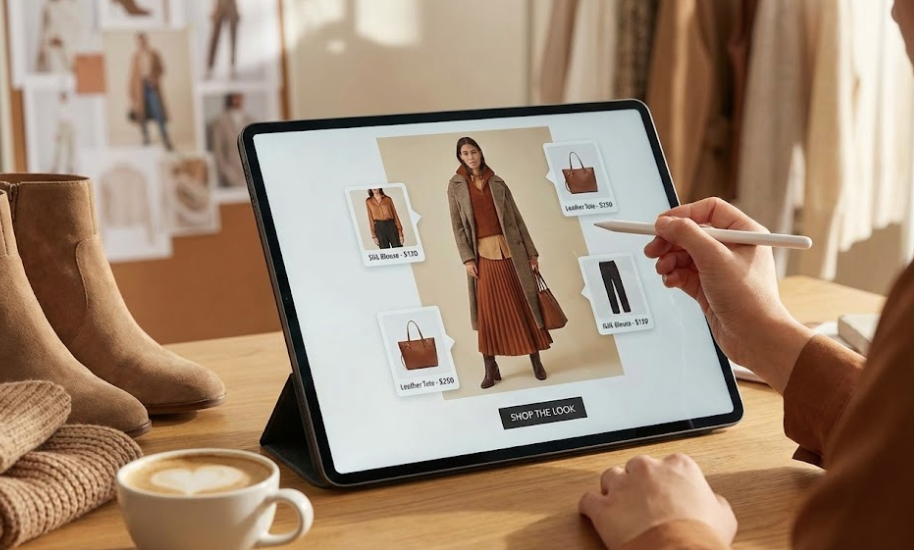
Lookbooks have evolved far beyond inspirational galleries. In today’s eCommerce landscape, especially in 2026, the most effective lookbooks are not designed just to impress but to convert. High-intent lookbooks bridge the gap between discovery and purchase by guiding shoppers from visual inspiration straight to checkout with minimal friction. When designed correctly, they shorten decision-making, increase average order value, and turn browsing behavior into buying behavior.
This guide explores how to design high-intent lookbooks that balance storytelling with conversion, explaining the psychology behind them, the structural elements that matter most, and the practical design decisions that help collections move shoppers confidently toward purchase.
Traditional lookbooks focus on mood, lifestyle, and brand identity. While these elements still matter, high-intent lookbooks are built with a commercial purpose.
They are structured to answer buying questions, reduce uncertainty, and subtly push shoppers toward action without breaking the emotional flow.
High-intent design starts with the assumption that the shopper is already curious, not passive. Every image, layout, and interaction is chosen to support a purchase decision.
Intent-driven lookbooks feel immersive but also purposeful.
Shoppers use lookbooks differently than product pages. They scan images, imagine usage, and compare combinations rather than specifications.
This behavior creates an opportunity to influence buying decisions earlier in the journey.
Intent often forms when a shopper sees how products work together in a real-world context. The faster you connect inspiration to availability, the higher the chance of conversion.
High-intent lookbooks reduce the gap between desire and action.
A strong visual hierarchy guides the eye naturally through the lookbook. Shoppers should immediately understand what the focus is and where to interact.
Confusion slows momentum and weakens intent.
Each look should follow a clear path:
This flow should feel seamless, not transactional.
High-intent lookbooks group products that make sense together. This encourages bundling and increases order value.
Instead of random assortments, collections should feel curated and intentional.
Too many options dilute intent. High-performing lookbooks often feature fewer, stronger looks rather than endless variations.
Constraint helps shoppers decide faster.
Contextual imagery helps shoppers visualize ownership. Seeing products worn, styled, or used together builds confidence.
Confidence is a key driver of conversion.
Consistency in lighting, styling, and tone creates trust. A disjointed lookbook feels experimental, while a cohesive one feels professional.
Professional presentation supports purchasing decisions.
High-intent lookbooks minimize the number of steps between seeing a product and adding it to cart.
Shoppers should not have to search for product details.
Clickable hotspots or overlays allow users to interact without leaving the lookbook experience.
These interactions keep shoppers engaged while moving them closer to checkout.
Too many icons, labels, or pop-ups disrupt immersion. High-intent lookbooks keep interfaces clean and intuitive.
Clarity always beats cleverness.
Hiding price or availability creates hesitation. High-intent designs surface key information at the right moment.
Transparency builds trust and reduces friction.
Most lookbook engagement now happens on mobile devices. Mobile users have shorter attention spans and less patience for friction.
Design decisions must reflect this reality.
High-intent mobile lookbooks prioritize:
Speed and simplicity protect intent on small screens.
Lookbooks naturally support cross-selling by showing how products work together.
When shoppers see complete outfits or setups, they are more likely to buy multiple items.
Upselling works best when it feels like advice, not pressure. Styling suggestions embedded in lookbooks feel helpful rather than sales-driven.
This increases order value without resistance.
Integrating reviews, ratings, or user-generated content near looks reinforces credibility.
Seeing real feedback next to styled products strengthens confidence.
Lookbooks should align with product page messaging, pricing, and imagery. Inconsistencies create doubt.
Trust thrives on consistency.
High-intent lookbooks quietly answer questions about fit, compatibility, and use cases through visuals and microcopy.
The fewer questions a shopper has, the faster they move forward.
The transition from lookbook to cart should feel natural. Abrupt changes in layout or tone disrupt momentum.
Continuity preserves intent.
In 2026, personalization tools allow lookbooks to adapt based on behavior, location, or preferences.
Relevant content strengthens intent.
Showing alternative looks or variations based on browsing patterns keeps shoppers engaged longer.
Engagement fuels confidence and purchase readiness.
Heavy imagery can slow down lookbooks, especially on mobile. Slow load times weaken emotional impact and intent.
Performance is part of design.
Effective optimization includes:
Fast lookbooks feel effortless and premium.
High-intent lookbooks should be evaluated based on conversion-focused metrics, not just engagement.
Key indicators include:
These metrics reveal true impact.
Small design changes can significantly affect performance. Regular testing helps refine layout, copy, and interactions.
High-intent design is an ongoing process.
Purely visual lookbooks may look beautiful but fail to convert.
A lack of structure weakens commercial impact.
Too many images without clear guidance overwhelms shoppers.
Focus beats volume.
Lookbooks are becoming more interactive, offering guided shopping paths rather than static browsing.
Guidance increases confidence.
The line between lookbook and checkout continues to blur. Faster transitions and embedded purchase options are becoming standard.
Convenience amplifies intent.
High-intent lookbooks are no longer optional for brands that rely on visual merchandising. In 2026, they serve as powerful conversion tools that connect inspiration directly to checkout. By understanding shopper psychology, structuring collections with purpose, minimizing friction, and optimizing for mobile and speed, merchants can transform lookbooks into revenue-driving experiences.
The most successful lookbooks balance emotion with clarity, creativity with performance, and storytelling with action. When done right, they do not just showcase products—they confidently lead shoppers to buy.