New to Shopify? Free trial, then $1/month for your first 3 months. Start free trial →
 Where is your store?
Ryviu works with both – pick yours to continue.









In the competitive world of eCommerce, trust is everything. When customers shop online, they don’t have the luxury of holding your product, testing it out, or talking to a salesperson face-to-face. Instead, they rely on something far more powerful: customer reviews.
For WooCommerce store owners, reviews are more than just nice add-ons. They shape brand reputation, influence buying decisions, and even improve visibility on Google. But here’s the catch: to really harness the power of reviews, you need the right tool to collect, display, and manage them.
That’s where WooCommerce review plugins come in. From free solutions to enterprise-level platforms, there are countless options out there—but which one delivers the best results? In this article, we’ll break down the most popular WooCommerce review plugins, highlight their pros and cons, and ultimately help you decide which one fits your store best.
Let’s pause for a moment and talk about why reviews are such a big deal.
#1. Build Trust Instantly

Imagine two stores selling the exact same phone case. One has zero reviews. The other has 300 reviews with photos from real buyers. Which one are you more likely to trust?
Exactly. Reviews are social proof in action—they show that other shoppers have already taken the leap, making it easier for new buyers to do the same.
#2. Drive Conversions
According to research, products with reviews can increase conversion rates by up to 270% compared to those without. Even a handful of honest reviews can tip the scales in your favor.
#3. Improve SEO
Reviews are a goldmine of fresh, user-generated content. With structured data (schema markup), they can also trigger star ratings in Google search results. That extra visual boost can dramatically increase click-through rates.
#4. Reduce Returns
When customers read detailed reviews about sizing, material quality, or performance, they make better decisions—and fewer returns follow.
Clearly, reviews aren’t optional. They’re essential. But to maximize their potential, you need the right WooCommerce plugin.
Not all plugins are created equal. Some only handle the basics, while others offer advanced features that take your review strategy to the next level. Here’s what you should look for:
Now that we know the essentials, let’s dive into the most popular WooCommerce review plugins and see how they stack up.
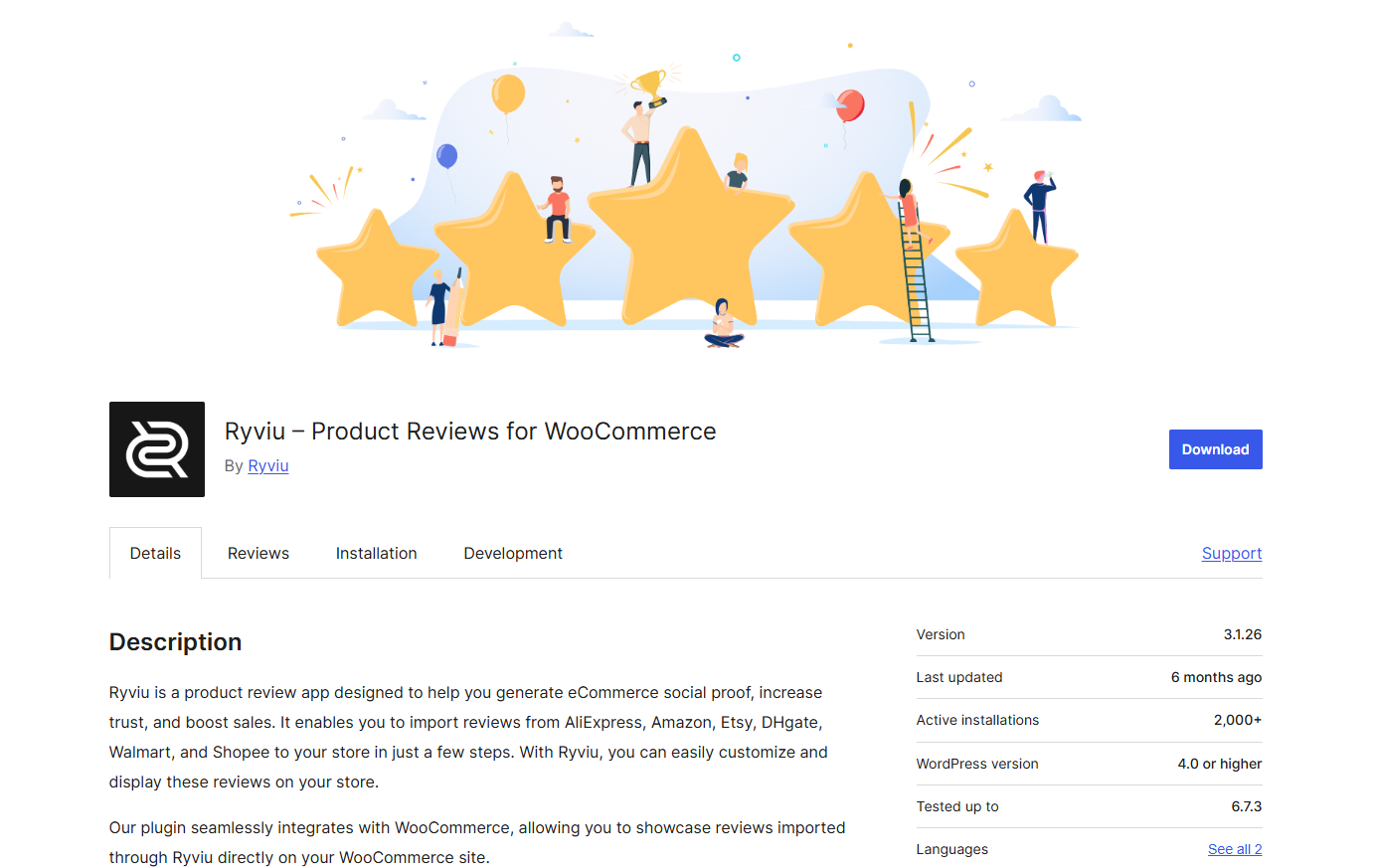
If you’re looking for a plugin that balances authenticity, features, and affordability, Ryviu should be at the top of your list.
Why it stands out: Ryviu offers the essential features you need to grow with reviews, without bloating your store with unnecessary extras.
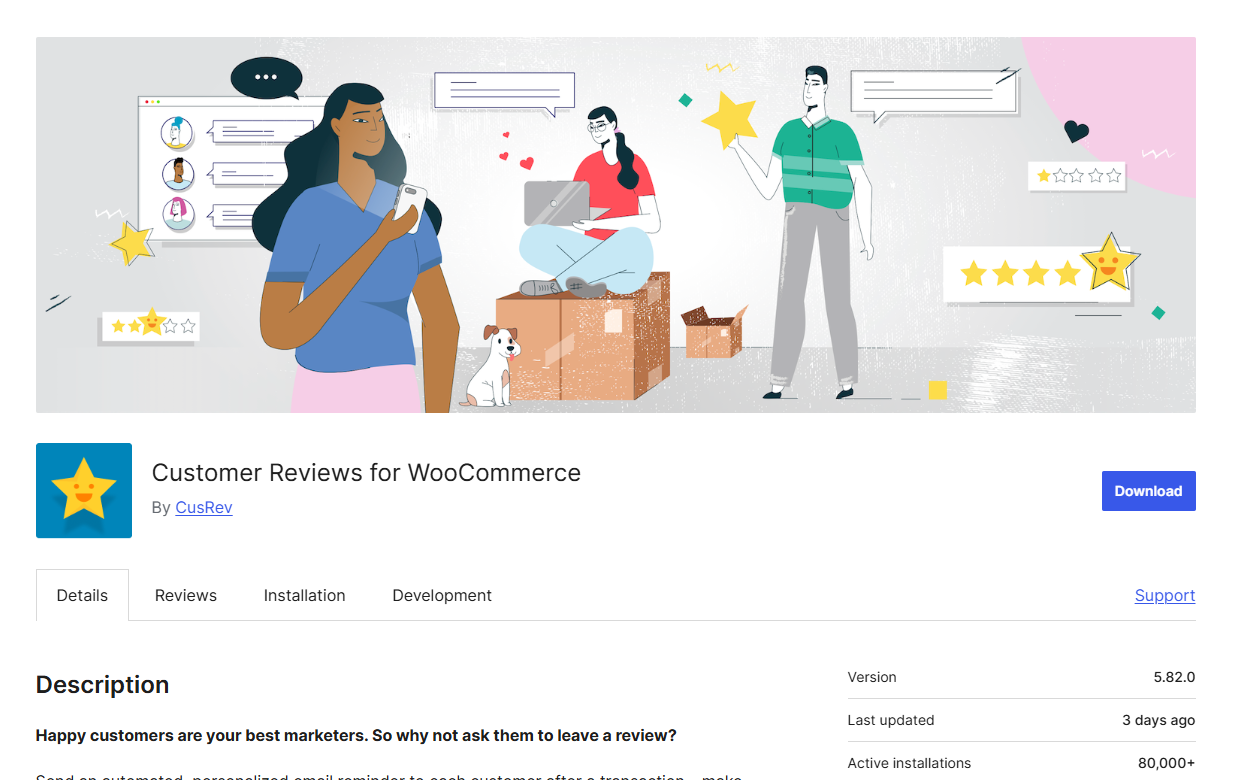
This plugin is a favorite among budget-conscious beginners.
Judge.me is known for being feature-rich at a very low cost.
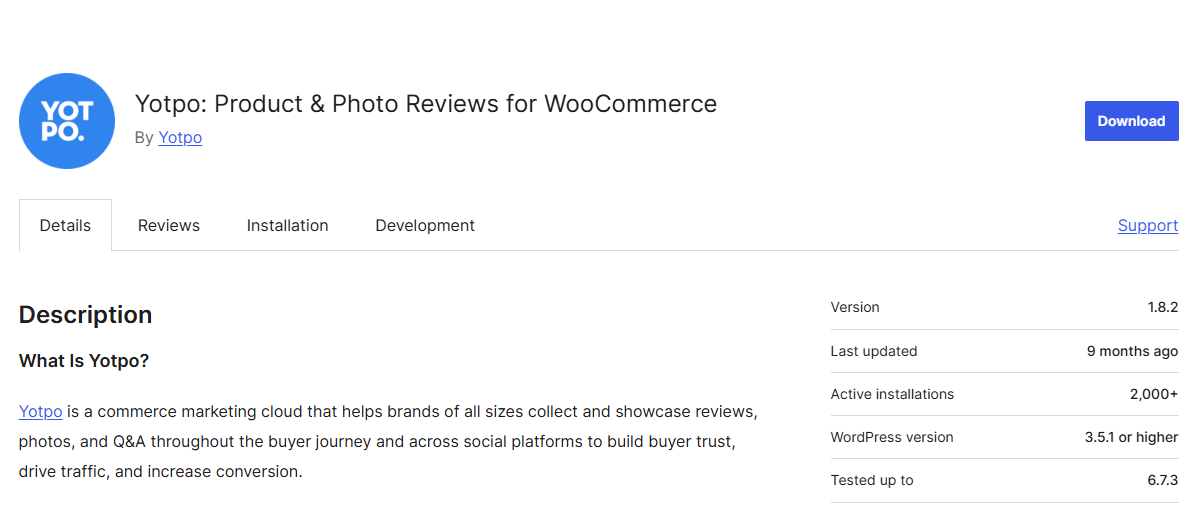
Yotpo is the heavyweight of the review world, aimed at big brands.
Stamped.io is another platform that goes beyond reviews to include loyalty and engagement tools.
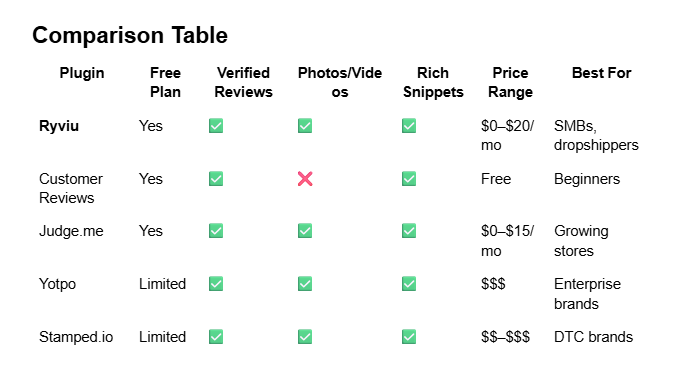
After comparing these plugins, it’s clear that Ryviu delivers the best overall value for WooCommerce store owners.
For dropshippers, small-to-medium businesses, and even growing brands, Ryviu offers everything you need to build trust, improve conversions, and boost sales—without the hefty price tag of enterprise solutions.
If you’re serious about scaling your WooCommerce store with the power of reviews, Ryviu is the plugin you can rely on.