New to Shopify? Free trial, then $1/month for your first 3 months. Start free trial →
 Where is your store?
Ryviu works with both – pick yours to continue.








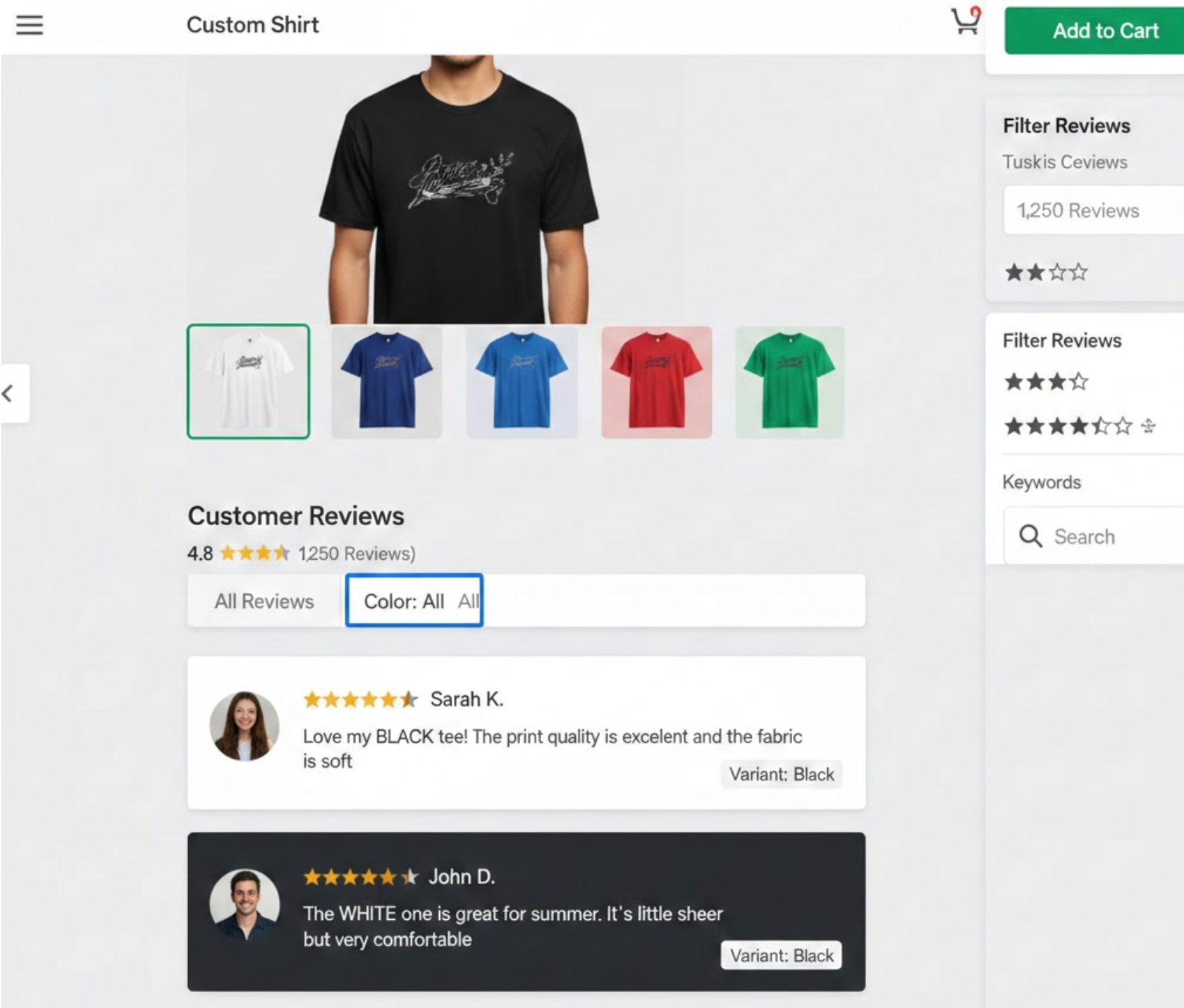
Product reviews are one of the strongest trust signals in ecommerce, but they become far more powerful when they are relevant. For stores that sell products with multiple options, such as size, color, material, or model, showing the right reviews for the right variant can significantly improve customer confidence and conversion rates. Displaying reviews by product variants helps shoppers see feedback that matches exactly what they are considering, reducing hesitation and post-purchase disappointment.
This article explores why variant-level reviews matter, the challenges merchants face, and the best practices for implementing them effectively without harming performance or user experience.
Not all product variants deliver the same experience. A shoe in size 38 may fit differently than size 42, and a jacket in one color may look very different in real life than another. When all reviews are lumped together, customers may struggle to determine whether the feedback applies to the specific option they want to buy.
Variant-level reviews solve this problem by increasing relevance. Shoppers can quickly find comments about the exact color, size, or configuration they are viewing, which builds trust and reduces uncertainty. This is especially important for products where fit, appearance, or compatibility plays a critical role in satisfaction.
While variant-based reviews are valuable, implementing them incorrectly can create friction. One major challenge is review fragmentation. If reviews are split too aggressively across variants, each option may appear to have very few reviews, making the product seem less popular than it actually is.
Another challenge is data accuracy. Customers may forget to select the correct variant when leaving a review, resulting in mismatched or misleading feedback. Finally, poor UI implementation, such as cluttered filters or confusing labels, can overwhelm shoppers instead of helping them make faster decisions.
Customers often want reassurance that a product is popular before diving into specific details. Showing all reviews by default helps establish strong social proof and prevents individual variants from appearing untested or unpopular. At the same time, shoppers still need a way to focus on feedback that matches their exact choice.
To balance credibility and relevance, merchants should guide users smoothly from a broad overview to specific insights.
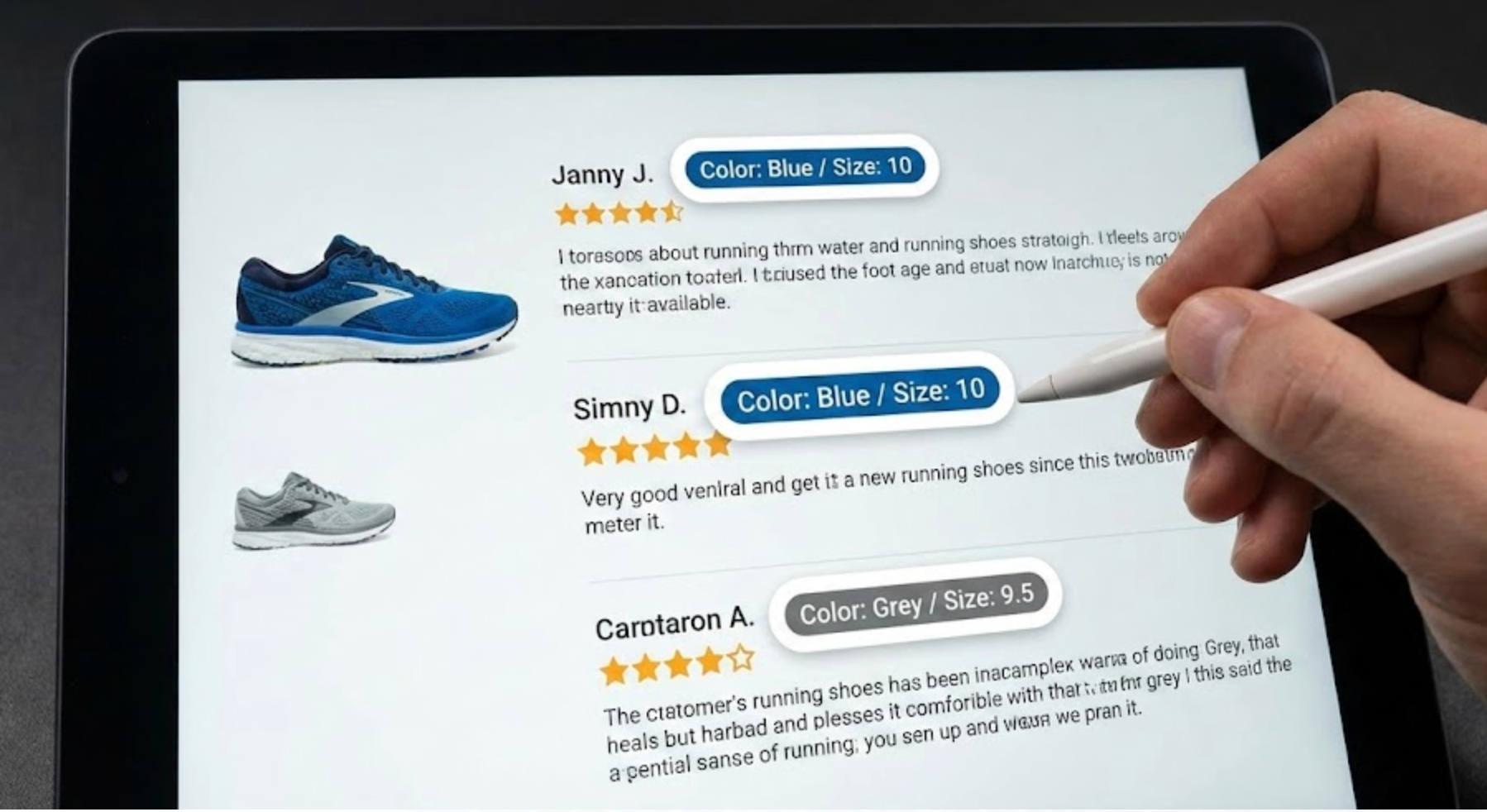
Variant-level reviews lose their value if shoppers cannot easily tell which option a review refers to. Clear and consistent labels help customers instantly recognize whether a review is relevant to their selection. This is especially important for products where appearance, fit, or compatibility varies significantly.
Once shoppers can quickly scan and identify relevant reviews, their decision-making process becomes faster and more confident.
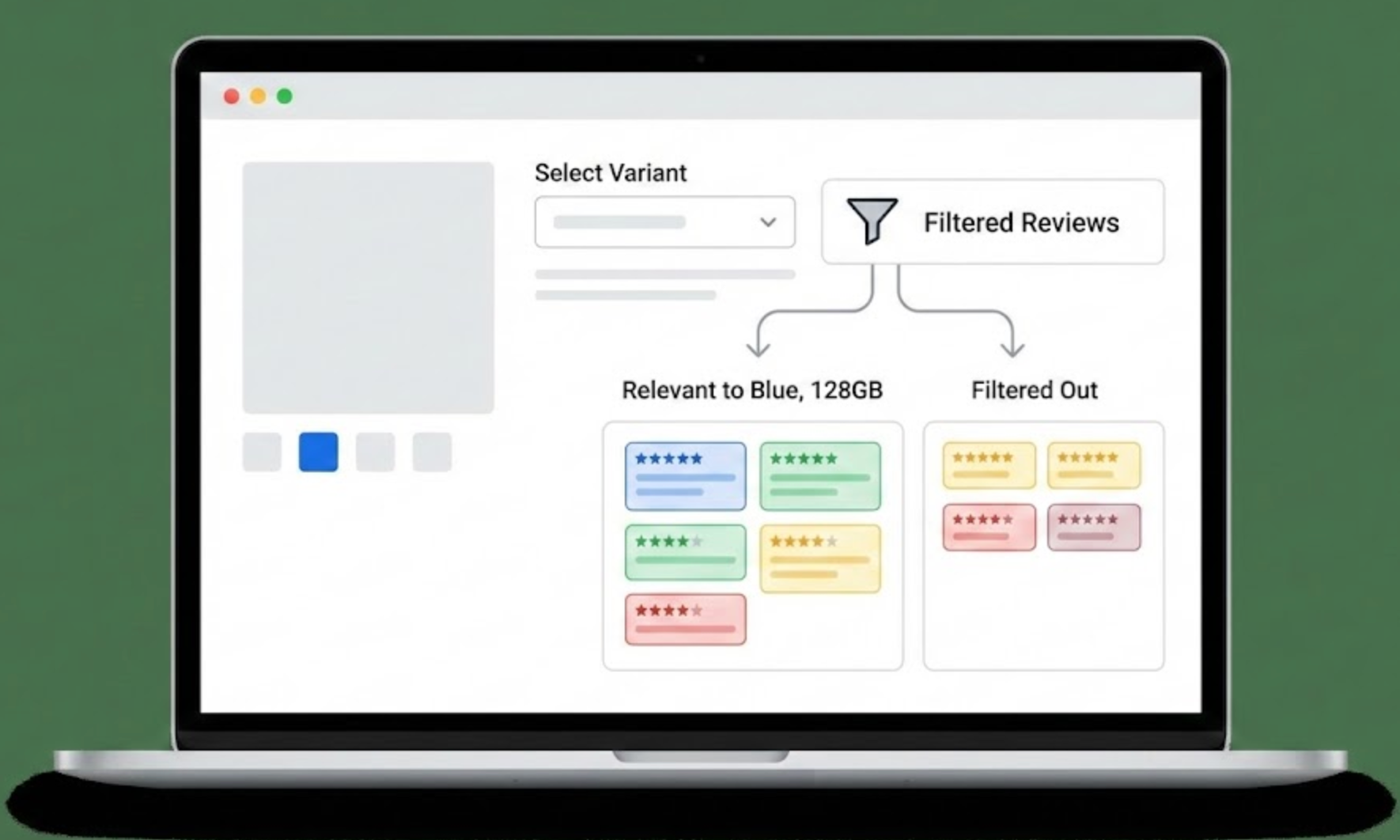
When customers change a variant on the product page, they naturally expect related information to update as well. If reviews remain static, the experience feels disconnected and less helpful. Automatically syncing reviews with the selected variant creates a more personalized and intuitive journey.
This dynamic behavior makes reviews feel like part of the product itself rather than a separate section.
Accurate variant-level reviews depend heavily on the data collected during submission. If customers are unsure which variant they reviewed, the feedback may become misleading. Guiding customers at this stage ensures long-term review quality and reliability.
A small prompt during submission can make a significant difference in review accuracy.
Some feedback applies only to certain variants, such as fit issues, color differences, or material quality. Surfacing these insights helps shoppers avoid surprises and choose the option that best suits their needs. This approach also shows transparency and builds long-term trust.
By organizing feedback intelligently, merchants turn reviews into a practical decision-making tool.
While variant-level detail is valuable, excessive segmentation can make products look less credible. Variants with only a few reviews may appear risky, even if the overall product performs well. Merchants need a strategy that preserves context and confidence.
A thoughtful fallback ensures shoppers always see enough feedback to feel secure.
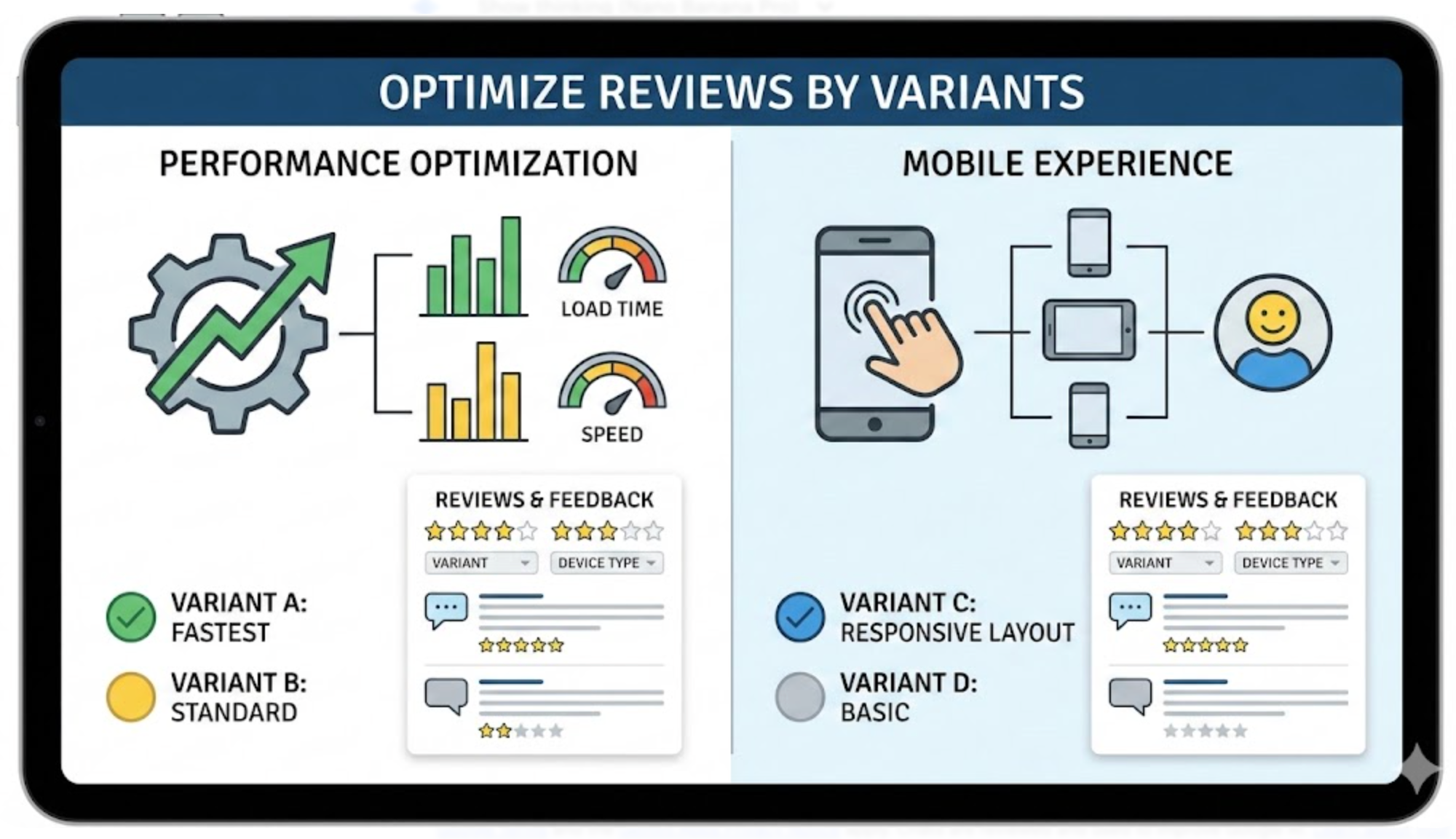
Variant-based filtering should enhance usability, not slow it down. Slow-loading or jumpy review sections can frustrate users, especially on mobile devices. Performance optimization is essential for maintaining engagement and conversions.
Smooth interactions ensure that reviews support, rather than interrupt, the buying process.
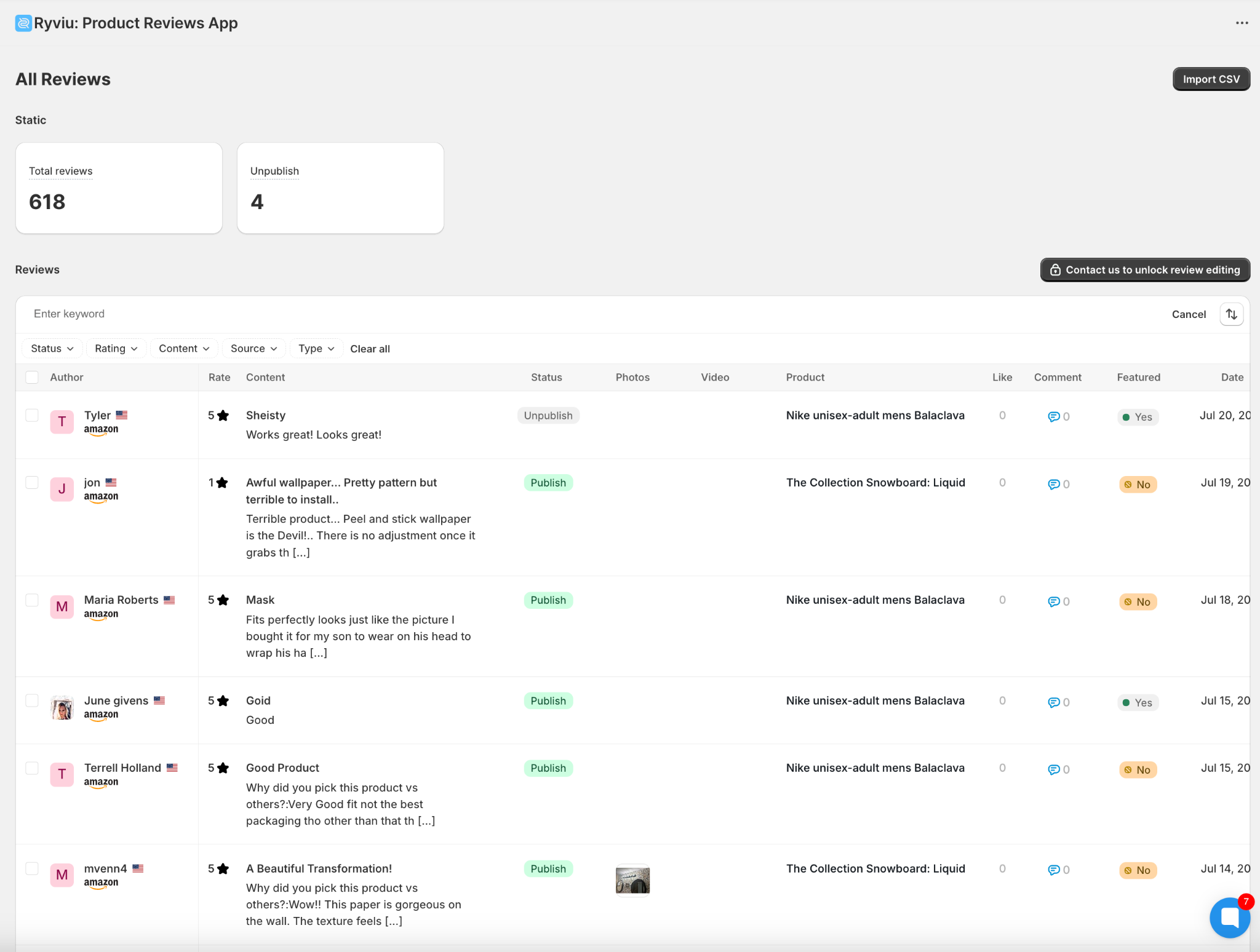
Ryviu is designed to help merchants display reviews in a way that feels both relevant and trustworthy. It allows reviews to be automatically linked to product variants, ensuring customers see feedback that matches their selected option. At the same time, Ryviu preserves total review counts to maintain strong social proof.
Ryviu also supports dynamic filtering, so reviews can update instantly when shoppers change variants on the product page. Clear variant labels are displayed within each review, making it easy for customers to scan and compare feedback. This creates a more personalized shopping experience without fragmenting reviews or hurting page performance.
By combining smart variant tagging, flexible filtering, and performance-friendly design, Ryviu helps merchants turn reviews into a powerful conversion tool.
Displaying reviews by product variants is a powerful way to increase relevance, trust, and conversion rates, when done correctly. The key is balance: provide variant-specific insights without fragmenting social proof or overwhelming users. By combining global reviews with smart filtering, clear labels, and dynamic behavior, merchants can create a review experience that truly supports the customer’s decision-making process.
When implemented as part of a broader review strategy, variant-level reviews don’t just answer questions, they reduce returns, improve satisfaction, and help shoppers buy with confidence.