New to Shopify? Free trial, then $1/month for your first 3 months. Start free trial →
 Where is your store?
Ryviu works with both – pick yours to continue.








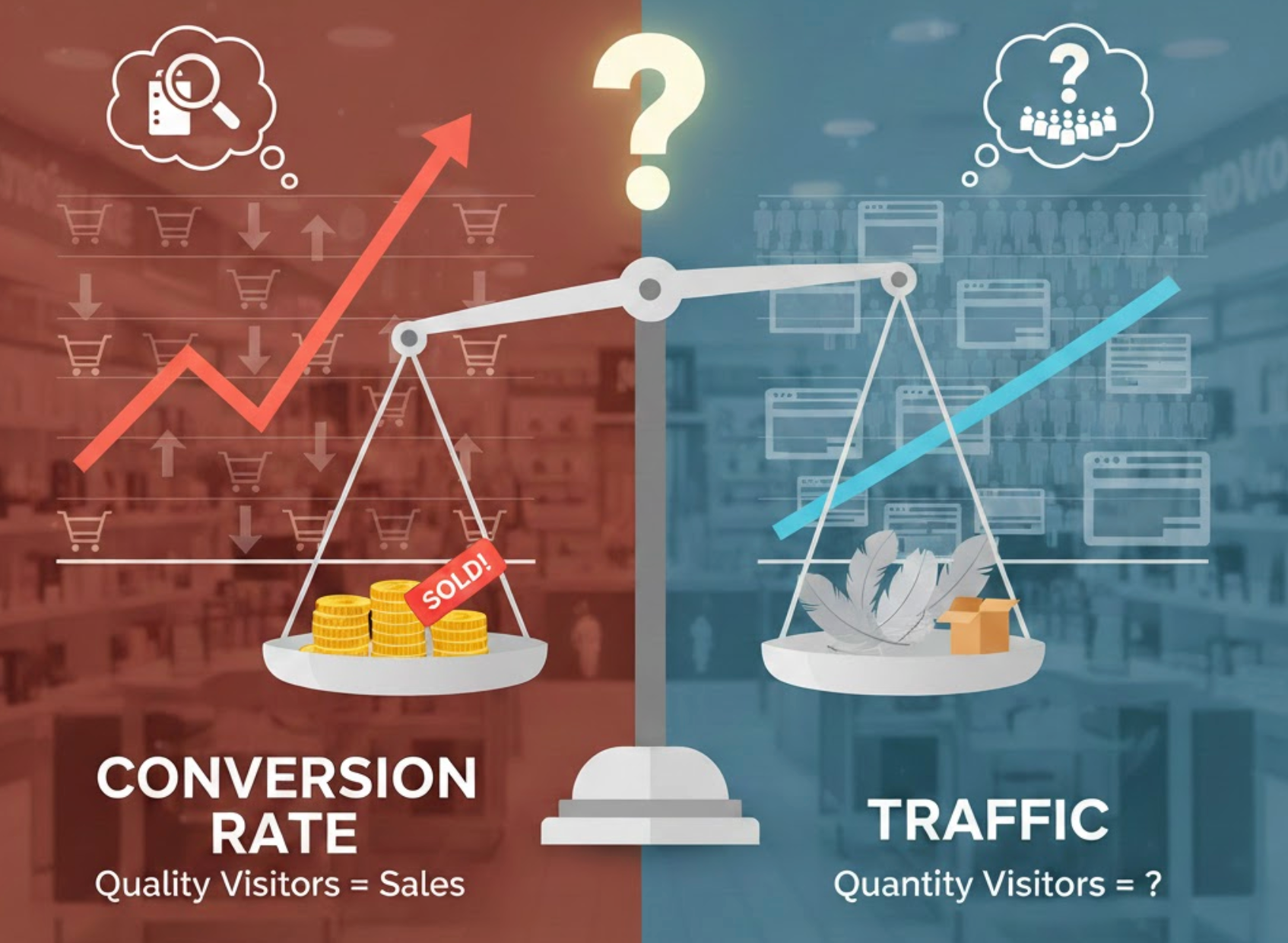
When Shopify merchants think about growth, the conversation almost always starts with traffic. More visitors feel like progress. More clicks look impressive in analytics dashboards. And higher session numbers often create the illusion that sales will eventually follow. Yet for many stores, traffic keeps rising while revenue barely moves. This disconnect leads to a deeper and far more important question: is traffic really the problem, or is conversion rate the missing piece?
Understanding the difference between traffic and conversion rate, and how they interact, is essential for building a Shopify store that grows profitably rather than expensively.
In Shopify, traffic and conversion rate are two core metrics that directly influence sales growth, yet they serve very different purposes. Traffic determines how many potential customers enter your store, while conversion rate measures how effectively those visitors are turned into buyers. Understanding the distinction between these two metrics is essential for identifying whether growth issues come from lack of exposure or poor store performance.
While traffic creates opportunities for sales, conversion rate determines whether those opportunities translate into real revenue.
Traffic refers to the number of visitors who land on your Shopify store through channels such as paid ads, search engines, social media, influencers, or email marketing. For new and growing stores, traffic is especially important because it provides the volume and behavioral data needed to test products, messaging, and user experience. However, traffic on its own only represents potential value, and as acquisition costs rise and competition increases, relying solely on traffic growth can quickly become expensive if the store is not optimized to convert.
Conversion rate measures how effectively your Shopify store turns visitors into customers, reflecting the overall quality of the shopping experience. It captures how clearly your products are presented, how much trust your store builds, and how smoothly customers can move from browsing to checkout. Unlike traffic, which often requires continuous spending, improving conversion rate increases the performance of every traffic source at once, allowing your store to generate more revenue from the same number of visitors over time.
Traffic and conversion rate influence Shopify growth in different ways, and comparing them by key aspects helps clarify which metric delivers more impact in real business scenarios.
This aspect compares how much ongoing effort and budget are required to improve each metric.
Here, the focus is on how effectively each metric turns effort into actual sales.
This aspect evaluates how predictable and sustainable each metric is over time.
Both metrics play a role in understanding customer behavior, but their contributions differ.
This aspect highlights how each metric supports long-term scaling.
Overall, traffic creates opportunity, but conversion rate determines outcomes. While traffic is necessary for visibility and learning, conversion rate consistently delivers stronger advantages in cost control, efficiency, and stability, making it the more impactful metric for most Shopify stores.
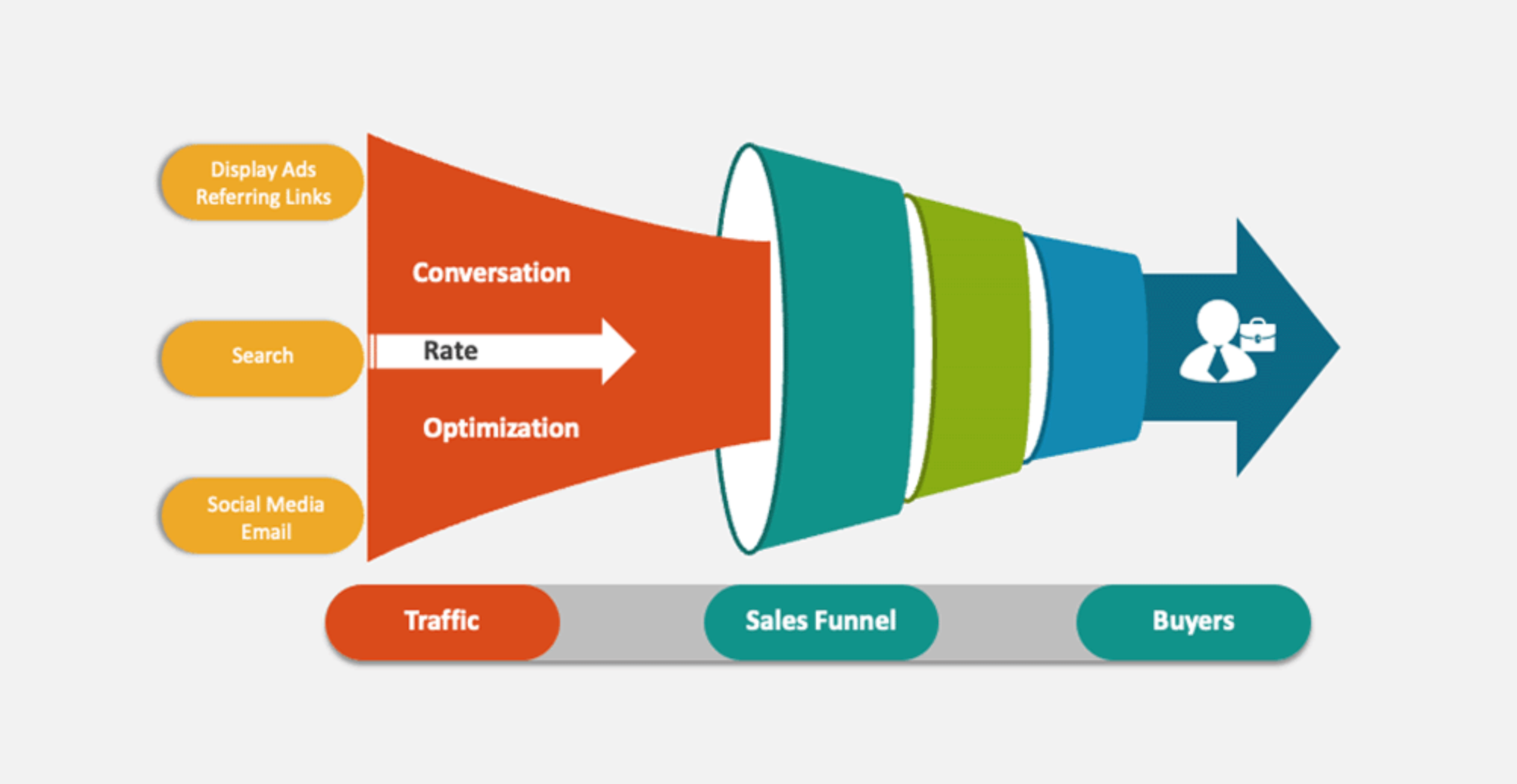
Traffic and conversion rate are often treated as separate growth levers, but in reality, neither can succeed in isolation. Traffic brings visitors into your Shopify store, creating opportunities for sales, while conversion rate determines how effectively those opportunities are turned into revenue. Focusing on only one of these metrics limits growth and can even create new problems as your store scales.
Traffic without conversion optimization leads to wasted potential. As more visitors arrive, weaknesses in product presentation, trust signals, or checkout flow become more visible, causing bounce rates and abandonment to rise. In this scenario, increasing traffic simply amplifies inefficiencies rather than improving results.
On the other hand, conversion rate improvements without sufficient traffic can also stall growth. A well-optimized store still needs a steady flow of visitors to generate meaningful revenue and data. Without traffic, even the best conversion strategies lack the volume needed to scale.
True Shopify growth happens when traffic and conversion rate work together. Traffic supplies the volume and learning opportunities, while conversion rate ensures that each visitor delivers maximum value. When combined, they create a balanced, scalable system where increases in traffic lead to predictable and profitable revenue growth.
Rather than choosing between traffic and conversion rate, successful Shopify growth comes from understanding how they interact. Revenue is the product of traffic, conversion rate, and average order value. Ignoring any one of these limits growth.
However, the order in which you optimize matters. Traffic without conversion leads to wasted effort. Conversion without traffic leads to stagnation. The most effective approach is to build a strong conversion foundation first, then scale traffic with confidence.
If you have to choose, conversion rate matters more for most Shopify stores, especially once basic traffic levels are reached. Traffic creates opportunity, but conversion rate determines results.
The smartest Shopify merchants do not chase visitors blindly. They focus on creating a store that deserves traffic, one that communicates value clearly, builds trust instantly, and makes buying effortless. Once that foundation is in place, traffic becomes a powerful growth engine rather than a costly experiment.