New to Shopify? Free trial, then $1/month for your first 3 months. Start free trial →
 Where is your store?
Ryviu works with both – pick yours to continue.








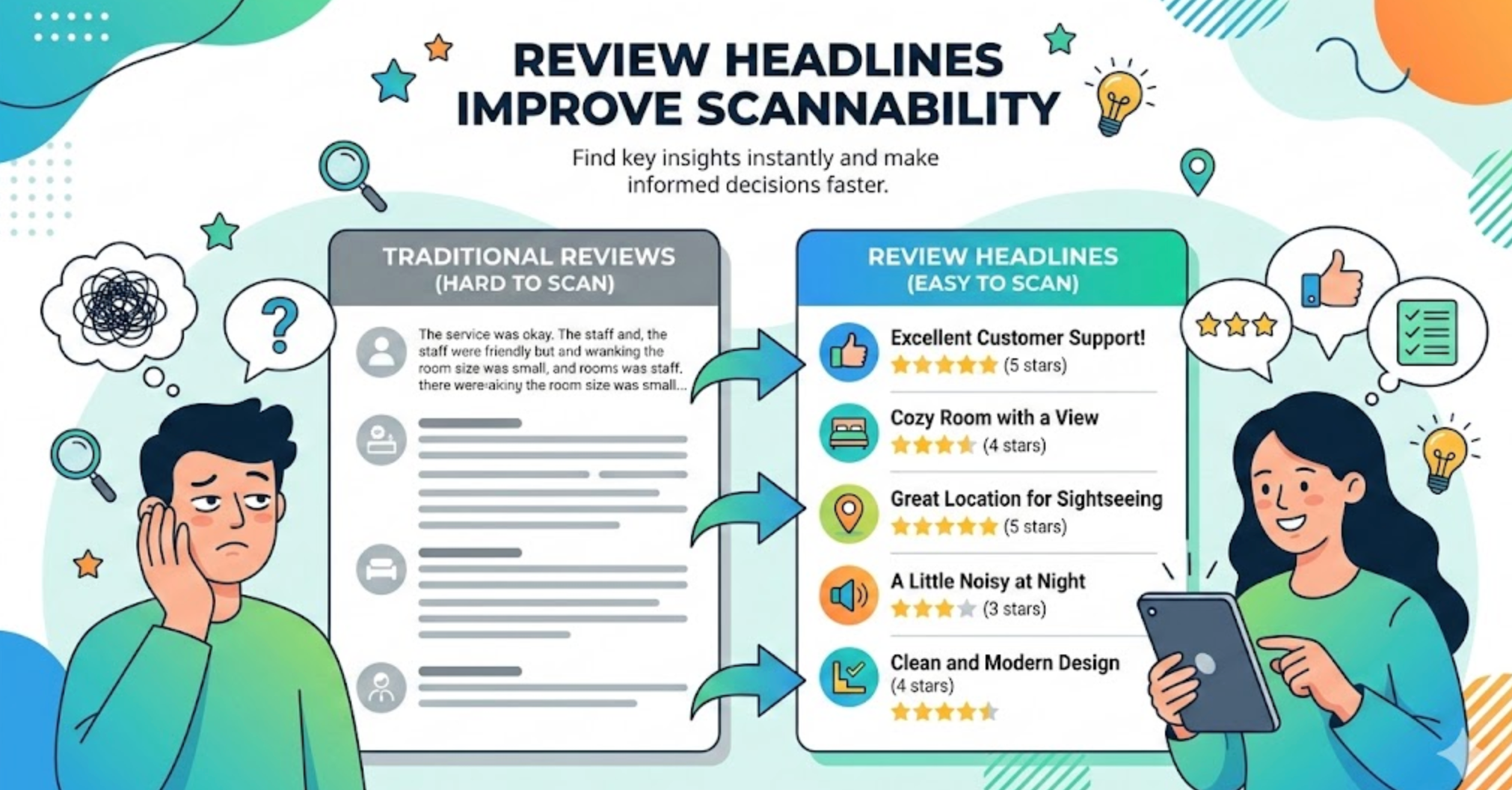
In modern eCommerce, attention is one of the most limited resources. Shoppers rarely sit down to carefully read every review in full. Instead, they skim quickly, scroll rapidly, and pause only when something immediately feels relevant. This browsing behavior makes review headlines far more important than many merchants realize. Review headlines act as visual anchors that guide the reader’s eye and help them extract value from reviews in seconds rather than minutes.
When implemented well, review headlines don’t just improve readability, they improve comprehension, trust, and ultimately conversion rates.
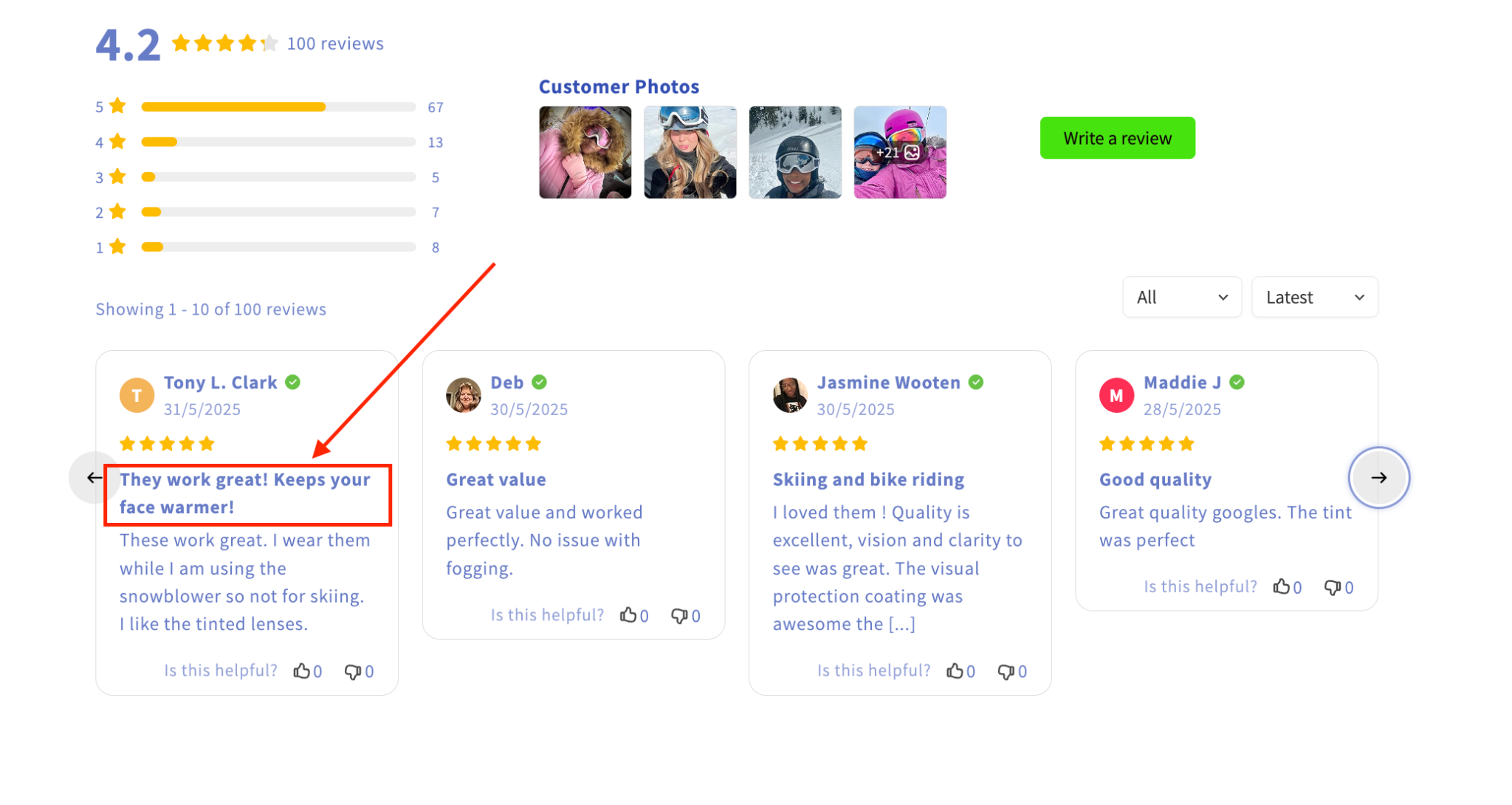
Review headlines are short, descriptive summaries placed at the top of a customer review. Their main role is to capture the essence of the customer’s experience in a single line. Rather than forcing shoppers to interpret a full paragraph to understand the point, the headline communicates the main takeaway instantly.
In practice, review headlines often highlight:
Because they sit at the top of each review, headlines become the first, and sometimes only, part that a shopper reads. This makes them a critical component of review presentation, not just an optional add-on.
Scannability refers to how easily users can visually skim content and still understand its meaning. On eCommerce product pages, shoppers are already processing a lot of information: product images, pricing, variants, shipping details, guarantees, and more. Reviews add enormous value, but they also add cognitive weight.
On platforms like Shopify, reviews are often displayed in long lists. Without strong visual structure, these lists can feel overwhelming. Scannable reviews help by:
In short, scannability determines whether reviews get read at all, or skipped entirely.
A well-written headline acts as a summary sentence. It tells the shopper exactly what the reviewer experienced before they read a single paragraph. This is especially valuable for shoppers with specific concerns, such as sizing, durability, or ease of use.
Instead of scanning entire paragraphs, users can skim headlines until one aligns with their priorities. This makes the review section feel efficient and respectful of the shopper’s time.
Cognitive load increases when users must interpret dense, unstructured text. Review headlines reduce this burden by doing part of the mental work upfront. They frame the review, set expectations, and provide context.
When shoppers know what a review is “about” from the headline, they can read the full text more comfortably, or confidently skip it. This sense of control improves the overall shopping experience and reduces decision fatigue.
Many shoppers don’t rely on a single review. Instead, they scan multiple reviews to identify trends. Headlines make these patterns visible. Repeated phrases like “Great value,” “Fast shipping,” or “Runs small” quickly stand out.
This helps shoppers form conclusions based on collective feedback rather than isolated opinions. As a result, trust builds faster, and hesitation decreases.
Mobile shoppers face even greater constraints: smaller screens, shorter attention spans, and more distractions. Long review paragraphs can feel especially intimidating on mobile.
Headlines allow mobile users to scroll quickly, stop when something feels relevant, and decide whether to expand the full review. This improves usability and prevents reviews from becoming a friction point in the mobile buying journey.
Headlines don’t just convey information, they also set an emotional tone. A headline like “Better than expected” immediately creates a positive frame, while “Looks good but disappointed” signals caution.
This emotional guidance helps shoppers interpret reviews more quickly and accurately, especially when skimming at speed.
Strong review headlines are specific, honest, and easy to understand at a glance. Examples include:
Each example gives the shopper a clear expectation before they read further, improving both speed and clarity.
To truly improve scannability, review headlines should follow a few best practices:
Many stores see better results when customers are prompted to write a headline during the review submission process, rather than leaving it optional.
Managing review headlines manually can be difficult, especially as a store grows. This is where Ryviu provides strong support. Ryviu is designed to help merchants present reviews in a structured, scannable, and conversion-focused way without sacrificing authenticity.
Ryviu helps improve scannability by:
By combining well-presented headlines with trusted review signals, Ryviu turns large volumes of customer feedback into an easy-to-navigate decision-making tool.
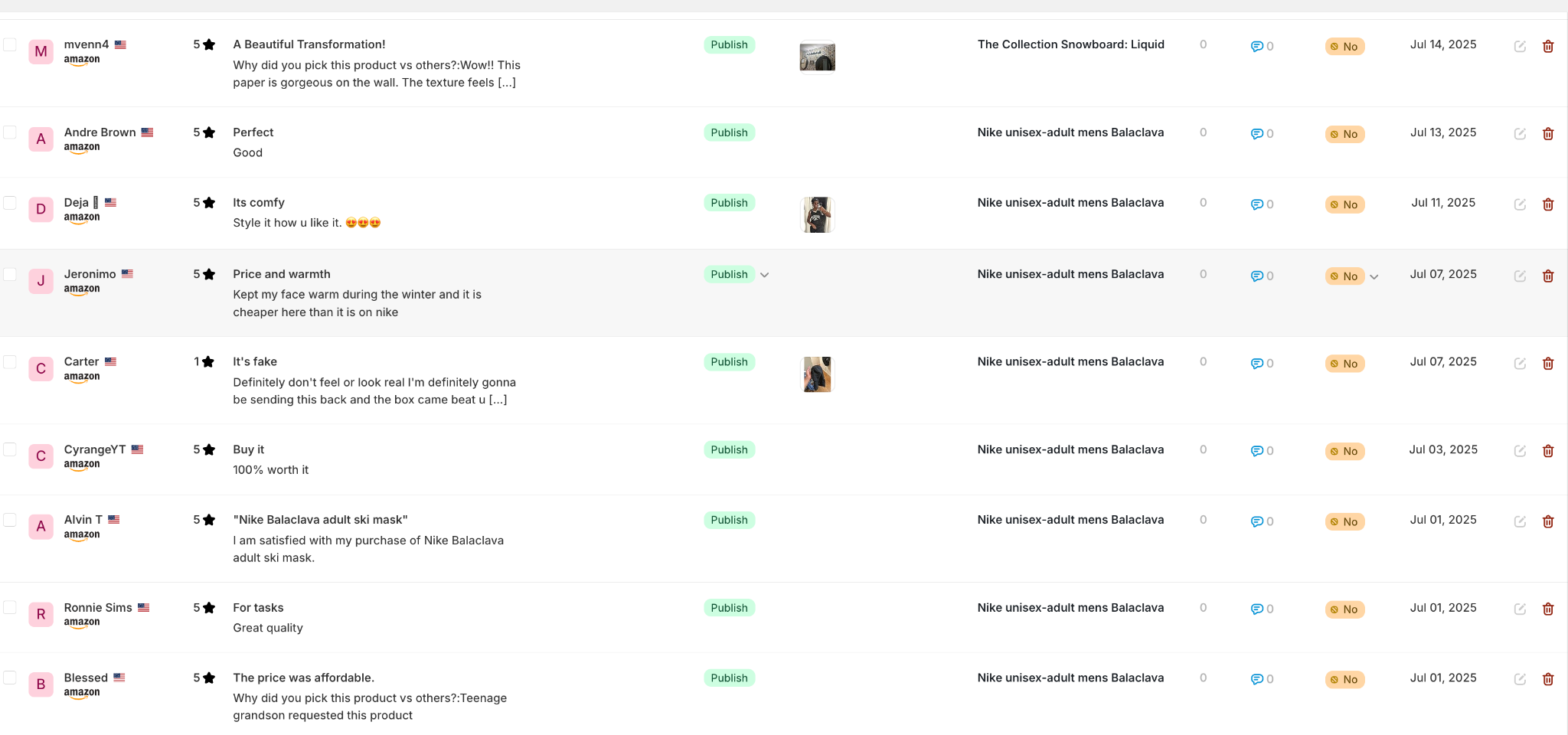
When reviews are easy to scan, shoppers feel more confident and less overwhelmed. They can quickly confirm product fit, quality, and reliability without digging through walls of text. This leads to:
Over time, improved scannability contributes directly to higher conversion rates and lower bounce rates.
Review headlines play a vital role in making reviews usable, readable, and persuasive. By summarizing experiences clearly and guiding the shopper’s attention, they transform reviews from dense text blocks into powerful decision aids. When combined with the right tools and thoughtful presentation, review headlines don’t just improve scannability, they improve the entire shopping experience.