New to Shopify? Free trial, then $1/month for your first 3 months. Start free trial →
 Where is your store?
Ryviu works with both – pick yours to continue.








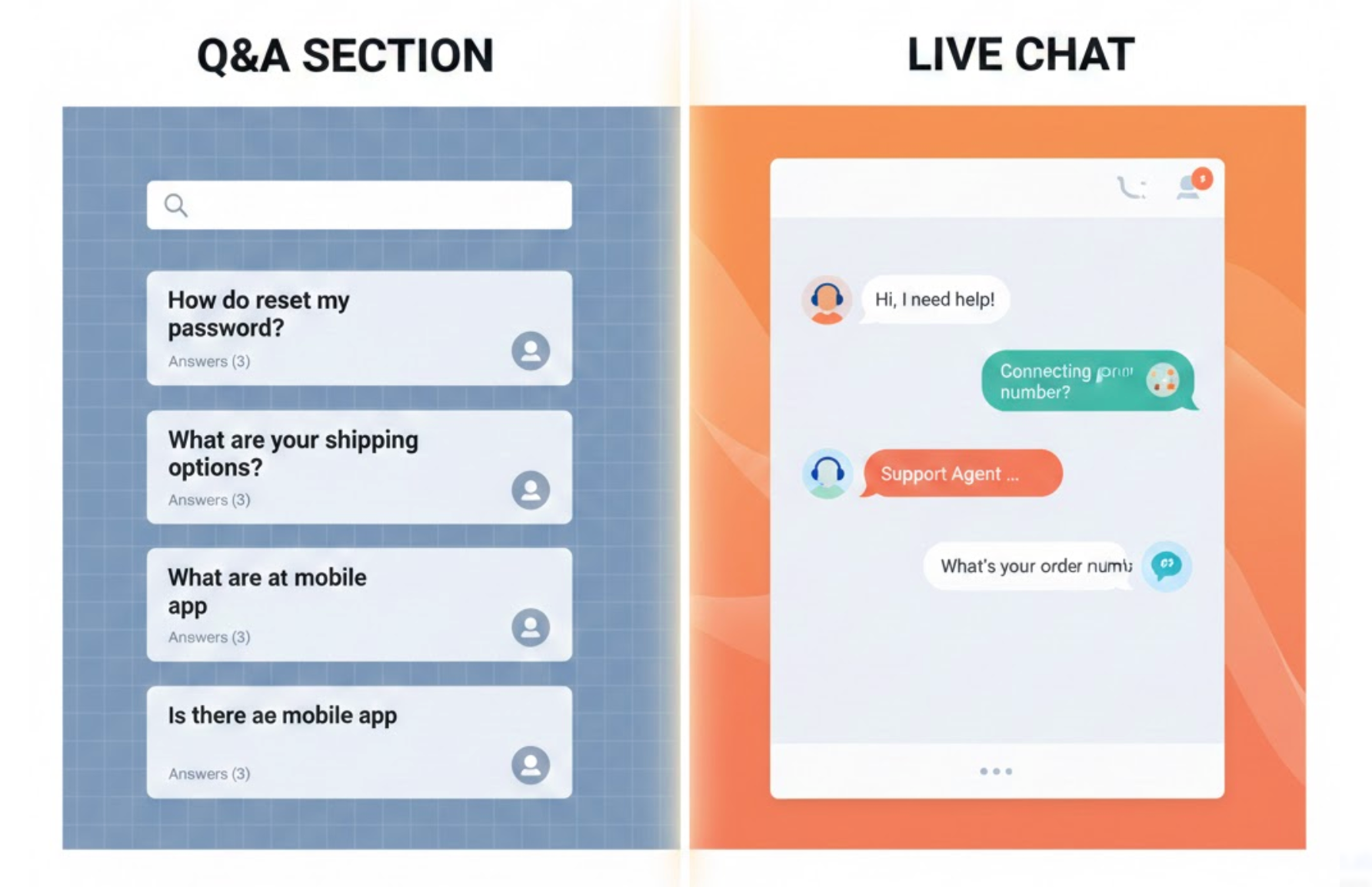
Helping customers get answers quickly is one of the most important factors in driving trust and conversions in an online store. Two of the most commonly used tools for this purpose are Q&A sections and live chat. While both aim to reduce uncertainty and improve decision-making, they serve different roles at different moments in the customer journey. Understanding when and why to use each one can significantly improve both user experience and operational efficiency.
This article breaks down the differences between Q&A sections and live chat, explains their strengths and limitations, and shows how to choose the right option depending on your business needs.
At a high level, the difference between a Q&A section and live chat comes down to self-service versus real-time support. A Q&A section allows shoppers to browse previously answered questions at their own pace, while live chat provides instant, personalized responses through direct interaction.
Because they operate in different ways, these tools impact customer behavior, support workload, and conversion rates differently. Choosing the right one, or combining both, depends on the type of questions your customers ask and the stage they are in.
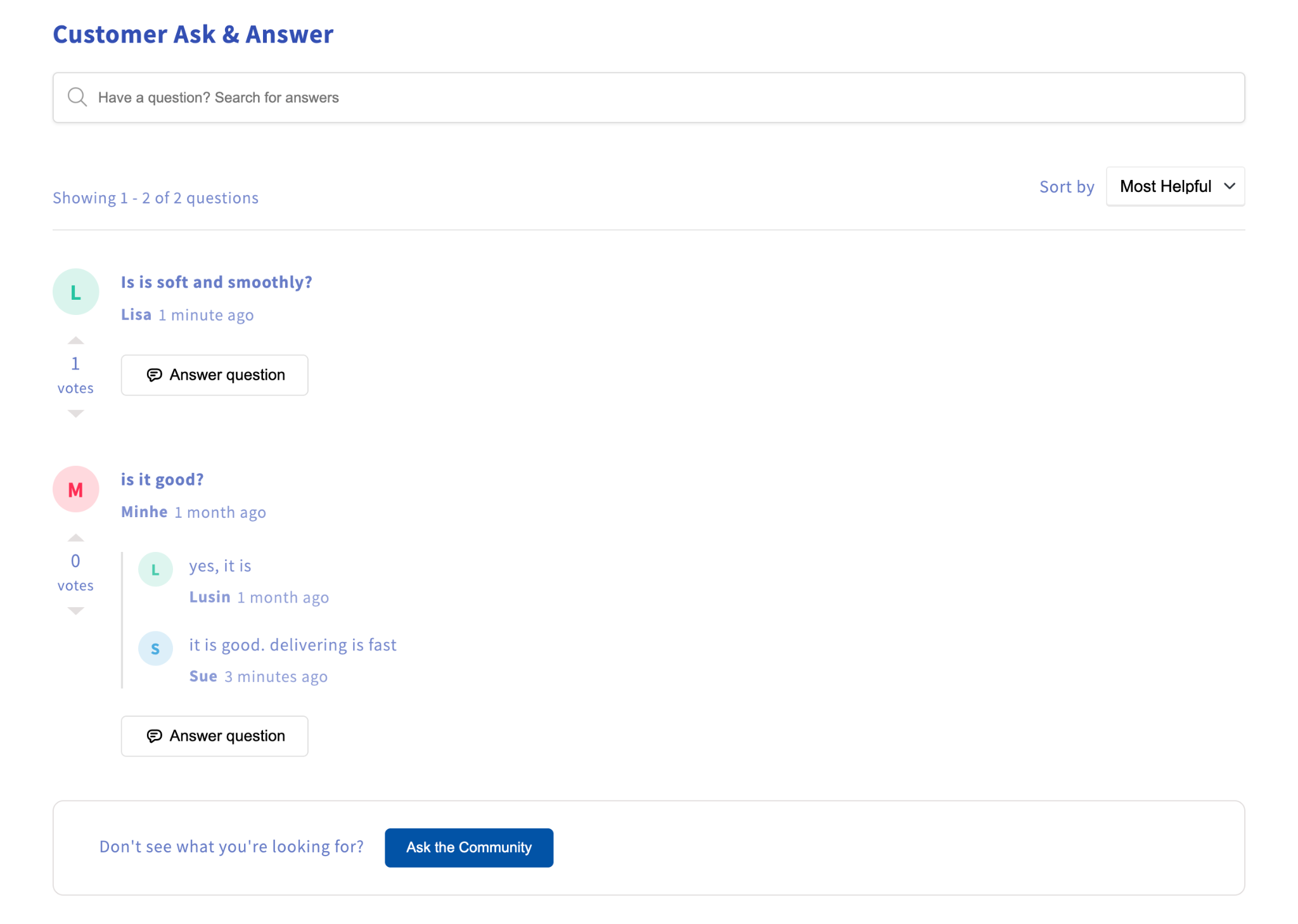
A Q&A section is a static, searchable knowledge layer that sits directly on product pages or help sections. It works best for addressing common, recurring questions that many shoppers share.
Customers often prefer Q&A sections when they are in research mode. They want to confirm details such as sizing, materials, compatibility, shipping, or usage without having to talk to someone. Seeing answers from the brand or even previous buyers also adds social proof and builds confidence.
From a business perspective, Q&A sections scale extremely well. Once a question is answered, it can help hundreds or thousands of future shoppers without adding any extra workload. This makes it ideal for reducing repetitive inquiries and keeping support costs under control.
Q&A sections are most effective when:
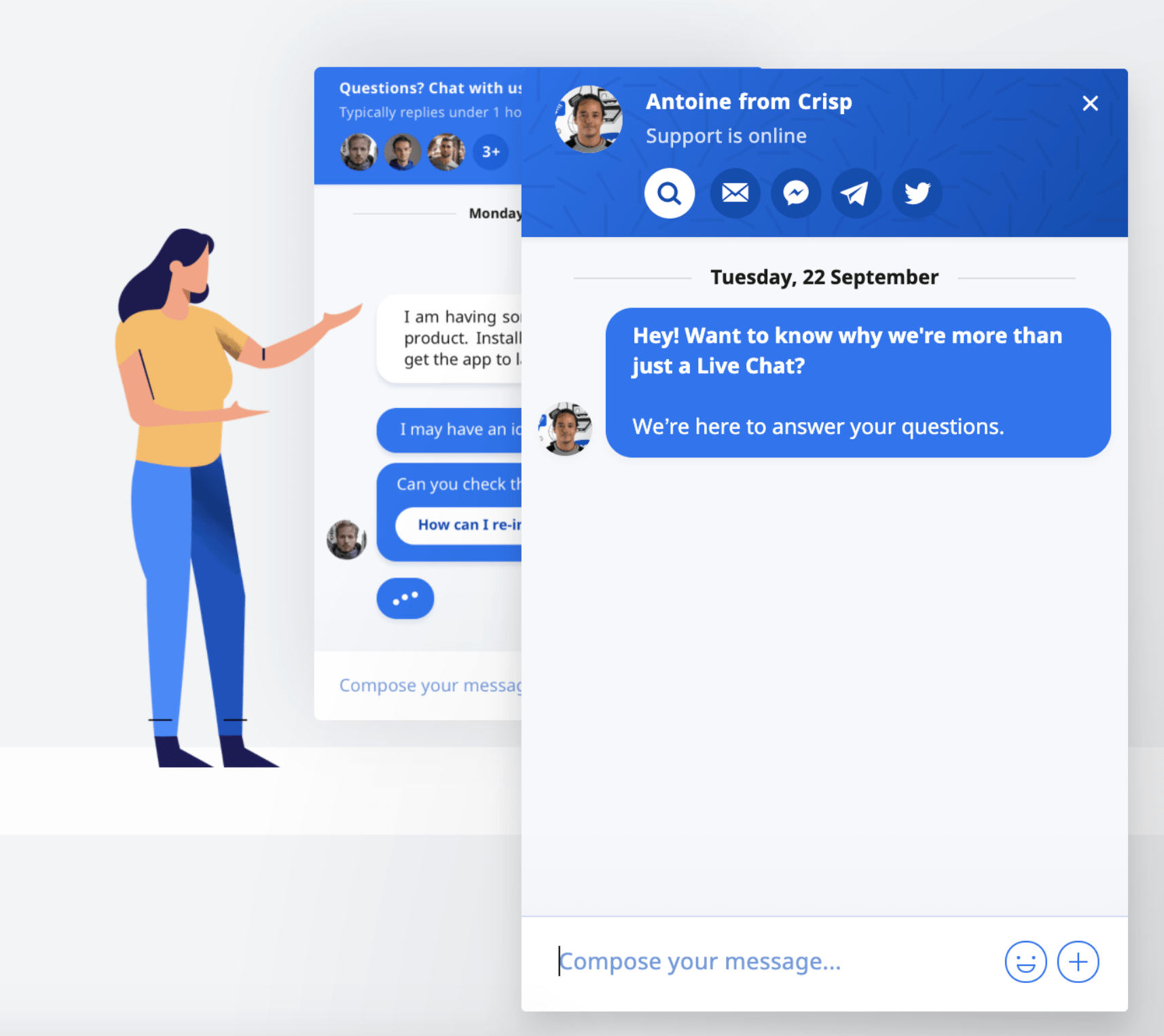
Live chat is designed for immediacy and personalization. It excels when customers need quick clarification, reassurance, or help with a specific situation that cannot be easily generalized.
Shoppers tend to use live chat when they are close to making a decision or when something unexpected happens, such as a payment issue, delivery concern, or customization request. The real-time nature of chat reduces friction and can prevent cart abandonment at critical moments.
However, live chat also requires ongoing resources. Someone must be available to respond quickly, and conversations often address issues that cannot be reused for other customers. This makes live chat powerful, but less scalable than a Q&A section.
Live chat works best when:
Although both Q&A sections and live chat aim to remove uncertainty during the shopping journey, they operate in fundamentally different ways. These differences affect not only how customers interact with your store, but also how information is delivered, reused, and scaled over time.
A Q&A section functions as a shared knowledge hub. Every question and answer becomes part of a growing information library that all shoppers can access. When one customer asks about sizing, materials, compatibility, or delivery timelines, that answer remains visible to future visitors facing the same concern. This makes Q&A inherently cumulative, its value increases over time as more relevant questions are added and refined.
By contrast, live chat is transactional and temporary. Each conversation is typically private and designed to solve one customer’s immediate issue. While it can be extremely effective in the moment, the information exchanged usually disappears once the chat ends, offering little long-term value to other shoppers unless it is manually documented elsewhere.
Live chat excels in speed of response when agents are online. Customers receive tailored answers within seconds, which is especially valuable during checkout or when a purchase decision is nearly finalized. The immediacy creates reassurance and can prevent hesitation from turning into abandonment.
However, a Q&A section offers constant availability rather than instant interaction. Answers are accessible 24/7 without waiting for an agent, regardless of time zone or business hours. For many shoppers, especially those in the research phase, the ability to instantly read existing answers is faster and less disruptive than starting a conversation.
In practice, live chat wins on responsiveness, while Q&A wins on uninterrupted access.
Live chat allows for a high degree of personalization. Agents can adapt responses based on the customer’s order history, location, or specific needs. This is crucial for complex products, custom requests, or troubleshooting scenarios where generic answers fall short.
On the other hand, Q&A sections prioritize consistency and clarity. Every shopper sees the same vetted answer, reducing the risk of conflicting information. This consistency is particularly important for policies, specifications, and expectations where accuracy matters more than personalization.
From a brand perspective, Q&A helps maintain a unified message, while live chat provides flexibility on a case-by-case basis.
Scalability is where the contrast becomes most apparent. A Q&A section scales effortlessly, one well-written answer can serve thousands of customers without increasing support workload. Over time, this significantly reduces repetitive inquiries and frees up support teams to focus on more complex issues.
Live chat, by comparison, scales linearly with demand. More visitors typically mean more conversations, which requires more agents or longer wait times. While automation and chatbots can help, live chat still involves ongoing operational costs.
For growing stores or lean teams, Q&A offers long-term efficiency, while live chat requires careful resource planning.
Q&A sections allow customers to stay in full control of their browsing experience. Shoppers can scan questions, read answers at their own pace, and continue exploring products without interruption. This low-pressure approach aligns well with how many people prefer to shop online.
Live chat, although helpful, introduces an interactive interruption. Even when initiated by the customer, it shifts focus away from browsing and into conversation. This can be beneficial for resolving blockers, but unnecessary interruptions may slow down confident shoppers.
As a result, Q&A supports self-directed exploration, while live chat supports guided intervention.
Another key difference lies in long-term visibility. Q&A content contributes to on-page depth and SEO, especially when questions mirror real customer search queries. Well-structured Q&A sections can improve product page relevance and help attract organic traffic.
Live chat conversations, unless archived and repurposed, offer little lasting discoverability. Their impact is largely confined to the moment of interaction.
This makes Q&A a strategic content asset, while live chat remains a tactical support tool.
Q&A sections tend to influence shoppers earlier in the funnel, when they are comparing products and validating basic information. They reduce uncertainty gradually and build confidence over time.
Live chat has the strongest impact near the point of conversion, where fast reassurance or clarification can directly push a shopper toward completing a purchase.
Understanding this timing difference is crucial when deciding how to prioritize each tool.
In essence, Q&A sections are proactive, scalable, and enduring. They educate, reduce friction quietly, and grow more valuable as your store matures. Live chat is reactive, immediate, and persuasive, stepping in when personal attention is needed most.
Rather than viewing one as better than the other, the comparison reveals that they serve different strategic purposes. When aligned with the right customer intent and funnel stage, each tool strengthens the overall shopping experience in its own way.
If your store sells products that generate similar questions repeatedly, a Q&A section should be your first priority. It creates clarity at scale and empowers customers to help themselves.
Q&A is also better when shoppers may feel hesitant to start a conversation. Many users prefer reading existing answers rather than initiating chat, especially during early research stages.
Choose a Q&A section when your goal is to:
Live chat becomes essential when timing and personalization matter more than scalability. If a shopper is stuck, confused, or about to abandon their cart, immediate assistance can make the difference.
It is also more suitable for complex products, custom orders, or services where needs vary significantly from one customer to another.
Live chat is the right choice when you need to:
Rather than choosing one over the other, many successful stores use Q&A and live chat together. A strong Q&A section handles common questions upfront, while live chat acts as a safety net for edge cases and urgent situations.
This layered approach reduces support pressure while still offering human help when it matters most. Customers get fast answers without friction, and your team can focus on conversations that truly require personal attention.
When implemented correctly, Q&A sections lower the volume of chats, and live chat improves conversions where automation alone is not enough.
Q&A sections and live chat are not competitors, yet they are complementary tools designed for different moments in the customer journey. Q&A sections shine in education, scalability, and long-term value, while live chat excels in immediacy, personalization, and conversion support.
The key is understanding your customers’ intent. Use Q&A to answer what most people ask, and live chat to help when someone needs immediate, tailored support. When used together, they create a smoother, more confident shopping experience that benefits both customers and your business.