New to Shopify? Free trial, then $1/month for your first 3 months. Start free trial →
 Where is your store?
Ryviu works with both – pick yours to continue.








Few moments in the online shopping journey are as sensitive as the final step before payment. At this stage, customers are ready to commit—but their confidence can quickly disappear if unexpected fees appear. Shipping costs, taxes, service charges, or handling fees can feel frustrating when they are introduced too late or explained poorly.
These moments of surprise often lead to cart abandonment, not because the fees are unreasonable, but because they were not communicated clearly. Transparency around additional costs is not just a technical requirement—it is a trust-building opportunity. When businesses communicate fees clearly and early, they transform potential friction into reassurance and confidence.
Customers approach checkout with a clear expectation of what they will pay. When that expectation is disrupted by unexpected charges, it creates a moment of doubt.
This reaction is not only about the money itself. It is about the feeling of being misled or unprepared. Even small fees can feel significant when they appear suddenly.
Hidden or unclear fees often lead to:
The issue is not necessarily the presence of additional costs, but the way they are introduced.
When fees are transparent from the beginning, customers are more likely to accept them as part of the overall value.
Customers do not expect every price to be all-inclusive, but they do expect clarity. They want to understand what they are paying for and why.
Different types of fees carry different expectations. Shipping fees may be accepted as standard, while unexpected service charges may require more explanation.
Understanding these expectations helps businesses communicate more effectively.
Customers typically expect:
When these expectations are met, the checkout process feels predictable and trustworthy.
This predictability reduces anxiety and increases confidence.
One of the most effective ways to reduce friction is to introduce additional fees before the checkout stage. Waiting until the final step creates unnecessary tension.
Instead, fees can be communicated gradually throughout the shopping journey.
Early communication can occur on:
By the time customers reach checkout, there should be no surprises.
This approach allows customers to mentally prepare for the total cost.
It also reinforces transparency at every stage of the experience.
Clarity is not just about visibility—it is also about understanding. Customers should be able to quickly grasp what each fee represents.
Technical or vague terms can create confusion. Simple, descriptive language helps customers feel informed rather than overwhelmed.
Effective fee descriptions often include:
For example, instead of a generic label, a fee might be explained in terms of logistics, processing, or regulatory requirements.
When customers understand the reason behind a charge, they are more likely to accept it.
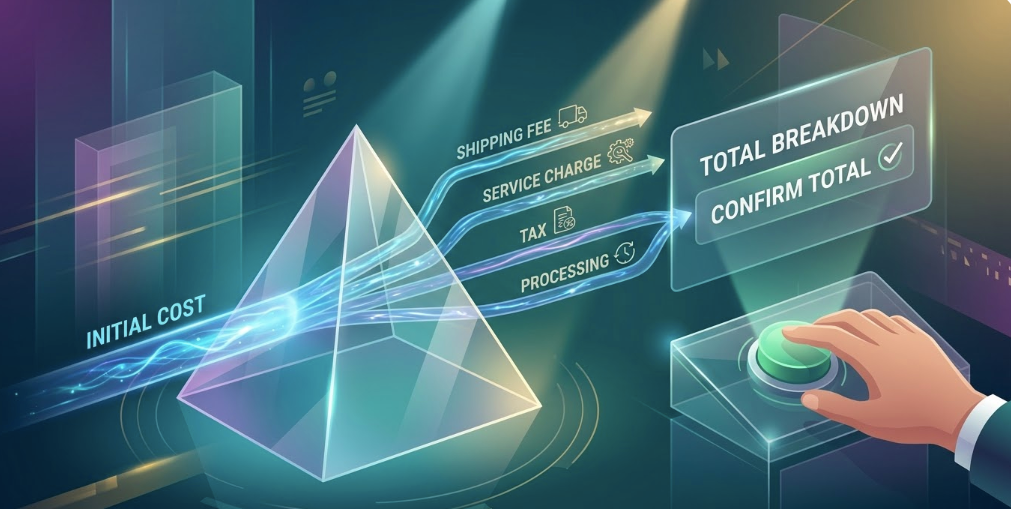
A detailed cost breakdown helps customers see exactly how the total price is calculated. This transparency reduces uncertainty and builds trust.
Instead of presenting a single final number, businesses can show individual components.
A clear breakdown might include:
This structure allows customers to evaluate each element separately.
It also demonstrates that the business is not hiding any information.
Transparency in pricing reinforces credibility and professionalism.
As customers interact with the checkout process, costs may change based on selections such as shipping methods or delivery locations.
Real-time updates ensure that customers always see accurate information.
Dynamic pricing feedback can include:
These updates create a responsive and interactive experience.
Customers feel more in control because they can see how their choices affect the total cost.
This sense of control reduces frustration and increases satisfaction.
Customers often have similar questions about additional costs. Addressing these proactively can prevent confusion and hesitation.
Instead of waiting for customers to seek clarification, businesses can provide answers directly within the shopping experience.
Common questions may include:
Providing clear answers to these questions builds confidence.
It also reduces the need for customer support interactions.
When customers feel informed, they are more likely to complete their purchase.
Design plays a crucial role in how customers perceive pricing information. Even clear explanations can be overlooked if they are not presented effectively.
Visual hierarchy helps highlight important details and guide attention.
Effective design techniques include:
These elements make pricing information easier to scan and understand.
Good design ensures that clarity is not only present but also accessible.
Consistency across the shopping journey is essential for maintaining trust. Pricing information should remain aligned from the product page to the final payment step.
Inconsistencies, even small ones, can create doubt.
Consistency involves:
When customers encounter consistent information, they feel reassured.
This consistency reinforces the perception of reliability and honesty.
Clear communication of additional fees is not just about avoiding problems—it can also be a strategic advantage.
In a market where many businesses still struggle with transparency, clarity stands out.
Customers appreciate brands that are open and straightforward.
Benefits of transparent fee communication include:
Transparency can become part of the brand identity.
It signals respect for the customer and confidence in the value offered.
Customer expectations evolve, and businesses must adapt their communication strategies accordingly.
Feedback and data can provide valuable insights into how pricing information is perceived.
Continuous improvement may involve:
This iterative approach ensures that communication remains effective.
It also demonstrates a commitment to improving the customer experience.
Communicating additional fees clearly before payment is a critical part of building trust in eCommerce. By introducing costs early, using simple and transparent language, providing detailed breakdowns, and ensuring consistency throughout the shopping journey, businesses can eliminate uncertainty and reduce friction. Real-time updates and thoughtful design further enhance clarity, while proactive answers to common questions help customers feel informed and confident.
Rather than being a source of frustration, additional fees can become an opportunity to demonstrate honesty and professionalism. When customers understand exactly what they are paying for, they are far more likely to complete their purchase—and return with confidence in the future.