New to Shopify? Free trial, then $1/month for your first 3 months. Start free trial →
 Where is your store?
Ryviu works with both – pick yours to continue.









Custom and personalized products are powerful drivers of emotional connection and brand differentiation. Whether it is engraved jewelry, made-to-order apparel, or tailored digital products, these items often carry higher perceived value for customers. They also create a sense of uniqueness that standard products cannot replicate.
However, these advantages come with operational and policy challenges. Businesses must carefully manage expectations while protecting themselves from losses. A well-designed return policy becomes essential to maintaining both trust and profitability.
Custom products differ fundamentally from mass-produced items. Each piece is created based on individual customer input, making it difficult to standardize outcomes. This uniqueness increases both perceived value and potential risk.
Customers often feel more emotionally invested in personalized products. As a result, dissatisfaction can feel more personal, even when the issue is minor. This makes communication and expectation-setting even more critical.
To fully understand how return policies should be structured, it is important to recognize the defining characteristics of these products:
Applying a standard return policy to custom products often creates more problems than it solves. Traditional policies assume items can be resold or restocked, which is rarely possible in this case. This mismatch can quickly lead to financial losses.
Customers may also feel confused if the policy does not reflect the nature of the product. A generic return policy can appear misleading when exceptions suddenly apply. This inconsistency damages trust and reduces conversion rates.
To avoid these issues, businesses need to rethink their approach in a more tailored way:
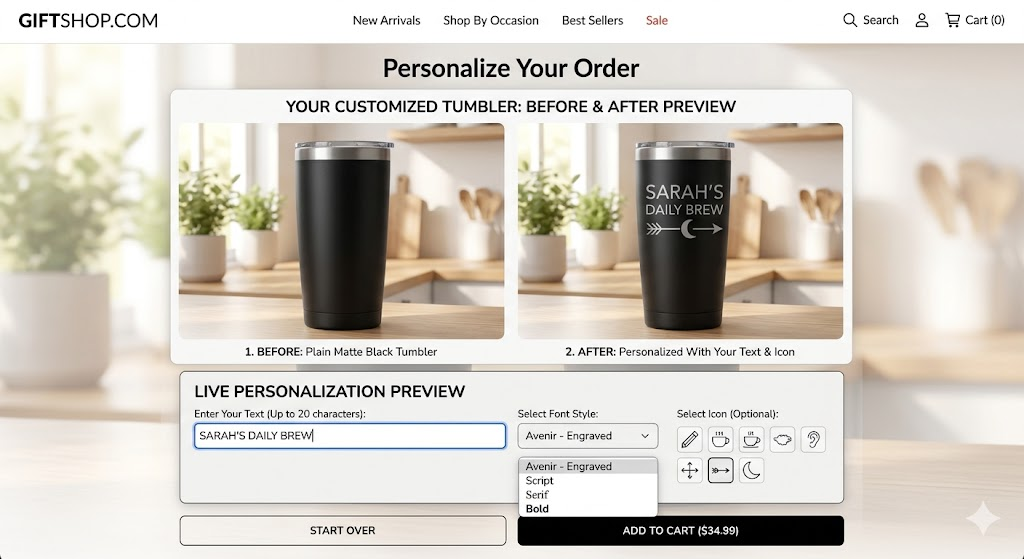
The most effective way to reduce returns is to prevent misunderstandings before they happen. Clear communication before purchase helps customers make informed decisions. It also reduces the likelihood of disputes after delivery.
Providing accurate product descriptions is essential. Customers should know exactly what they will receive, including possible variations. Visual clarity plays a major role in shaping expectations.
To ensure clarity, businesses should implement the following practices:
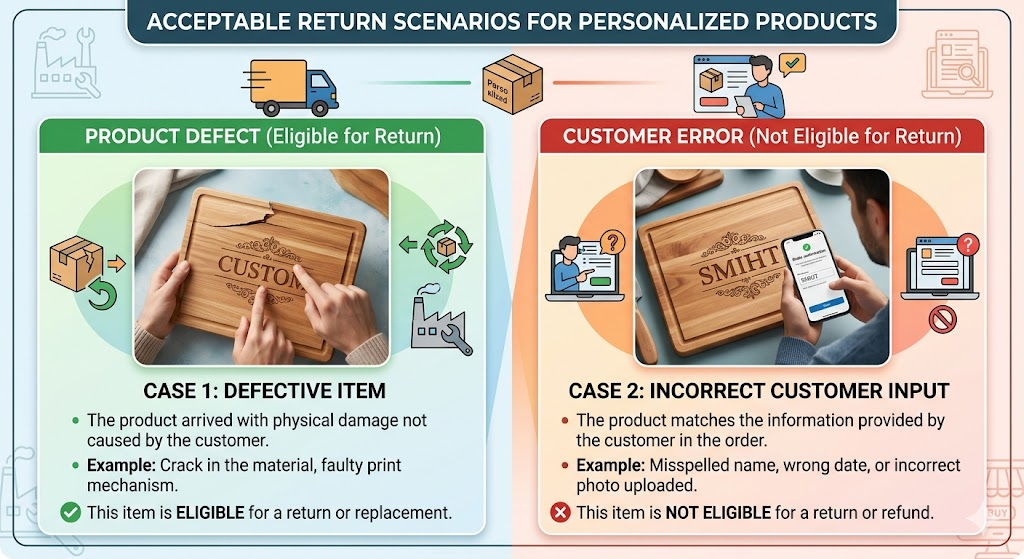
Even with restrictions, customers still expect fairness. A policy that completely denies all returns can discourage purchases. Instead, businesses should clearly define when returns are acceptable.
This approach reassures customers that they are protected in reasonable situations. It also helps reduce disputes by setting clear boundaries. When expectations are defined, trust becomes easier to maintain.
To create a balanced policy, consider these acceptable return scenarios:
Determining responsibility is one of the most challenging aspects of return policies. Customers may input incorrect information, leading to dissatisfaction with the final product. Businesses must decide how to handle these situations fairly.
Being too strict can negatively impact customer loyalty. Being too lenient can reduce profitability and encourage misuse. A balanced approach is necessary to maintain both trust and sustainability.
To manage responsibility effectively, businesses can:
Since returns are not always feasible, offering alternatives can improve customer satisfaction. These options help resolve issues without requiring a full refund. Understanding when to offer store credit versus refunds is also essential, as explored in this guide on smart return incentives.
Customers are more likely to remain loyal when they feel supported. Offering creative solutions can turn negative experiences into positive ones. This approach strengthens long-term relationships.
Instead of traditional returns, consider offering:
Transparency is essential in building customer confidence. When policies are clearly communicated, customers are more likely to accept limitations. Hidden terms often lead to frustration and complaints. A well-designed return policy does more than clarify expectations. It directly influences whether customers come back, as explained in this analysis of the impact of return policy on customer loyalty.
A transparent policy should be easy to understand and accessible. It should guide customers through what to expect at every stage. Clarity reduces uncertainty and improves overall satisfaction.
To improve transparency, businesses should:

Return policies are only one part of the customer experience. Reviews play a significant role in shaping buyer expectations. They provide real insights into product quality and accuracy.
When customers see authentic feedback, they feel more confident in their purchase. Reviews act as social proof that supports policy limitations. This reduces hesitation and builds trust.
Tools like the Ryviu review app can help businesses leverage this advantage effectively:
Customer reviews do more than build trust. They actively help reduce return rates by setting realistic expectations. Buyers can see what others received and adjust their expectations accordingly. However, not all review strategies work the same way. Businesses selling custom or one-time products should focus on post-purchase feedback, while subscription models require continuous review loops, as explained in this guide on review systems for subscription vs. one-time products.
This is especially important for personalized items, where variations are normal. Real customer experiences provide clarity that product descriptions alone cannot achieve. This reduces surprises after delivery.
By using a review platform like Ryviu, businesses can:
Balancing customer satisfaction with profitability is a key challenge. A policy that is too strict may reduce conversions. A policy that is too flexible may lead to losses.
The goal is to create a system that supports both the business and the customer. This requires thoughtful planning and continuous adjustment. Flexibility should be guided by clear boundaries.
To achieve this balance, businesses can:
Return policies must also comply with local regulations. Consumer protection laws may still apply even to personalized products. Businesses need to understand their legal obligations.
Failing to comply can result in penalties and loss of trust. Clear legal alignment ensures both protection and credibility. It also prevents misunderstandings with customers.
To stay compliant, businesses should:
A return policy should evolve with your business. Customer expectations and market conditions change over time. Regular updates ensure that your policy remains effective.
Feedback is a valuable source of improvement. Customer reviews provide insights into common issues and expectations. This helps businesses refine their approach.
To continuously improve your policy, consider:
Return policies for custom and personalized products are more complex than standard policies. However, they also offer an opportunity to build stronger relationships with customers. Clear communication and fair rules are essential to success.
By combining transparent policies with authentic reviews, businesses can reduce uncertainty and increase trust. Tools like Ryviu make it easier to showcase real experiences and improve decision-making. This creates a more confident and satisfied customer base.
In the end, a well-designed return policy does more than handle problems. It prevents them, builds credibility, and turns operational challenges into a competitive advantage.