New to Shopify? Free trial, then $1/month for your first 3 months. Start free trial →
 Where is your store?
Ryviu works with both – pick yours to continue.








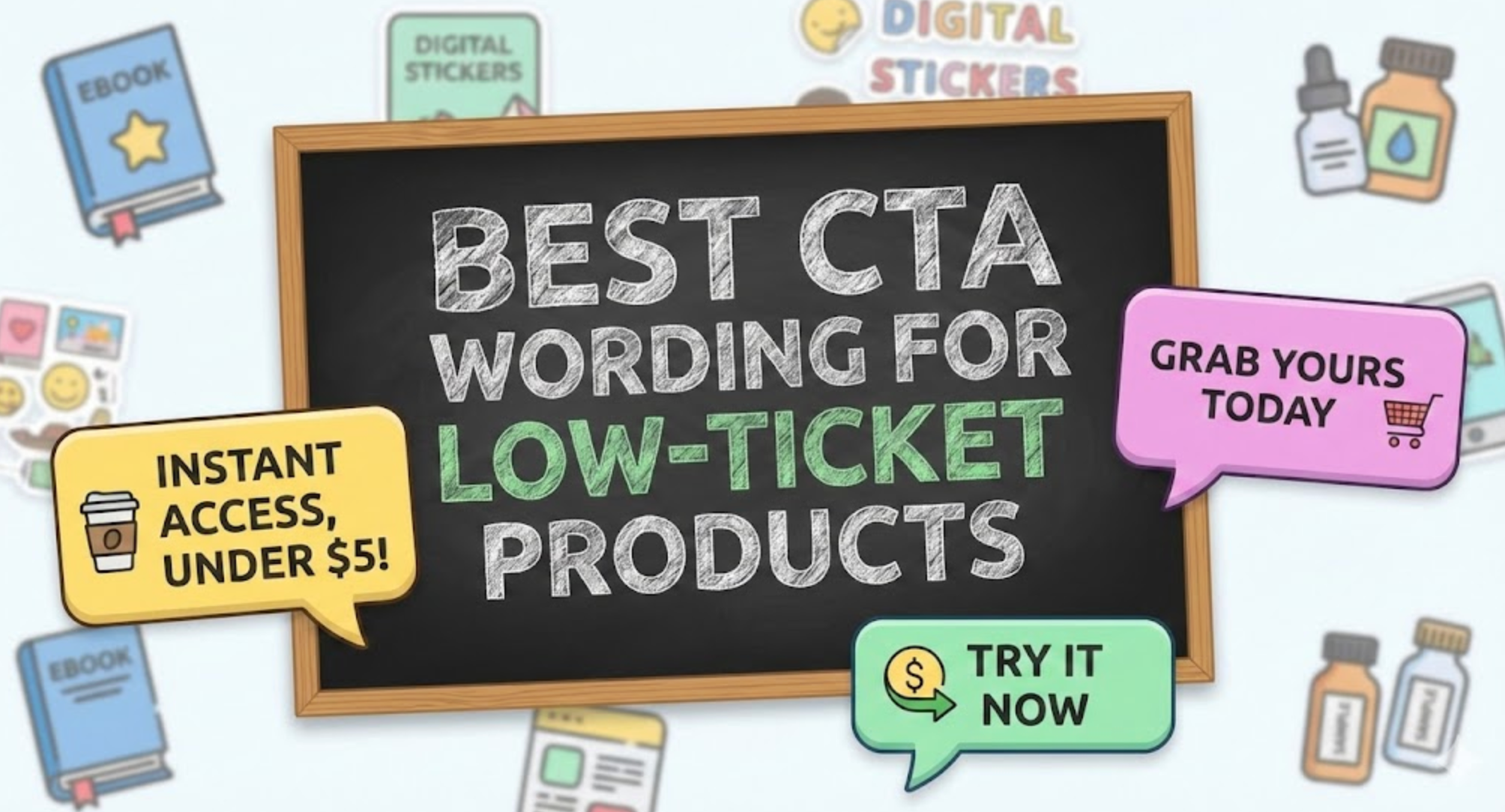
Low-ticket products, typically priced under $20 or $30, sell on speed, simplicity, and impulse. Shoppers browsing these products are rarely planning a long comparison process; instead, they want reassurance, clarity, and a quick path to checkout. Because the financial risk is low, hesitation usually comes from friction rather than price itself. This makes CTA (Call-to-Action) wording especially important.
The words inside your CTA button act as the final nudge in the buying journey. When phrased correctly, they reduce doubt, reinforce value, and make the next step feel effortless. When phrased poorly, they can slow users down, even for a $5 product.
In this article, we’ll explore the best CTA wording strategies for low-ticket products, explain why they work, and show practical examples you can apply across product pages, collections, carts, and checkout flows.
Low-ticket purchases are often emotional, fast, and convenience-driven. Shoppers are not searching for deep justification; they are looking for a reason not to abandon the page. As a result, even small moments of uncertainty can interrupt momentum.
At this price point, friction feels larger than it should. Long, formal, or unclear CTAs can make the action seem more serious than the product itself. That mismatch often leads to hesitation.
The main goal of CTA wording for low-ticket products is to keep momentum moving forward. Rather than asking users to make a major commitment, your CTA should feel like a simple, low-effort step.
Key psychological factors include:
Once these fundamentals are in place, wording becomes a powerful conversion lever.

Low-ticket shoppers are rarely in a formal mindset. They are scrolling quickly, often on mobile, and responding to cues that feel natural and human. Corporate or overly technical language can feel out of place and slow the decision process.
Action-oriented, conversational CTAs align better with how users think in the moment. They communicate movement without pressure and guide shoppers forward without sounding demanding.
Effective action-driven CTAs feel fast, friendly, and familiar. They clearly describe what happens next without adding unnecessary weight to the decision.
To see how this looks in practice, the following CTA phrases are commonly used to encourage quick, low-friction purchases:
While tone is important, reassurance often plays an equally strong role.
One of the biggest advantages of low-ticket products is minimal financial risk, but shoppers don’t always internalize that automatically. A subtle reminder at the CTA level can help them justify the purchase instantly.
By reinforcing affordability directly in your CTA, you remove the need for extra mental calculation. This is especially helpful for users who are skimming rather than reading every detail.
Risk-reducing language reframes the action from a purchase into an easy decision. It turns hesitation into acceptance.
To highlight low risk at the moment of action, CTA wording like the following tends to work especially well:
Once risk feels low, shoppers are more receptive to immediate rewards.

Low-ticket products often promise quick wins, entertainment, convenience, or a fast solution to a small problem. CTA wording should reflect that immediacy rather than focusing solely on the act of purchasing.
When users associate clicking with instant benefit, they are less likely to overthink the decision. This is especially effective for digital products or fast-shipping offers.
Benefit-driven CTAs shift attention from paying to receiving. The action becomes rewarding rather than transactional.
This approach becomes clearer when you look at CTA wording examples such as:
Supporting microcopy like “No waiting” or “Instant delivery” can further strengthen these CTAs.
Not every shopper is ready to buy immediately, even when the price is low. Pushing too hard at this stage can increase resistance rather than conversions.
Soft CTAs offer a lower-pressure alternative. They allow users to explore while still moving forward in the funnel.
Soft CTAs lower psychological barriers while preserving momentum. They are especially effective for new visitors or unfamiliar products.
In situations where users need reassurance before purchasing, soft CTAs like the following often perform well:
Once users feel informed, transitioning to a stronger CTA becomes more natural.
Urgency can significantly improve conversions for low-ticket products, but it must feel genuine. Overly aggressive urgency can feel manipulative when the purchase value is small.
Light, honest urgency nudges users forward without creating pressure. It works best when it aligns with real constraints like stock levels or timing.
Subtle urgency feels helpful rather than forceful. It reminds users to act while maintaining trust.
To encourage timely action without overwhelming users, CTA wording such as the following is often effective:
When urgency is authentic, it strengthens confidence instead of undermining it.
CTA wording should evolve as users move through the funnel. What works on a product page may not work at checkout, where expectations and intent are different.
Context-aware CTAs help users feel oriented and confident. Each step should feel like a logical continuation rather than a sudden push.
Matching CTA wording to intent reduces friction and confusion. It keeps users focused on the next clear action.
A typical progression might look like this:
This gradual shift in language aligns with how user intent strengthens over time.
Because low-ticket products rely on volume, even small wording changes can have a meaningful impact on revenue. CTA testing is one of the fastest ways to uncover performance gains.
Instead of redesigning entire pages, start by testing variations that emphasize price, speed, or benefits. These tests are easier to run and often produce clearer insights.
In many cases, CTA wording changes outperform major design updates.
Common tests include:
Testing should prioritize mobile traffic, where most low-ticket purchases occur.
The best CTA wording for low-ticket products is simple, reassuring, and benefit-focused. Rather than pushing commitment, effective CTAs make buying feel easy, quick, and low risk. By using casual language, emphasizing affordability, highlighting instant gratification, and matching wording to context, you create a smoother path to conversion.
Low-ticket success is ultimately about momentum. When your CTA wording supports that momentum instead of interrupting it, shoppers are far more likely to click, continue, and complete their purchase.