New to Shopify? Free trial, then $1/month for your first 3 months. Start free trial →
 Where is your store?
Ryviu works with both – pick yours to continue.








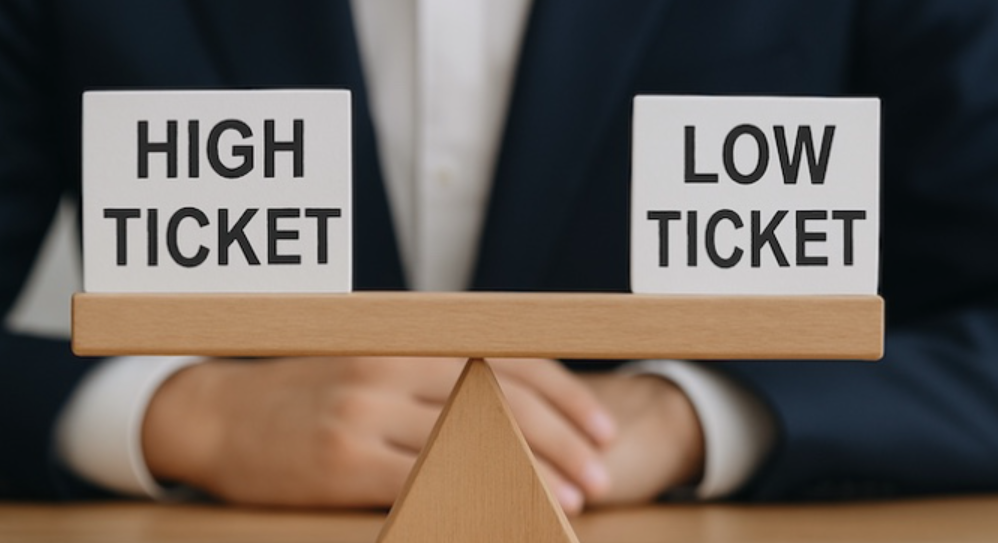
One of the first strategic decisions every dropshipping entrepreneur faces is whether to sell high-ticket or low-ticket products. On the surface, the difference seems simple: expensive items versus affordable ones. In reality, this choice affects nearly every part of your business, from marketing strategy and cash flow to customer support and long-term scalability.
Many stores struggle not because dropshipping itself is flawed, but because the product pricing model doesn’t match their resources, experience level, or growth goals. This article breaks down high-ticket and low-ticket dropshipping in depth, exploring their advantages, drawbacks, and real-world trade-offs so you can choose the model that fits your business—not just what sounds attractive on paper.
High-ticket dropshipping typically involves products priced anywhere from a few hundred to several thousand dollars, such as furniture, home fitness equipment, electronics, or specialized tools. Low-ticket dropshipping focuses on inexpensive items, often priced under $50, including accessories, impulse buys, or everyday consumer goods.
The price tag, however, is only the surface-level difference. These two models attract different types of customers, require different levels of trust, and demand very different operational approaches. Choosing between them isn’t about which is “better,” but about which aligns with your capabilities, risk tolerance, and long-term vision.
High-ticket dropshipping appeals to many entrepreneurs because of its profit potential per order. One sale can generate the same revenue as dozens of low-ticket transactions. This makes the business feel simpler and more controlled, especially when managing inventory, ads, and fulfillment.
Low-ticket dropshipping, on the other hand, relies on volume. Individual margins are often slim, but consistent daily sales can add up to meaningful revenue. The challenge is maintaining enough traffic and conversion efficiency to make those small margins worthwhile.
When you look deeper, the trade-off becomes clear:
Advertising behaves very differently for high-ticket and low-ticket stores. High-ticket dropshipping can absorb higher customer acquisition costs because the revenue per sale is larger. Spending $100 to acquire a customer is acceptable if the order value is $1,000 or more.
Low-ticket dropshipping doesn’t have this luxury. Ads must be highly efficient, with low costs per click and strong conversion rates. Any increase in ad costs can quickly erase profits.
As you go deeper, you’ll notice:
Low-ticket products benefit from impulse behavior. Customers don’t need to think long or do extensive research before buying a $20 item. This leads to higher conversion rates but lower emotional commitment.
High-ticket purchases trigger caution. Buyers compare alternatives, read reviews, and often need reassurance before committing. Conversion rates are lower, but buyer intent is stronger once trust is established.
This difference affects everything from page design to copywriting:
Trust is important in all eCommerce, but it becomes non-negotiable in high-ticket dropshipping. Customers expect professional branding, clear policies, responsive support, and detailed product information.
Low-ticket stores can succeed with simpler branding, but they still face trust issues when scaling. As order volume increases, even small trust gaps can lead to higher chargebacks and refunds.
When trust breaks down:
High-ticket customers expect white-glove treatment. They may ask pre-sale questions, request customization details, or follow up multiple times after purchase. Shipping delays or product issues carry higher emotional weight.
Low-ticket dropshipping typically involves fewer support interactions per order, but higher overall ticket volume means more total messages. Automation becomes essential to keep costs under control.
Over time, support demands differ:
High-ticket products are often large, fragile, or complex to ship. This increases the risk of damage, delays, and supplier errors. When something goes wrong, the financial impact is larger.
Low-ticket products are easier to ship and replace, but they’re more vulnerable to loss, customs issues, and inconsistent quality when sourced cheaply.
Key differences include:
High-ticket dropshipping can generate impressive revenue spikes, but cash flow can be uneven. Refunds, chargebacks, or delayed payouts can disrupt operations if reserves are limited.
Low-ticket dropshipping offers more predictable daily revenue, especially with repeat purchases. While margins are smaller, cash flow stability can be easier to manage once systems are optimized.
From a financial perspective:
High-ticket dropshipping scales by improving conversion rates, trust, and marketing efficiency rather than increasing volume. Growth is slower but often more controlled.
Low-ticket dropshipping scales through automation, upsells, bundles, and repeat customers. It can grow rapidly but becomes fragile if ad costs rise or suppliers fail.
As businesses mature:
High-ticket dropshipping carries higher risk per transaction. A single dispute can erase profits from multiple sales. However, fewer transactions mean fewer total points of failure.
Low-ticket dropshipping spreads risk across many small transactions. Individual losses matter less, but operational inefficiencies can quietly drain profits over time.
Understanding risk means recognizing:
There is no universally “better” option between high-ticket and low-ticket dropshipping. The right choice depends on your experience, budget, risk tolerance, and willingness to build systems.
High-ticket dropshipping suits entrepreneurs who value depth over volume and can invest in branding, support, and trust-building. Low-ticket dropshipping fits those who excel at optimization, automation, and testing at scale.
Before deciding, consider:
High-ticket vs. low-ticket dropshipping represent two very different ways to build an online business. High-ticket models offer larger profits per sale, deeper customer relationships, and slower but more deliberate growth, while low-ticket models rely on speed, volume, and system efficiency to succeed.
Neither path is inherently easier or safer. The real advantage comes from choosing a model that aligns with your strengths and building it intentionally. When expectations, systems, and pricing strategy work together, dropshipping becomes not just viable—but sustainable in the long run.