New to Shopify? Free trial, then $1/month for your first 3 months. Start free trial →
 Where is your store?
Ryviu works with both – pick yours to continue.








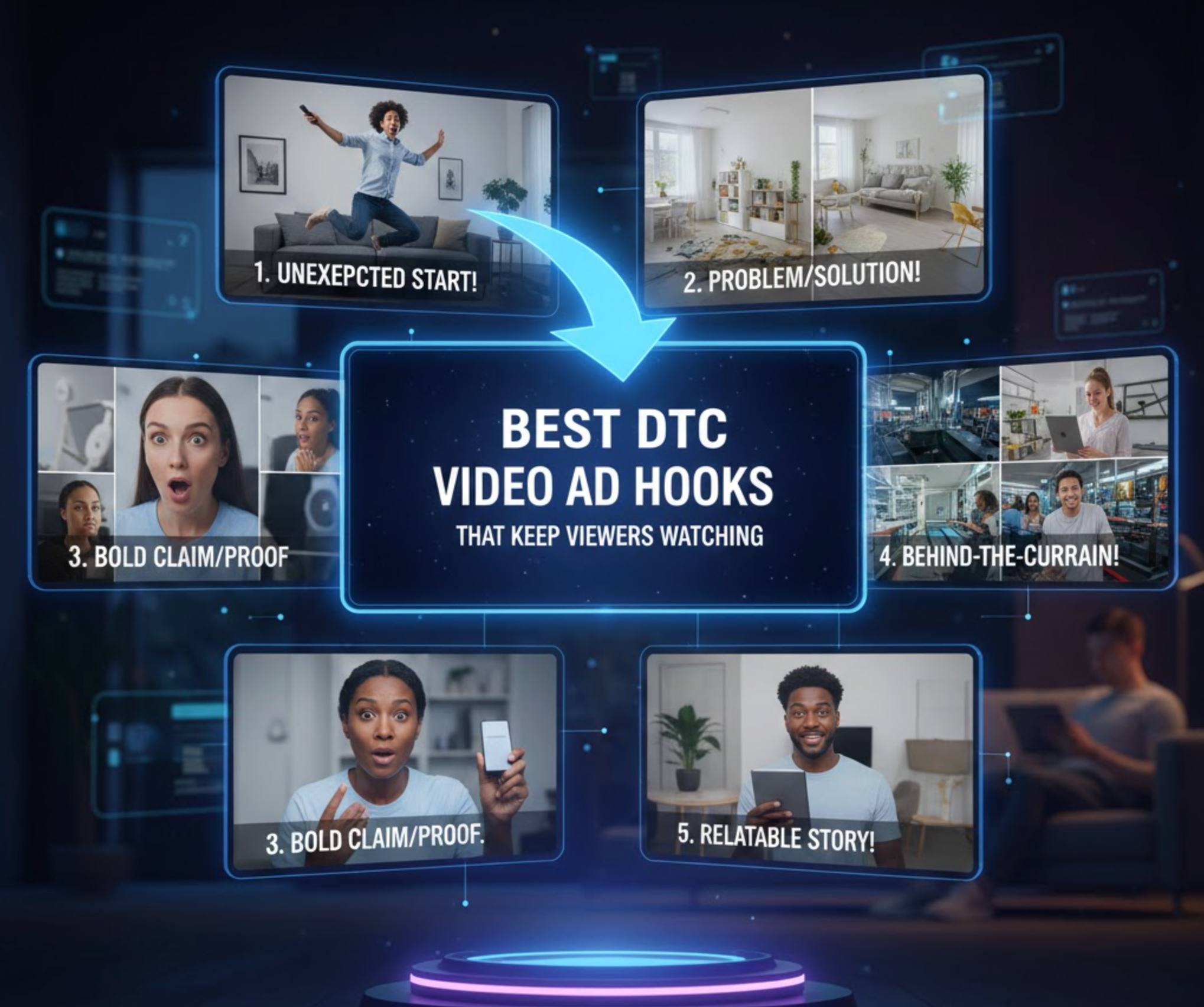
In today’s fast-moving digital world, DTC video ads have become a critical tool for grabbing attention and driving sales. Yet, the difference between a video that converts and one that’s ignored often comes down to the first few seconds. That’s where a strong hook comes in, it immediately stops the scroll, sparks curiosity, and encourages viewers to continue watching. Below, we explore the most effective DTC video ad hooks, complete with examples and practical advice on using them to keep viewers engaged.
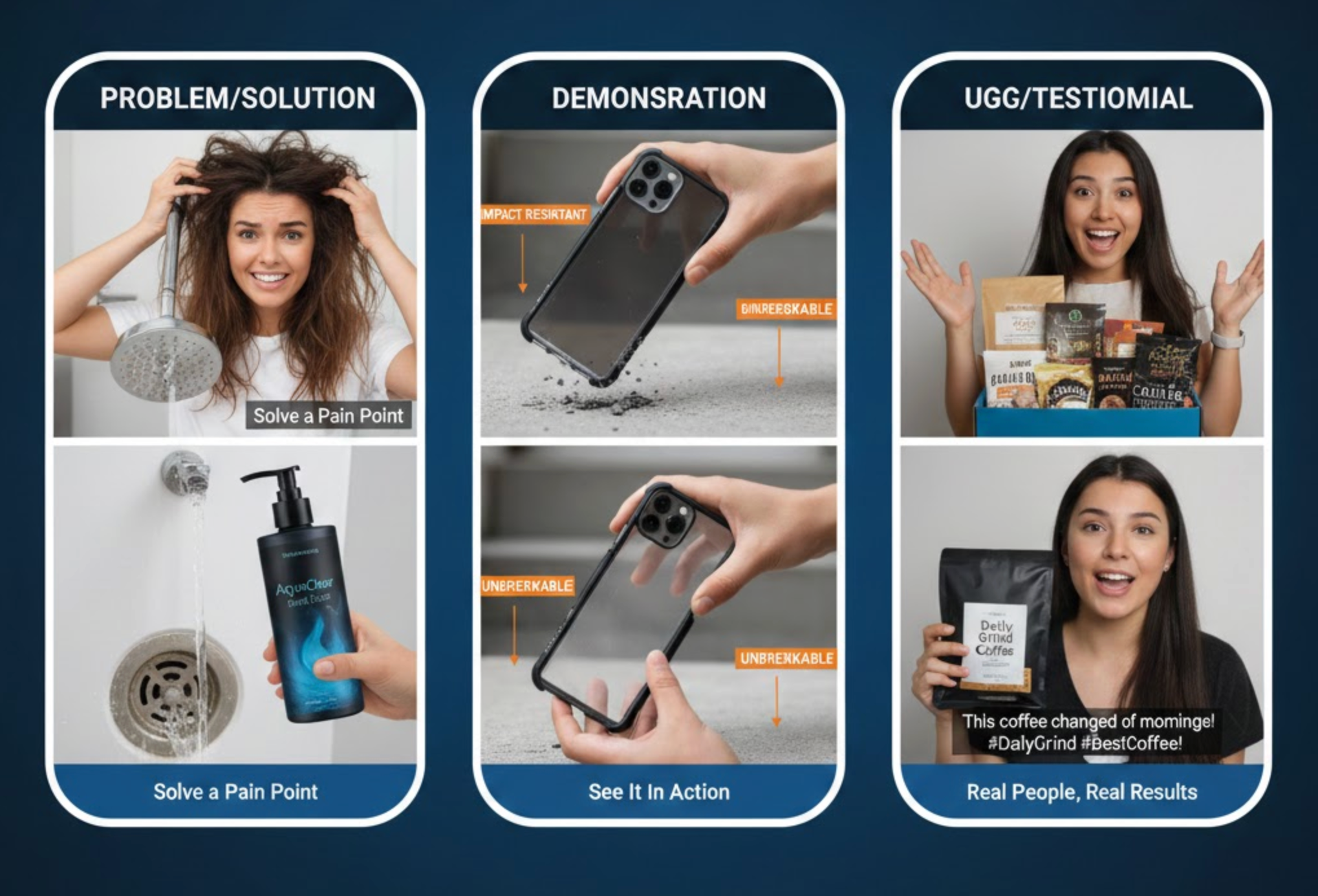
Before diving into examples, it’s important to understand what a video ad hook is. A hook is the opening segment of your video, usually the first 1–5 seconds, that captures attention, sparks curiosity, and compels viewers to keep watching.
Hooks can be visual, auditory, emotional, or information-based, but they all share the same goal: stop the scroll and engage the audience immediately. Without a strong hook, even the most polished video or revolutionary product can fail to generate results.
Key characteristics of a strong DTC video ad hook:
A pattern interrupt captures attention by breaking expectations, jolting viewers out of their usual scrolling behavior. Humans instinctively notice anything unusual, making this type of hook highly effective for immediate engagement. It works especially well when paired with a subtle hint of the product or its benefit to maintain curiosity.
Examples:
Tips: Follow up quickly with a demonstration or explanation so viewers understand why the moment is relevant. This keeps curiosity alive and guides them naturally toward the product story.
A pain point hook instantly connects by presenting a problem the viewer has likely experienced. People stop when they see themselves reflected in an ad because it signals relevance and builds empathy, creating an immediate emotional connection. This type of hook works best when paired with a promise of a solution, making viewers curious about how the problem can be solved.
Examples:
Tips: After showing the problem, hint at the solution without giving it away all at once. Make viewers feel understood, then naturally reveal your product as the fix.
Transformation hooks leverage the brain’s attraction to change by showing a stark contrast between a “before” and “after.” People naturally want to see how results are achieved, and teasing the “after” creates suspense that keeps viewers engaged. This approach is particularly effective for products that deliver visible improvements, such as skincare, cleaning tools, or fitness items.
Examples:
Tips: Let the visual contrast do most of the work, then introduce the product as the reason for the transformation. Keep explanations concise and visually compelling to maintain engagement.
Bold claims immediately grab attention because they spark curiosity and provoke skepticism. Viewers naturally want to verify if the statement is true, which encourages them to keep watching. Pairing the claim with a demonstration or testimonial makes it credible and turns initial curiosity into engagement and trust.
Examples:
Tips: Make sure to support the claim with proof, whether a demonstration, before/after, or user testimonial, so curiosity turns into confidence in your product. Keep the pacing quick to maintain attention.
Some viewers want instant clarity about the product’s value, and showing it in action immediately provides that. Demonstrating the product upfront removes skepticism and shows its practical benefit in a way that’s easy to understand. This type of hook works well for products with visible, tangible results that can be demonstrated in seconds.
Examples:
Tips: Focus on clarity and impact, show exactly what the product does and how quickly it works. Keep the demonstration visually obvious so viewers instantly grasp its usefulness.
Unboxing and first-reaction hooks grab attention through authenticity and relatability. Viewers enjoy seeing real people interact with the product, and genuine reactions feel trustworthy. This approach works especially well on social platforms that favor UGC-style content, where viewers value authentic experiences over polished advertising.
Examples:
Tips: Emphasize natural reactions and highlight small, exciting details. This approach makes the product feel tangible and helps viewers imagine using it themselves.
Opening with a surprising or shocking statistic draws immediate attention because it delivers unexpected information. People naturally want to understand context and relevance, which keeps them watching. This hook is especially useful for products that solve common, overlooked problems.
Examples:
Tips: Keep the statistic clear and relatable, then quickly connect it to your product as the solution. A brief visual or demonstration can reinforce the point and maintain curiosity.
Challenges and tests engage viewers through suspense, as humans naturally want to see whether a product can meet a claim. By teasing a result that may be surprising, you create a sense of curiosity that encourages viewers to watch until the end. This type of hook works best for products with a measurable or visible outcome.
Examples:
Tips: Show the stakes quickly and make the outcome satisfying. Use the test to highlight a unique feature or benefit that differentiates your product.
This hook leverages curiosity and self-reflection by showing a common mistake and then revealing the correct approach using your product. People enjoy learning better ways to do things, making this hook highly engaging. It’s especially effective for instructional or problem-solving products.
Examples:
Tips: Make the contrast obvious and relatable, then show how your product simplifies the right method. Highlight ease, speed, or effectiveness to keep viewers interested.
POV-style hooks immerse viewers in the experience, creating a sense of personal connection with the product. When done well, it feels like the video is speaking directly to them, which increases engagement and retention. This approach works particularly well for fashion, beauty, lifestyle, and pet products.
Examples:
Tips: Keep the perspective authentic and relatable. Let viewers feel like they’re experiencing the benefit firsthand, and reinforce it with a brief demonstration or visual highlight.
Reacting to reviews, comments, or user-generated content makes the ad feel conversational and authentic. Viewers enjoy seeing real reactions because it creates a sense of participation and trust. This hook works particularly well on platforms like TikTok or Instagram, where reaction and duet content are popular.
Examples:
Tips: Keep reactions expressive but genuine, and use them as a bridge to showcase the product. Showing the solution after a reaction reinforces credibility and value.
Unexpected or trending sounds capture attention even when viewers aren’t fully looking at the screen. Audio hooks can interrupt scrolling and create curiosity, especially when paired with eye-catching visuals. This approach is particularly effective on mobile-first platforms where sound plays a key role in engagement.
Examples:
Tips: Pair the sound with clear visuals or a product demonstration. Use audio cues to enhance the narrative and guide viewers’ attention naturally.
In DTC video advertising, the first few seconds of your video are the most valuable, and a strong hook can make all the difference between a scroll and a conversion. By using hooks that grab attention, spark curiosity, and immediately connect with your audience, whether through pattern interrupts, relatable pain points, shocking statistics, or authentic reactions, you can keep viewers engaged and guide them naturally toward your product.
The key is to choose hooks that align with your audience and product, test variations, and continuously refine based on performance. When executed well, compelling hooks not only capture attention but also build trust, showcase value, and drive real results for your brand. Mastering the art of DTC video hooks ensures that every second of your content works to grow engagement, loyalty, and sales.