New to Shopify? Free trial, then $1/month for your first 3 months. Start free trial →
 Where is your store?
Ryviu works with both – pick yours to continue.








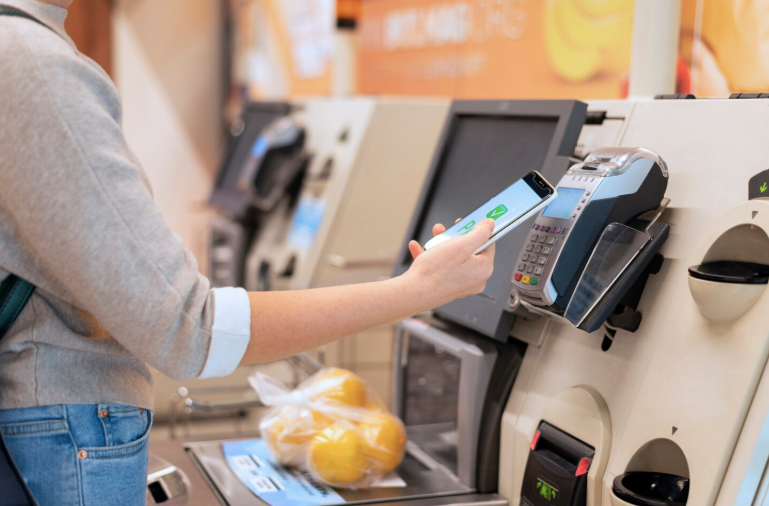
Choosing the right Point of Sale (POS) system in 2026 isn’t just about processing transactions — it’s about selecting a central hub that streamlines your operations, supports growth, enhances customer experiences, and ties together inventory, sales, analytics, and payments. Today’s small business owners face an ever-evolving landscape where mobile payments, omnichannel selling, advanced reporting, and AI-assisted insights are becoming critical features rather than luxury add-ons.
In this comprehensive guide, we’ll explore 10+ of the best POS systems for small businesses in 2026, explain why each stands out, and offer deeper analysis to help you match your business needs with the right technology.
Before diving into specific solutions, it’s crucial to understand what differentiates a great POS system from an average one. A modern POS should go far beyond simple checkout functions. It needs to provide seamless integration across sales channels, whether in-store, online, or mobile. Real-time inventory tracking and reporting help prevent stockouts and overstocks, while customer relationship capabilities like loyalty programs and purchase history tracking boost repeat business.
Advanced POS platforms now leverage AI and predictive analytics to help business owners forecast sales trends, optimize staffing, and manage peak times more effectively. Connectivity with accounting, payroll, and marketing tools further ensures that the POS becomes the backbone of your business operations rather than just a cash register.
Square POS continues to dominate the small business POS landscape in 2026 thanks to its blend of affordability, ease of use, and expanding feature set. Originally known for its mobile card reader, Square has grown into a comprehensive ecosystem that supports everything from payment processing and inventory management to employee management and online selling.
What makes Square particularly appealing to small businesses is its low barrier to entry: you can start with no monthly subscription and pay only per transaction while still accessing essential tools like sales reports and customer management interfaces.
In 2025, Square introduced a new Handheld POS device that combines contactless payments, barcode scanning, and inventory tools in a single portable device, making it ideal for retailers and hospitality businesses alike.
The Verge This move reflects a broader shift in POS technology — toward versatile hardware that supports dynamic business workflows without the need for separate devices. Square’s intuitive setup and the ability to scale features as businesses grow mean that even a micro-business can start small and expand without migrating to a new system.
Square’s ecosystem also ties in with online sales, marketing tools, employee scheduling, and payroll, creating a unified solution that’s hard to beat for owner-operators who want simplicity without sacrificing functionality. The system’s strengths lie in user-friendliness, minimal upfront costs, and broad flexibility, though transaction fees might be slightly higher than some flat-rate competitors.
For retail businesses that operate across physical stores and online platforms, Shopify POS offers a seamless bridge between both worlds. What sets Shopify apart is its unified ecosystem — inventory, customer profiles, sales data, and loyalty programs sync in real-time across channels, eliminating the headaches of managing separate systems. This integration helps small retailers stay organized and responsive to customer behaviors whether sales take place in person or online.
Shopify’s strengths include real-time inventory tracking, easy setup for multiple sales channels, and strong marketing tools that are built into the platform rather than requiring third-party add-ons. Being part of the Shopify ecosystem also means access to a suite of tools for email marketing, online store building, and customer segmentation — useful assets for businesses looking to grow beyond a single brick-and-mortar location.
While Shopify’s POS may come with higher monthly fees than free systems, its unified dashboard and omnichannel capabilities often justify the investment for retailers wanting scalability and detailed analytics in one place.
Restaurants, cafés, and quick-service businesses have very specific needs — like table management, kitchen display integration, and order routing — that general POS systems often fail to address adequately. That’s where Toast POS shines. Designed specifically for hospitality, Toast offers tools tailored to food service workflows, including table mapping, menu customization, delivery and pickup integration, and staff scheduling.
Toast’s focus on operations helps businesses reduce order errors, manage rush periods efficiently, and streamline kitchen communication. It also supports loyalty programs and guest feedback tools that can boost repeat business. Although Toast’s feature set may be more expensive than generic POS systems, the depth of restaurant-specific capabilities often yields substantial operational improvements for busy food businesses.
For small businesses with complex inventory requirements — such as boutiques, specialty goods stores, or multi-location retailers — Lightspeed POS offers advanced tools that help keep stock optimized and reporting meaningful. Its strengths include detailed inventory automation, supplier and purchase order tracking, and robust analytics that go beyond basic sales numbers.
Retailers with seasonality, lots of SKUs, or multiple outlets benefit from Lightspeed’s ability to centralize inventory across locations and forecast reorders based on historical data. The platform also supports customer profiles, promotions, and flexible pricing controls. While Lightspeed may require more training than simpler systems, the depth it provides can lead to smarter merchandising decisions and operational efficiencies that are crucial for sustained growth.
Clover POS combines flexible hardware options with a wide range of software apps that let business owners expand functionality as needed. Its modular ecosystem means that a café owner, retail manager, or service provider can customize the POS experience with apps for loyalty, staff scheduling, and inventory extensions.
Clover’s hardware lineup — from handheld devices to full terminals — gives businesses the freedom to choose what fits their space and workflow. However, this flexibility sometimes comes with a trade-off: Clover often requires businesses to use its payment processing, making vendor changes or migrations more complex down the line. Even so, for owners who value customization without needing extensive third-party integrations, Clover remains a strong contender.
Not every business needs a fully loaded POS suite; for many, simplicity and cost predictability are paramount. Helcim POS stands out for its transparent pricing and flexibility. Many small businesses appreciate that Helcim’s software runs on any internet-connected device, eliminating the need for expensive proprietary hardware while still offering essential tools like inventory tracking, recurring subscription management, and custom discount codes.
Helcim’s approach allows owners to control costs effectively because they aren’t locked into long contract terms or surprise fees. This is crucial for microbusinesses or seasonal sellers who need technology without a heavy financial commitment.
Epos Now is a cloud-based POS solution that provides flexibility for both retail and hospitality environments. Its major advantage lies in its compatibility with a variety of hardware — from full terminals to tablets — and its ability to integrate with accounting, e-commerce, and CRM tools.
Cloud access allows small business owners to monitor sales and staff activity from anywhere, which is especially beneficial for multi-location operations or owners who need remote oversight. While not always as specialized as industry-specific systems like Toast, Epos Now offers the right balance of versatility and functionality for many shops and restaurants that don’t require niche workflows.
For mobile vendors, pop-ups, and microbusinesses looking for a low-commitment solution, PayPal POS (formerly Zettle) delivers simplicity with essential features like QR code payments, invoicing, and basic inventory tracking.
Because it pairs seamlessly with the PayPal app and doesn’t require a monthly subscription, PayPal POS is one of the most budget-friendly ways to start accepting payments from almost anywhere with a phone or tablet. Its limited advanced features are balanced by its ease of setup and minimal cost, making it ideal for businesses in early stages or with sporadic sales patterns.
Beyond the major platforms, several other systems deserve attention based on specific business needs:
Each of these comes with strengths tailored to different use cases — whether it’s delivery-centric operations, workforce management, or low-cost entry.
Selecting the right POS system in 2026 requires thoughtful reflection on your business type, growth plans, and operational needs. Whether you prioritize simplicity and cost-effectiveness with systems like Square or PayPal POS, omnichannel strength with Shopify POS, industry specialization with Toast, inventory intelligence with Lightspeed, or customization with Clover, there is a solution designed to support your goals and scale with your business.
By aligning your tech choice with not just what you need today but where you plan to be tomorrow, you’ll build a foundation that enhances efficiency, drives revenue, and delights customers in an increasingly competitive marketplace.