New to Shopify? Free trial, then $1/month for your first 3 months. Start free trial →
 Where is your store?
Ryviu works with both – pick yours to continue.








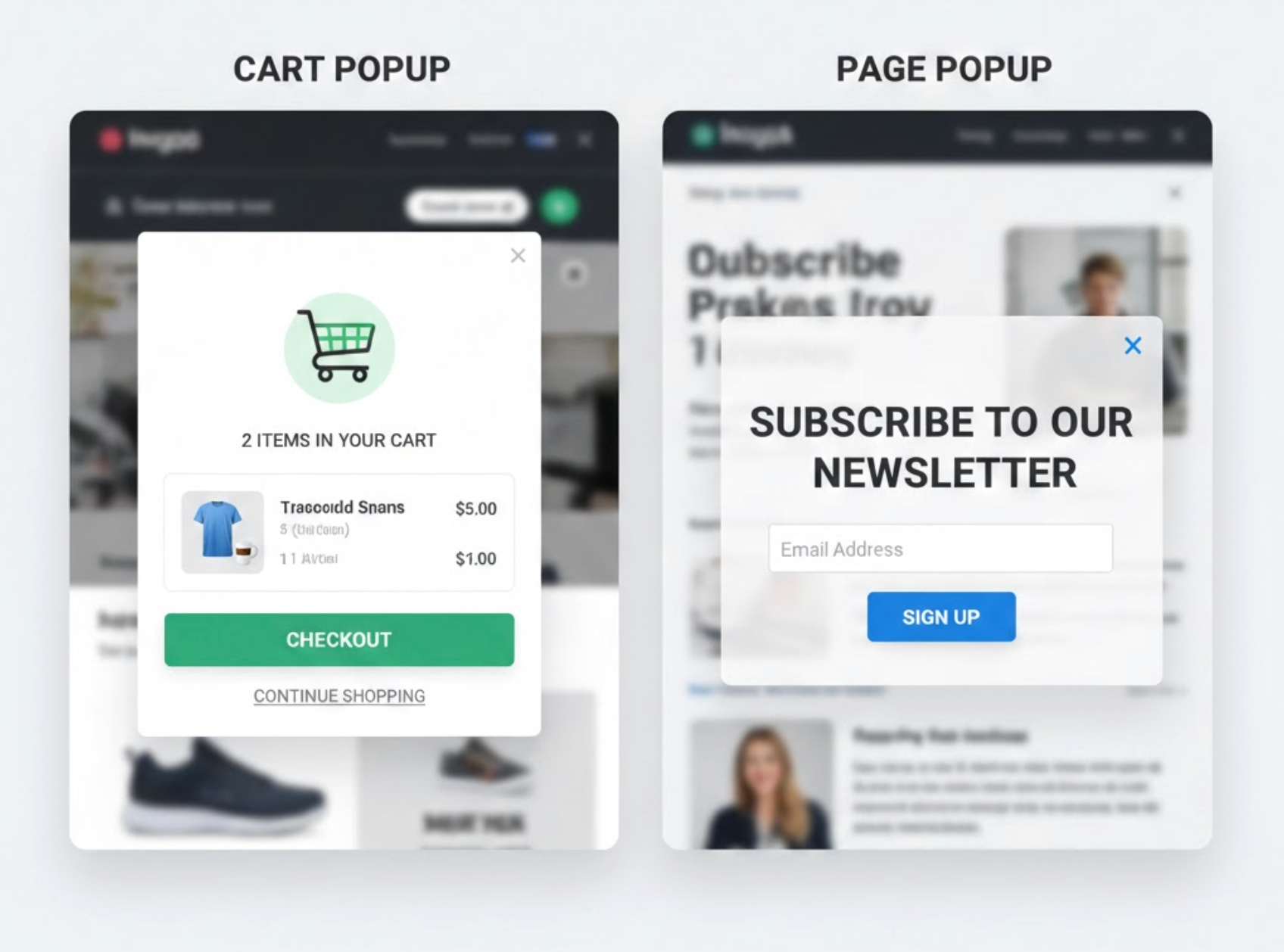
In ecommerce, conversion optimization often comes down to timing and relevance. Even small interface elements, such as popups, can significantly influence whether a shopper completes a purchase or leaves the site. Among the most widely used popup strategies, Cart Popups and Page Popups stand out as two fundamentally different approaches.
Although they may appear similar on the surface, these popup types serve distinct purposes, operate at different stages of the customer journey, and deliver very different conversion outcomes. To make the right choice, it’s important to understand not only how they work, but also why they work.
In this article, we’ll explore Cart Popups and Page Popups in greater depth, compare them across multiple dimensions, and clearly determine which option converts better in real ecommerce environments.
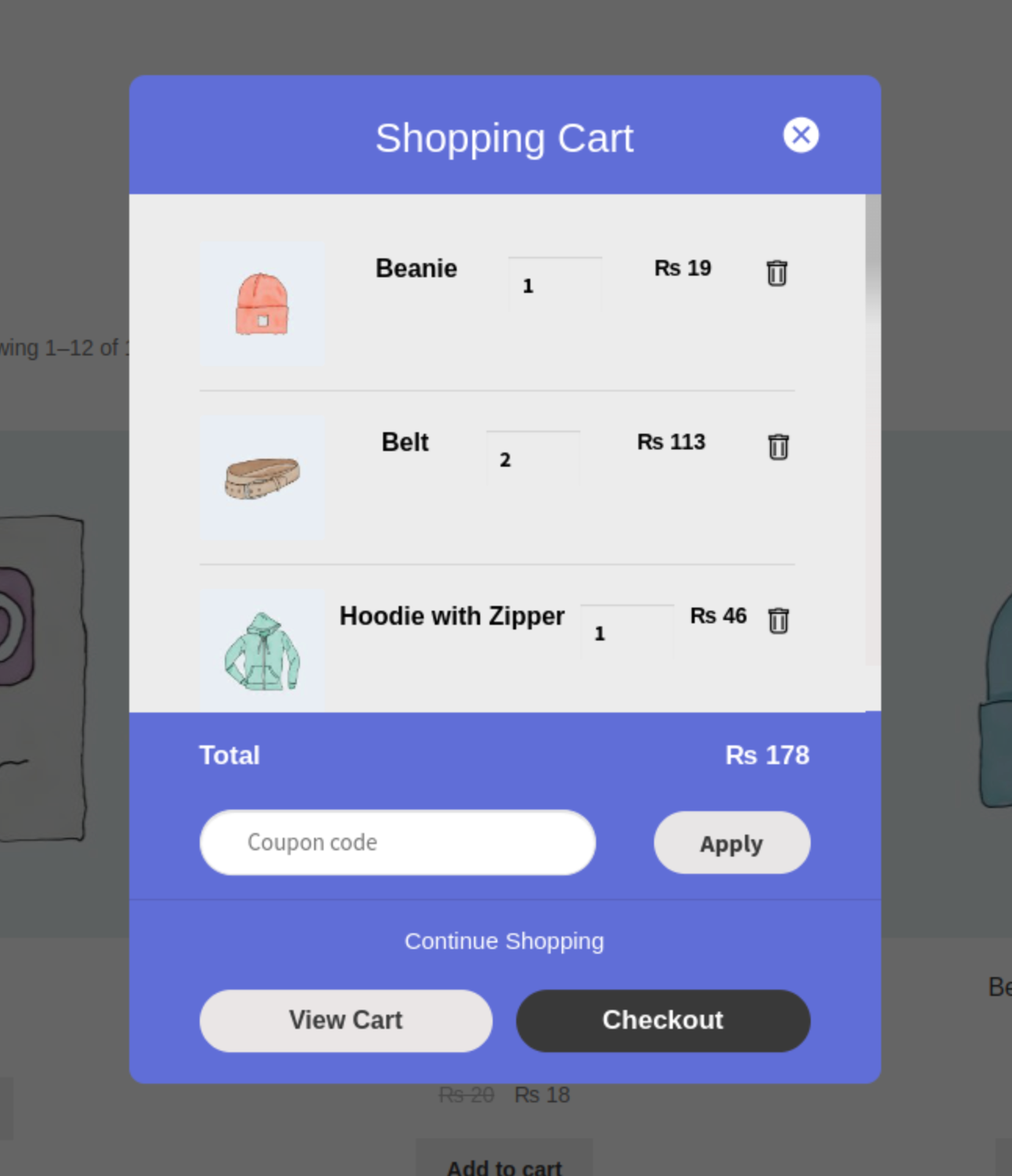
A Cart Popup, also known as an Add-to-Cart Popup or Mini Cart Popup, appears immediately after a shopper adds a product to their cart or clicks the cart icon. Instead of redirecting the user to a separate cart page, the popup presents cart information in an overlay on the current page.
This approach helps preserve the shopper’s momentum. By reducing unnecessary page transitions, Cart Popups create a faster, more fluid shopping experience that keeps users focused on completing their purchase.
A well-designed Cart Popup usually includes:
Because Cart Popups are triggered by a deliberate user action, they feel purposeful and aligned with the shopper’s intent rather than interruptive.
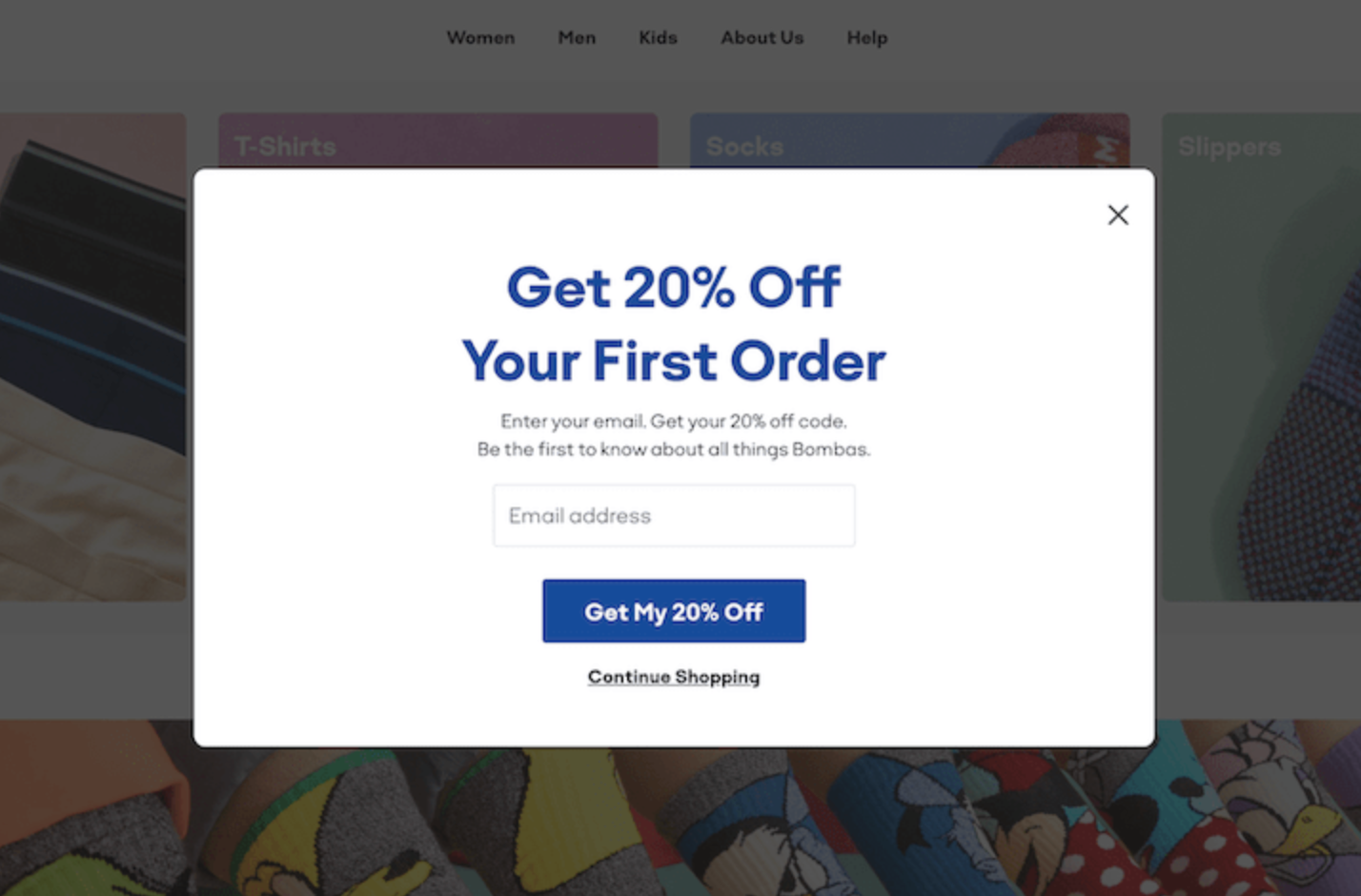
A Page Popup is a general overlay that appears based on predefined triggers, such as time spent on the page, scroll depth, exit intent, or repeat visits. Unlike Cart Popups, Page Popups are not tied to a specific purchase-related action.
Instead, they are designed to pause the browsing experience in order to deliver a message, incentive, or promotion. Their role is often to influence decision-making earlier in the customer journey.
Page Popups are commonly used for:
Because Page Popups target a wider audience, they offer flexibility but require careful execution to avoid disrupting the user experience.
Although both popup types aim to improve conversions, their core objectives differ, which directly impacts how and when they perform best.
Cart Popups are built to support users who already show strong buying intent. Once a shopper adds an item to the cart, the popup reinforces that decision and guides them toward the next logical step.
At this stage, hesitation is minimal, making Cart Popups highly effective at pushing users toward checkout with minimal resistance.
Page Popups focus on capturing attention from users who may still be exploring. These shoppers might be browsing, comparing options, or preparing to leave without converting.
As a result, Page Popups are better suited for persuasion, awareness, and nurturing interest rather than closing immediate sales.
User experience is one of the most important factors when evaluating popup effectiveness, as intrusive design can quickly reduce trust and engagement.
Cart Popups generally feel natural because they appear as a direct response to user behavior. When implemented properly, they:
This alignment with user expectations makes Cart Popups feel helpful rather than disruptive.
Page Popups can be more challenging from a UX standpoint. If triggered too early or shown repeatedly, they may interrupt browsing and create frustration.
That said, when triggered strategically, such as after meaningful engagement or exit intent, Page Popups can still add value. Even so, Cart Popups typically offer a smoother overall experience.
Conversion performance is often the deciding factor when choosing between popup strategies.
Cart Popups tend to generate higher conversion rates because they engage users at the most critical point in the funnel. Shoppers have already committed mentally, and the popup simply removes barriers.
They are particularly effective for:
Because intent is already high, even subtle improvements can produce noticeable gains.
Page Popups usually achieve lower immediate purchase conversions. However, they excel at micro-conversions, such as email signups or coupon redemptions.
These actions may lead to future purchases, but the impact is delayed and less direct compared to Cart Popups.
Increasing order value is just as important as increasing conversion rate.
Cart Popups are highly effective for upselling because the product context is fresh and relevant. Suggesting accessories, bundles, or upgrades at this moment feels logical and timely.
This relevance significantly increases the likelihood of acceptance.
Page Popups can promote upsells, but without strong personalization, they may feel generic. Without immediate context, shoppers are less likely to act on these offers.
As a result, Cart Popups generally outperform Page Popups for AOV growth.
With mobile traffic dominating ecommerce, popup performance on small screens is critical.
Cart Popups generally perform well on mobile when designed responsively. They minimize navigation steps and allow quick actions, which aligns well with mobile user behavior.
Page Popups can cause usability issues on mobile if they obscure content or are difficult to dismiss. Poor mobile optimization may lead to higher bounce rates.
For mobile-heavy stores, Cart Popups are typically the safer choice.
Understanding performance data is essential for long-term success.
Cart Popups provide clear, revenue-focused metrics such as:
This clarity makes testing and optimization more straightforward.
Page Popups rely on indirect attribution, such as tracking email-to-purchase behavior. While valuable, results often take longer to evaluate.
When deciding between Cart Popups and Page Popups, context matters just as much as design. Each popup type serves a distinct purpose within the ecommerce funnel, and understanding where they perform best helps ensure they are used strategically rather than interchangeably.
Rather than competing with one another, these popups work most effectively when applied at the right moment in the customer journey.
Cart Popups are particularly effective in situations where the primary objective is to move shoppers smoothly toward completing a purchase. Because they appear after a clear buying action, they are well suited for stores that want to capitalize on existing purchase intent.
Cart Popups are ideal for:
In these scenarios, Cart Popups help maintain momentum and encourage faster, more confident purchase decisions.
Page Popups are better suited for moments earlier in the shopping journey, where the goal is to influence behavior rather than close a sale immediately. They are especially useful for engaging visitors who may not yet be ready to buy.
Page Popups work best for:
When used thoughtfully, Page Popups help extend engagement and create additional conversion opportunities outside of immediate purchases.
When applied correctly, Cart Popups and Page Popups don’t compete, they complement each other. By assigning each popup type a clear role within the funnel, ecommerce stores can improve both short-term revenue and long-term growth.
When the goal is to drive direct sales and generate immediate revenue, Cart Popups consistently outperform Page Popups. By engaging shoppers at the moment of highest purchase intent, they reduce friction in the buying journey, encourage faster checkout decisions, and often increase average order value. This streamlined experience is especially effective on mobile, where speed and simplicity matter most.
That said, the strongest ecommerce strategies don’t rely on a single popup type. Cart Popups are best used to optimize bottom-funnel conversions and maximize revenue, while Page Popups play a valuable role in lead generation and early-stage engagement. If your primary focus is conversion performance and sales impact, Cart Popups remain the clear choice.