New to Shopify? Free trial, then $1/month for your first 3 months. Start free trial →
 Where is your store?
Ryviu works with both – pick yours to continue.








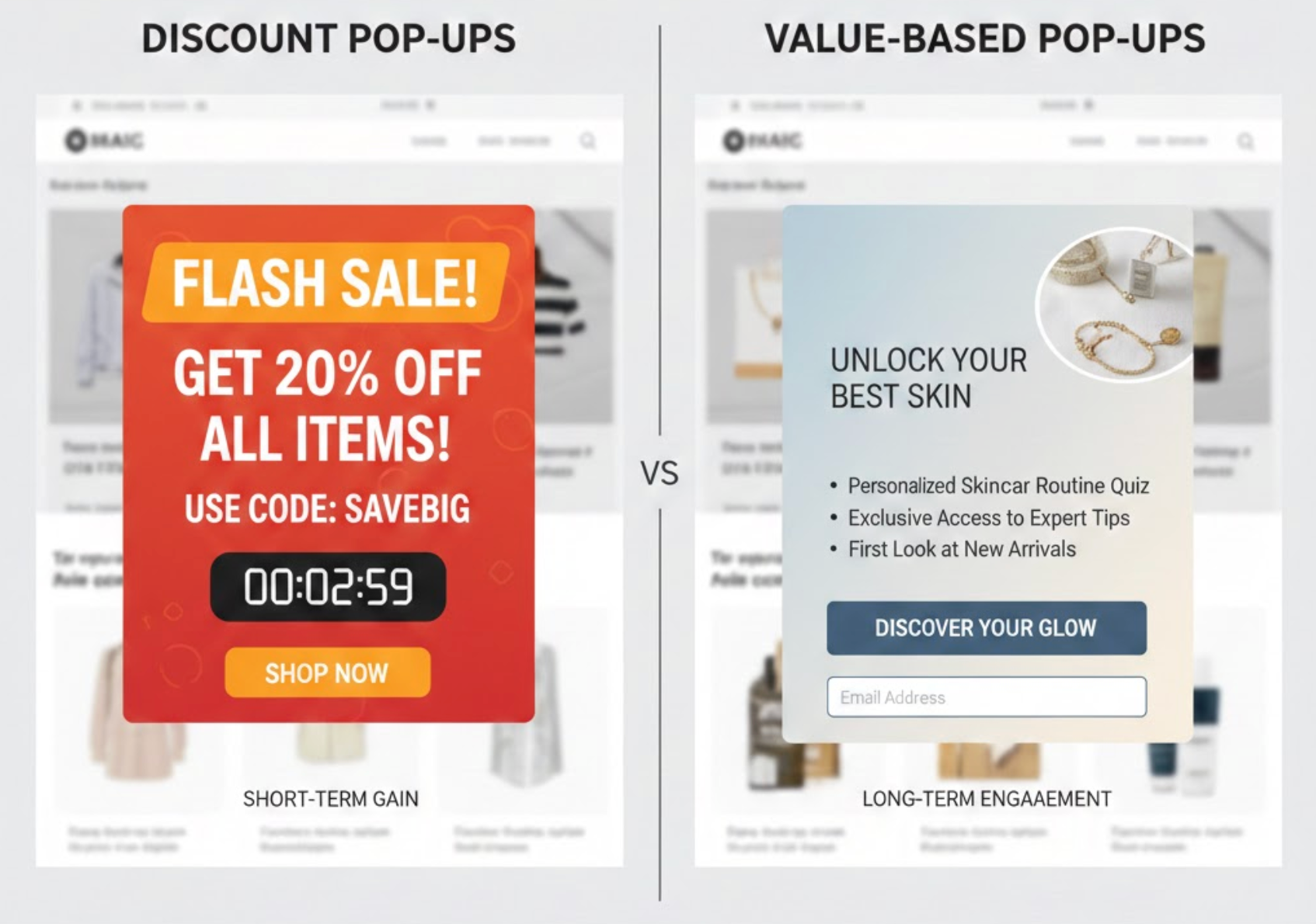
Popups have become a core conversion tool for eCommerce brands. When implemented correctly, they capture attention, guide user behavior, and influence purchasing decisions at critical moments in the customer journey. However, not all popups drive conversions in the same way. Among the most widely used popup strategies today are discount popups and value-based popups.
While both aim to convert visitors, they operate on very different psychological triggers and produce different types of results. Some stores see quick revenue spikes with discounts, while others build stronger long-term engagement through value-driven offers. Understanding how these two popup types work, and when each performs best, is essential for building a sustainable conversion strategy.
This article takes a deep dive into discount popups and value-based popups, compares their performance across multiple dimensions, and provides a clear verdict on which converts better depending on your business goals.
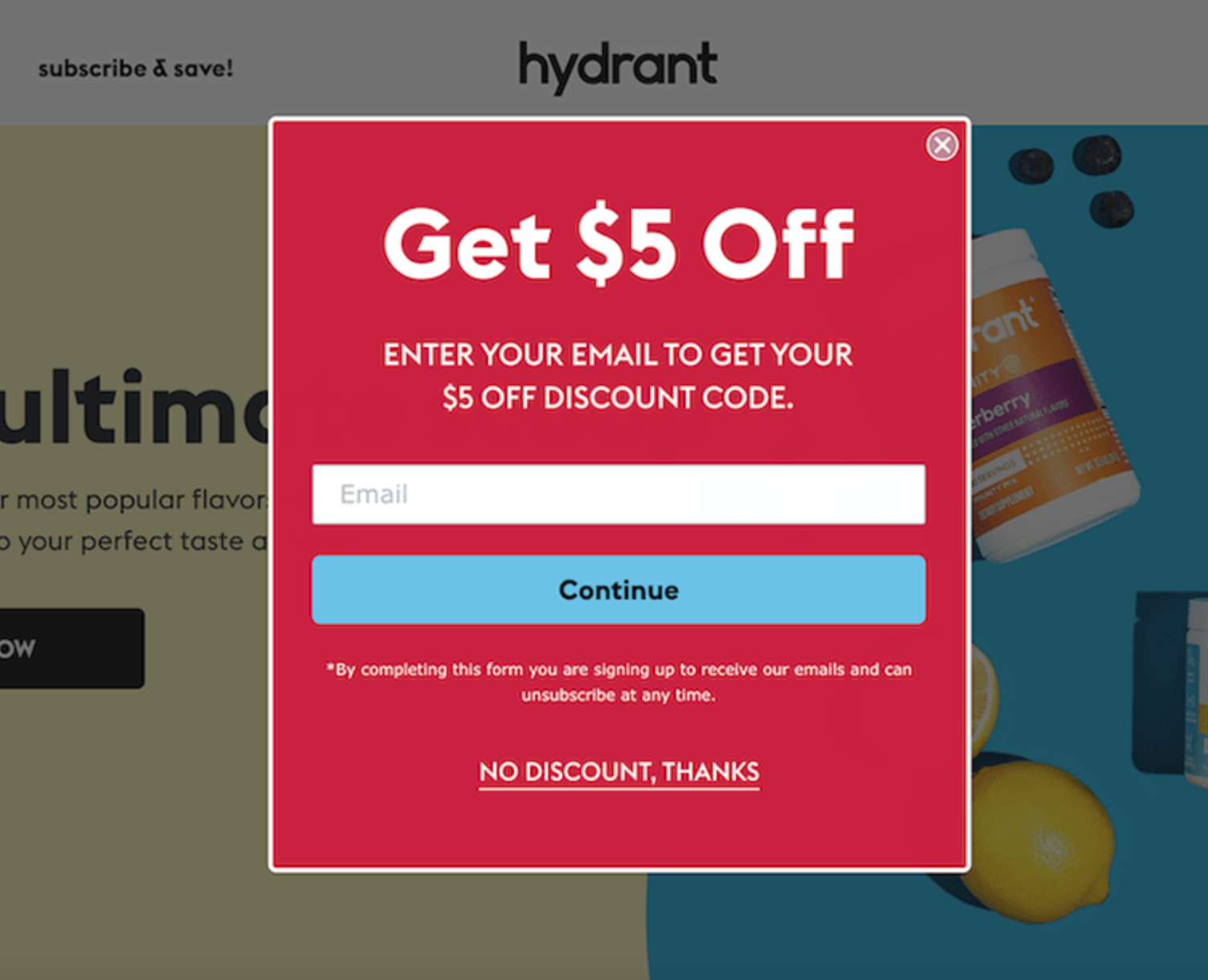
Discount popups are designed to motivate visitors by offering a direct financial incentive. This typically takes the form of a percentage discount, a fixed monetary reduction, or a limited-time deal that applies to a purchase.
Common examples include first-order discounts, exit-intent coupons, or cart-level incentives designed to push hesitant shoppers toward checkout. Because the value is immediately clear, discount popups tend to create a fast emotional response.
At their core, discount popups work by reducing perceived risk. For shoppers who are unsure about price, product fit, or overall value, a discount lowers the psychological barrier to purchase. The visitor feels they are getting a better deal, which often makes the decision easier.
From a behavioral standpoint, discount popups leverage urgency, scarcity, and loss aversion. When users believe an offer is temporary or exclusive, they are more likely to act immediately rather than postpone the purchase.
However, while discount popups are powerful, they are also transactional by nature. Their effectiveness is closely tied to short-term results rather than long-term brand equity.
Discount popups excel at generating quick wins. They are easy to understand, easy to implement, and highly effective at converting price-sensitive visitors. In high-traffic stores or during promotional periods, they can produce noticeable revenue lifts in a short time.
However, their limitations become apparent when used too frequently. Overreliance on discounts can erode margins, reduce perceived value, and attract customers who are less loyal. Without careful segmentation and timing, discount popups may solve short-term conversion problems while creating long-term challenges.

Value-based popups take a different approach. Instead of offering a price reduction, they focus on delivering something useful, educational, or personalized to the visitor. This could be content, tools, guidance, early access, or insider benefits that enhance the overall shopping experience.
Examples include size guides, product quizzes, buying checklists, free resources, exclusive content, or early access to collections. Rather than appealing to price sensitivity, value-based popups appeal to relevance and usefulness.
The strength of value-based popups lies in their ability to build trust. By offering value before asking for a purchase, brands position themselves as helpful rather than pushy. This approach often resonates with visitors who are still researching, comparing options, or not yet ready to buy.
Psychologically, value-based popups rely on reciprocity and relationship-building. When users receive something helpful, they are more willing to engage further, subscribe, or return later. Over time, this can lead to higher-quality leads and stronger brand loyalty.
While value-based popups may not always trigger immediate sales, they often play a crucial role in nurturing visitors through the funnel.
Value-based popups shine in environments where education, trust, and differentiation matter. They are especially effective for content-heavy brands, complex products, or stores with higher average order values.
The main challenge with value-based popups is that they require more strategic planning. The value offered must be genuinely useful and aligned with user intent. When done poorly, these popups may fail to capture attention or feel irrelevant.
However, when executed well, value-based popups become a powerful foundation for relationship-driven marketing.
To determine which popup converts better, it is important to define what “conversion” actually means. Conversion can refer to email signups, immediate purchases, engagement, or long-term customer value. When viewed through this broader lens, the performance gap between discount popups and value-based popups becomes clearer.
When the primary goal is growing an email list, value-based popups often outperform discount popups in terms of lead quality. While discount offers can generate a high volume of signups, many of those subscribers are motivated primarily by price and may disengage once the deal is redeemed.
In contrast, value-based popups attract users who are genuinely interested in the brand’s expertise, products, or content. These subscribers tend to open emails more consistently, engage with content, and respond better to future campaigns.
Although the raw signup rate may sometimes be higher with discounts, value-based popups typically deliver stronger long-term email performance.
When the objective is to drive immediate revenue, discount popups usually have the advantage. They are particularly effective at the bottom of the funnel, where visitors have already shown purchase intent but may still hesitate.
In scenarios such as cart abandonment, exit intent, or checkout friction, a timely discount can provide the final push needed to complete the transaction. The clarity and immediacy of a discount make it easier for shoppers to justify the purchase decision in the moment.
Value-based popups, by comparison, are less effective for instant sales unless the value directly supports the purchase decision, such as a size guide or product recommendation tool.
Over the long term, value-based popups tend to outperform discount popups in building sustainable growth. By focusing on education, personalization, and ongoing benefits, they create stronger emotional connections with users.
Customers acquired through value-based experiences are more likely to return, make repeat purchases, and recommend the brand to others. They are also less dependent on discounts, which helps protect profit margins.
Discount-driven customers, while valuable in the short term, may develop price sensitivity and delay purchases until the next promotion appears.
Another important distinction between the two popup types is how they influence brand perception. Discount popups position a brand as deal-oriented, which can be effective but also limiting if overused. Frequent discounts may signal lower perceived value or train customers to expect constant price reductions.
Value-based popups, on the other hand, reinforce expertise, credibility, and customer-centric positioning. They suggest that the brand understands customer needs and is willing to invest in helping users make better decisions.
For brands aiming to build a premium or authority-driven image, value-based popups often align more closely with long-term branding goals.
Discount popups work best in scenarios where urgency and transaction completion are the priority. This includes flash sales, seasonal campaigns, exit-intent triggers, and cart recovery flows.
Value-based popups perform best earlier in the funnel, where visitors are exploring, learning, or comparing options. They are ideal for blog pages, product discovery stages, and audience-building initiatives.
Rather than choosing one approach exclusively, many successful brands assign each popup type to a specific stage of the customer journey.
In practice, the highest-performing stores often combine both popup types into a cohesive strategy. Value-based popups are used to attract and nurture visitors, while discount popups are reserved for moments of high purchase intent.
For example, a visitor may first encounter a value-based popup offering a helpful guide or personalized quiz. After engaging with the brand and entering the cart, a discount popup may appear only if hesitation or exit behavior is detected.
This layered approach maximizes both conversion efficiency and long-term value without over-relying on discounts.
There is no universal winner between discount popups and value-based popups. Each converts better under different conditions and for different objectives.
Discount popups convert better when the goal is immediate sales and rapid revenue generation. Value-based popups convert better when the focus is on engagement, trust, and sustainable growth.
Ultimately, the most effective strategy is not choosing one over the other, but understanding how and when to deploy each. Brands that align popup type with user intent, funnel stage, and long-term goals consistently achieve stronger overall conversion performance.