New to Shopify? Free trial, then $1/month for your first 3 months. Start free trial →
 Where is your store?
Ryviu works with both – pick yours to continue.








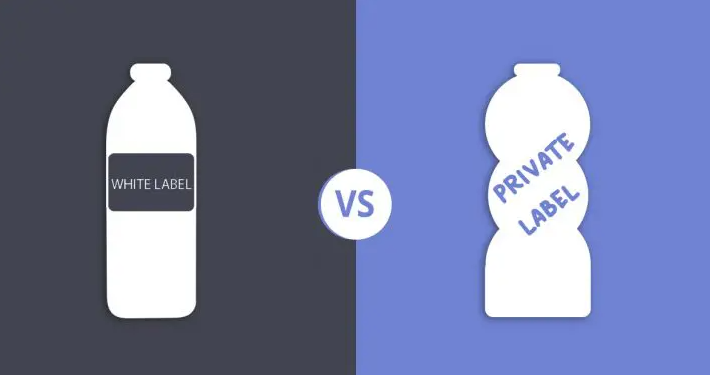
As dropshipping matures in 2026, the question is no longer whether to brand your products, but how. Private label and white label dropshipping have emerged as two dominant models for merchants who want more control, higher margins, and stronger brand equity than traditional reselling. While both approaches offer a path beyond generic products, they differ significantly in cost, complexity, differentiation, and long-term scalability.
This guide breaks down private label and white label dropshipping in depth, helping you understand how each model works, where it excels, and which one is better suited for your business goals in today’s increasingly competitive eCommerce landscape.
White label dropshipping involves selling products that are manufactured by a supplier and already fully developed, with your brand name or logo applied. The product itself remains unchanged across sellers.
You are essentially branding an existing product and marketing it as your own, without influencing its design, features, or formulation.
Private label dropshipping goes a step further. While you still rely on a manufacturer, you have some level of control over product specifications, packaging, ingredients, or features.
This allows your product to be distinct, even if it is based on an existing template.
In 2026, consumers are more brand-aware and less tolerant of generic products. Marketplaces and social platforms are saturated with similar-looking items.
The ability to stand out now directly affects conversion rates, retention, and lifetime value.
Paid advertising has become more expensive, while organic reach favors recognizable brands. Both private label and white label models aim to solve this, but in different ways.
Your choice impacts not only branding, but also ad performance and trust.
With white label dropshipping, differentiation is primarily visual and emotional. The product experience itself is identical to competitors using the same supplier.
This makes branding, storytelling, and positioning extremely important—but also fragile.
Private label allows you to improve or customize aspects of the product. Even small changes can create meaningful differentiation.
Examples include:
These changes help justify premium pricing.
White label dropshipping typically requires lower upfront investment. Many suppliers allow small minimum order quantities or even print-on-demand branding.
This makes white label attractive for beginners or businesses testing a niche.
Private label usually requires larger MOQs, sampling costs, and longer lead times. You are investing in product development, even if limited.
While risk is higher, so is ownership and defensibility.
White label products can often be launched within days or weeks. Once branding assets are ready, suppliers can fulfill orders quickly.
This speed is ideal for trend-based products or seasonal opportunities.
Private label products take longer due to sampling, revisions, and production. This slower pace discourages impulsive launches but encourages strategic thinking.
In 2026, patience often leads to stronger brands.
Because white label products are shared across sellers, quality changes affect everyone. If a supplier cuts corners, your brand reputation suffers.
Merchants have limited leverage to enforce improvements.
Private label merchants can set standards and approve samples before production. While not foolproof, this creates more consistency.
Quality control becomes part of brand strategy rather than damage control.
White label sellers compete primarily on marketing and price. Since products are identical, customers can easily compare alternatives.
Margins are often thinner unless branding is exceptionally strong.
Private label products are harder to compare directly. This gives merchants more pricing freedom.
Higher margins help offset higher upfront costs and advertising spend.
White label brands can feel legitimate if executed well, but customers may sense familiarity if they have seen the product elsewhere.
Trust depends heavily on website experience, reviews, and social proof.
Private label brands often feel more authentic because the product experience is unique. This strengthens trust and repeat purchases.
Customers are more likely to associate success or failure with your brand alone.
With white label products, stories revolve around lifestyle, benefits, and brand values rather than product innovation.
This can work, but narratives may feel repetitive across competitors.
Private label products allow merchants to tell stories about design decisions, improvements, and customer feedback.
This depth enhances content marketing and email engagement.
White label stores can scale quickly but often hit a ceiling. Increased competition and supplier dependency limit long-term defensibility.
Scaling usually requires launching more products rather than strengthening one.
Private label supports long-term growth. Products can evolve, expand into variants, and anchor a broader catalog.
This model aligns better with brand exits, wholesale expansion, and loyalty programs.
White label dropshipping is operationally simpler. Inventory management, product development, and logistics are mostly handled by suppliers.
This frees time for marketing and optimization.
Private label introduces complexity in forecasting, inventory planning, and supplier coordination.
Strong systems are essential to avoid stockouts or overproduction.
White label risks include:
Risk is lower upfront but persistent over time.
Private label risks include:
However, risks decrease as the brand matures.
White label sellers rely on suppliers for compliance. If documentation is incomplete, sellers may face legal exposure.
This is common in regulated categories.
Private label merchants are more involved in compliance, but also more aware. This reduces surprise issues.
Proactive compliance builds long-term resilience.
White label is better if:
It is a learning-friendly entry point.
Private label is suitable for beginners who:
Commitment matters more than experience.
Many successful brands start with white label, then move into private label once demand is proven.
This reduces risk while preserving learning momentum.
Clear indicators include:
Transitioning strengthens defensibility.
AI-generated ads and content have lowered creative barriers. Generic products now struggle more.
Private label products benefit more from AI-enhanced storytelling.
In 2026, tools make private label operations easier than ever. Inventory forecasting and supplier coordination are no longer manual nightmares.
This narrows the complexity gap.
In 2026, the better choice between private label and white label dropshipping depends on your ambition, resources, and time horizon. White label offers speed, simplicity, and lower upfront risk, making it ideal for testing ideas and entering new markets quickly. Private label, while more demanding, provides stronger differentiation, pricing power, and long-term brand value.
For merchants aiming to build sustainable businesses rather than short-term wins, private label increasingly stands out as the smarter investment. Ultimately, success lies not in the model itself, but in how intentionally and strategically you execute it.