 New to Shopify? Free trial, then $1/month for your first 3 months. Start free trial →
 Where is your store?
Ryviu works with both – pick yours to continue.









In today’s digital commerce landscape, businesses constantly collect opinions from customers. However, many brands still confuse feedback and reviews, using the terms interchangeably even though they serve different purposes. Understanding how each works, and when to use them, can help companies improve products, strengthen marketing strategies, and build long-term customer trust.
This article explains the differences between feedback and reviews, how they impact business growth, and how brands can use both effectively to improve customer experience and sales performance.
Customer feedback refers to direct insights provided by customers about their experiences, expectations, or problems. It is often collected through surveys, interviews, support conversations, forms, or post-purchase questionnaires. Unlike public reviews, feedback is typically shared privately with the business.
The main goal of feedback is improvement. Customers provide suggestions, highlight challenges, or offer detailed opinions that help brands refine products, services, and processes. Feedback often focuses on operational issues such as usability, delivery speed, customer support quality, or feature requests.
Feedback is also more flexible and exploratory. Instead of short opinions, customers may share long explanations or context about their experiences. This depth helps companies understand not just what customers think, but why they feel that way.
Because feedback is usually collected intentionally, businesses can ask targeted questions and gather structured insights. This allows companies to identify patterns, prioritize improvements, and make data-driven decisions that enhance overall customer satisfaction.
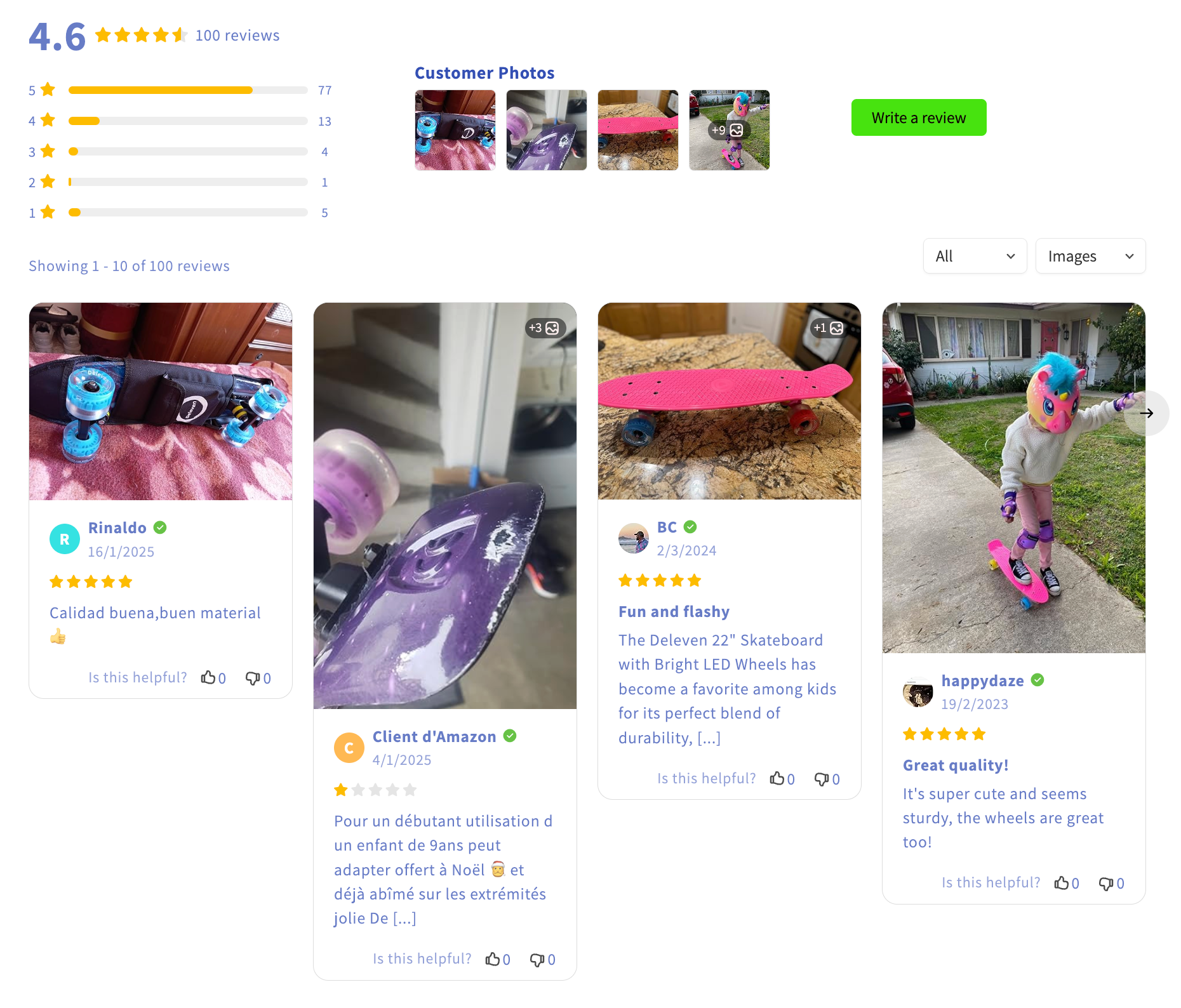
Customer reviews are public evaluations shared on websites, marketplaces, or social platforms. They typically include ratings, short comments, and sometimes photos or videos of real product usage. Reviews are visible to other shoppers and play a major role in shaping purchase decisions.
Unlike feedback, reviews are primarily social proof. They influence how potential buyers perceive product quality, trustworthiness, and reliability. Many customers rely on reviews to reduce uncertainty before making a purchase, especially when buying online.
Reviews are usually voluntary and spontaneous. Customers write them to share their experiences with others rather than to provide structured improvement suggestions. As a result, reviews may be shorter and more emotional, reflecting personal satisfaction or disappointment.
For businesses, reviews function as a marketing asset. Positive reviews increase credibility, improve conversion rates, and help products stand out in competitive markets. Even negative reviews can be valuable when handled properly, as they demonstrate transparency and responsiveness.
Although feedback and reviews both reflect customer opinions, they differ significantly in purpose, format, and usage.
1. Purpose
Feedback is primarily collected to help businesses improve products, services, and internal processes through actionable insights. While reviews focus on sharing personal experiences publicly to influence other customers’ decisions, shaping perception, building trust, and supporting marketing rather than internal development efforts.
2. Audience
Feedback is usually private communication between customers and the business, shared through surveys, emails, or support conversations to guide improvements. However, reviews are written for a public audience, helping potential buyers evaluate products by learning from real experiences before making purchase decisions.
3. Structure and Depth
Feedback tends to be detailed and structured, often guided by specific questions that encourage thoughtful explanations and practical suggestions. Reviews are generally shorter and more emotional, reflecting overall satisfaction or disappointment, and may lack the depth needed for complex product or service improvements.
4. Business Impact
Feedback directly supports internal decision-making by highlighting issues, revealing customer expectations, and guiding product development or service improvements. Reviews influence external perception, helping brands build credibility, strengthen reputation, and increase conversion rates by offering social proof to prospective customers.
5. Timing and Collection
Feedback is typically requested at strategic moments, such as after onboarding, support interactions, or feature releases, allowing businesses to gather targeted insights. Reviews are usually voluntary and submitted after a purchase or experience, reflecting spontaneous customer reactions and public opinions.
Relying only on reviews or only on feedback limits a company’s growth potential. Each provides unique insights that complement the other.
Feedback reveals hidden challenges that customers might not mention publicly. It allows brands to fix usability problems, optimize features, and improve service quality before negative experiences become public issues.
Reviews, on the other hand, provide social validation. They help potential buyers understand real-world experiences and build trust in the brand. Positive reviews can significantly increase conversion rates by reducing hesitation during the purchase process.
When businesses combine both sources, they gain a more complete picture of customer perception. Feedback guides internal improvements, while reviews demonstrate external credibility. Together, they create a balanced strategy that supports both operational excellence and marketing success.
Understanding when to prioritize feedback or reviews helps businesses maximize their impact.
Use feedback when testing new products or features. Early feedback reveals usability problems and improvement opportunities before a wider launch. Feedback is also valuable after customer support interactions, where detailed insights can highlight service gaps.
Reviews are more useful during marketing campaigns or product launches. Encouraging satisfied customers to share reviews increases visibility and helps new customers feel confident in their purchasing decisions.
During product development cycles, feedback should take priority. During growth and scaling phases, reviews become increasingly important for building brand authority and attracting new customers.
To maximize the value of feedback, businesses need a clear collection strategy.
Start by asking specific questions instead of broad ones. Focus on areas such as product functionality, ease of use, delivery experience, or support quality. Targeted questions produce actionable responses.
Use multiple feedback channels. Surveys, in-app prompts, customer interviews, and follow-up emails all capture different perspectives. Combining methods ensures a more complete understanding of customer experiences.
Analyze feedback regularly rather than waiting until large volumes accumulate. Continuous review helps teams respond quickly and maintain a customer-centric approach.
Finally, communicate improvements based on feedback. When customers see that their suggestions lead to real changes, they become more engaged and loyal.
While reviews are voluntary, businesses can guide customers toward sharing meaningful experiences.
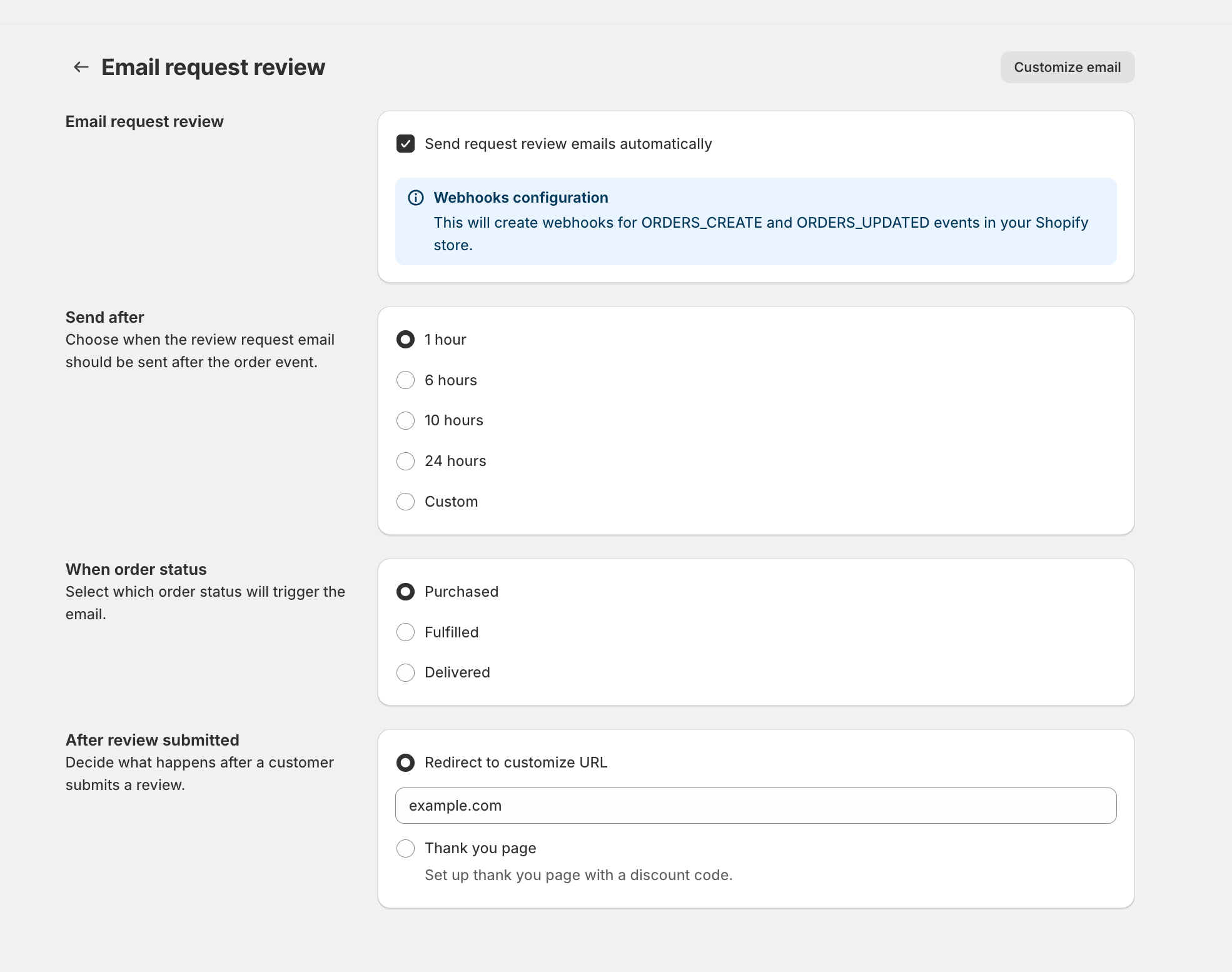
Request reviews at the right moment, such as after successful delivery or positive support interactions. Timing increases the likelihood of genuine and thoughtful responses.
Make the review process simple. Short forms and clear instructions encourage participation without overwhelming customers.
Encourage customers to share specific details, such as how they used the product or what problems it solved. Detailed reviews provide more value to potential buyers.
Respond to reviews consistently. Thank customers for positive feedback and address concerns in negative reviews with professionalism and transparency. Active engagement demonstrates commitment to customer satisfaction and strengthens trust.
Many companies blur the line between feedback and reviews, leading to missed opportunities.
One common mistake is treating reviews as the only source of improvement insights. While reviews are helpful, they rarely provide the depth needed for product development decisions.
Another mistake is collecting feedback without a clear plan for analysis or implementation. Without structured processes, valuable insights remain unused.
Some businesses also ignore positive feedback or reviews. Highlighting strengths helps reinforce brand positioning and informs marketing strategies.
Finally, failing to respond to public reviews can damage credibility. Customers expect brands to acknowledge both praise and criticism.
Feedback and reviews may seem similar, but they serve distinct roles in business growth. Feedback focuses on internal improvement, providing detailed insights that help companies refine products and customer experiences. Reviews, on the other hand, build external trust by offering social proof that influences purchasing decisions.
Businesses that understand the differences, and use both strategically, gain a significant advantage. Feedback helps brands evolve and solve problems before they escalate, while reviews enhance credibility and attract new customers. By integrating both into a unified customer insight strategy, companies can strengthen relationships, improve performance, and create more meaningful experiences that drive long-term success.




