 New to Shopify? Free trial, then $1/month for your first 3 months. Start free trial →
 Where is your store?
Ryviu works with both – pick yours to continue.








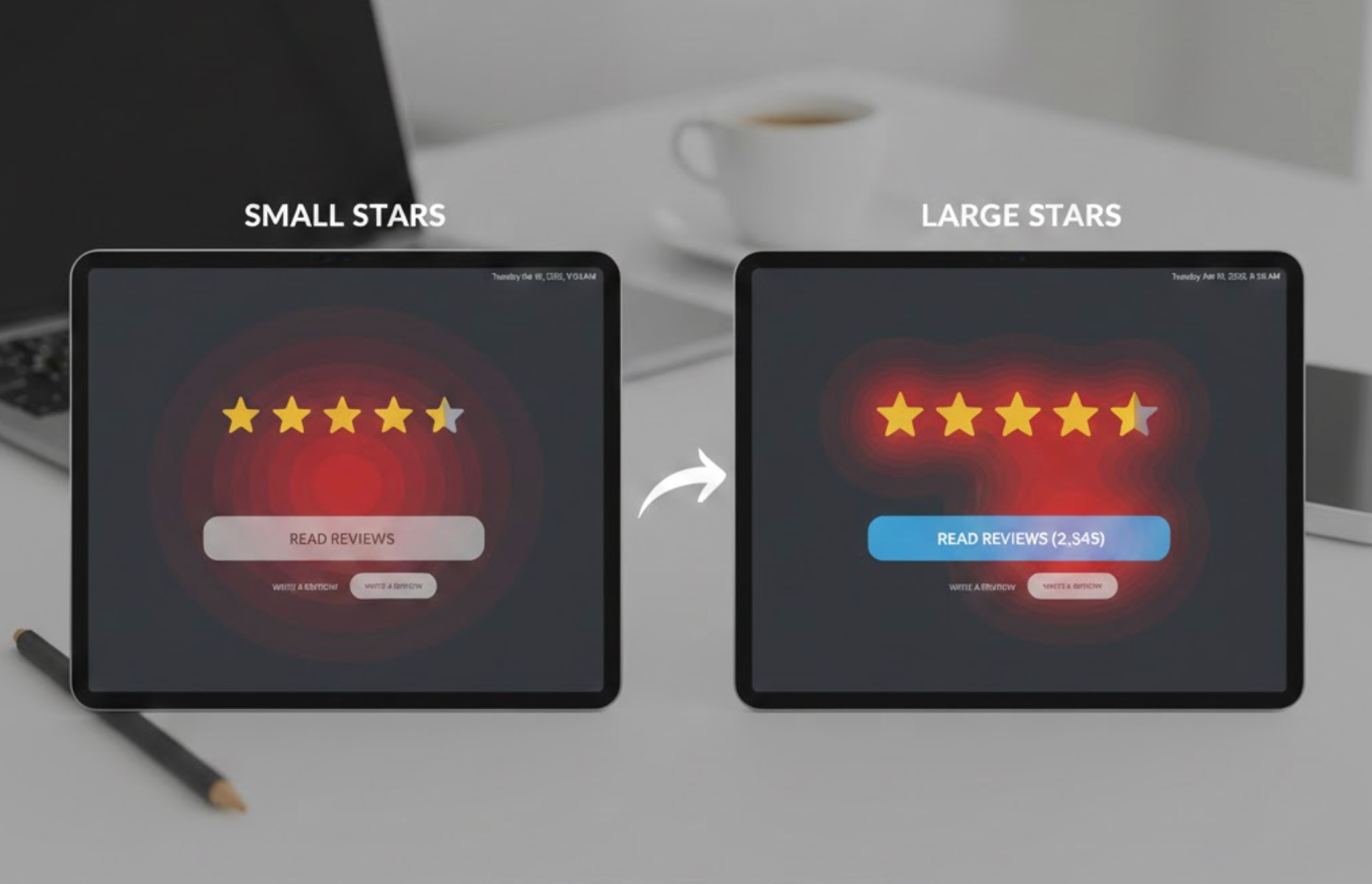
Star ratings are one of the most influential visual trust signals in ecommerce. While the rating score itself matters, the size of the stars plays a surprisingly strong role in how customers perceive products and decide where to click. In fast-scrolling environments where shoppers skim rather than read deeply, larger or more prominent ratings can guide attention, reduce uncertainty, and encourage exploration. However, effective use of size requires thoughtful balance, not simply making stars as large as possible. Understanding how star rating size shapes user psychology, scanning patterns, and trust perception helps businesses design product pages that improve click-through rates and overall engagement.
Visual hierarchy is a core principle in user experience design, and star rating size directly influences where users focus their attention first. Larger stars act as visual anchors that draw the eye toward products with strong social proof. When customers browse quickly, they rely on prominent visual signals to evaluate trustworthiness before reading details. Bigger ratings can subconsciously communicate popularity and reliability, which increases the likelihood of clicks and deeper exploration.
At the same time, authenticity is essential. If ratings appear exaggerated or disconnected from real reviews, customers may question credibility. The goal is to enhance visibility without creating a sense of artificial promotion or visual imbalance that distracts from the product itself.
How larger star ratings influence perception and engagement:
Online shoppers typically scan rather than read. During the first few seconds of browsing, they look for images, prices, and ratings to make rapid decisions. Larger star ratings improve visibility during this scanning process, allowing users to identify high-quality products quickly. When ratings are easy to notice, customers feel more confident clicking through to product pages because they have already formed a positive first impression.
If ratings are too small or hidden among other elements, shoppers may overlook strong social proof. This can reduce engagement even when products have excellent reviews. Clear sizing helps users absorb information instantly, making browsing smoother and more efficient while reinforcing trust early in the customer journey.
Design elements that improve scanning and clicking behavior include:
Large and clearly visible star ratings reduce cognitive load by presenting product reputation in a simple visual format. Instead of analyzing long descriptions or reading multiple reviews, shoppers can instantly understand how others feel about a product. This ease of understanding builds trust and encourages further exploration, which naturally increases click behavior and engagement.
Prominent ratings also help users compare multiple products quickly, especially in categories with many similar items. When trust signals are easy to interpret, customers feel more confident browsing deeper into collections and product pages without second-guessing their choices.
Benefits of well-sized ratings in simplifying decisions:
Although larger ratings can improve engagement, excessive size may harm design clarity. Oversized stars can dominate the page, overshadow product images, or make the layout feel overly promotional. Maintaining proportion is key to preserving both usability and authenticity. Ratings should feel helpful and informative rather than aggressive or distracting.
Designers should consider typography, spacing, and surrounding elements when adjusting star sizes. Subtle increases often deliver better results than dramatic changes because they enhance visibility while maintaining a clean, professional aesthetic.
Practical ways to maintain balance include:
On mobile devices, star rating size becomes even more important because of limited screen space and touch-based navigation. Small ratings can be difficult to read or interact with, leading to frustration and missed engagement opportunities. Appropriately sized stars improve usability and allow customers to evaluate products quickly while scrolling.
Mobile users often rely heavily on visual cues rather than long descriptions. Prominent ratings help them make decisions faster and encourage deeper browsing. Responsive design ensures ratings remain visible and readable across different screen sizes without overwhelming the layout or pushing important content out of view.
Mobile-focused considerations for star rating size include:
Size alone does not determine click behavior, placement and context also play major roles. Larger stars positioned near product titles or prices reinforce decision-making because they appear alongside key evaluation factors. Combining star ratings with review counts, verified buyer labels, or summary feedback strengthens credibility and encourages engagement.
Contextual cues help customers interpret ratings accurately and reduce misunderstandings. For example, a high rating backed by hundreds of reviews may require different visual emphasis compared to a newly launched product with limited feedback. Strategic placement ensures ratings guide decisions naturally rather than distracting from other essential content.
Effective contextual design strategies include:
Ryviu makes it easier for ecommerce stores to customize the appearance of star ratings without complex development work. Instead of editing code or redesigning themes manually, merchants can adjust star rating size directly within the app’s settings to test different visual hierarchies and improve click performance. This flexibility allows businesses to experiment with design changes quickly while maintaining a consistent brand experience.
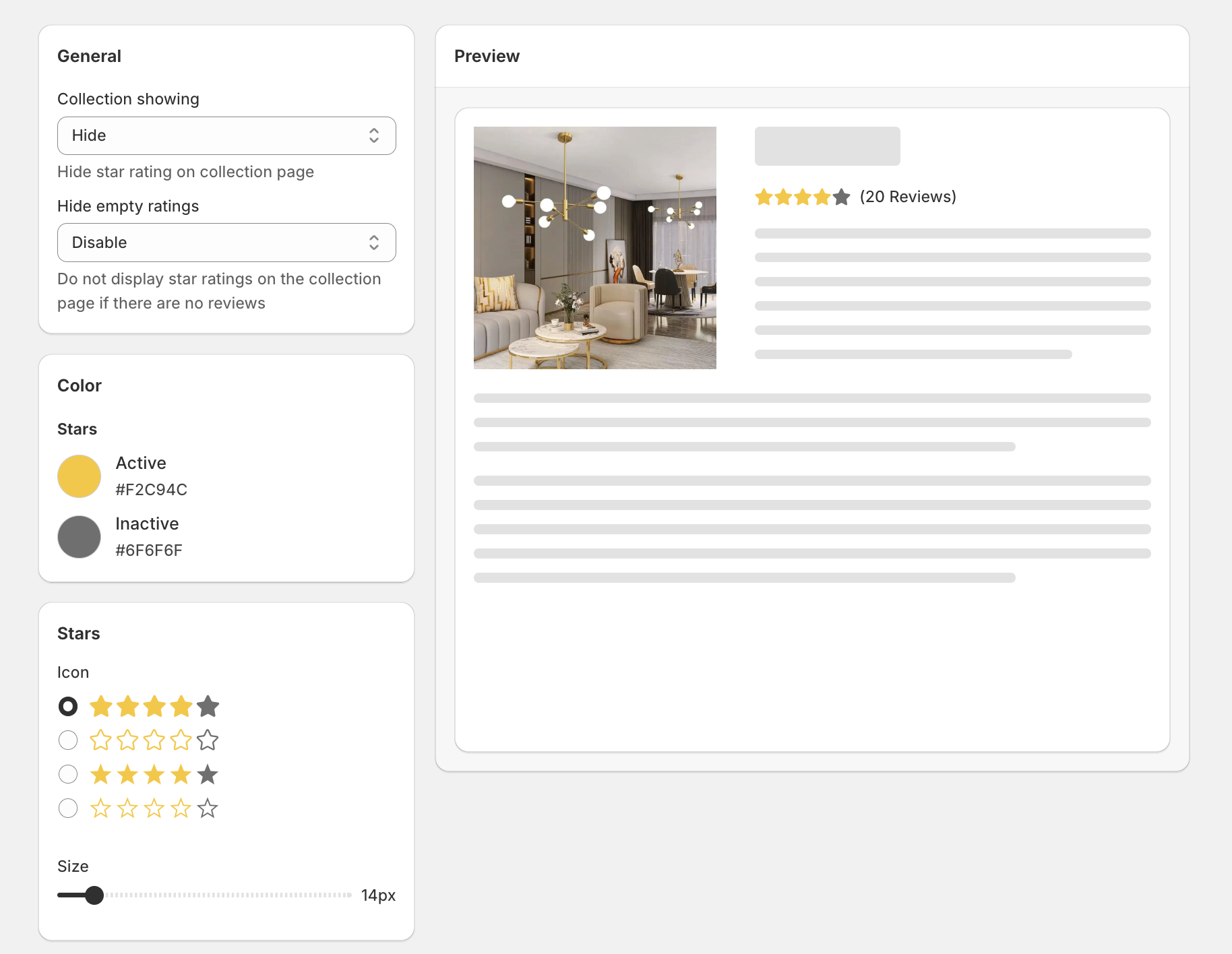
Ryviu also helps store owners refine how ratings appear across product pages, collection pages, and widgets. By adjusting size, layout, and supporting review elements, businesses can create a clearer and more engaging presentation that enhances trust signals and encourages clicks.
Ways Ryviu supports star rating optimization include:
Because audiences respond differently to design changes, continuous testing is essential. A/B testing star rating sizes helps businesses find the right balance between visibility and authenticity. Even small adjustments can significantly influence click-through rates and overall engagement.
Testing should cover both desktop and mobile experiences to reflect real browsing behavior. Measuring performance metrics such as clicks, time on page, and conversion rates helps determine which rating sizes produce the best results. Incremental experimentation allows stores to refine design decisions over time rather than relying on assumptions.
Effective testing practices include:
Star rating size has a meaningful impact on click behavior because it shapes visual attention, trust perception, and decision-making speed. Larger ratings help customers identify trusted products quickly, but effective design requires balance to maintain authenticity and clarity. By combining thoughtful sizing with strong placement, contextual information, continuous testing, and flexible tools like Ryviu, ecommerce businesses can create more intuitive shopping experiences that encourage clicks, improve engagement, and strengthen long-term customer confidence.




