New to Shopify? Free trial, then $1/month for your first 3 months. Start free trial →
 Where is your store?
Ryviu works with both – pick yours to continue.








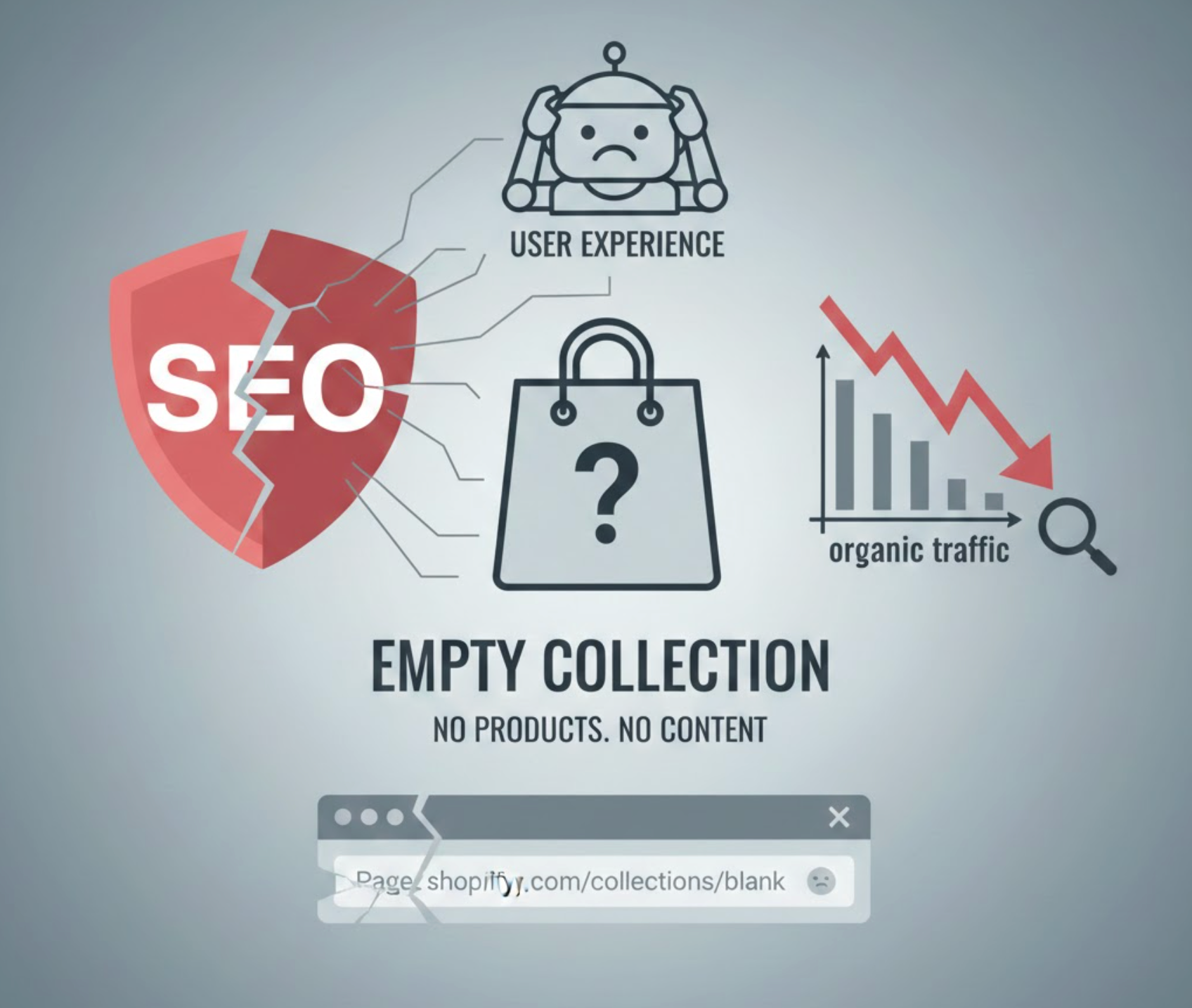
Empty collection pages are a hidden issue that many Shopify store owners underestimate. These pages often appear during product updates, inventory changes, seasonal sales, or even simple tagging mistakes. While they may look harmless, empty collections can quietly damage your store’s search visibility and frustrate potential customers at the same time.
Because collection pages usually target high-intent keywords and play a major role in product discovery, leaving them empty creates missed opportunities. Over time, this can reduce traffic quality, weaken engagement signals, and lower overall conversion potential. To fully understand the impact, it’s important to look at how empty collection pages affect both SEO and user experience.
An empty collection page is a published collection that currently displays no products. This can happen when all products in the collection are out of stock, unpublished, deleted, or no longer meet the collection’s automated rules. In other cases, merchants may create collections in advance for future launches and forget to hide them from the storefront.
Even though these pages are technically live and accessible, they lack the core element users and search engines expect, products. From Google’s perspective, the page offers little value. From a shopper’s perspective, it feels incomplete or broken. This disconnect is what makes empty collection pages particularly harmful.
From an SEO standpoint, empty collection pages create multiple structural and content-related problems. Search engines aim to deliver the most helpful and relevant results, and pages without products or meaningful content struggle to meet that standard. Over time, these low-value pages can dilute your site’s overall SEO strength.
As search engines continue to crawl and evaluate your store, empty collections send signals that certain areas of your site are outdated, poorly maintained, or irrelevant.

While SEO issues take time to appear, UX problems happen instantly. Shoppers arrive on collection pages expecting to browse products and compare options. When they see an empty layout, it creates confusion and disappointment, especially if the page was reached through navigation or search results.
This negative experience disrupts the shopping journey and increases the likelihood that users will abandon your site altogether.
The real risk of empty collection pages lies in how their negative effects stack over time. Poor user engagement leads to higher bounce rates and lower dwell time, which reinforces negative SEO signals. As rankings decline, the traffic you do receive becomes less relevant and less likely to convert.
This creates a cycle where empty pages not only fail to generate revenue but actively slow down growth. Instead of supporting discovery and sales, they quietly push potential customers away at multiple stages of the funnel.
Most empty collections are not created intentionally but appear as a byproduct of everyday store management. When collections aren’t reviewed regularly, these pages can remain live for long periods without being noticed.
Fixing empty collection pages doesn’t require advanced technical skills, but it does require consistency. Shopify store owners should regularly review collections to ensure each one serves a clear purpose and provides value to users.
By taking a proactive approach, you can prevent empty pages from harming both search performance and customer trust.
Not all empty collections are permanent. During restocking periods or upcoming launches, it’s often better to transform these pages into informational hubs rather than removing them entirely. This approach maintains search visibility while setting clear expectations for shoppers.
You can explain when products will return, link to related categories, or encourage users to sign up for restock notifications. This turns a potential dead end into a useful touchpoint that still supports SEO and engagement.
Empty collection pages may seem like a small oversight, but their impact on Shopify SEO and UX can be substantial. They weaken keyword rankings, frustrate shoppers, and disrupt the path to conversion, all without obvious warning signs.
By regularly auditing your collections, improving empty-page handling, and ensuring every collection provides value, you create a stronger, more trustworthy storefront. In the long run, well-managed collection pages don’t just rank better, they deliver smoother experiences and higher conversions too.