New to Shopify? Free trial, then $1/month for your first 3 months. Start free trial →
 Where is your store?
Ryviu works with both – pick yours to continue.








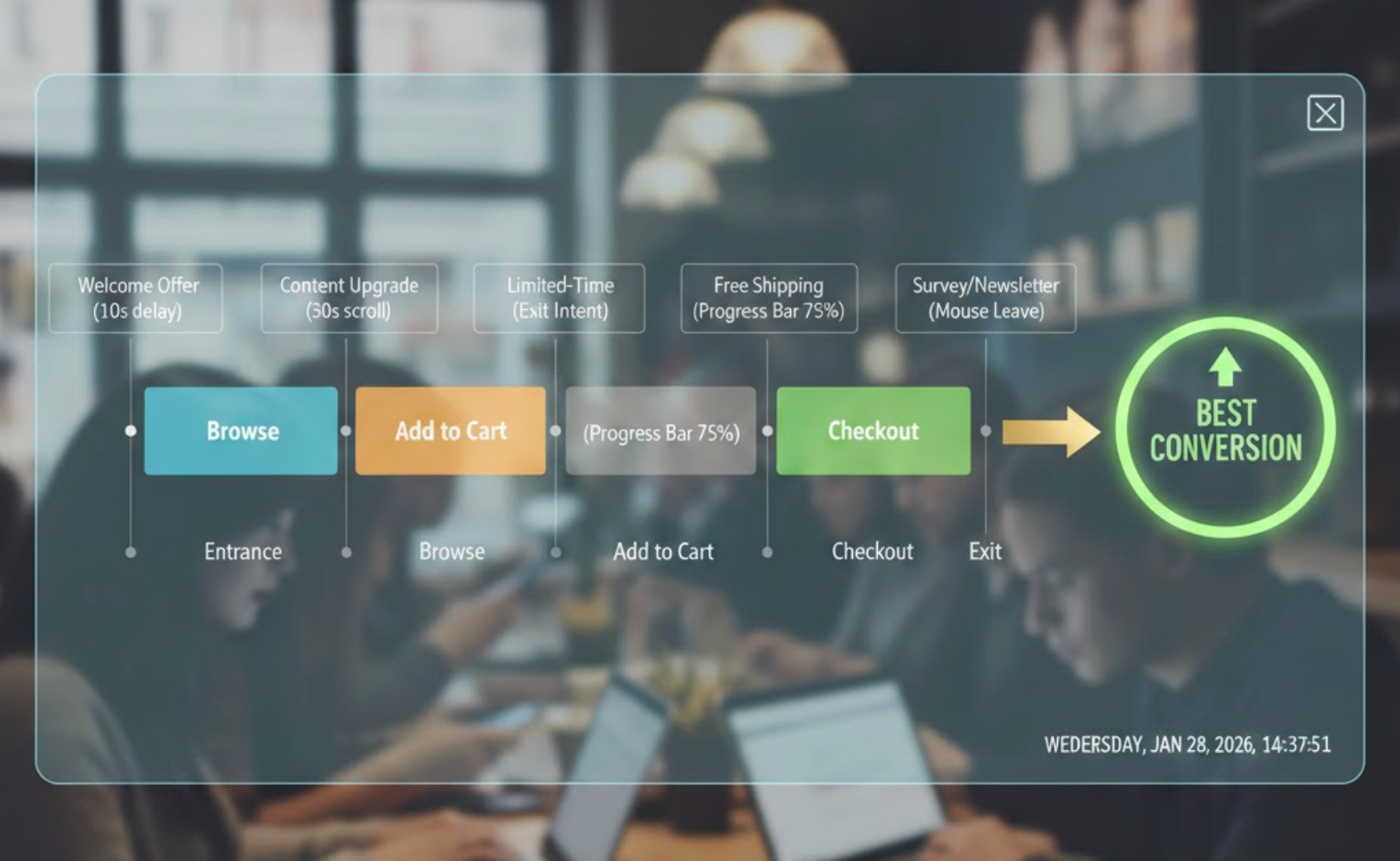
Popups can either boost conversions significantly or frustrate users enough to drive them away. The difference rarely lies in the design or offer alone—it comes down to timing. Showing the right popup at the wrong moment can kill intent, while showing a simple message at the perfect moment can feel helpful and natural.
Understanding when to show popups means aligning them with user behavior, intent, and context. When popups appear at moments of engagement rather than interruption, they support the buying journey instead of disrupting it.
This article explores the most effective popup timing strategies and explains why each moment works for conversion optimization.
Showing a popup immediately after page load often feels intrusive, especially for first-time visitors. Users need a few seconds to understand where they are and what value your store provides before being asked to take action.
A short delay, typically 5 to 10 seconds, allows visitors to scan the page, absorb key visuals, and develop initial interest. By the time the popup appears, it feels more like a continuation of the experience rather than an interruption.
Used correctly, delayed popups help capture attention without overwhelming new users.
Scroll-based popups trigger when a user reaches a certain depth on a page, such as 30%, 50%, or 70%. This behavior indicates interest, users who scroll are actively engaging with your content or product information.
Because the popup appears only after engagement, it feels earned rather than forced. It complements the user’s curiosity instead of distracting from it.
Scroll-triggered popups are especially effective on long-form pages where users invest time reading.
Exit-intent popups appear when the system detects that a user is about to leave the page, such as moving the cursor toward the browser bar or back button. At this point, the user has already decided to leave, so the popup doesn’t interrupt their experience.
Instead, it offers a second chance to re-engage them with a compelling reason to stay. When done well, exit-intent popups feel like a helpful reminder rather than a sales push.
This timing is one of the highest-performing strategies for recovering abandoning visitors.
When a user adds an item to their cart, it signals strong purchase intent. This is an ideal moment to show supportive popups that enhance decision-making rather than distract from it.
Instead of pushing discounts immediately, popups at this stage can reinforce value, build trust, or suggest complementary products.
Because the user is already committed, these popups feel relevant and timely.
Hesitation often appears as inactivity, repeated scrolling, or lingering on the checkout page without completing the purchase. This moment signals doubt, confusion, or concern.
Triggering a popup during hesitation allows you to address friction points before abandonment occurs. The popup acts as reassurance rather than persuasion.
This timing focuses on removing barriers instead of pushing harder.
Not all users should see the same popup at the same time. New visitors need education and trust, while returning visitors are often closer to converting.
Timing popups differently based on visitor status allows for more personalized experiences. Returning users may respond better to urgency-based messages, while new users benefit from softer introductions.
Behavior-based timing ensures relevance and improves overall conversion performance.
Mobile users are especially sensitive to intrusive popups due to smaller screens. Timing becomes even more critical to avoid frustration.
Instead of appearing immediately, mobile popups should trigger after engagement, such as scrolling or tapping. This ensures the popup doesn’t block essential content or navigation.
Smart mobile timing protects user experience while still driving conversions.
The best popup conversions don’t come from louder messages or bigger discounts, they come from better timing. Showing popups when users are ready to engage, rather than when it’s convenient for the store, creates a smoother and more persuasive experience.
By aligning popup triggers with user behavior, scrolling, hesitation, exit intent, or cart actions, you transform popups from interruptions into helpful nudges. The result is higher engagement, improved trust, and stronger conversion rates across your store.
When popups respect timing, they stop feeling like popups, and start feeling like guidance.