New to Shopify? Free trial, then $1/month for your first 3 months. Start free trial →
 Where is your store?
Ryviu works with both – pick yours to continue.








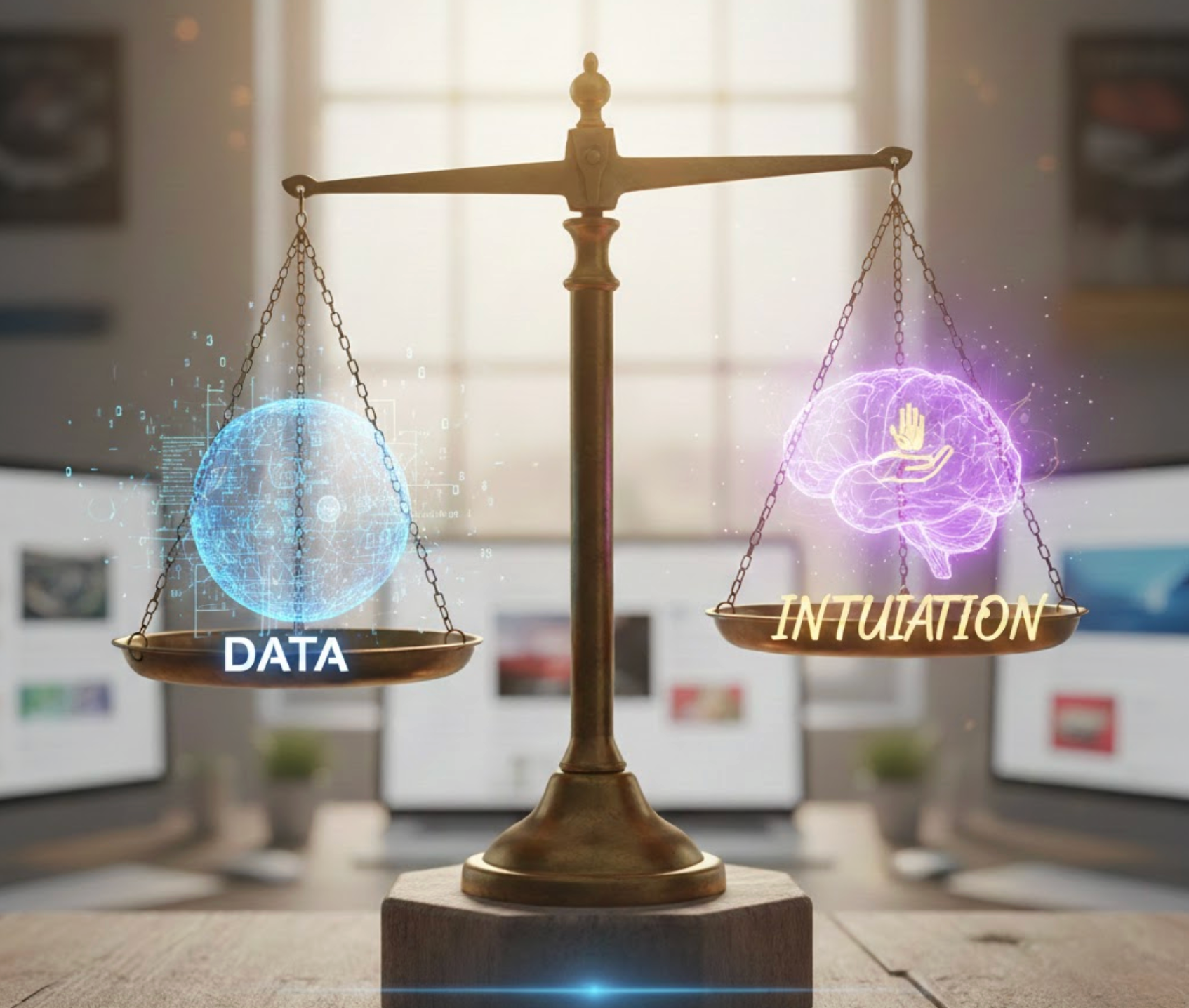
In today’s eCommerce landscape, decision-making often feels pulled between two forces: hard data and human intuition. Analytics promise objectivity and scale, while intuition reflects experience, empathy, and real-world understanding. Brands that grow sustainably are not the ones that choose one side, but the ones that learn how to combine both effectively.
Instead of treating data and intuition as opposing approaches, successful teams use them as complementary tools that strengthen each other. When data informs intuition and intuition guides how data is used, decisions become clearer, faster, and more customer-focused. To understand how to strike this balance, it’s important to explore the role, and limitations, of each.
Data is the foundation of modern eCommerce because it reveals how customers actually behave at scale. Metrics such as conversion rates, bounce rates, and revenue per visitor help businesses move beyond assumptions and observe real patterns. Over time, this data creates a shared language that aligns teams and reduces emotional or opinion-based decision-making.
However, data is most powerful when it is used as a guide rather than a final authority. To understand its true value, it helps to look at what data does particularly well in eCommerce.
Intuition is built through experience, pattern recognition, and deep familiarity with customers. It helps teams sense friction, confusion, or emotional resistance even before those issues appear clearly in reports. In fast-moving markets, intuition often acts as an early-warning system when something “doesn’t feel right.”
While intuition may seem subjective, it is often rooted in repeated exposure to real customer behavior. To see why intuition remains essential, consider the unique strengths it brings to decision-making.
Although data offers clarity, relying on it too rigidly can slow decision-making. Teams may hesitate to act while waiting for statistically perfect results, missing opportunities in the process. In some cases, data can also be misinterpreted or taken out of context, leading to flawed conclusions.
Data becomes dangerous when it replaces critical thinking instead of supporting it. Understanding these risks helps teams use analytics more responsibly.
Intuition without validation can easily drift into assumption or personal bias. What feels right to one decision-maker may not reflect how a broad audience actually behaves. Over time, this can result in inconsistent strategies and unpredictable outcomes.
Without data, intuition also becomes difficult to communicate across teams. Recognizing these limitations ensures intuition is used responsibly rather than recklessly.
Balancing data and intuition is not about compromise, it’s about collaboration between the two. Each approach strengthens the other when used intentionally. The key is knowing when to lead with intuition and when to rely on data for confirmation.
The following practices show how to combine both into a practical decision-making framework.

Intuition often identifies potential problems or opportunities before metrics confirm them. Instead of acting immediately, treat these instincts as hypotheses that need validation. This creates a healthy feedback loop between insight and evidence.
Data is excellent at showing where something is happening, but weaker at explaining why. Interpretation requires empathy and contextual understanding. This is where intuition adds depth to numbers.
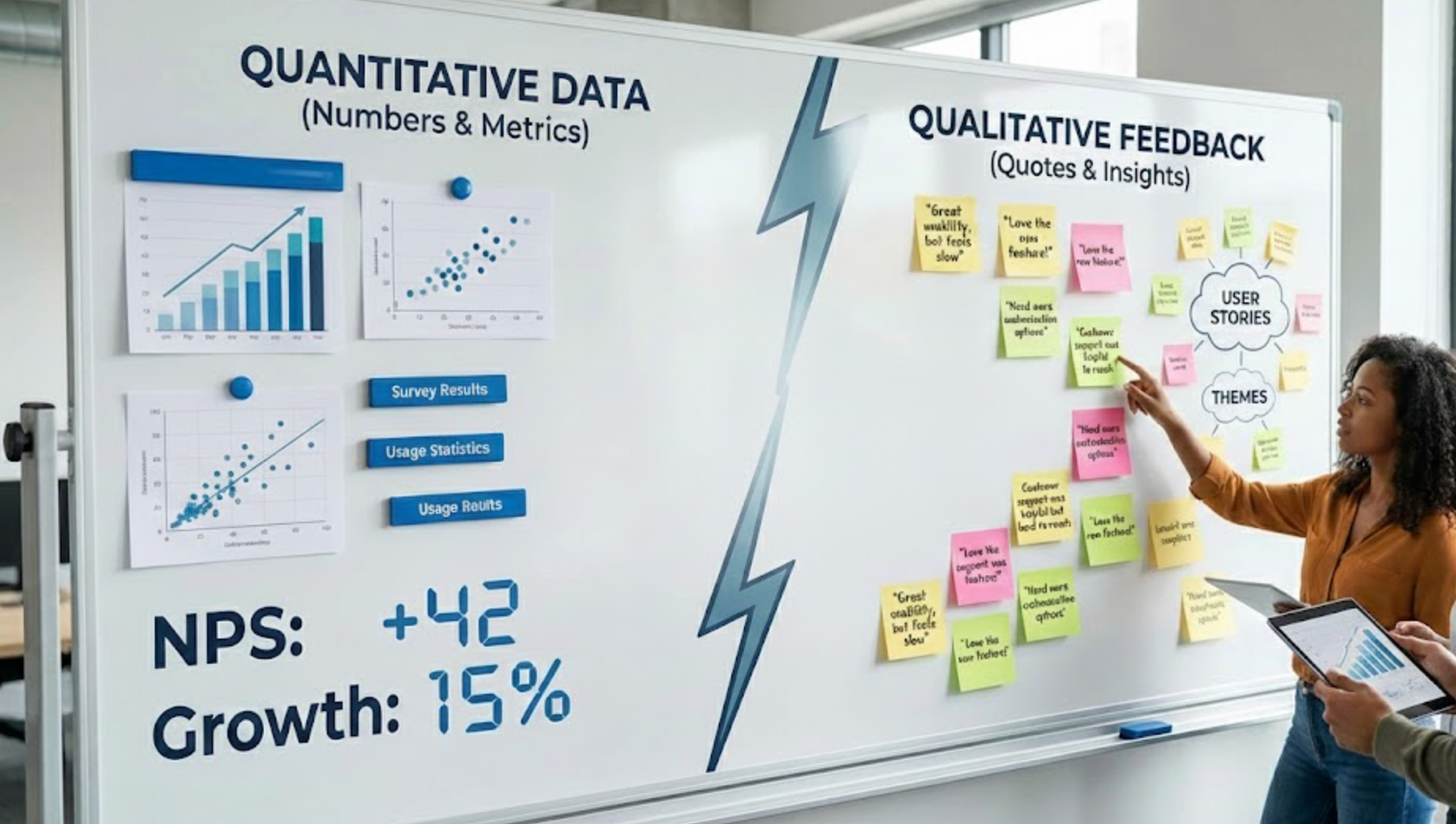
Numbers show performance, but words reveal motivation. Reviews, surveys, and customer support conversations provide emotional context. Together, they create a more complete understanding of user behavior.
Intuition often inspires bold ideas, while data ensures they’re implemented responsibly. Instead of all-or-nothing changes, experiments allow intuition to be tested safely. This approach encourages innovation without unnecessary risk.
Balancing data and intuition requires cultural alignment, not just tools. Teams should feel comfortable sharing instincts while being accountable to evidence. This balance leads to better collaboration and faster decisions.
Seeing how this balance works in real scenarios makes it easier to apply. Many common eCommerce challenges benefit from both analytical and intuitive thinking. These examples show how the two approaches naturally reinforce each other.
The combination often leads to clearer, more confident decisions.
Balancing data and intuition in eCommerce is not about choosing logic over feeling, or vice versa. Data brings structure, measurement, and accountability, while intuition brings empathy, creativity, and speed. Together, they create decisions that are both scalable and deeply human.
The strongest eCommerce strategies emerge where insight meets evidence. By intentionally balancing data and intuition, brands move from reactive optimization to confident, customer-centered growth.