New to Shopify? Free trial, then $1/month for your first 3 months. Start free trial →
 Where is your store?
Ryviu works with both – pick yours to continue.









Build-a-Box subscriptions allow customers to personalize their recurring orders by choosing exactly which products they want in each delivery. Rather than receiving a fixed bundle, shoppers actively participate in creating a box that reflects their preferences, habits, and needs. This sense of control makes the subscription feel more valuable and engaging, while also encouraging repeat purchases and long-term loyalty.
For Shopify merchants, Build-a-Box subscriptions offer predictable recurring revenue while showcasing a broader range of products. However, success depends on thoughtful planning, clear structure, and a seamless user experience. The following steps explain how to create, launch, and optimize a Build-a-Box subscription in Shopify from the ground up.
A Build-a-Box subscription blends product customization with recurring billing. Customers typically select a set number of items or fill a box up to a predefined value, then receive that box on a recurring schedule such as monthly or quarterly. This model strikes a balance between flexibility for customers and consistency for your business.
From the customer’s perspective, Build-a-Box subscriptions feel personal and adaptable. From a business perspective, they drive predictable revenue while encouraging customers to explore more of your catalog. Before you move into execution, it’s essential to step back and carefully define the core structure that will determine how customers interact with your subscription.
Before moving forward, it’s important to clarify the foundational choices that will shape how your Build-a-Box subscription works:
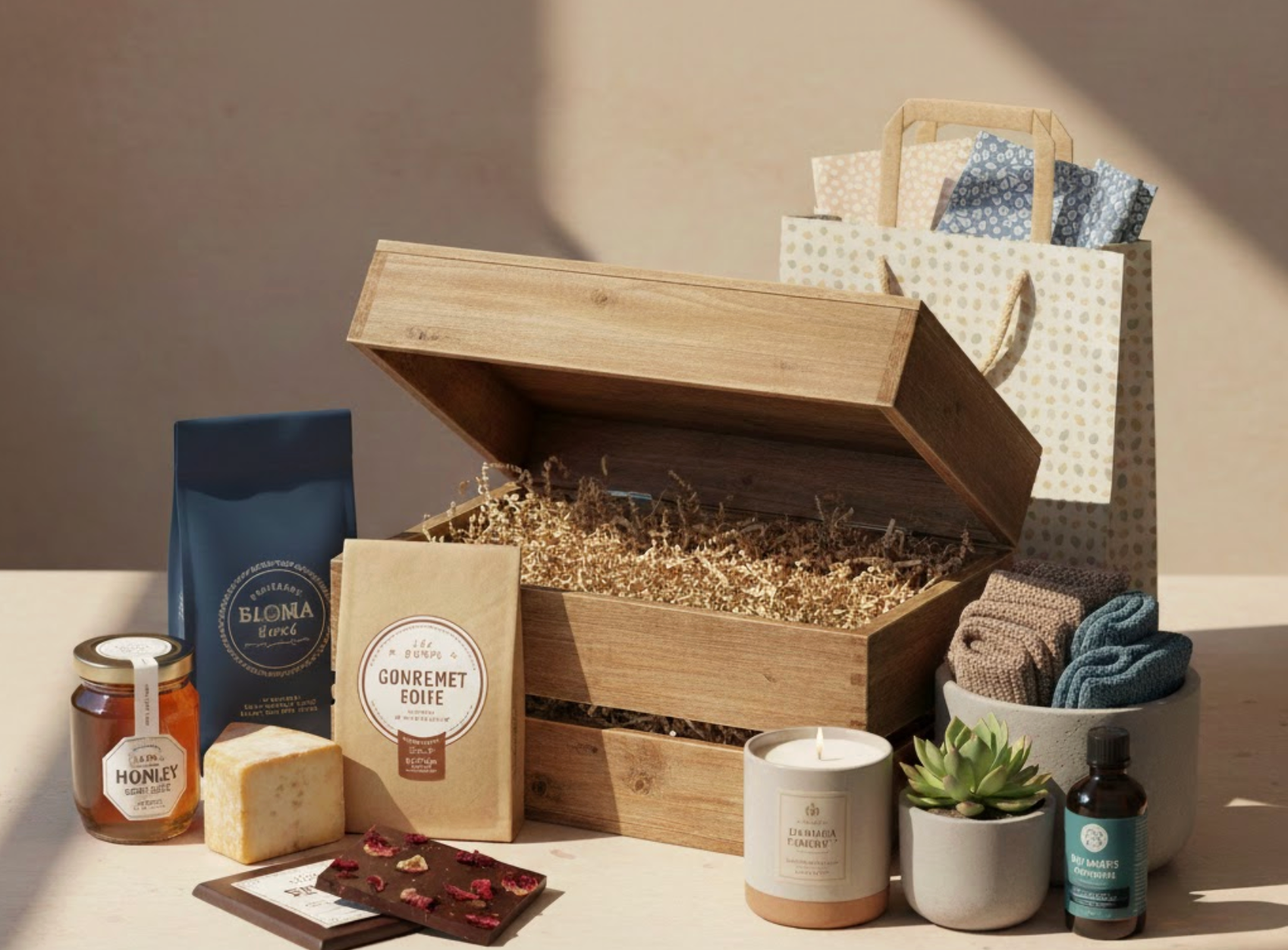
Not all products are equally suited for a Build-a-Box subscription. Ideally, items should be easy to ship, relatively consistent in size or weight, and priced in a way that feels fair when combined into a single box. Large price discrepancies or complex logistics can make the experience confusing or unbalanced.
A curated product selection helps customers build their box faster and with more confidence. Rotating items seasonally or highlighting bestsellers can keep the experience fresh without overwhelming users. With the overall box structure in place, the next step is to thoughtfully select products that align with both customer expectations and operational efficiency.
With your box concept defined, the next step is selecting products that fit well within a customizable subscription model:
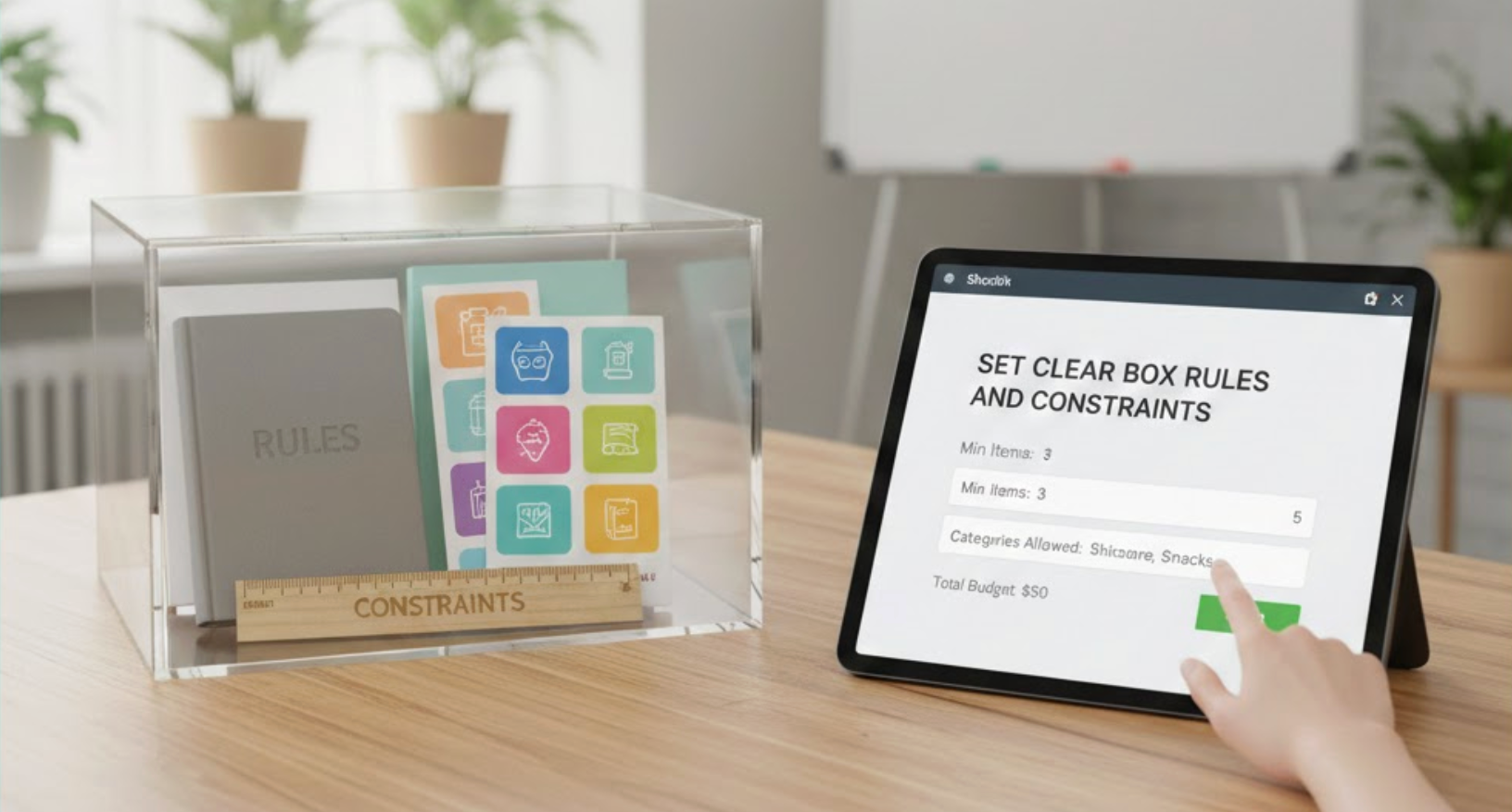
While customization is the appeal of Build-a-Box subscriptions, too much freedom can create uncertainty. Customers need clear boundaries to understand what’s allowed and what’s expected of them. Well-defined rules reduce cognitive load and make decision-making easier.
These rules should be communicated consistently throughout the box-building process, from the product selection interface to the cart and checkout. To ensure the experience feels structured rather than restrictive, box rules should gently guide customers while still preserving a sense of choice.
To keep the experience simple and frustration-free, these rules should clearly outline how customers can build their box.
Shopify does not natively support Build-a-Box subscriptions, so third-party apps are essential. Most setups require a subscription app combined with a bundling or box-builder app, although some solutions offer both features in one platform.
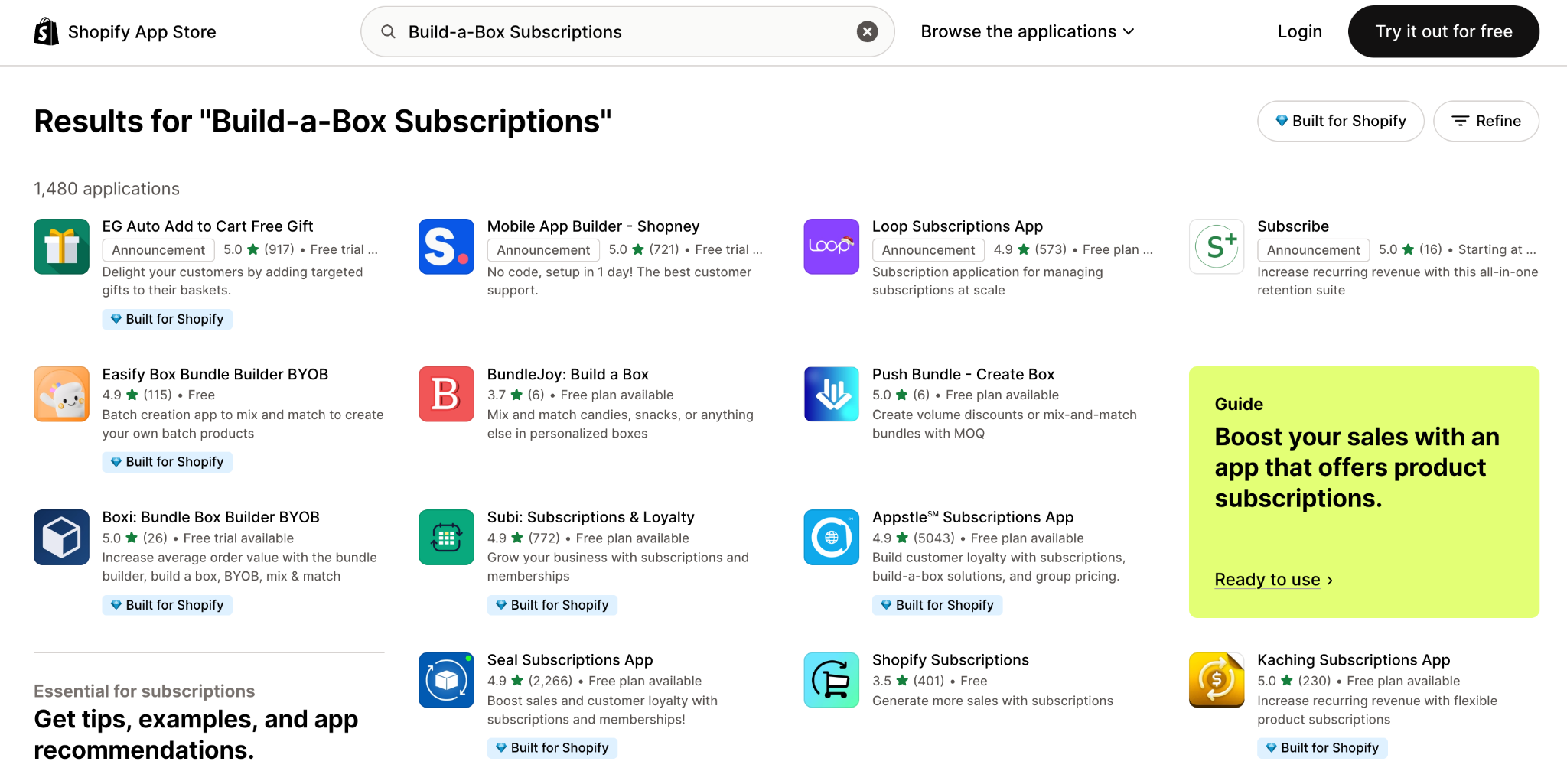
The apps you choose will directly affect the customer experience, from box customization to billing and renewals. Once your box logic is defined, selecting the right apps becomes the bridge between your concept and a fully functional subscription system.
Once your structure is in place, choosing the right apps becomes essential for turning your idea into a functional subscription system.
Even with the right products and apps, poor UX can derail a Build-a-Box subscription. Customers should always know what step they’re on, how many items they’ve selected, and what remains to be done. A guided experience reduces friction and increases completion rates.
Visual cues and real-time feedback help customers move confidently through the process. After the technical setup is complete, the focus should shift toward designing an experience that feels effortless and rewarding.
After the technical setup, focus on creating a box-building experience that feels intuitive and easy to complete.
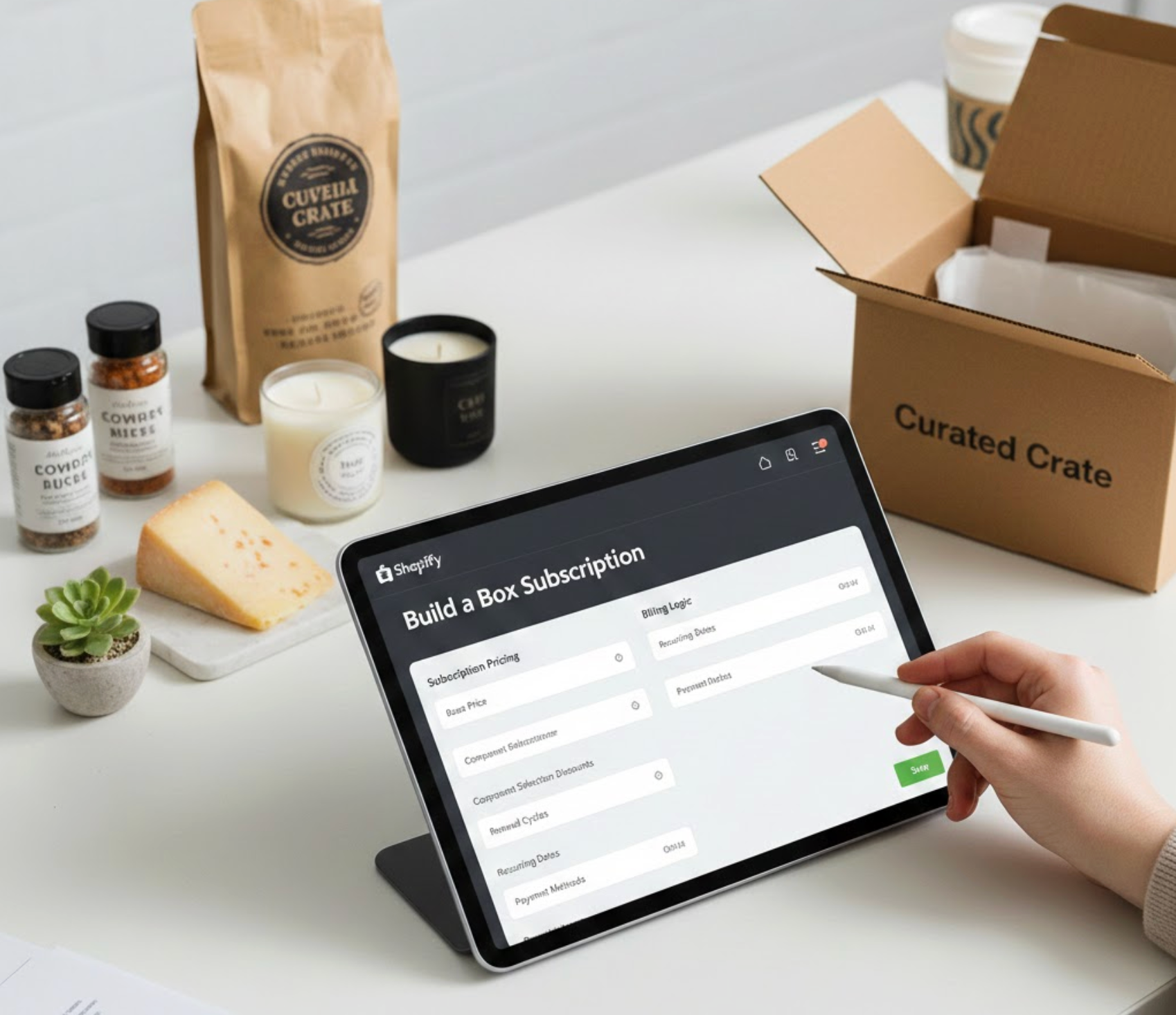
Pricing plays a critical role in subscription trust. Customers must clearly understand how much they’re paying, how often they’ll be charged, and what they’re receiving in return. Confusing or hidden billing details are a common cause of churn.
Subscription pricing should reinforce transparency and value throughout the journey. Once the box-building experience is defined, billing logic should seamlessly support it without introducing uncertainty.
With the experience designed, pricing and billing details should reinforce clarity and trust at every step.
A successful Build-a-Box subscription doesn’t end at checkout. Customers expect ongoing control over their subscription, including the ability to change box contents, skip deliveries, or cancel if needed. Removing friction post-purchase builds trust and reduces support requests.
Providing self-service options empowers customers and improves retention over time. As subscriptions continue beyond the first order, these management tools become essential to long-term satisfaction.
Beyond checkout, empowering customers to manage their subscriptions plays a key role in long-term satisfaction.
Launching a Build-a-Box subscription is only the beginning. Customer behavior, product popularity, and operational needs will evolve over time. Ongoing testing helps identify friction points and opportunities for improvement.
Small adjustments, such as refining box limits or reordering product displays, can significantly impact performance. Once your subscription is live, consistent optimization ensures it continues to grow sustainably.
Once everything is live, ongoing testing and refinement help ensure your Build-a-Box subscription continues to perform well.
Creating a Build-a-Box subscription in Shopify is a powerful way to combine personalization with recurring revenue. By defining clear rules, selecting the right products, and designing a guided experience, you can make customization feel simple rather than overwhelming.
When supported by transparent pricing and strong post-purchase management, Build-a-Box subscriptions drive higher engagement, increased order value, and long-term customer loyalty. With continuous testing and thoughtful optimization, this model can become a core growth engine for your Shopify store.