New to Shopify? Free trial, then $1/month for your first 3 months. Start free trial →
 Where is your store?
Ryviu works with both – pick yours to continue.









Launching a new product is one of the most important moments for any ecommerce store. However, no matter how strong your branding or how well-designed your product page is, one challenge almost always appears: low or zero reviews. For many shoppers, reviews are the final push that turns interest into action, and when they’re missing, hesitation naturally follows.
That said, low review counts are not a sign of failure. They are simply a reflection of timing. Every best-selling product once started with zero reviews. The key difference between products that succeed and those that struggle lies in how merchants handle this early-stage gap in social proof.
In this guide, we’ll break down why low review counts affect buyer behavior, what you can do to reduce friction during this phase, and how you can actively build trust while reviews are still growing.
To address the issue effectively, it’s essential to understand why shoppers care so much about reviews in the first place.
Online shopping removes the ability to touch, test, or experience a product physically. As a result, customers rely heavily on social proof to reduce uncertainty. Reviews act as validation that a product works, meets expectations, and has been purchased successfully by others.
When a product has very few or no reviews, customers often interpret it as:
As a result, even motivated buyers may pause, compare alternatives, or leave the site entirely. This hesitation doesn’t mean the product lacks value, it simply means the trust signals aren’t strong enough yet.
Understanding this psychological barrier allows you to proactively design product pages that compensate for low review volume, rather than letting it silently hurt conversions.

One of the simplest yet most effective ways to handle low review counts is to be upfront about them.
Instead of leaving customers to guess why reviews are missing, use short, clear cues such as “New arrival”, “Just launched”, or “Be one of the first to review this product.” These messages help shoppers immediately understand that the product is new, not unpopular or unreliable.
This small layer of transparency reframes the situation. Rather than viewing the product as risky, customers may see it as exclusive or ahead of the curve. In many cases, early adopters actually enjoy being among the first to try something new.
By setting expectations early, you remove doubt before it has a chance to grow, creating a smoother and more confident browsing experience.
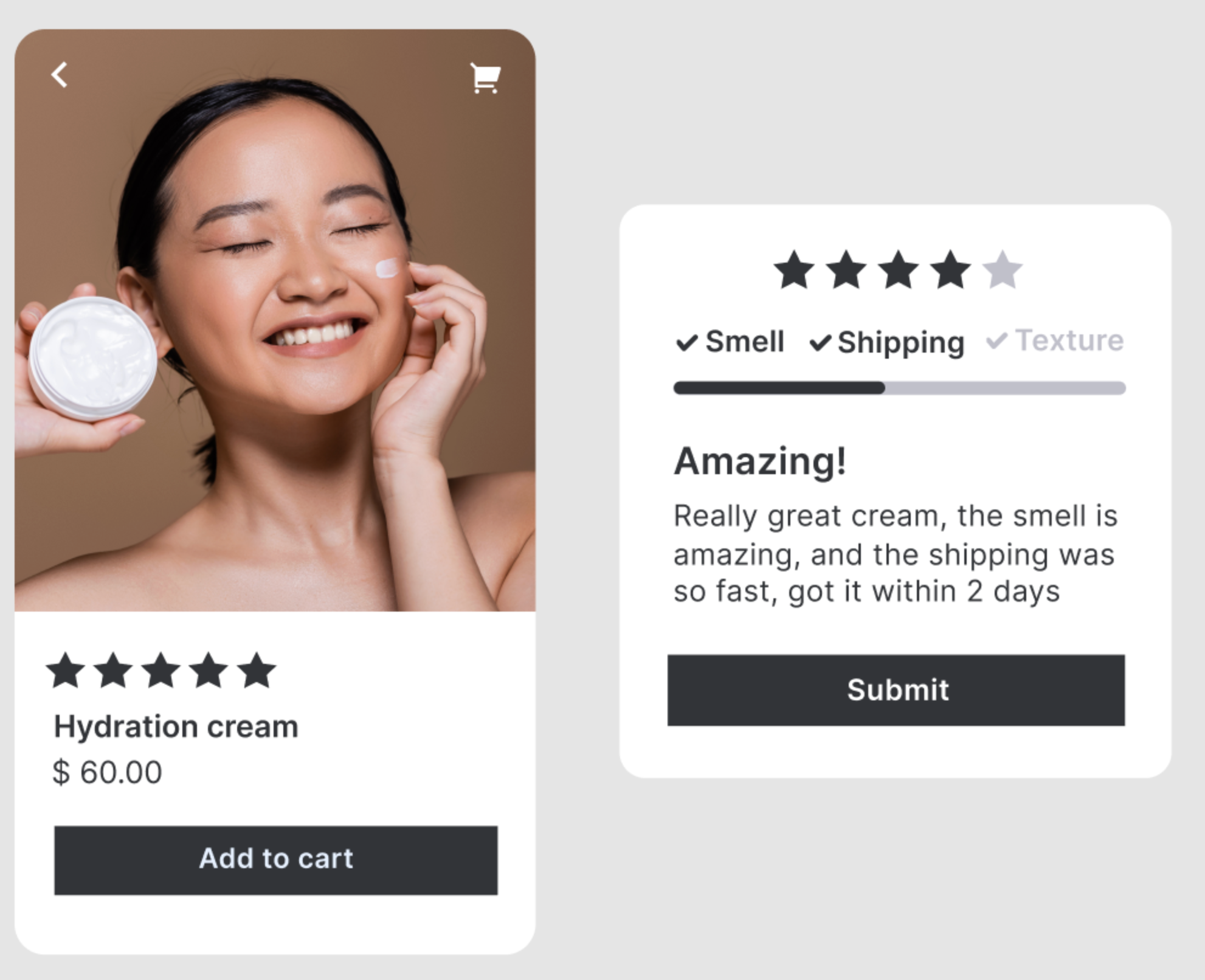
When reviews are limited, your product page must do more heavy lifting.
At this stage, customers rely more on what you show and explain, rather than what others say. This makes strong product content absolutely critical. Every element on the page should work together to answer unspoken questions and reduce uncertainty.
Focus on strengthening:
The more complete and informative your product page feels, the less customers will fixate on the lack of reviews. In many cases, clarity and confidence can temporarily replace social proof until reviews naturally accumulate.
Even if a specific product is new, your brand reputation doesn’t disappear, and you should make full use of it.
If your store already has positive feedback elsewhere, bring that credibility forward. Displaying overall store ratings, testimonials from other products, or total orders fulfilled helps reassure customers that they’re buying from a trustworthy business.
This approach works because shoppers often evaluate risk on two levels:
When product-level trust is still developing, strong brand-level signals can fill the gap. They remind customers that while the item is new, the seller is experienced, reliable, and accountable.
As a result, customers are more willing to take that first step, even without dozens of reviews.
Early reviews don’t just happen by accident, they need encouragement. However, the way you ask for them matters just as much as the request itself.
After a customer has received and used the product, follow up with a friendly, low-pressure review request. Timing is important here: asking too early feels pushy, while asking too late reduces response rates.
Effective review requests often:
You can also offer small incentives where platform policies allow, but these should never feel like a bribe. The goal is to encourage honest, voluntary feedback, not artificially positive reviews.
Over time, these early voices set the tone for your product’s long-term reputation.
When review volume is low, visual reviews become even more powerful.
A single photo or video from a real customer can do what multiple text reviews cannot, it proves that the product exists, has been delivered, and is being used in real life. This is especially important for fashion, home goods, beauty, and lifestyle products.
Visual reviews help shoppers:
Even with only a handful of reviews, adding photos or videos can dramatically increase perceived trust. In early stages, quality and authenticity often matter more than quantity.
While low review counts can be frustrating, taking shortcuts will always backfire.
Fake reviews may seem like a quick fix, but they create long-term risks. Shoppers are increasingly skilled at spotting unnatural language, repetitive phrasing, or suspicious posting patterns. Once trust is broken, it’s extremely difficult to rebuild.
In addition, many ecommerce platforms actively penalize stores that manipulate reviews. The short-term gain is never worth the potential damage to credibility, rankings, or customer loyalty.
A smaller number of genuine reviews will always outperform a large number of fake ones in the long run.
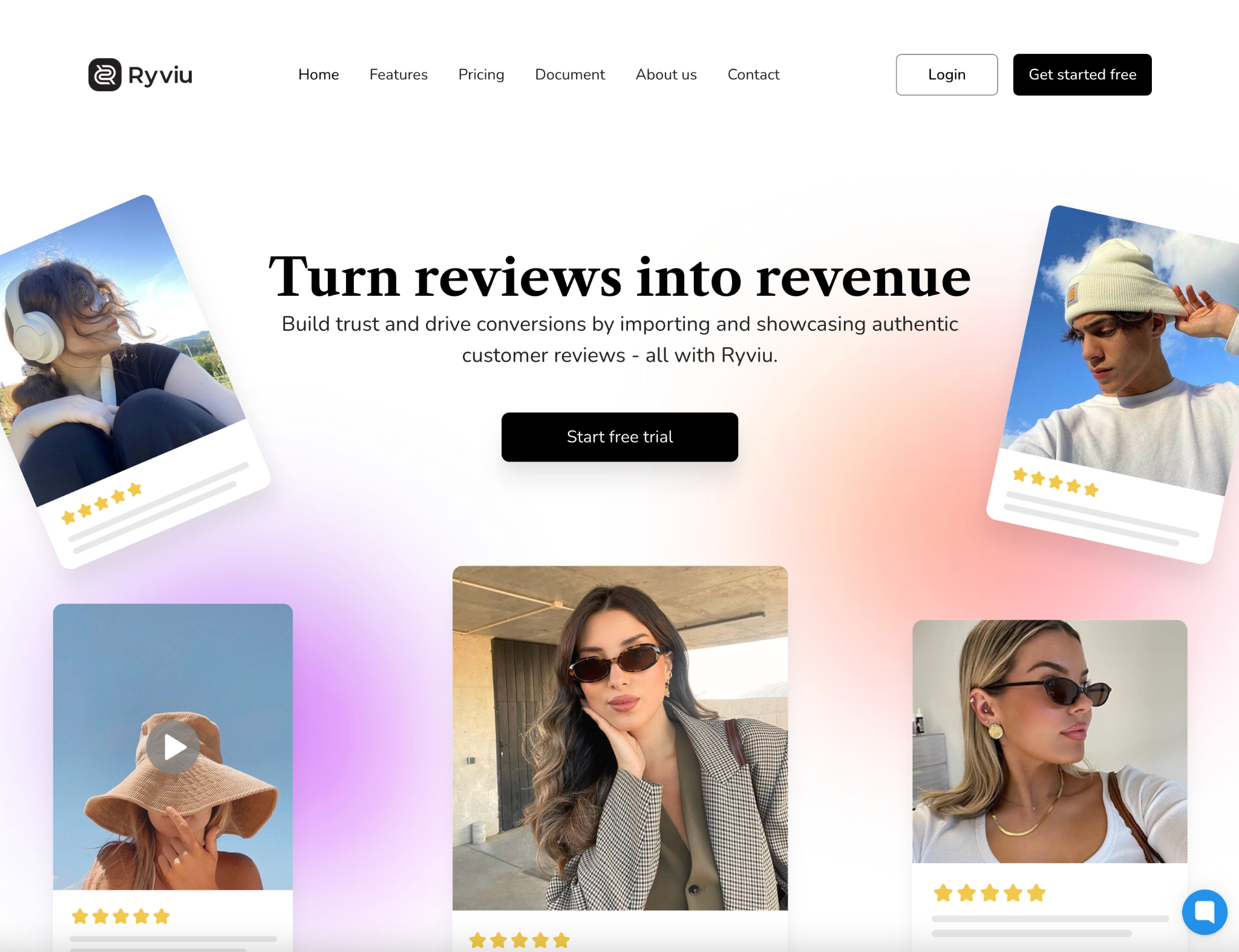
Handling low review counts manually can quickly become overwhelming, especially when launching multiple products at once. This is where Ryviu plays a crucial role.
Ryviu helps you manage and grow reviews strategically by:
By centralizing review collection and presentation, Ryviu allows new products to gain social proof faster, without sacrificing authenticity. Instead of waiting months for reviews to build organically, you create a trustworthy shopping experience from day one.
Low review counts are a natural part of every product launch, but they don’t have to limit your success. By setting clear expectations, strengthening product content, leveraging brand trust, and actively encouraging genuine feedback, you can reduce hesitation and protect conversions during this early phase.
With the right strategy, low review counts become a temporary challenge rather than a permanent barrier. When handled correctly, even new products with few reviews can feel credible, compelling, and ready to convert.