New to Shopify? Free trial, then $1/month for your first 3 months. Start free trial →
 Where is your store?
Ryviu works with both – pick yours to continue.








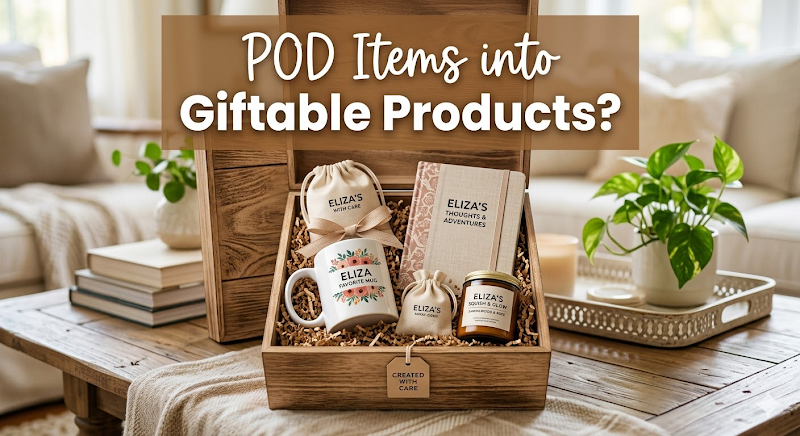
Print-on-demand (POD) has opened the door for anyone to start an online store with minimal upfront cost and risk. However, as more sellers enter the market, competition increases and basic products alone are no longer enough to stand out. Customers today are not just shopping for items—they are searching for meaningful, memorable gifts.
The difference between a product that sells occasionally and one that consistently converts often lies in how “giftable” it feels. A simple mug, hoodie, or tote bag can become a best-selling item when positioned correctly. By focusing on emotion, presentation, and customer experience, you can dramatically increase your product’s perceived value. Let’s explore how to transform ordinary POD items into products people love to give.
Most POD sellers begin by focusing on visuals like colors, typography, and graphics. While design is important, it is not the main driver behind gift purchases. People buy gifts to express feelings, not just to own something visually appealing. When creating a product, think about the emotional trigger behind it. Is it love, humor, nostalgia, or appreciation? A product that connects emotionally will always outperform one that is purely decorative. To make this shift, you need to design with intention rather than decoration.
Here’s how to apply emotion-driven design:
Personalization is Everything
Personalized products instantly feel more valuable because they are made specifically for someone. Even a simple addition like a name or date can turn a basic item into a keepsake. This is one of the easiest ways to increase both conversion rate and customer satisfaction. Customers are naturally drawn to products that feel unique. Personalization creates a sense of ownership and emotional attachment that generic products cannot match. It also makes the buyer feel more confident that their gift will be appreciated. Once you understand its impact, the next step is making personalization easy and accessible.
Ways to add personalization to POD products:
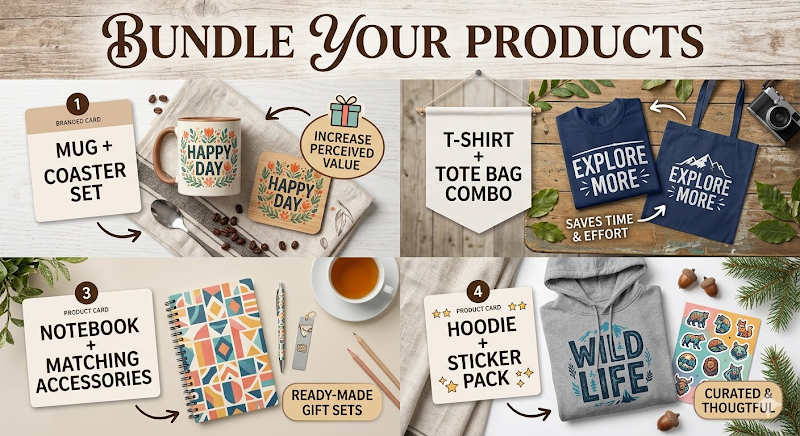
A single POD item can feel underwhelming as a gift. However, when combined with complementary products, it instantly becomes more complete and thoughtful. Bundling is a powerful way to increase perceived value without drastically increasing costs. Customers often prefer buying ready-made gift sets instead of assembling items themselves. Customers often prefer buying ready-made gift sets, which aligns with how psychological pricing reduces decision-making effort. It saves time and removes decision fatigue. Bundles also give your store a more professional and curated feel. With that in mind, consider how your products can naturally work together.
Effective bundle ideas:
Even the best product can fail if it looks unappealing online. Customers rely heavily on visuals when deciding whether something is gift-worthy. Presentation is what transforms a simple item into something desirable. Lifestyle images help customers imagine the product in real-life situations. When people can visualize giving or receiving the item, they are more likely to buy. This is especially important for gift-focused products. To elevate your store, you need to move beyond basic mockups.
Ways to improve presentation:
Packaging plays a major role in how a gift is perceived. Even if your POD supplier has limitations, you can still position your product as gift-ready. Small touches can make a big difference in customer perception. Customers want convenience when buying gifts. If your product feels ready to give, it removes an extra step for them. This can significantly improve conversion rates. So, think about how you can enhance the gifting experience without complicating operations.
Ways to make products feel gift-ready:
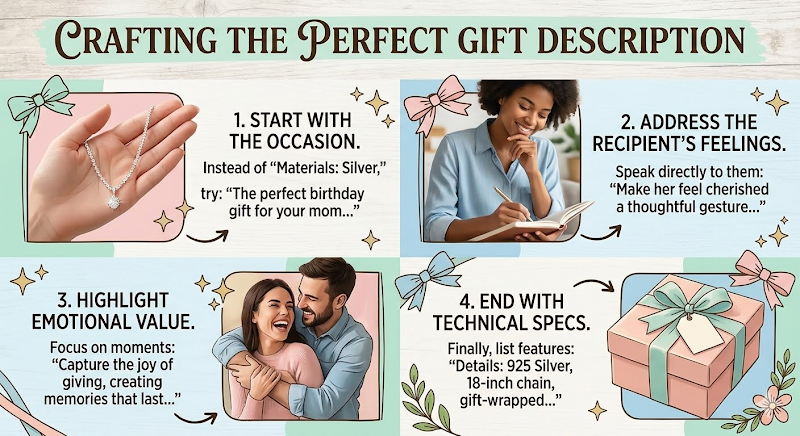
A standard product description focuses on materials and specifications. However, gift buyers care more about meaning and impact. Your description should help customers imagine the emotional moment of giving. Instead of listing features first, start by addressing the buyer’s intent. Speak directly to the occasion and the recipient. This approach makes your product feel more relevant and compelling. Once you shift your mindset, writing becomes much more effective.
How to write better gift descriptions:
Most customers search for gifts based on occasions, not product categories. They are looking for “birthday gifts” or “Mother’s Day ideas,” not just mugs or t-shirts. Aligning your products with these searches can increase visibility. Occasion-based marketing also helps customers quickly determine if your product is relevant. It reduces hesitation and speeds up decision-making. This is especially important during peak shopping seasons. With this in mind, your listings should reflect real customer search behavior.
Ways to optimize for occasions:
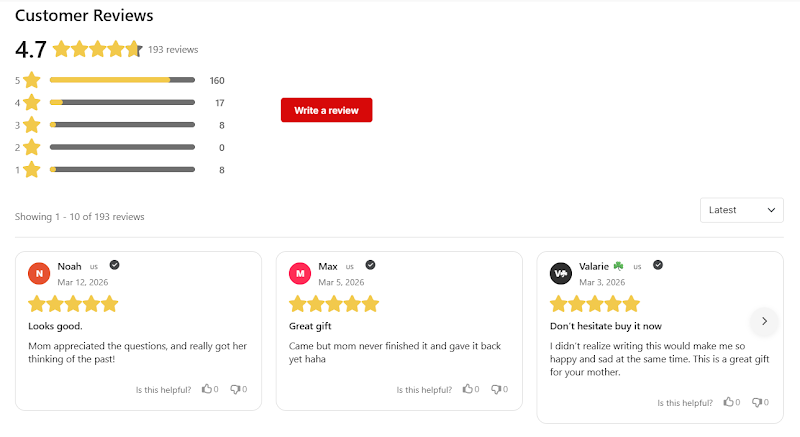
Customers trust other customers more than any marketing message. Reviews provide reassurance that your product is worth buying. For giftable items, visual proof is even more powerful. Seeing someone else give or receive your product creates emotional validation. It helps potential buyers imagine the same experience. This can significantly increase conversion rates. To maximize this effect, you need a system that showcases reviews effectively.
How to leverage social proof:
A review app like Ryviu can help you collect and display photo reviews in a clean, engaging way, making your products feel more trustworthy and gift-worthy without overwhelming your design.
A well-organized store makes shopping easier and more enjoyable. Instead of listing random products, grouping them into gift collections provides structure. It also helps customers discover more items. Gift collections guide customers toward relevant options. They reduce the effort needed to find the perfect product. This leads to higher engagement and better sales performance. To achieve this, think from the customer’s perspective when organizing your store.
Examples of effective collections:
Storytelling adds depth and meaning to your products. A simple item becomes more memorable when it carries a message or narrative. This emotional layer is what makes a product truly giftable. Stories help customers connect on a personal level. They transform a purchase into an experience. This is especially important for sentimental or personalized items. To make your products stand out, focus on the story behind them.
Ways to incorporate storytelling:
Final Thought
Turning simple POD items into giftable products is not about changing what you sell, but how you present it. By focusing on emotion, personalization, and customer experience, you can significantly increase your product’s value. Small improvements in positioning can lead to big results.
When you combine strong presentation with social proof and thoughtful messaging, your products become more than just items, they become meaningful gifts. Tools like Ryviu can further support this by showcasing real customer experiences, helping build trust naturally.
Start applying these strategies step by step, and you’ll see your POD store evolve from basic to truly gift-worthy.