New to Shopify? Free trial, then $1/month for your first 3 months. Start free trial →
 Where is your store?
Ryviu works with both – pick yours to continue.








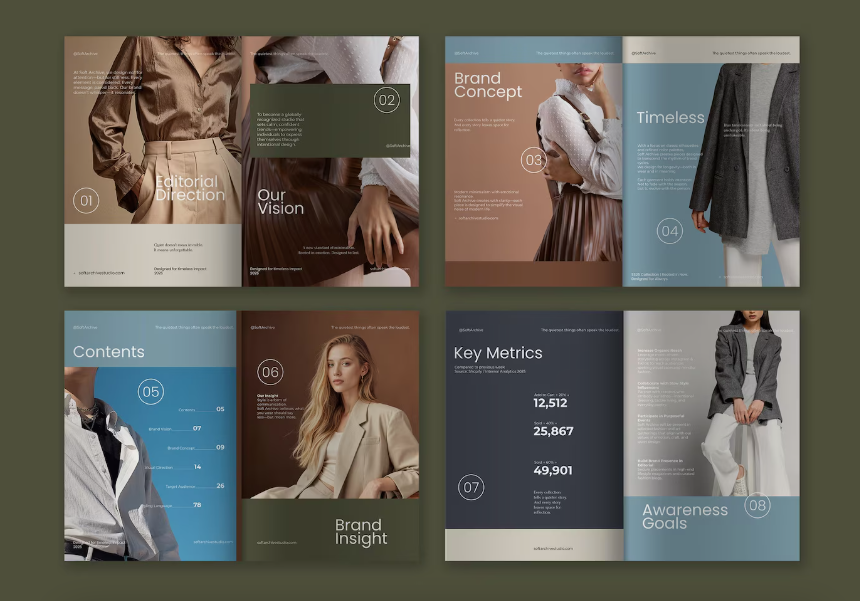
Choice is supposed to empower shoppers, yet in modern eCommerce it often does the opposite. Endless product variations, colors, styles, and bundles can leave customers feeling overwhelmed and uncertain. This hesitation—known as choice anxiety—causes delays, abandoned carts, and missed conversions. Lookbooks offer a powerful visual solution to this problem.
By curating products into styled, contextual collections, lookbooks help indecisive shoppers imagine outcomes rather than compare options endlessly. In this article, we’ll explore how lookbooks reduce choice anxiety, why visual storytelling matters, and how thoughtful design can gently guide shoppers toward confident decisions without pressure or complexity.
Choice anxiety occurs when shoppers face too many options without clear guidance. Instead of feeling in control, they become unsure whether they are making the best decision. This emotional friction is especially common in fashion, home decor, beauty, and lifestyle categories, where personal taste and visual outcomes matter deeply.
In eCommerce, filters and product grids often emphasize comparison rather than clarity. While these tools are useful, they don’t always help shoppers visualize how products work together or fit into their lives.
In physical stores, shoppers can see products in context, feel textures, and get help from staff. Online, they are often left alone with dozens of thumbnails and technical descriptions. Without context, every option feels equally risky.
Indecisive shoppers are not necessarily uninterested; they are cautious. They want reassurance that their choice will look good, work well, and feel right.
Lookbooks are curated visual collections that show products styled together in realistic or aspirational settings. Rather than presenting items individually, lookbooks tell a visual story.
This storytelling approach reduces the mental effort required to evaluate options.
Lookbooks shift the shopper’s mindset from “Which one should I choose?” to “I like this look.” This subtle change has a powerful effect. When shoppers respond emotionally to a visual composition, decision-making becomes more intuitive.
Instead of comparing features, shoppers imagine outcomes. This visualization reduces uncertainty and builds confidence.
By showing products together, lookbooks act as silent guides. They suggest combinations and use cases without explicitly telling shoppers what to buy.
This feels supportive rather than pushy, which is especially important for indecisive customers.
Human brains process visuals far faster than text. For indecisive shoppers, visuals reduce cognitive load by simplifying complex choices into recognizable patterns.
Lookbooks leverage this natural preference for visual information.
When products are grouped into a styled look, the brain perceives them as a single unit rather than multiple separate decisions. This reduces mental strain and speeds up decision-making.
Instead of choosing from twenty items, the shopper chooses one cohesive look.
Well-designed lookbooks often resemble magazine spreads, social media posts, or lifestyle imagery that shoppers already trust. This familiarity creates emotional comfort.
When something feels familiar, it feels safer to choose.
Not all lookbooks reduce anxiety. Poorly designed ones can create new confusion. To be effective, lookbooks must be intentional, focused, and empathetic.
Design decisions should always support clarity rather than showcase variety for its own sake.
Each lookbook section should feature a manageable number of products. Too many items reintroduce the same anxiety lookbooks are meant to solve.
A small, cohesive set allows shoppers to focus on the overall style rather than individual comparisons.
Consistency in lighting, styling, and composition helps shoppers focus on the products themselves. Inconsistent visuals can feel chaotic and undermine trust.
Clean, cohesive visuals signal professionalism and control.
One of the biggest strengths of lookbooks is their ability to provide context. Context answers questions that product pages often leave unanswered.
For indecisive shoppers, context is more reassuring than specifications.
When shoppers see products in realistic environments, they can better imagine using them. This reduces the fear of making a wrong choice.
Context transforms abstract options into concrete possibilities.
Lookbooks naturally emphasize how products are used together rather than listing technical details. This aligns better with how indecisive shoppers think.
They care less about specifications and more about how the product fits into their life.
Lookbooks are most effective when they guide gently. Indecisive shoppers resist hard selling and pressure.
Subtle cues help them move forward without feeling rushed.
By guiding the eye toward a primary item, lookbooks reduce ambiguity. Shoppers intuitively understand where to focus first.
Supporting items then feel like natural additions rather than extra decisions.
While lookbooks simplify decisions, they should still allow curious shoppers to explore details. Links to individual product pages should feel optional, not mandatory.
This balance respects different decision-making styles.
Where and how lookbooks appear matters just as much as how they are designed. Poor placement can reduce their impact.
Lookbooks should appear at moments where indecision is most likely.
On category pages, lookbooks can act as visual shortcuts, helping shoppers bypass endless scrolling. On product pages, they show how an item fits into a broader style.
Both placements reduce uncertainty and keep shoppers engaged.
Calls to action should reinforce exploration rather than urgency. Phrases that encourage discovery feel safer to indecisive shoppers.
The goal is to maintain momentum without pressure.
Beyond conversions, lookbooks play a deeper role in building shopper confidence and trust.
They show that the brand understands how customers think and feel.
Well-curated lookbooks position the brand as a trusted guide rather than a salesperson. This expertise reassures indecisive shoppers that they are in good hands.
Trust reduces hesitation more effectively than discounts or urgency tactics.
Lookbooks often reflect a lifestyle or identity. When shoppers see themselves in that story, decisions feel more personal and meaningful.
This emotional alignment makes choices feel right rather than risky.
To refine lookbooks, businesses should understand how they influence behavior. Measurement helps ensure that visual storytelling is actually reducing anxiety.
Data complements intuition.
Metrics such as time spent, click-through rates, and scroll depth reveal whether shoppers engage with lookbooks. Increased interaction often correlates with reduced hesitation.
Behavioral patterns can highlight which looks resonate most.
Customer feedback provides insight into emotional responses that numbers alone can’t capture. Indecisive shoppers often express relief or clarity when lookbooks help them decide.
These insights guide future improvements.
Lookbooks are powerful tools for reducing choice anxiety because they replace overwhelming selection with visual clarity and inspiration. For indecisive shoppers, seeing curated looks in context feels safer than comparing endless options. When designed thoughtfully, lookbooks guide without pressure, simplify decisions, and build emotional confidence. They transform shopping from a stressful process into an enjoyable exploration. By focusing on visual storytelling, consistency, and empathy, brands can help shoppers move from hesitation to confidence—one curated look at a time.