New to Shopify? Free trial, then $1/month for your first 3 months. Start free trial →
 Where is your store?
Ryviu works with both – pick yours to continue.









A product Q&A section can be one of the most powerful trust-building tools on your store, but only if customers actively participate. While many shoppers are willing to ask questions, far fewer feel motivated to answer them. Encouraging customers to share their real experiences not only reduces support workload but also creates social proof that helps future buyers make confident decisions. The key lies in making participation easy, rewarding, and meaningful.
Below are proven strategies to turn passive buyers into helpful contributors in your product Q&A section.
Many customers assume that Q&A sections are meant only for store owners or support teams. If this expectation isn’t addressed, even satisfied buyers may hesitate to respond. You need to clearly communicate that customer insights are valued and encouraged.
To gently guide customer behavior, your Q&A interface should set the right expectations upfront. Small wording changes can significantly influence participation rates.
When customers understand that their voice belongs in the conversation, they’re far more likely to contribute.
Timing plays a crucial role in whether customers respond to questions. If you ask too early, they may not have enough experience with the product. Ask too late, and they may have already forgotten key details.
The most effective approach is to reach out when the product is still fresh in their mind but has already been used. This balance makes answering questions feel effortless rather than burdensome.
By aligning your requests with the customer journey, you significantly increase response quality and engagement.
Even helpful customers may avoid answering if the process feels time-consuming or complicated. Friction, no matter how small, can dramatically lower participation rates.
Your goal should be to make answering a question feel like a quick, low-effort action. The easier it is, the more likely customers are to participate.
When customers can answer in under a minute, participation becomes a natural habit rather than a chore.
Most customers are more motivated by purpose than by obligation. If they understand how their answers benefit others, they’re more likely to contribute thoughtfully.
Position answering questions as an act of helpfulness and community-building rather than a task. This emotional framing increases both response rate and answer quality.
When customers feel their input truly matters, they’re more willing to share it.
Recognition is a powerful motivator, even without monetary incentives. Customers who feel appreciated are more likely to answer again in the future.
You don’t need complex reward systems, simple acknowledgments often work just as well when done consistently and visibly.
By rewarding participation, you turn one-time contributors into long-term advocates.
If unanswered questions are buried or invisible, customers won’t notice them, let alone answer them. Visibility plays a major role in driving engagement.
Bring unanswered questions to places where customers naturally spend time, especially after purchase or during browsing.
The more visible the need for answers, the more likely customers are to step in.
People are more inclined to take action when they see others doing the same. A lively Q&A section signals that participation is normal and valued.
By showcasing active engagement, you reduce hesitation and create momentum.
Social proof reassures customers that answering questions is both common and appreciated.
Customers are more willing to answer when they know their responses won’t be misinterpreted or left unchecked. Light moderation helps maintain quality while building confidence.
Your role is to support, not overshadow, customer contributions.
This supportive approach encourages ongoing participation while maintaining accuracy.
Dedicated review and Q&A apps can make customer participation far more seamless and effective. By using tools like Ryviu, for example, you can integrate Q&A directly with customer reviews, creating a stronger feedback ecosystem.
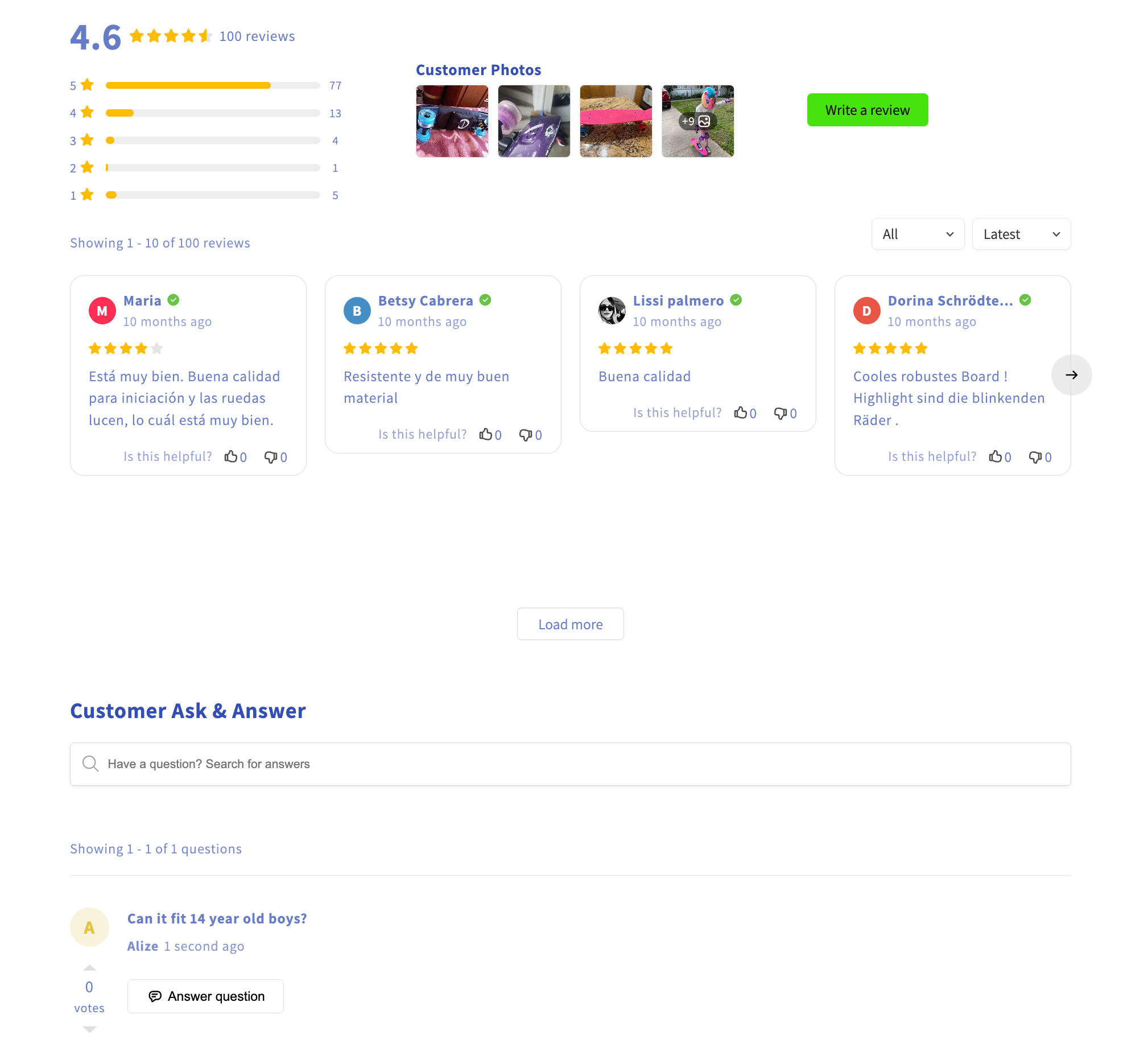
By connecting verified buyers with relevant questions, these tools help automate participation without feeling intrusive.
When Q&A is integrated into your broader review strategy, customer engagement becomes both scalable and authentic.
Encouraging customers to answer others’ questions isn’t about pushing harder, but it’s about removing friction, providing clarity, and creating motivation. When customers understand their role, feel appreciated, and can respond easily, participation becomes natural.
A well-managed Q&A section builds trust, reduces purchase hesitation, and turns satisfied customers into valuable contributors. By applying the strategies above, you can transform your Q&A section into a living, community-driven resource that drives confidence and conversions.