New to Shopify? Free trial, then $1/month for your first 3 months. Start free trial →
 Where is your store?
Ryviu works with both – pick yours to continue.








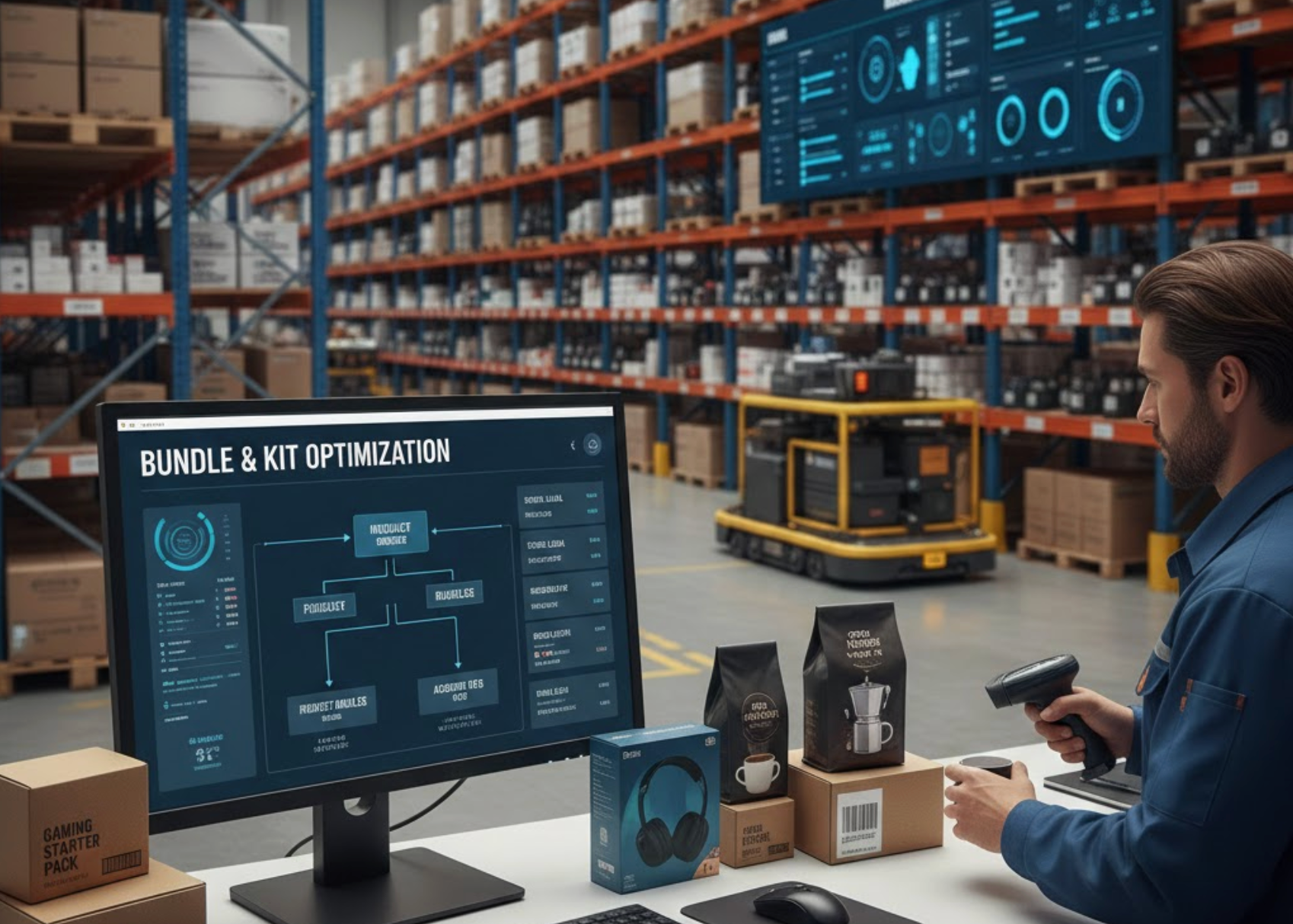
Product bundles and kits are an effective strategy for increasing average order value, improving product discovery, and encouraging customers to buy more in a single transaction. By grouping complementary items together, merchants can deliver added value while simplifying the buying decision for shoppers. However, behind the scenes, managing inventory for bundles and kits introduces a layer of complexity that doesn’t exist with single-product sales.
When multiple products share the same inventory pool, even a small tracking mistake can lead to overselling, fulfillment delays, or frustrated customers. This article walks through practical and scalable strategies to help you manage bundle and kit inventory accurately, reduce operational risk, and support long-term growth.
The first step in managing inventory effectively is understanding how bundles and kits function within your product catalog. Although they may look similar on the storefront, they behave very differently in inventory systems and fulfillment workflows. Misclassifying them often leads to incorrect stock deductions and reporting issues.
Bundles usually consist of multiple existing products sold together without being physically combined, while kits are often assembled or packaged into a single unit before sale. This distinction determines whether inventory is tracked at the individual product level or as a standalone SKU. Clarifying this early helps prevent future complications as your store scales.
Once you define how your bundles and kits work, it becomes much easier to apply consistent inventory rules.
Tracking inventory at the component level is one of the most reliable methods for managing bundles, especially when items are sold both individually and as part of multiple bundles. This approach ensures that stock levels remain accurate no matter how a product is purchased. Without component-level tracking, stores often oversell items that appear in multiple bundle offers.
By linking each bundle to its underlying components, inventory updates automatically whenever a sale occurs. This allows your system to calculate bundle availability based on real-time component stock rather than static bundle quantities. It also supports greater flexibility when adjusting or creating new bundle combinations.
Component-level tracking creates a dependable foundation for scaling bundle strategies without sacrificing accuracy.
Clear inventory rules are essential for avoiding confusion and fulfillment issues when selling bundles and kits. Without predefined rules, bundles may remain purchasable even when one or more components are unavailable, leading to order cancellations or customer dissatisfaction. These rules act as safeguards that protect both your customers and your operations.
Establishing inventory behavior in advance ensures your store reacts automatically to stock changes. This becomes especially important during promotions, flash sales, or seasonal peaks when inventory moves quickly and manual oversight is limited.
Well-defined rules reduce manual fixes and keep customer expectations aligned with real inventory.
Selling through multiple channels increases reach, but it also increases the complexity of inventory management, especially for bundles. A sale on one platform immediately affects bundle availability everywhere else, making real-time synchronization essential. Without proper syncing, stock discrepancies can appear quickly.
A centralized inventory system ensures that every channel reflects the same stock data at all times. This approach minimizes errors and creates a consistent shopping experience regardless of where customers place their orders.
Accurate syncing keeps your operations aligned and prevents costly overselling issues.
Bundles often perform differently than standalone products, especially during promotions, holidays, or clearance events. Forecasting demand for bundles helps you prepare adequate inventory levels and avoid running out of key components at critical times. Relying only on individual product sales data can lead to inaccurate forecasts.
By analyzing historical bundle performance, you can identify patterns and anticipate future demand more accurately. This insight allows you to plan smarter reorders and allocate inventory where it generates the most value.
Strong forecasting helps maintain availability while reducing excess inventory.
As your product catalog grows, manually managing bundle inventory becomes increasingly inefficient and error-prone. Automation plays a critical role in maintaining accuracy and reducing the operational workload associated with complex bundle setups. Automated systems respond instantly to inventory changes, something manual processes cannot reliably achieve.
Inventory automation tools handle stock deductions, availability updates, and alerts without human intervention. This not only saves time but also reduces the risk of mistakes that can lead to lost sales or customer complaints.
Automation allows you to focus on growth while maintaining inventory precision.
Even with advanced automation, regular inventory audits are essential to ensure long-term accuracy. Returns, damaged goods, and system errors can slowly create discrepancies between recorded and actual stock levels. Audits help you catch these issues before they affect customers.
Routine checks also provide an opportunity to review bundle configurations and ensure they still align with current inventory and sales performance. This proactive approach keeps your bundle strategy efficient and profitable.
Consistent auditing strengthens inventory reliability and supports smoother fulfillment.
Managing inventory for bundles and kits requires a thoughtful balance between flexibility and control. By clearly defining bundle types, tracking inventory at the component level, syncing across channels, and leveraging automation, merchants can prevent common inventory challenges. These practices create a system that scales alongside your business without introducing unnecessary risk.
When inventory is managed correctly, bundles and kits become a powerful growth tool, driving higher order values, improving customer satisfaction, and keeping operations efficient even as demand increases.