New to Shopify? Free trial, then $1/month for your first 3 months. Start free trial →
 Where is your store?
Ryviu works with both – pick yours to continue.









In the modern eCommerce landscape, shoppers are no longer passive consumers of marketing messages. They are informed, skeptical, and highly comparison-driven. Before making a purchase, especially online, customers actively evaluate what a brand promises versus what real users actually experience. This tension between brand claims and customer reviews plays a decisive role in shaping trust.
While both elements are essential to a successful product page, they serve very different purposes. By comparing them across key trust-building dimensions, we can clearly see which one influences shoppers more, and at what stage of the buying journey.
Brand claims originate from the company itself. They are written by marketing teams with the clear goal of persuasion, positioning, and differentiation. Even when factual, shoppers instinctively understand that these statements are selective and benefit-driven. As a result, brand claims are often viewed as expected rather than believed.
Customer reviews come from people who have already paid for and used the product. Because these reviewers have no direct incentive to sell, their opinions feel independent. The informal language, uneven structure, and personal tone of reviews actually increase their credibility by signaling authenticity.
Verdict: Reviews are more credible because shoppers trust third-party experiences more than self-reported brand messaging.
Brand claims attempt to build trust through authority and confidence. Phrases like “expert-designed,” “top-rated,” or “trusted by thousands” are meant to reassure shoppers logically. While this can establish baseline trust, it often remains abstract and emotionally distant.
Customer reviews create trust through empathy and shared experience. When shoppers read about someone with the same problem, lifestyle, or expectations, they emotionally connect to the outcome. This connection helps reduce fear of regret and increases confidence in the decision.
Verdict: Brand claims create surface-level trust, but reviews build emotional trust that feels personal and reassuring.
Brand claims focus on ideal scenarios. They highlight best-case benefits, core features, and designed use cases. However, they rarely explain how a product performs over time or in less-than-perfect conditions.
Customer reviews provide practical, experience-based detail. Shoppers learn how a product fits into daily routines, whether it meets expectations long-term, and how it performs compared to alternatives. These insights answer unspoken questions that brand descriptions often avoid.
Verdict: Reviews offer deeper, more realistic insights that help shoppers make confident, informed decisions.
Shoppers expect brand claims to emphasize positives and minimize weaknesses. When claims sound overly perfect or exaggerated, they often trigger doubt rather than excitement.
Customer reviews, especially when mixed, signal transparency. A few negative or neutral reviews make the positive ones more believable. Shoppers interpret this balance as honesty, not failure.
Verdict: Reviews feel more transparent because they show both strengths and weaknesses without filtering.
Brand claims are most influential at the awareness stage. They help shoppers quickly understand what a product is and why it might be worth considering. However, their influence often fades as shoppers move closer to making a decision.
Customer reviews dominate the evaluation and conversion stages. Many shoppers actively seek reviews before purchasing, using them as a final confirmation step. Positive reviews can push hesitant buyers forward, while negative ones can immediately stop a purchase.
Verdict: Brand claims attract interest, but reviews determine whether a purchase actually happens.
Buying online always involves risk, wrong size, poor quality, wasted money. Brand claims attempt to reduce this risk by promising quality and satisfaction, but promises alone don’t eliminate uncertainty.
Customer reviews reduce perceived risk by showing real outcomes. When shoppers see consistent feedback that matches the brand’s claims, they feel reassured. This is especially powerful when reviews include photos, usage stories, or long-term experiences.
Verdict: Reviews are more effective at reducing purchase anxiety and increasing buyer confidence.
Brand claims remain static, but customer perception evolves. If real experiences don’t align with the promises, long-term trust erodes quickly.
Customer reviews continuously shape brand reputation. Over time, consistent positive feedback builds credibility that outperforms any slogan. By using Ryviu, you can easily collect and display authentic reviews, allowing trust to grow organically through real customer voices.
Verdict: Reviews are essential for long-term trust, while brand claims mainly support initial positioning.
The most effective approach is not choosing between brand claims and customer reviews, but combining both strategically. Brand claims help shape perception and communicate value quickly, while reviews add credibility through real experiences. When these two elements work together, they reduce doubt and strengthen shopper confidence. Instead of sounding promotional, the product message feels verified and trustworthy.
To achieve this balance, brands need to align what they promise with what customers consistently experience:
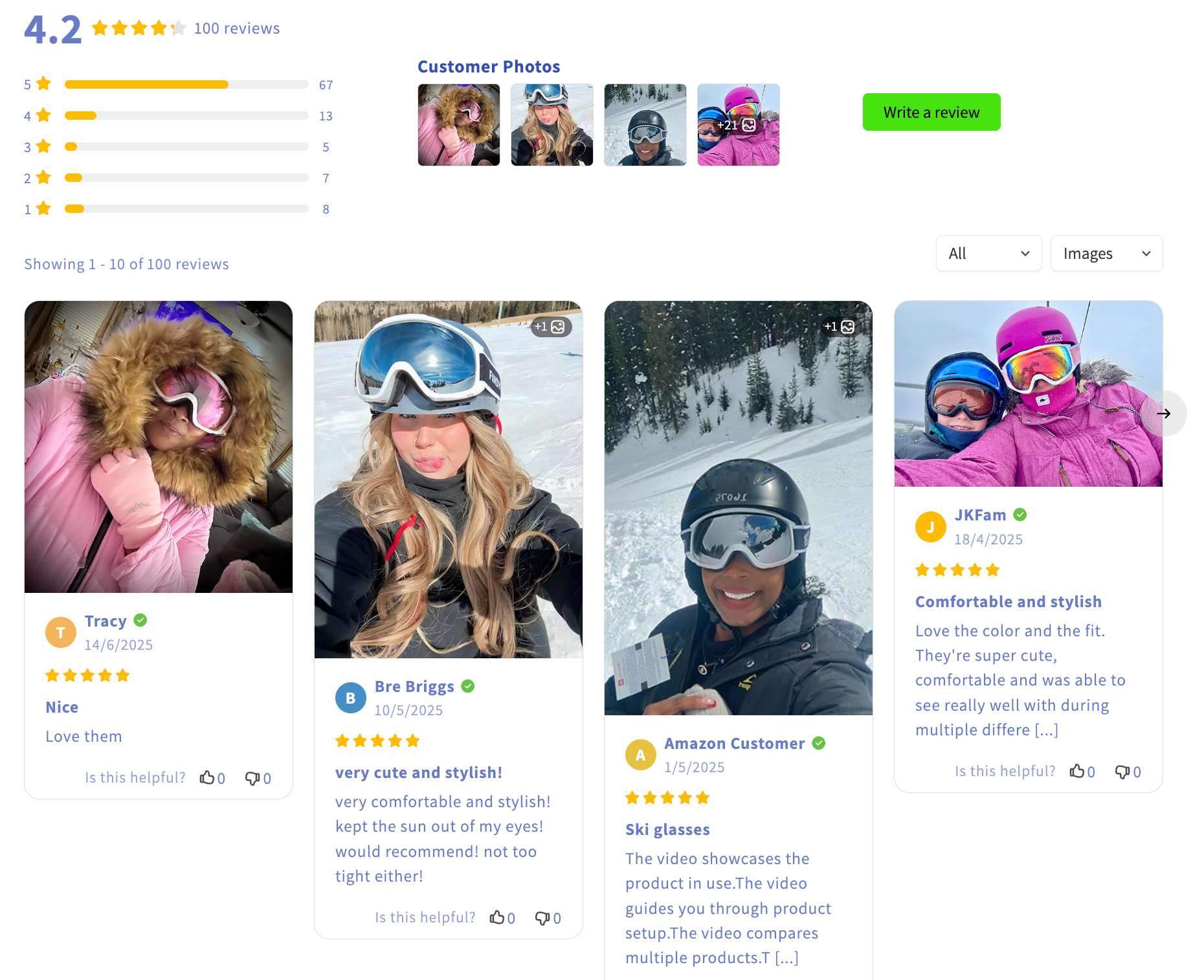
When comparing real customer reviews and brand claims across credibility, emotional trust, transparency, decision impact, and long-term influence, the conclusion is clear.
Brand claims are necessary but not sufficient. They explain what a product should do. Customer reviews reveal what it actually does. In the eyes of modern shoppers, truth is proven by experience, not promises.
Ultimately, shoppers trust brand claims only when customer reviews confirm them. Brands that align compelling messaging with authentic customer feedback don’t just sell more, they earn trust, loyalty, and lasting credibility.