 New to Shopify? Free trial, then $1/month for your first 3 months. Start free trial →
 Where is your store?
Ryviu works with both – pick yours to continue.








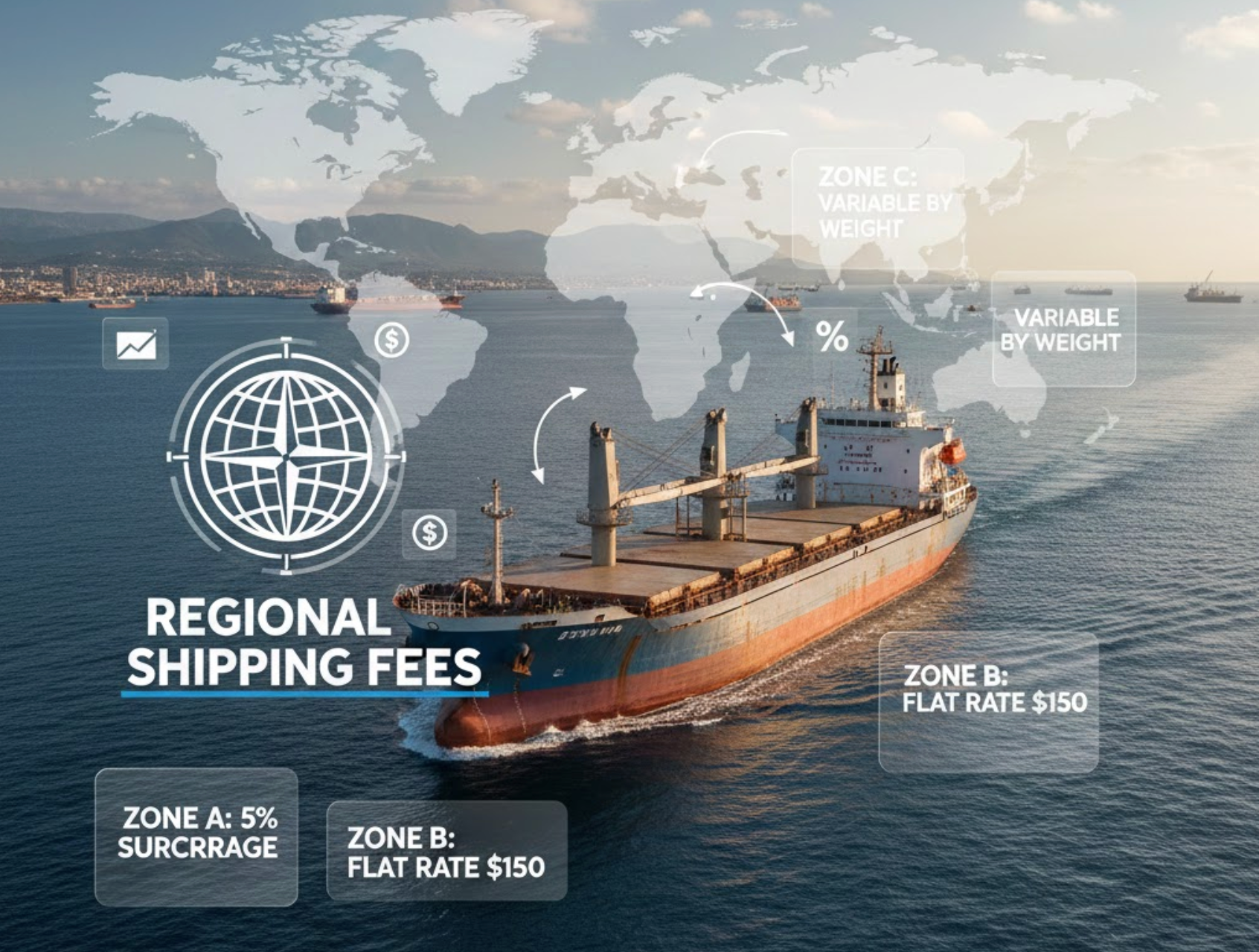
Shipping costs are no longer a simple line item at checkout, but they are a strategic part of the ecommerce experience. Among different pricing structures, regional shipping fees play a critical role in balancing operational costs, pricing transparency, and customer satisfaction. When implemented correctly, they help businesses scale sustainably while setting clear expectations for buyers across different locations.
Understanding how regional shipping fees work, when to apply them, and how they influence buyer behavior allows merchants to turn a potential friction point into a trust-building element.
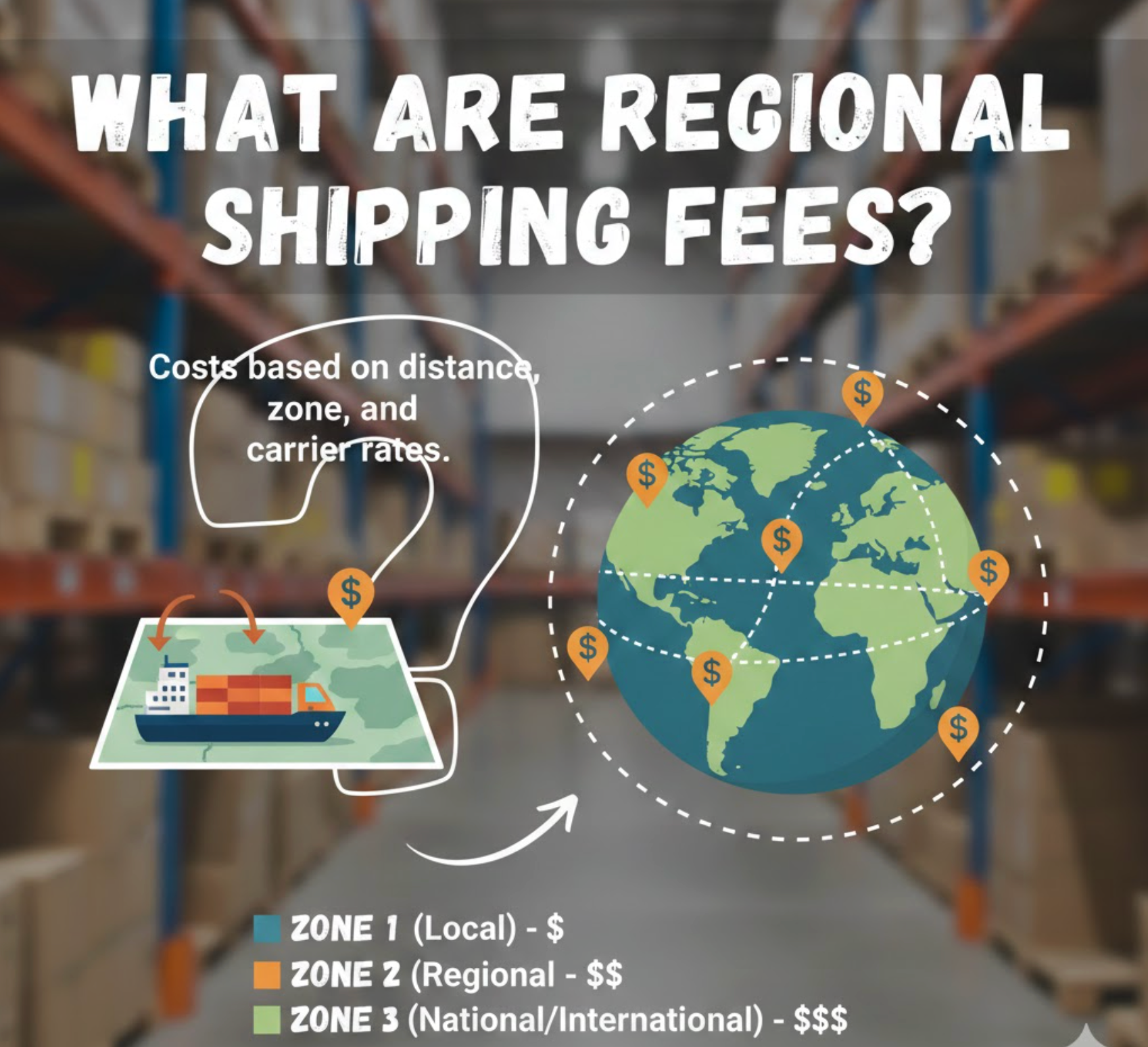
Regional shipping fees are variable shipping charges applied based on the customer’s delivery location. Instead of offering one universal shipping rate, merchants adjust fees to reflect differences in distance, logistics complexity, carrier pricing, and regional regulations. This approach ensures that shipping costs align more closely with the real expenses involved in fulfilling an order.
These fees exist because shipping is not uniform across regions. Delivering a package within a major city often requires fewer resources than shipping to a rural area, island, or international destination. Factors such as fuel consumption, infrastructure quality, last-mile delivery challenges, customs processing, and carrier availability all contribute to cost variations. Without regional pricing, merchants may either overcharge nearby customers or absorb losses from high-cost destinations.
From a business perspective, regional shipping fees help maintain profit margins while supporting wider geographic reach. From a customer perspective, they create fairer pricing, provided the reasoning behind the fees is communicated clearly and early in the shopping journey.
Regional shipping fees can improve cost accuracy, but they also add complexity to the checkout experience. Weighing both sides helps merchants decide whether this pricing approach fits their business model.
Regional shipping fees allow merchants to align delivery charges more closely with real logistics costs. This creates a more sustainable and scalable shipping strategy.
As a result, businesses can benefit in several key ways:
While effective, regional shipping fees can create friction if not presented clearly. Poor communication is often the root cause of customer dissatisfaction.
Understanding the limitations highlights where caution is needed:
In the end, regional shipping fees work best when paired with transparency and clear expectations. When customers understand the reason behind the cost, they are far more likely to accept it.
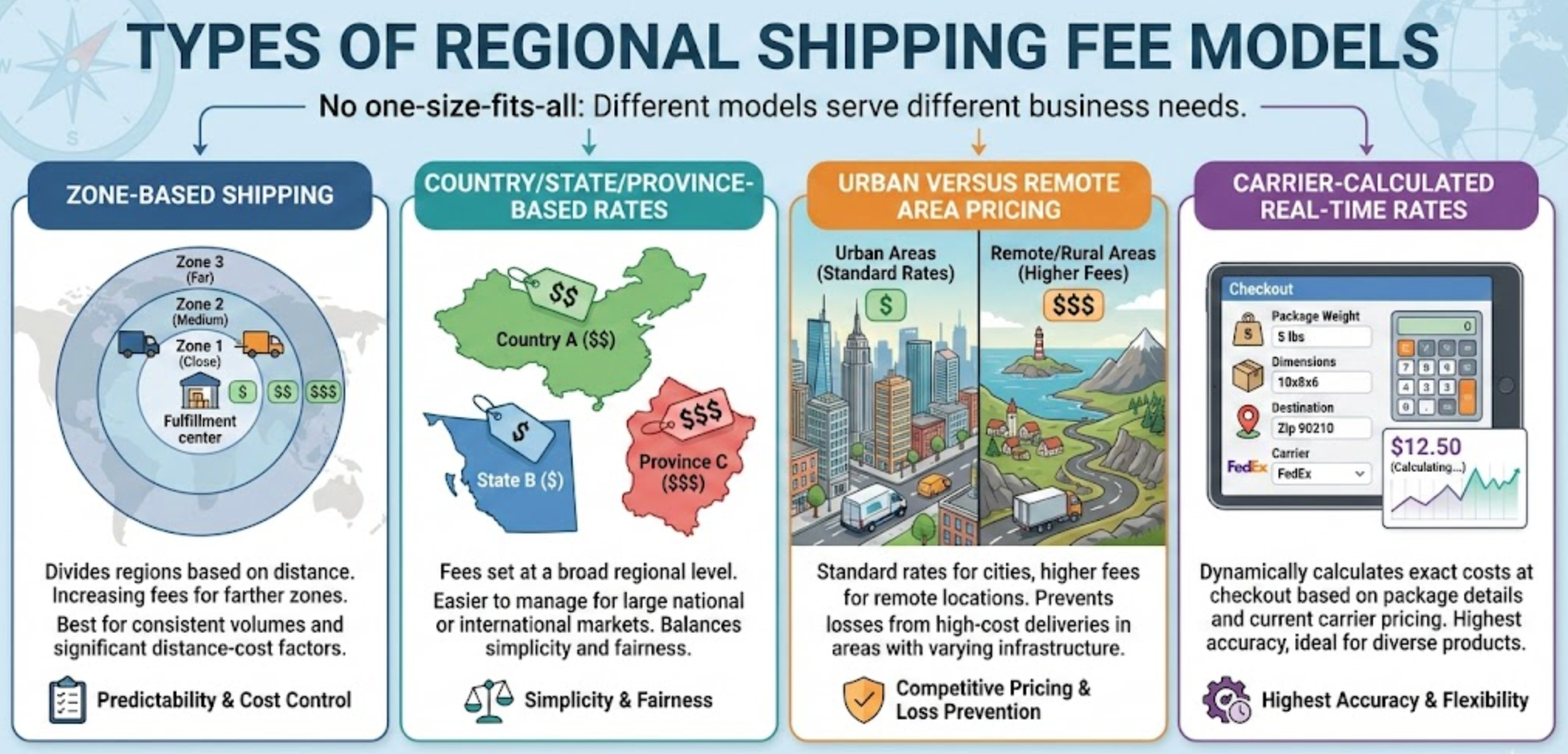
There is no one-size-fits-all approach to regional shipping fees. Different models serve different business needs, depending on store size, shipping volume, and geographic reach. Choosing the right model requires understanding not only how each works, but when and why to apply it.
Shipping costs strongly influence how customers perceive fairness, trust, and overall value during checkout. Regional fees can either reassure shoppers that pricing is transparent or push them away if introduced too late.
To ensure regional shipping fees enhance rather than harm the customer experience, merchants must focus on clarity and expectation-setting. When customers understand what they are paying for, they are more likely to complete their purchase.
Managing regional shipping fees effectively requires more than technical setup, it requires ongoing optimization and thoughtful communication. Small improvements in how fees are presented can significantly reduce friction at checkout.
By following proven best practices, merchants can protect margins while maintaining a smooth shopping experience.
Regional shipping fees are a powerful tool when used with intention and transparency. They allow ecommerce businesses to scale sustainably, reflect real logistics costs, and maintain fair pricing across different regions. While they introduce complexity, thoughtful structure and clear communication turn regional fees into a competitive advantage rather than a barrier.
By understanding the logic behind regional shipping fees and applying best practices, merchants can improve trust, reduce checkout friction, and create a smoother path from cart to conversion.




