 New to Shopify? Free trial, then $1/month for your first 3 months. Start free trial →
 Where is your store?
Ryviu works with both – pick yours to continue.








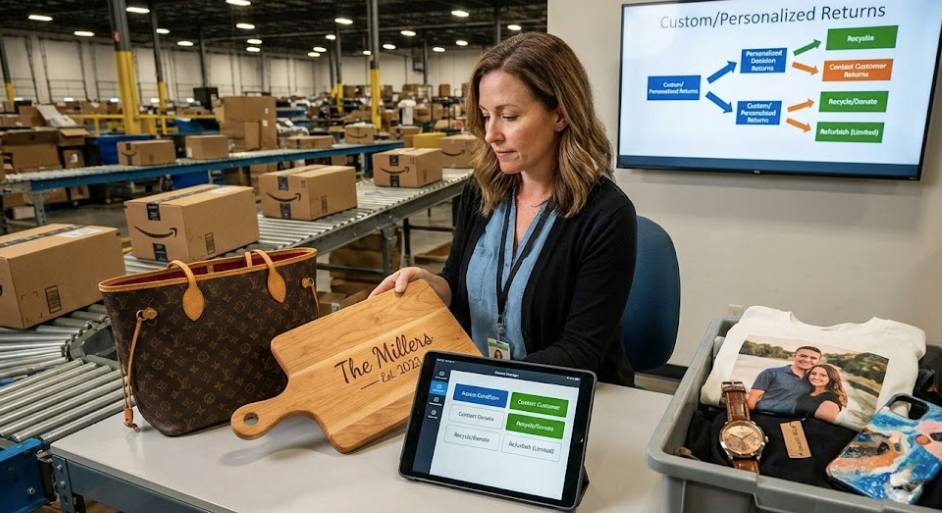
Custom and personalized products have become a powerful way for brands to stand out in crowded eCommerce markets. From engraved jewelry and printed apparel to made-to-order home décor, personalization increases emotional value and perceived uniqueness. However, it also introduces a major operational challenge: returns.
Unlike standard products, custom items often cannot be resold, refurbished, or restocked. Poorly managed returns can quickly erase profit margins and damage customer trust. Effective returns management for custom or personalized products requires a careful balance between protecting the business and delivering a fair, transparent customer experience.
Once a product is customized, its resale value drops dramatically. A name, date, or personal message transforms an item into something specific to one customer.
This irreversibility changes the economics of returns and forces businesses to rethink traditional policies.
Customers often attach emotional meaning to personalized products. When something goes wrong, disappointment can feel stronger than with standard items.
This emotional factor increases sensitivity to mistakes and raises the stakes for how returns are handled.
Many return requests stem from mismatched expectations rather than product defects. Typos, incorrect sizes, or misunderstood customization options are common triggers.
These issues often originate during the ordering process rather than production.
Despite best efforts, production errors happen. Incorrect engraving, misaligned prints, or color mismatches can occur at scale.
In these cases, responsibility typically falls on the seller rather than the customer.
Custom products often have longer lead times. When delays combine with shipping damage, customer frustration escalates quickly.
These scenarios complicate return decisions because the product itself may be correct, but the experience is not.
A clear return policy is the most effective tool for managing expectations. Customers are more accepting of strict policies when they are communicated early and honestly.
Ambiguity creates conflict, especially for personalized items.
A no-return policy for custom products may protect margins but harm long-term trust. Flexible policies, when used selectively, can preserve customer relationships without encouraging abuse.
Effective policies often distinguish between customer errors and seller errors.
The best returns management strategy is prevention. Customization errors are often avoidable through better interface design.
Order flows should slow customers down just enough to confirm critical details.
Preview tools and confirmation screens dramatically reduce mistakes. Showing exactly how the final product will look aligns expectations and builds confidence.
These steps reduce both returns and support requests.
When the error is on the seller’s side, hesitation damages trust. Fast, decisive action reassures customers that the brand stands behind its products.
Clear responsibility builds loyalty even in negative situations.
In many cases, replacing the item is more cost-effective than issuing a refund. However, this depends on production costs, timelines, and customer urgency.
The right choice balances operational efficiency with customer satisfaction.
If a return request is due to customer input errors, policies should be firm but empathetic. Customers often accept responsibility when the rules are clear.
Tone matters as much as policy enforcement.
Partial refunds, store credit, or discounts on reorders can resolve disputes without full financial loss.
These alternatives maintain goodwill while protecting margins.
In many cases, requiring customers to ship back custom items is unnecessary and costly. Disposal or donation may be more efficient.
Clear instructions reduce confusion and friction.
Custom returns impact inventory differently than standard products. Tracking these items accurately prevents accounting errors and misleading performance data.
Operational clarity supports smarter decision-making.
Returns involving personalized products often require explanation. Automated responses can feel cold in emotionally charged situations.
Personalized communication mirrors the care customers expect from personalized products.
Custom replacements take time. Honest timelines prevent frustration and reduce follow-up inquiries.
Managing expectations is as important as resolving the issue itself.
Patterns in return reasons often point to deeper problems in design, descriptions, or production processes.
Returns data becomes a valuable feedback loop rather than just a cost.
Limiting overly complex customization choices can reduce error rates without reducing perceived value.
Simplification often improves both customer experience and operational efficiency.
Return rights vary by region. Some jurisdictions require specific disclosures for non-returnable personalized goods.
Compliance protects the business from disputes and penalties.
Clear records of customer approvals and previews strengthen dispute resolution. Documentation reduces ambiguity in refund discussions.
Preparation minimizes risk.
How a brand handles returns for custom products often leaves a stronger impression than the product itself.
Fairness and clarity shape long-term perception.
A well-handled return can convert frustration into advocacy. Customers remember brands that treat them respectfully, even when policies are strict.
Returns management becomes part of brand identity.
Returns management for custom or personalized products is a delicate balancing act. These items challenge traditional return models, but they also offer an opportunity to build deeper trust through transparency and care. By preventing errors upfront, setting clear policies, and handling issues with empathy and consistency, businesses can protect margins without sacrificing customer relationships.
In a personalization-driven market, how returns are managed is not just an operational concern—it is a defining part of the customer experience.




