New to Shopify? Free trial, then $1/month for your first 3 months. Start free trial →
 Where is your store?
Ryviu works with both – pick yours to continue.








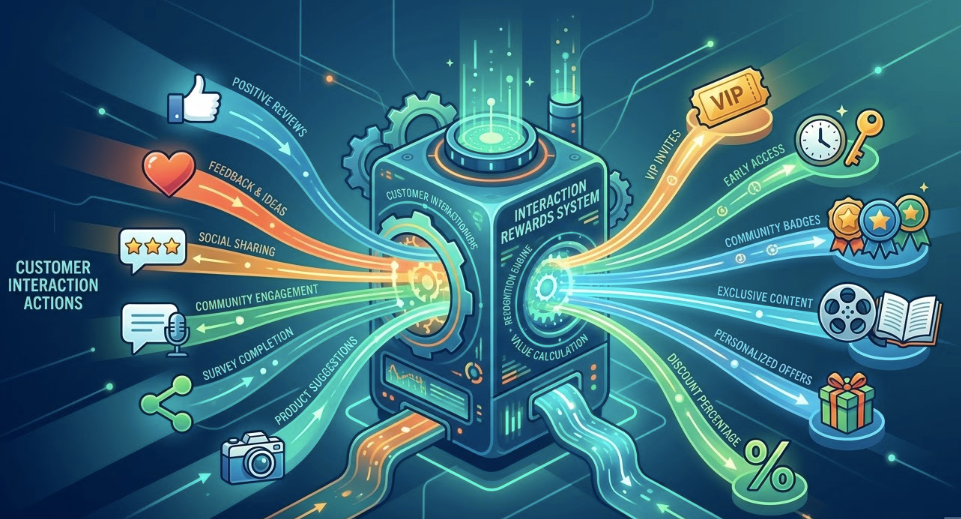
For many eCommerce businesses, rewards are closely tied to transactions. Customers earn points, discounts, or perks when they buy something. While this approach can drive short-term sales, it overlooks a broader and more valuable reality: customers interact with brands in many ways beyond purchasing.
They browse, review, share, ask questions, and engage with content. Each of these actions contributes to brand growth and community building. By shifting the focus from rewarding purchases alone to rewarding meaningful interactions, businesses can create deeper relationships, encourage ongoing engagement, and build loyalty that extends far beyond a single transaction.
Traditional loyalty programs are built around a simple idea: spend more, earn more. While this model is straightforward, it often fails to capture the full spectrum of customer value.
Customers who are not ready to purchase immediately may still engage with the brand in meaningful ways. Ignoring these interactions can result in missed opportunities to build relationships.
When rewards are tied only to purchases, businesses may experience:
This approach can create a narrow view of customer value.
Expanding rewards to include interactions helps businesses recognize and nurture a wider range of behaviors.
Customer interactions are signals of interest, trust, and engagement. Even small actions—such as leaving a review or sharing content—contribute to the brand ecosystem.
These interactions often influence other customers and shape overall perception.
Recognizing their value requires a shift in perspective.
Important types of interactions include:
Each of these actions adds value in different ways.
Some interactions drive awareness, while others build trust or improve product understanding.
By rewarding these behaviors, businesses can encourage a more active and engaged customer base.
Reviews and feedback are among the most valuable forms of customer interaction. They provide insights for businesses and guidance for future buyers.
However, many customers need a small nudge to share their experiences.
Rewarding reviews can increase participation while maintaining authenticity.
Effective strategies include:
It is important that rewards focus on participation rather than positivity.
This ensures that feedback remains genuine and trustworthy.
When customers feel that their voices are valued, they are more likely to contribute thoughtfully.
Customer questions often reflect curiosity and interest. When these questions are encouraged and rewarded, they become part of a dynamic engagement system.
Answering questions—whether by the brand or other customers—adds depth to the shopping experience.
Rewarding this interaction can involve:
These actions create a more interactive environment.
Customers feel that they are part of a conversation rather than passive observers.
This sense of involvement strengthens their connection to the brand.
Social sharing is a powerful form of customer interaction. When customers share products or experiences, they extend the brand’s reach organically.
Unlike traditional advertising, these recommendations often feel more authentic and trustworthy.
Encouraging social advocacy can amplify brand visibility.
Ways to reward sharing include:
These incentives encourage customers to become advocates.
Over time, this can lead to a stronger and more engaged community.
Rewards are most effective when they create a sense of progress. Customers should feel that their interactions contribute to something meaningful.
This sense of achievement can motivate continued engagement.
Instead of focusing solely on transactions, businesses can design systems that recognize ongoing participation.
Progress-driven rewards may include:
These systems transform engagement into a journey.
Customers are encouraged to stay involved and explore different ways of interacting with the brand.
While expanding rewards beyond purchases offers many benefits, it also introduces complexity. Too many rules or conditions can overwhelm customers.
Simplicity is key to maintaining clarity and usability.
An effective reward system should:
When customers understand how their actions translate into rewards, they are more likely to participate.
Clarity ensures that the system feels accessible rather than confusing.
One of the biggest challenges in rewarding interactions is maintaining authenticity. Incentives should not encourage low-quality or spammy behavior.
For example, rewarding reviews without guidance may lead to superficial or repetitive content.
To preserve quality, businesses should:
This approach ensures that rewards enhance rather than dilute the customer experience.
Authenticity remains the foundation of trust.
Interaction-based rewards should feel like a natural part of the customer journey. They should not interrupt or distract from the overall experience.
Instead, they should enhance key moments of engagement.
Integration can occur at:
When rewards align with natural behaviors, they feel intuitive.
Customers engage without feeling pressured or manipulated.
To ensure effectiveness, businesses must track how interaction-based rewards influence behavior.
Metrics can provide insights into engagement levels and overall impact.
Important indicators include:
These metrics help refine the reward system over time.
They also demonstrate the value of expanding beyond purchase-based incentives.
Rewarding interactions is ultimately about building relationships. When customers feel recognized for their contributions, they develop a stronger connection to the brand.
This connection goes beyond transactions.
It creates a sense of belonging and mutual value.
Long-term benefits include:
These outcomes contribute to sustainable growth.
They also differentiate the brand in a competitive market.
Rewarding customer interaction instead of focusing solely on purchases represents a powerful shift in how businesses approach loyalty and engagement. By recognizing actions such as reviews, questions, sharing, and participation, brands can create a more inclusive and dynamic relationship with their audience.
This approach not only encourages continuous engagement but also builds a sense of community and trust. When designed thoughtfully, interaction-based rewards enhance authenticity rather than undermine it. Ultimately, the goal is to move beyond transactions and create meaningful connections.