 New to Shopify? Free trial, then $1/month for your first 3 months. Start free trial →
 Where is your store?
Ryviu works with both – pick yours to continue.








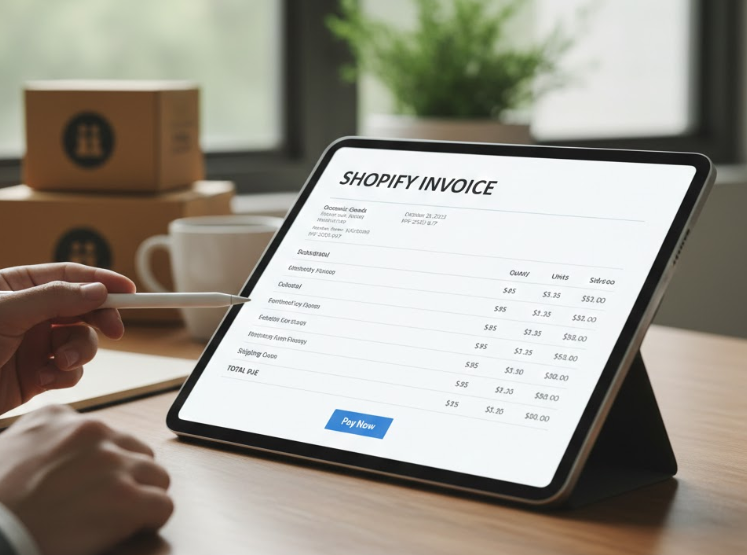
Invoices are often treated as a simple administrative detail, but in reality, they sit at the intersection of customer experience, accounting accuracy, and legal compliance. For Shopify store owners, invoices do far more than confirm a transaction. They communicate professionalism, build trust, support tax reporting, and reduce friction when issues arise.
Whether you are running a small online store or scaling a high-volume operation, understanding how Shopify invoices work—and how to optimize them—can save time, prevent costly mistakes, and strengthen your brand. This complete guide walks you through everything you need to know, from invoice basics to advanced workflows.
A Shopify invoice is a formal record of a transaction between you and your customer. It typically includes details such as purchased items, pricing, taxes, shipping costs, payment status, and seller information. While Shopify automatically generates order records and receipts, invoices play a more structured role, especially for accounting, tax compliance, and B2B transactions.
Invoices differ from order confirmations and receipts in subtle but important ways. An order confirmation tells the customer what they bought, while an invoice represents a financial document that may be required for bookkeeping, tax deductions, or audits. For many customers—particularly business buyers—receiving a clear, compliant invoice is not optional but expected.
Invoices in Shopify can be used at different stages of the purchasing process. Some stores send invoices before payment, especially for draft orders or wholesale customers. Others issue invoices after payment as proof of purchase. Understanding when and why invoices are used helps you design workflows that match your business model and customer expectations.
Out of the box, Shopify provides basic order documentation rather than fully customizable invoices. Every order contains a printable order summary that includes product details, totals, and customer information. While this works for simple use cases, it often falls short for businesses with more advanced needs.
Shopify’s default documents may lack elements such as:
For many store owners, these limitations become apparent as soon as they start working with accountants or international customers.
Draft orders are one of the most invoice-friendly features in Shopify. They allow you to create an order manually, apply custom pricing, add shipping and taxes, and then send an invoice to the customer for payment.
This approach is particularly useful for:
Draft order invoices feel more like traditional business invoices, making them a bridge between eCommerce automation and personalized sales processes.
A complete Shopify invoice should clearly communicate who the seller is, who the buyer is, and what the transaction involves. Missing or unclear information can cause confusion, delays, or compliance issues.
Core elements typically include:
While Shopify stores much of this data internally, presenting it clearly on an invoice requires deliberate configuration or third-party tools.
Tax information is one of the most sensitive parts of any invoice. Depending on your region, you may be required to display VAT, GST, or sales tax details in a specific format. In some countries, invoices must include seller tax IDs and precise tax breakdowns per item.
Shopify calculates taxes automatically, but displaying them correctly on invoices is not always straightforward. For stores operating internationally, this complexity multiplies, making invoice accuracy a legal necessity rather than a cosmetic detail.
Invoices are often the last branded touchpoint a customer sees. A generic or poorly formatted invoice can undermine the trust built by a well-designed storefront. Custom invoices reinforce your brand identity and signal professionalism.
Customization also improves clarity. Clear layouts, consistent terminology, and logical grouping of information reduce support requests and misunderstandings, especially for high-value or recurring customers.
Shopify allows limited customization of order print templates through its admin interface. Store owners with technical knowledge can edit Liquid templates to adjust formatting, add fields, or include branding elements.
However, this approach has drawbacks. Template changes affect all documents, and updates require testing to avoid breaking layouts. For non-technical users, this can feel risky and time-consuming.
For most Shopify merchants, third-party invoice apps are the most practical solution. These apps extend Shopify’s native capabilities, offering features such as automated invoice generation, PDF downloads, and email delivery.
Common benefits include:
Invoice apps allow store owners to meet compliance requirements while maintaining a professional appearance.
Not all invoice apps are created equal. Some focus on simple PDF generation, while others integrate deeply with accounting systems. When evaluating options, consider your current needs and future growth.
Important factors include ease of use, customization depth, automation options, and compatibility with your accounting workflow. The right app should reduce manual work, not add another system to manage.
Invoices play a central role in bookkeeping. They serve as primary documents for revenue recognition, tax reporting, and financial audits. Inconsistent or missing invoices create extra work for accountants and increase the risk of errors.
Shopify stores often integrate invoices with accounting tools such as QuickBooks or Xero. This alignment ensures that every sale recorded in Shopify has a corresponding financial document, simplifying reconciliation.
Invoices must also reflect refunds, partial payments, and order adjustments. When a customer returns an item or receives a discount after purchase, the original invoice may need to be updated or supplemented with a credit note.
Handling these scenarios properly maintains accurate records and protects your business during audits or disputes.
B2B customers often have stricter invoice requirements than individual consumers. They may need purchase order references, net payment terms, or detailed tax breakdowns for internal approval processes.
Shopify’s standard checkout is optimized for B2C sales, so invoicing becomes a critical tool for adapting the platform to B2B workflows. Draft orders, custom invoices, and manual approvals help bridge this gap.
Unlike consumer sales, B2B transactions may involve payment terms such as net 15 or net 30. In these cases, invoices function as formal payment requests rather than immediate receipts.
Setting up clear invoice terms reduces misunderstandings and improves cash flow predictability.
Selling internationally introduces new invoicing challenges. Customers expect invoices in their local currency and language, while tax authorities require accurate conversions and reporting.
Shopify supports multi-currency pricing, but invoice presentation often requires additional configuration. Ensuring consistency between checkout, invoice totals, and accounting records is essential for credibility and compliance.
Cross-border sales may involve VAT, customs duties, or zero-rated taxes. Invoices must reflect these correctly to avoid customer confusion and regulatory issues.
For international sellers, invoices become a compliance document as much as a customer-facing one.
Consistency builds trust. Using standardized formats, clear terminology, and predictable layouts makes invoices easier to understand and process. This reduces support tickets and speeds up customer payments.
Automation is especially valuable as order volume grows. Automatically generating and sending invoices saves time and ensures no transaction is overlooked. Automation also reduces human error, which is one of the most common causes of invoicing issues.
Tax laws, business details, and branding evolve over time. Reviewing invoice templates periodically ensures they remain accurate and compliant. What worked at launch may no longer be sufficient as your store scales or expands into new markets.
Shopify invoices are more than simple transaction summaries. They are essential business documents that support trust, compliance, and financial clarity. While Shopify provides a solid foundation, most stores benefit from customizing and extending invoicing workflows to match their specific needs.
By understanding how invoices work, what they should include, and how to optimize them through templates or apps, you can turn invoicing from an afterthought into a strategic advantage. A well-designed Shopify invoice reflects professionalism, reduces friction, and supports sustainable growth as your business evolves.




