New to Shopify? Free trial, then $1/month for your first 3 months. Start free trial →
 Where is your store?
Ryviu works with both – pick yours to continue.








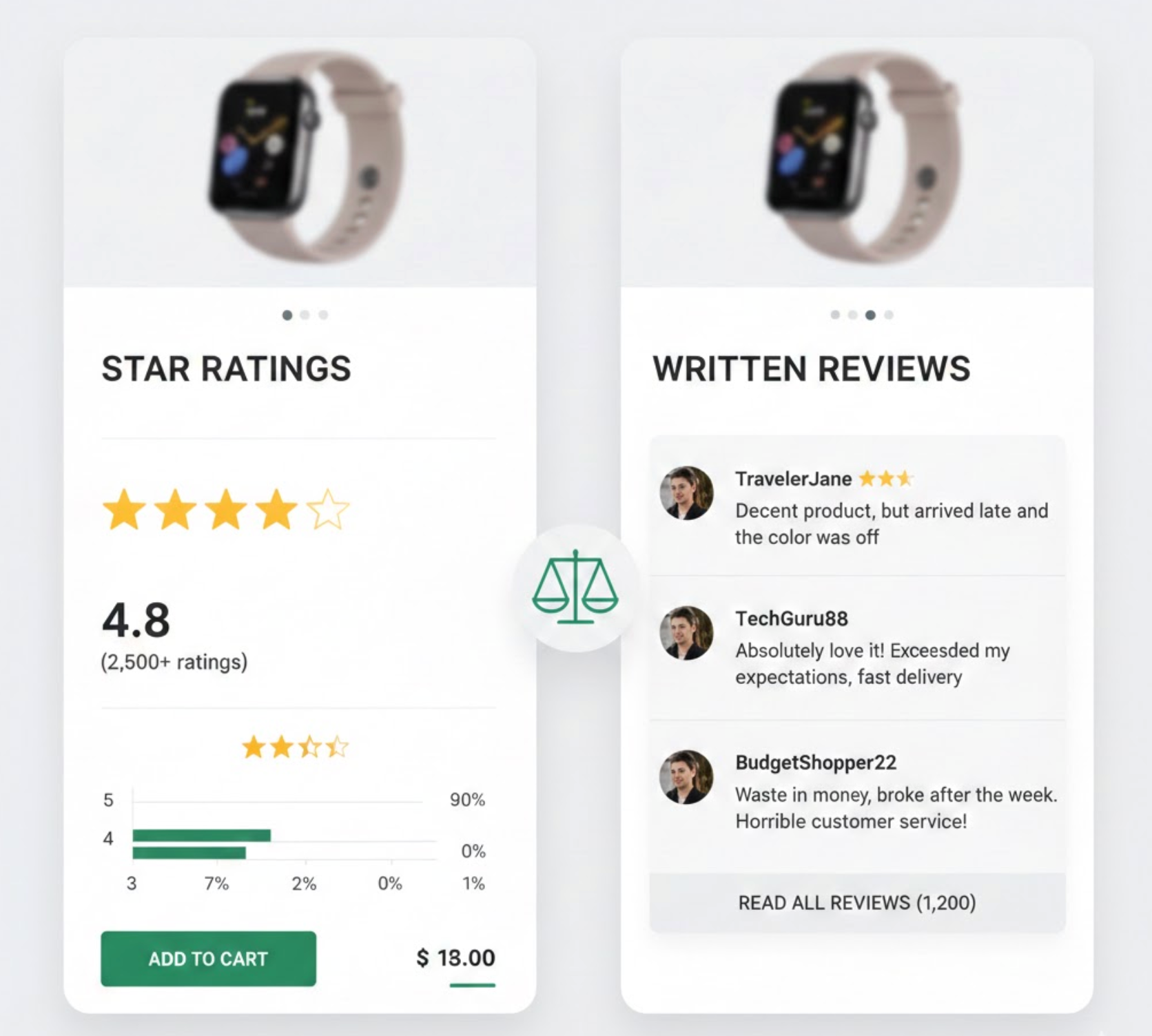
Customer reviews play a critical role in shaping buying decisions, but not all reviews influence shoppers in the same way. Star ratings and written reviews each serve a distinct purpose depending on where the customer is in the purchase funnel. Understanding how these two review formats work together, and when each matters most, can help brands optimize trust, engagement, and conversions across the entire customer journey.
This article breaks down the impact of star ratings and written reviews at every funnel stage, from awareness to post-purchase, and explains how to use them strategically rather than treating them as interchangeable signals.

Star ratings offer an instant, visual summary of customer sentiment. With a quick glance, shoppers can gauge overall satisfaction without investing time in reading details. This makes star ratings highly effective for fast decision-making moments, especially when attention spans are short.
Written reviews, on the other hand, provide depth and context. They explain why a product earned its rating, highlight real-world use cases, and address specific concerns. While they require more effort to read, they build credibility and emotional trust that numbers alone cannot deliver.
Rather than competing with each other, star ratings and written reviews work best when aligned with the customer’s intent at different stages of the funnel.
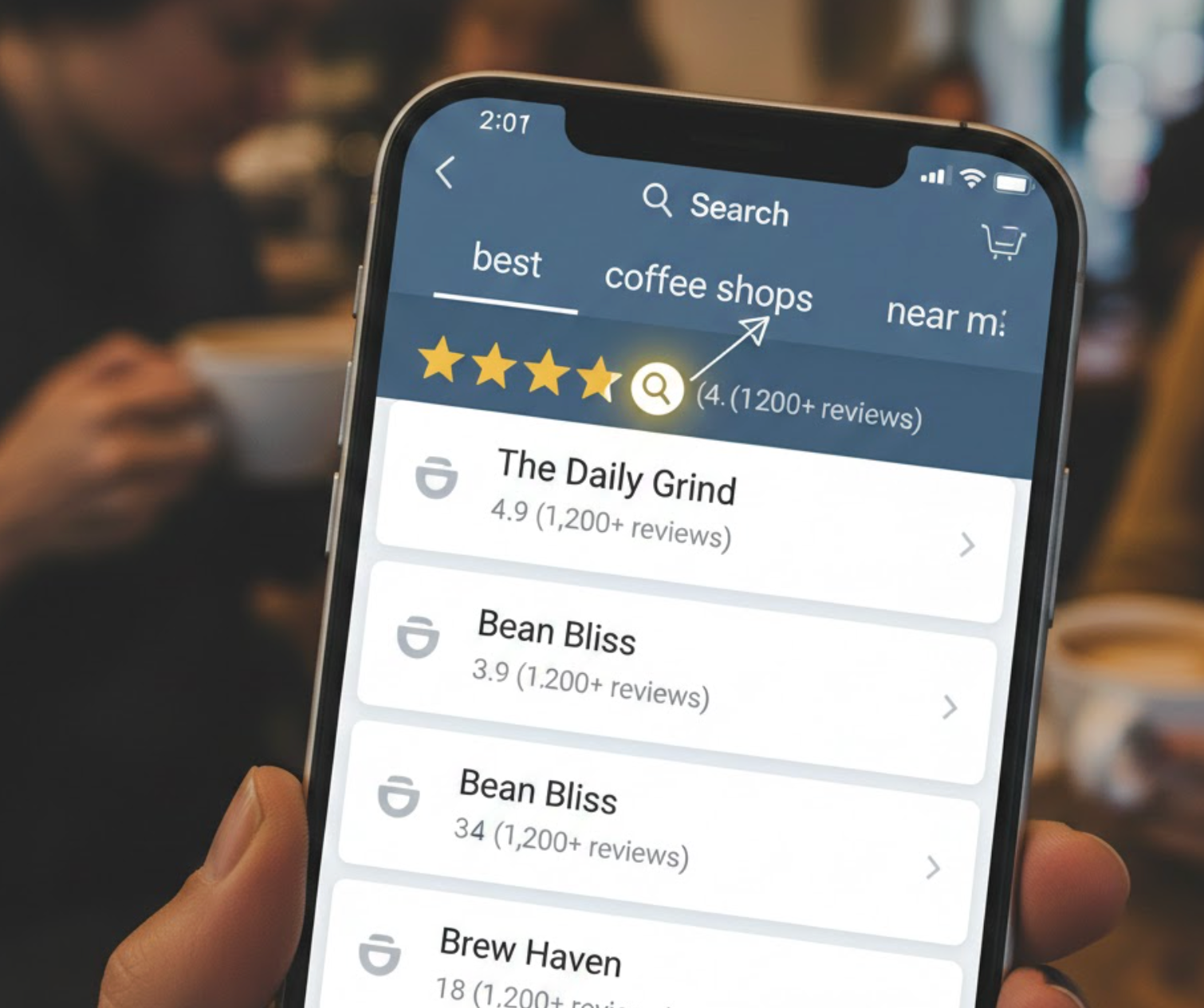
At the awareness stage, shoppers are discovering your brand or product for the first time. Their primary goal is not to evaluate every detail but to quickly assess whether something is worth their attention. This is where star ratings have the strongest impact.
High average ratings displayed on collection pages, ads, search results, or social proof widgets immediately signal popularity and reliability. They act as a shortcut for trust, especially when shoppers are comparing multiple brands side by side. A product with 4.7 stars naturally attracts more clicks than one with no visible rating, even if the product quality is similar.
At this stage, written reviews play a minimal role because users are not yet motivated to read long explanations. The goal is visibility and credibility at a glance, and star ratings excel at delivering both.

As shoppers move into the consideration stage, their behavior changes. They begin asking questions, comparing features, and evaluating whether a product fits their specific needs. At this point, star ratings alone are no longer enough.
Written reviews become essential because they reduce uncertainty. Customers look for details such as durability, sizing accuracy, ease of use, shipping experience, and customer support responsiveness. Reviews that mention real-life scenarios help shoppers imagine themselves using the product, which significantly increases purchase intent.
This is also where review filtering and sorting matter. Shoppers often look for reviews similar to their own situation, recent reviews, reviews with photos, or reviews mentioning a particular problem. Written feedback provides reassurance that the product performs well beyond marketing claims.
At the decision stage, customers are close to buying but may still hesitate due to risk. Common concerns include product quality, value for money, return policies, or hidden downsides. Written reviews are the most powerful tool for addressing these final objections.
Detailed reviews that include both pros and cons feel more authentic and trustworthy. Even slightly negative reviews can be beneficial if they explain limitations clearly, as this sets realistic expectations and reduces post-purchase regret. Shoppers at this stage are not looking for perfection; they are looking for honesty.
Star ratings still matter here, but mainly as confirmation. A strong rating reassures customers that the overall experience is positive, while written reviews provide the emotional push needed to finalize the purchase.
After a purchase, written reviews continue to deliver value, this time for both the brand and future customers. For buyers, writing a review helps validate their decision and creates a sense of participation. For brands, these reviews become a long-term asset that fuels trust and conversion.
Encouraging customers to leave detailed feedback, including photos or videos, enhances authenticity and creates a feedback loop for improvement. Over time, a library of high-quality written reviews strengthens brand authority and reduces friction for new shoppers entering the funnel.
Star ratings still serve as a summary metric, but written reviews are what sustain credibility and social proof in the long run.

The most effective review strategy doesn’t force a choice between star ratings and written reviews, it intentionally combines both to support customers throughout their decision-making journey. Star ratings act as a fast, visual trust signal that helps shoppers quickly evaluate products, especially when browsing or comparing options. Written reviews then take over by adding context, emotion, and real-world detail, turning initial interest into confidence and action.
When these two formats are aligned, they create a natural progression from surface-level reassurance to deeper validation. Shoppers first notice how well a product is rated, then learn why it earned that rating. This layered approach reduces cognitive effort, keeps customers engaged, and prevents drop-off caused by unanswered questions or uncertainty.
To maximize the impact of both star ratings and written reviews, brands should ensure:
Beyond layout and visibility, the real power comes from how reviews are managed and presented as a single system rather than isolated elements. This is where a solution like Ryviu adds meaningful value. Ryviu helps merchants unify star ratings and written reviews across the store, ensuring ratings are highly visible for quick trust-building while detailed reviews are well-organized for deeper evaluation. With features like review filtering, media-rich feedback, and consistent display across touchpoints, Ryviu turns reviews into a guided trust journey, one that supports shoppers at every stage of the funnel instead of overwhelming them with scattered feedback.
When used correctly, star ratings and written reviews work together to guide customers from first impression to final decision with clarity and confidence, ultimately driving higher conversions and long-term trust.

Star ratings and written reviews influence customers in different ways because customers have different needs at each stage of the funnel. Star ratings excel at capturing attention and building instant credibility, while written reviews answer deeper questions and eliminate doubt.
By aligning each review type with funnel intent, awareness, consideration, decision, and post-purchase, brands can create a smoother, more persuasive customer journey. Instead of asking which matters more, the better question is when each matters most.