 New to Shopify? Free trial, then $1/month for your first 3 months. Start free trial →
 Where is your store?
Ryviu works with both – pick yours to continue.









Star ratings are one of the most powerful trust indicators in eCommerce. In an online environment where customers cannot physically inspect products, ratings act as an immediate signal of quality and reliability. They help shoppers form an opinion within seconds, often before they read product descriptions or specifications.
Despite their importance, many stores treat star ratings as a secondary design element rather than a strategic conversion tool. When used thoughtfully, star ratings can reduce hesitation, improve decision-making, and guide shoppers toward confident purchases. The sections below explore best practices for maximizing the impact of star ratings across the entire shopping journey.

Star ratings influence how shoppers perceive products long before they evaluate features or pricing. They function as social proof, reassuring users that others have already purchased and shared their experiences. This reassurance becomes especially important for first-time visitors who are unfamiliar with the brand.
From a psychological standpoint, star ratings reduce the mental effort required to make a decision. Instead of analyzing every detail, shoppers rely on collective feedback to assess risk and value. When ratings are supported by authentic customer reviews, such as those gathered through platforms like Ryviu, they carry even more weight and credibility.
Even accurate and trustworthy ratings lose value if shoppers don’t see them at the right moment. Star ratings should appear exactly where users naturally pause to evaluate whether a product is worth their attention. Timing and placement are just as important as the rating itself.
By aligning star ratings with decision points, stores can subtly guide users without interrupting their browsing flow. The most effective placements include:

A star rating without context can feel incomplete or even misleading. Shoppers almost always want to know how many people contributed to the score before trusting it. Review count provides the missing layer of credibility.
Displaying review volume helps shoppers assess how representative a rating truly is. To improve transparency and trust, stores should:
Whole-number ratings may look clean, but they often oversimplify customer sentiment. Decimal and partial star ratings communicate that feedback is calculated precisely rather than rounded for appearance. This added nuance makes ratings feel more honest and data-driven.
More detailed ratings help shoppers compare similar products and set realistic expectations. Displaying decimal ratings allows stores to:
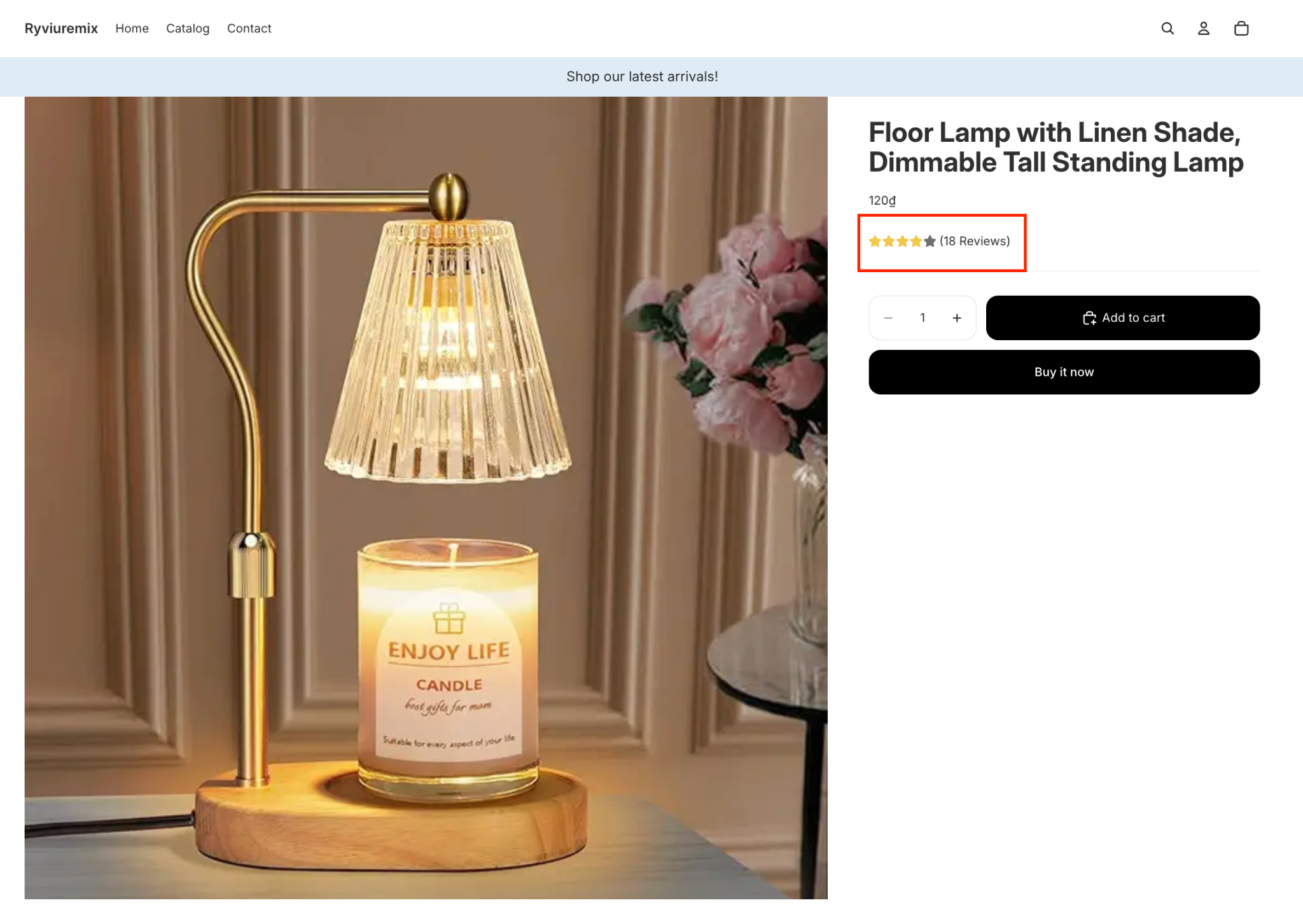
First impressions are formed quickly, especially in eCommerce. Shoppers often decide whether to stay on a page within a few seconds, making above-the-fold content extremely influential. Star ratings should be part of that initial visual experience.
When placed prominently near the top of the page, star ratings immediately communicate product credibility. This approach:
Star ratings work best when they feel instantly recognizable. Overly stylized designs can distract users or make it harder to interpret the meaning of the rating. Familiarity reduces friction and improves comprehension.
A clean and consistent design ensures ratings remain easy to scan and trust. This is best achieved by:
While star ratings provide quick validation, written reviews offer depth and context. Many shoppers rely on reviews to confirm that a product suits their specific needs or expectations. Together, ratings and reviews form a complete trust system.
Written reviews help clarify what the stars represent in real-life usage. They allow shoppers to:
Trust should not be limited to the product page alone. Shoppers often reconsider their choices multiple times before completing a purchase. Reintroducing star ratings at key moments helps reinforce confidence.
By repeating ratings strategically, stores can reassure users as they move closer to checkout. Effective touchpoints include:
Perfect ratings may look impressive, but they often raise suspicion. Shoppers are increasingly aware of fake or manipulated reviews and tend to trust balanced feedback more. Slight imperfections signal authenticity.
Realistic ratings help manage expectations and build long-term trust. They work because they:
Star ratings influence not only on-site behavior but also off-site discovery. When properly implemented with structured data, ratings can appear directly in search engine results. This visibility shapes perceptions before users even visit the store.
Search-enhanced ratings help by:

Mobile shoppers interact with content differently than desktop users. Limited screen space and shorter attention spans make clarity and placement even more critical. Star ratings must remain visible and readable on small screens.
To support mobile-first behavior, stores should ensure that:
Star ratings are not static elements. As product catalogs grow and customer behavior changes, their presentation should be reviewed and optimized. Ongoing analysis helps maintain effectiveness.
Meaningful optimization comes from tracking metrics such as:
Displaying star ratings effectively requires more than just collecting reviews. Stores need a system that ensures ratings are accurate, visible in the right places, and easy for shoppers to understand. This is where a dedicated review platform can quietly support performance without disrupting the user experience.
Ryviu helps streamline how star ratings appear across a store by focusing on clarity, consistency, and authenticity. It allows merchants to:
By handling the structure and presentation behind the scenes, Ryviu enables star ratings to do what they’re meant to do, build trust naturally and support confident purchasing decisions.

Star ratings are subtle but powerful drivers of trust in eCommerce. When implemented with clarity, transparency, and consistency, they reduce hesitation and guide shoppers toward confident decisions. Their impact grows when supported by real customer feedback and reinforced throughout the journey.
By treating star ratings as a strategic element rather than a decorative feature, and by managing reviews thoughtfully with tools like Ryviu, brands can build credibility naturally. In eCommerce, trust fuels action, and well-executed star ratings help earn that trust at every step.




