New to Shopify? Free trial, then $1/month for your first 3 months. Start free trial →
 Where is your store?
Ryviu works with both – pick yours to continue.









Online reviews have become one of the most influential factors in modern purchasing decisions. Modern customers have shifted away from relying solely on brand messaging as they now actively seek validation from other buyers before committing to a product. In this environment, trust is everything, and even small signals can significantly impact how reviews are perceived.
One of the most effective trust signals is the “Verified Buyer” tag. This simple label reassures readers that the reviewer has actually purchased and used the product, reducing skepticism and increasing confidence. As fake reviews and manipulated ratings continue to challenge eCommerce credibility, verified buyer tags are no longer optional; they are essential.
Consumers today are more informed and cautious than ever before. With access to countless options, they rely heavily on reviews to filter out poor choices and identify reliable products. However, this reliance also makes them more sensitive to signs of manipulation or inauthenticity. As a result, even a few suspicious reviews can damage a brand’s reputation. Shoppers are quick to question overly positive feedback, especially when it lacks proof of purchase. This is where verified buyer tags step in as a crucial layer of validation.
To better understand how credibility influences decision-making, let’s look at the key reasons why it matters:
Verified buyer tags are labels attached to reviews that confirm the reviewer has actually purchased the product through a legitimate transaction. These tags are typically generated automatically by review systems that integrate with order data. This ensures that only genuine customers receive the verification badge. While the concept is straightforward, its impact is significant. A verified tag transforms a review from “just an opinion” into a credible customer experience. This subtle distinction can dramatically influence how readers interpret the content.
To see why these tags are so effective, consider the advantages they bring:

Human decision-making is heavily influenced by social proof. When people see that others have successfully purchased and used a product, they feel more confident doing the same. Verified buyer tags amplify this effect by confirming that the social proof is genuine. This validation reduces uncertainty, which is one of the biggest barriers to online purchases. Instead of questioning whether a review is real, customers can focus on the content itself. This leads to faster and more confident decision-making.
To understand their behavioral impact more clearly, here are key ways verified tags shape user actions:
Not all reviews carry the same weight. Unverified reviews, while still valuable, often lack the credibility needed to fully convince potential buyers. Without confirmation of purchase, readers may question the authenticity of the feedback. This skepticism can weaken the overall effectiveness of your review system. Even genuine reviews may be overlooked simply because they lack verification. Over time, this can reduce trust in your entire platform.
To highlight the risks of relying solely on unverified reviews, consider the following challenges:
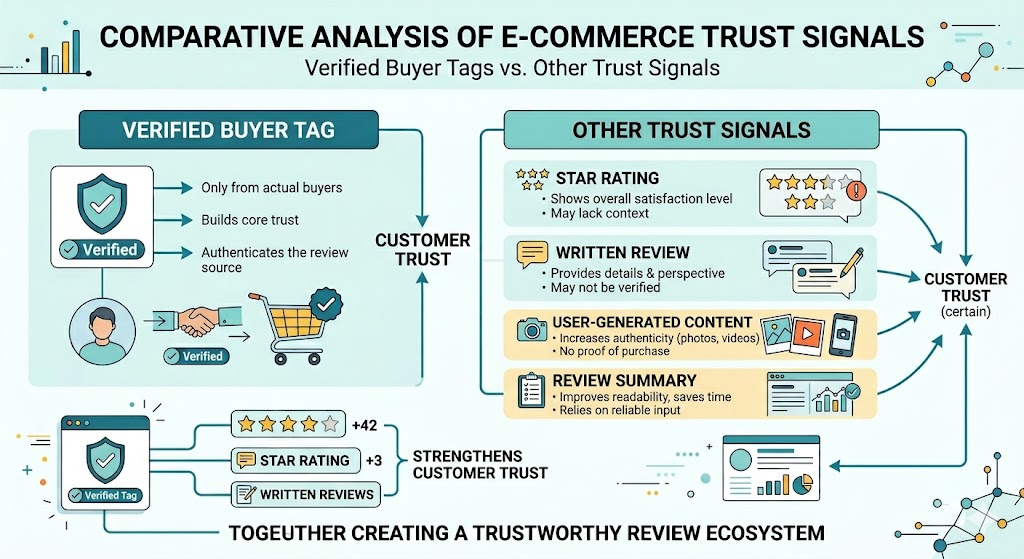
There are many ways to build trust in eCommerce, from star ratings to detailed testimonials. However, verified buyer tags offer a unique advantage: they directly validate the source of the review. Unlike other signals, they address authenticity at its core. While elements like photos, videos, and detailed descriptions add depth, they do not guarantee legitimacy. Verified tags complement these features by ensuring that the content comes from real customers. Together, they create a more complete and trustworthy review ecosystem.
To better understand their role, here’s how verified tags compare to other trust signals:
Simply adding verified buyer tags is not enough; you need to use them strategically. Placement, visibility, and integration all play a role in how effective these tags are. When implemented correctly, they can significantly enhance the user experience. It’s important to ensure that verification is accurate and consistent. Any errors in tagging can quickly undermine trust rather than build it. Additionally, combining verified tags with other review features can amplify their effectiveness.
To get the most out of verified buyer tags, consider these best practices:
Manually verifying reviews is not practical for growing businesses. As order volumes increase, automation becomes essential for maintaining accuracy and efficiency. This is where modern review platforms play a critical role. Automated systems can seamlessly connect purchase data with review submissions. This ensures that only legitimate buyers receive verification tags without requiring manual intervention. The result is a scalable and reliable trust-building mechanism.
To see why automation is key, here are its main benefits:
Trust is not just a branding element; it directly impacts sales performance. When customers feel confident in the authenticity of reviews, they are more likely to complete a purchase. Verified buyer tags help bridge the gap between consideration and conversion. By reducing doubt, these tags streamline the decision-making process. Customers spend less time questioning reviews and more time evaluating product fit. This leads to higher conversion rates and improved customer satisfaction.
To understand their impact on performance, consider these outcomes:
Verified buyer tags should not exist in isolation. They are most effective when integrated into a broader review strategy that prioritizes authenticity and usability. This includes collecting high-quality reviews, showcasing them effectively, and continuously optimizing the experience. A well-rounded approach ensures that verified tags enhance, not replace, other trust-building elements. When combined with thoughtful design and content strategy, they can significantly elevate your review system.
To build a strong review ecosystem, focus on these key elements:

Building a trustworthy review system can be complex, especially for growing eCommerce businesses. This is where tools like the Ryviu review app become valuable. By integrating directly with your store, it simplifies the process of collecting and verifying customer feedback. Ryviu allows businesses to automatically tag reviews from real buyers, ensuring authenticity without manual effort. It also provides features that enhance the visibility and impact of these verified reviews. This creates a more reliable and engaging experience for potential customers.
To see how a solution like Ryviu can support your strategy, here are some of its practical advantages:
As eCommerce continues to evolve, transparency will become even more important. Consumers are demanding higher standards of authenticity, and brands must adapt to meet these expectations. Verified buyer tags are just one step in this direction. In the future, we can expect more advanced verification methods and deeper integration between purchase data and review systems. However, the core principle will remain the same: trust drives decisions. Businesses that prioritize credibility will have a clear competitive advantage.
Looking ahead, here are key trends shaping review credibility:
Verified buyer tags play a critical role in building trust in today’s digital marketplace. By confirming the authenticity of reviews, they help customers make more confident and informed decisions. This not only improves the user experience but also drives measurable business results.
When combined with a strong review strategy and the right tools, verified tags can transform your review system into a powerful conversion engine. As consumer expectations continue to rise, investing in credibility is no longer optional; it’s essential for long-term success.