New to Shopify? Free trial, then $1/month for your first 3 months. Start free trial →
 Where is your store?
Ryviu works with both – pick yours to continue.








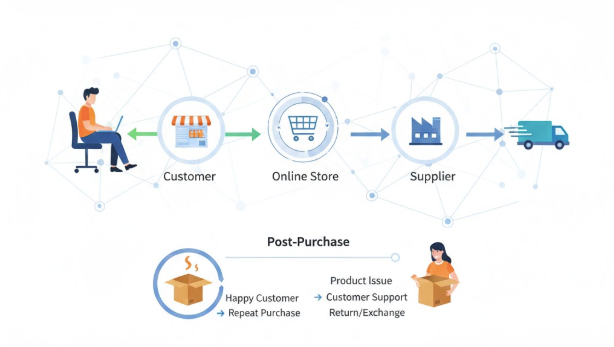
In dropshipping, ads usually get all the attention. Marketers obsess over creatives, targeting, and ROAS, believing that winning ads are the key to success. But the real story begins after the customer clicks “Buy.” What happens next—shipping updates, customer support, returns, follow-ups, and post-purchase communication—often determines whether a store grows or quietly dies.
In a market where acquisition costs keep rising, post-sale experience has become more valuable than ads themselves. This article explores what truly happens after the sale in dropshipping and why mastering this overlooked phase is the most reliable path to long-term growth.
Many dropshippers subconsciously treat the checkout confirmation as the end of the journey. From a business perspective, this is a costly mistake. For customers, the purchase moment is just a promise. The real evaluation starts after they’ve paid, when expectations collide with reality.
At this stage, customers are emotionally invested but also anxious. They wonder if the product will arrive, whether it will match the description, and how the store will respond if something goes wrong. Every interaction—or lack of one—either builds confidence or erodes trust.
Post-sale experience directly impacts refunds, chargebacks, reviews, and repeat purchases. Ads may bring traffic, but what happens afterward decides whether that traffic turns into profit or problems.
Ignoring post-sale operations creates silent leaks in the business:
Over time, stores that focus only on ads end up running faster just to stay in place. Those that invest in post-sale experience build momentum.
The first post-purchase touchpoint is often the order confirmation page and email. While it seems basic, it carries enormous psychological weight. This moment reassures the customer that their money is safe and the transaction was successful.
Clear confirmations reduce buyer’s remorse and post-purchase anxiety. Ambiguous or delayed confirmations do the opposite, leading customers to question their decision almost immediately.
A strong confirmation experience sets expectations clearly. It explains what happens next, when updates will arrive, and how to get help if needed. This transparency reduces inbound support requests and builds trust early.
Well-designed post-checkout communication often includes:
This is not about fancy design; it’s about clarity. In dropshipping, where fulfillment takes longer than marketplaces, clarity is more valuable than speed.
Shipping is where dropshipping feels most fragile. Long delivery times, inconsistent tracking, and limited visibility create anxiety. During this waiting period, customers are highly sensitive to communication.
Silence during shipping often leads customers to assume the worst. Even when delays are normal, lack of updates makes them feel ignored. Proactive communication can turn a long wait into a tolerable, even positive, experience.
Tracking updates are not just logistical tools; they are emotional reassurance mechanisms. Every update tells the customer, “Your order is real, and we’re paying attention.”
Successful dropshippers don’t hide shipping realities. Instead, they manage expectations and stay visible throughout the process.
Effective practices include:
When customers feel informed, they are far more forgiving—even if delivery takes longer than ideal.
Many dropshippers treat customer support as damage control. In reality, support is one of the strongest brand-building tools available. How a store responds when something goes wrong often matters more than whether it went wrong in the first place.
Fast, empathetic responses signal professionalism. Slow or scripted replies signal indifference. Customers remember how they were treated, especially during moments of frustration.
Support quality directly influences reviews, social mentions, and word-of-mouth. One helpful interaction can turn an unhappy buyer into a loyal advocate.
High-performing stores invest in systems and tone, not just staffing. Support is consistent, human, and proactive.
Strong support operations usually focus on:
In a crowded market, great support is a differentiator that ads cannot replicate.
Returns are inevitable in eCommerce, but in dropshipping they are often mishandled. Complicated processes, slow refunds, or unclear policies create resentment and disputes.
Customers don’t expect perfection, but they expect fairness. A smooth return process reassures them that the brand stands behind its products. A hostile or confusing process suggests the opposite.
Disputes and chargebacks hurt more than revenue. They damage payment processor trust, increase fees, and threaten store stability.
Forward-thinking dropshippers design return experiences to reduce friction rather than discourage customers.
Effective return strategies include:
Ironically, easier returns often lead to fewer disputes and higher retention.
Once the product arrives, the customer forms a final judgment. This is the moment when private experience turns into public feedback. Reviews, ratings, and social posts shape how future customers perceive the brand.
Many stores either ignore this stage or approach it aggressively, asking for reviews too soon or in the wrong tone. Timing and context matter.
Requesting feedback after confirming delivery and satisfaction feels respectful. Asking immediately or repeatedly feels transactional.
Reviews are not just conversion tools; they are operational insights. Patterns in feedback often reveal supplier issues, misleading descriptions, or unmet expectations.
Smart dropshippers analyze reviews to:
When feedback loops are used well, post-sale experience continuously improves.
Customer retention begins after the first order arrives, not before. A satisfied customer is far more likely to buy again than a cold prospect is to convert.
Post-purchase emails, educational content, and personalized follow-ups keep the relationship alive. Instead of pushing discounts immediately, effective brands focus on usefulness and relevance.
This stage transforms a transaction into a relationship. It’s where lifetime value is created.
High-quality post-sale communication often focuses on:
These messages reduce returns, increase satisfaction, and naturally lead to repeat sales.
Ads are rented attention. Post-sale experience builds owned relationships. As ad costs rise and platforms change, relying solely on acquisition becomes risky.
Every improvement in post-sale experience compounds over time. Lower refunds improve margins. Better reviews improve conversion rates. Repeat customers reduce dependence on ads.
In contrast, ads reset every day. Stop paying, and traffic disappears.
When post-sale systems are strong:
This compounding effect is why mature dropshipping businesses shift focus from ads to operations.
In dropshipping, the sale is not the victory—it’s the beginning of accountability. What happens after the customer pays determines whether the business earns trust, loyalty, and long-term profitability. While ads may bring customers in, post-sale experience decides whether they stay, return, or warn others away. Shipping communication, support quality, returns handling, and post-purchase engagement all shape the real brand experience.
As competition intensifies and acquisition costs rise, dropshippers who invest in what happens after the sale will outperform those who chase ads alone. In the future of dropshipping, operational excellence is the strongest marketing strategy of all.