New to Shopify? Free trial, then $1/month for your first 3 months. Start free trial →
 Where is your store?
Ryviu works with both – pick yours to continue.








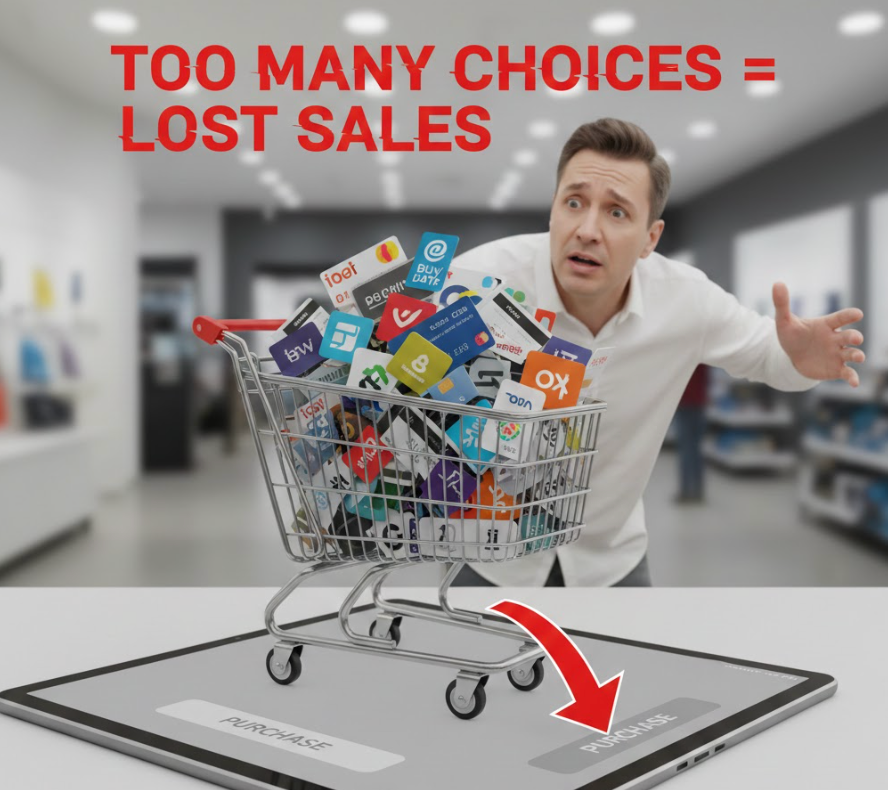
Offering multiple payment options is often seen as a way to improve checkout flexibility and meet different customer preferences. Merchants want to reduce friction and avoid losing sales because a shopper’s preferred payment method is missing. However, when payment choices become excessive, they can unintentionally complicate the checkout experience and reduce conversion rates.
To understand why this happens, it’s important to examine how customers think and behave at the final step of the buying journey.
Checkout is a critical moment where customers are already processing multiple decisions, such as pricing, shipping details, and purchase intent. Introducing too many payment options at this stage increases cognitive load and makes the experience feel more demanding than necessary. Instead of moving forward, customers are forced to pause and evaluate yet another set of choices.
As mental effort increases, hesitation becomes more likely.
A high-converting checkout is designed to feel fast and intuitive. Customers should immediately recognize a familiar payment method and proceed with confidence. When numerous payment options are displayed, customers shift from acting instinctively to carefully analyzing their choices.
Because speed is essential at checkout, this slowdown can negatively affect conversion rates.
Trust is crucial when customers are about to enter sensitive payment information. Well-known payment methods build confidence, but an overload of unfamiliar or rarely used options can raise doubts. Instead of feeling reassured, customers may question the legitimacy or security of the store.
When trust is weakened, customers become more cautious.
Mobile checkout environments magnify usability challenges. Limited screen space and touch-based interaction require clarity and simplicity. When too many payment options are shown, the experience can quickly feel crowded and difficult to navigate.
These mobile issues often result in higher abandonment rates.
Although stores may offer many payment methods, customer behavior usually centers on just a few. Most completed purchases come from familiar and trusted options. Treating all payment methods equally can dilute focus and reduce clarity.
Prioritizing relevance improves both usability and conversion.
Cart abandonment often happens at moments of hesitation. Too many payment options introduce uncertainty right before purchase completion. When customers pause, they are more likely to leave the checkout page.
This hesitation can undo earlier optimization efforts.
Optimizing payment options is about simplifying decisions, not removing flexibility. A focused and well-organized payment section helps customers feel confident and in control. When the checkout experience feels easy, conversion rates improve naturally.
Clear structure and prioritization are key.
While offering payment flexibility is important, clarity and simplicity matter more at checkout. Customers want a fast, confident path to completion, not another complex decision to make. Too many payment options disrupt this flow and increase friction.
By reducing choice overload, stores can improve trust, speed up decision-making, and increase conversion rates.