New to Shopify? Free trial, then $1/month for your first 3 months. Start free trial →
 Where is your store?
Ryviu works with both – pick yours to continue.








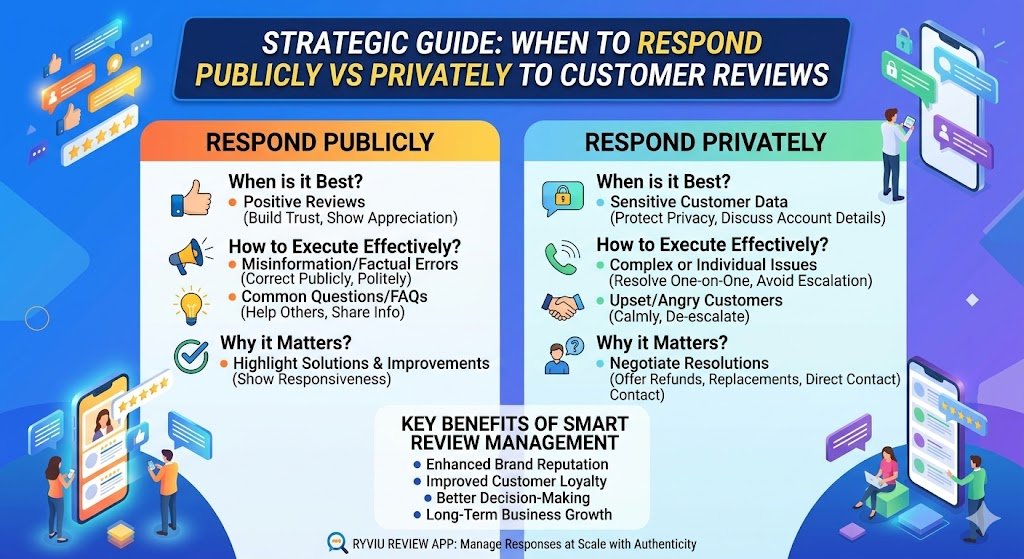
Story-driven customer reviews have become a defining factor in how brands build trust and influence purchase decisions. Every response you publish, whether visible to all or shared behind the scenes, shapes how your business is perceived. Knowing when to respond publicly versus privately is not just about etiquette; it’s a strategic decision that affects reputation, customer relationships, and long-term growth.
In this article, we’ll break down when each approach works best, how to execute them effectively, and how tools like the Ryviu review app can help you manage responses at scale without losing authenticity.
Customers today expect more than just products; they expect communication. A thoughtful reply signals that your brand is attentive, accountable, and invested in customer satisfaction, especially when reviews are displayed as high-converting testimonial snippets. At the same time, the wrong type of response in the wrong setting can escalate issues or damage trust.
To navigate this balance, it’s important to understand the role each response type plays.
Before diving into specific scenarios, let’s look at the strategic value behind choosing the right channel:
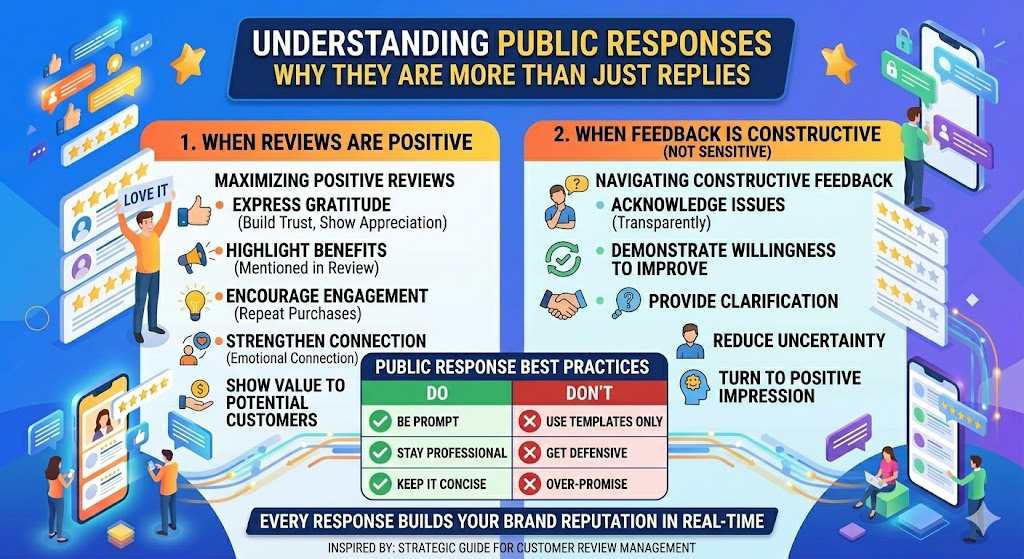
Public responses are visible to everyone who reads your reviews. They are not just replies to one customer; they are messages to your entire audience.
Because of this visibility, public replies serve as both customer service and marketing content. They showcase how your brand handles feedback in real time.
To better understand their role, consider the situations where public responses are most effective:
Positive reviews are an opportunity to reinforce customer satisfaction and amplify social proof. Responding publicly helps you show appreciation while encouraging others to share their experiences.
To make the most of positive feedback, here’s how public responses help:
Not all critical reviews are negative; many are constructive and offer insights for improvement. When the feedback isn’t personal or sensitive, responding publicly shows accountability.
In these cases, public responses can:
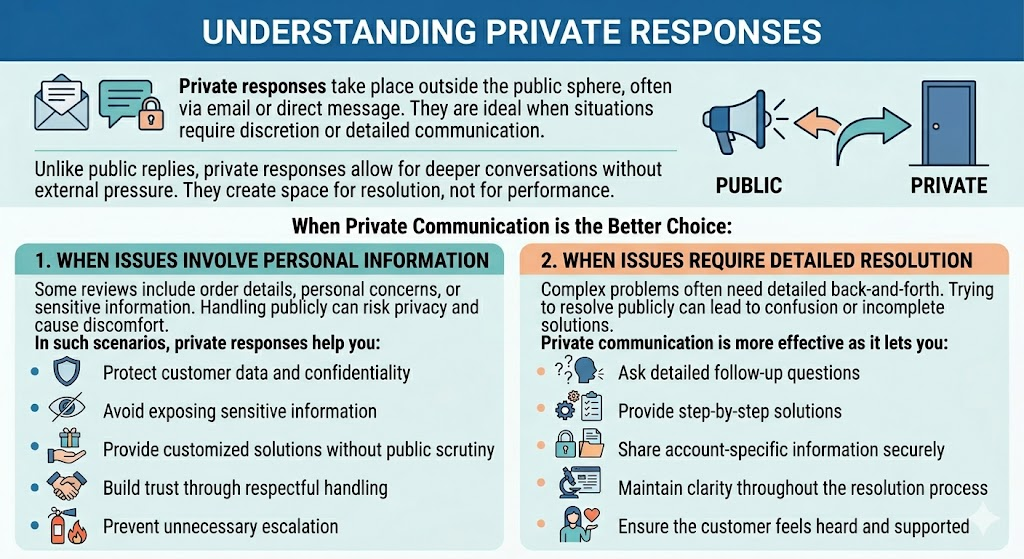
Private responses often play a key role in effective follow-up strategies, especially when resolving customer concerns in a more personalized way.
Unlike public replies, private responses allow for deeper conversations without external pressure. They create space for resolution rather than performance.
Let’s explore when private communication is the better choice:
Some reviews include order details, personal concerns, or sensitive information. Handling these publicly can risk customer privacy and create discomfort.
In such scenarios, private responses help you:
Complex issues often need back-and-forth communication. Trying to resolve them publicly can lead to confusion or incomplete solutions.
Private communication is more effective because it allows you to:
In many cases, the best approach is not choosing one over the other but using both strategically. A hybrid response allows you to maintain transparency while resolving issues privately.
This approach is particularly effective for negative reviews that require action.
Here’s how combining both methods works best:
This dual approach reassures both the reviewer and future customers that your brand takes responsibility while handling issues professionally.
Public replies are highly visible, so they need to be carefully crafted. Every word contributes to your brand image and influences how others perceive your business.
To ensure your public responses are effective, keep these best practices in mind:
Private communication offers more flexibility, but it still requires structure and empathy. A well-handled private response can turn dissatisfied customers into loyal advocates.
To maximize effectiveness, focus on these key practices:
Even with the best intentions, brands often make mistakes when responding to reviews. These missteps can reduce credibility or even worsen the situation.
Understanding what to avoid is just as important as knowing what to do.
Here are some common pitfalls:
As your business grows, managing reviews across multiple platforms becomes increasingly complex. Keeping track of which reviews require public or private responses can quickly become overwhelming.
This is where dedicated tools can make a significant difference.
Instead of handling everything manually, platforms like Ryviu help streamline your workflow by organizing, filtering, and prioritizing reviews.
With the right system in place, you can:
Managing the balance between public and private responses becomes much easier when you have the right tools. Ryviu is designed to help eCommerce businesses collect, display, and respond to reviews effectively.
Rather than overwhelming your team, it simplifies the entire process so you can focus on meaningful engagement.
Here’s how Ryviu helps you execute better response strategies:
By integrating a tool like Ryviu into your workflow, you can maintain a professional presence while responding thoughtfully whether publicly or privately.
Consistency is key when managing customer reviews. Without a clear framework, responses can feel inconsistent or reactive, which may confuse customers.
A structured approach ensures that every review is handled appropriately and professionally.
To build a strong framework, consider the following:
Responding to customer reviews is no longer optional; it’s a critical part of modern customer experience. The choice between public and private responses should be guided by context, sensitivity, and the desired outcome.
Public replies build transparency and trust, while private responses enable deeper, more personalized problem-solving. When used together strategically, they create a powerful system that enhances both customer satisfaction and brand reputation.
By combining thoughtful communication with tools like Ryviu, businesses can turn every review into an opportunity not just to respond, but to connect, improve, and grow.