New to Shopify? Free trial, then $1/month for your first 3 months. Start free trial →
 Where is your store?
Ryviu works with both – pick yours to continue.








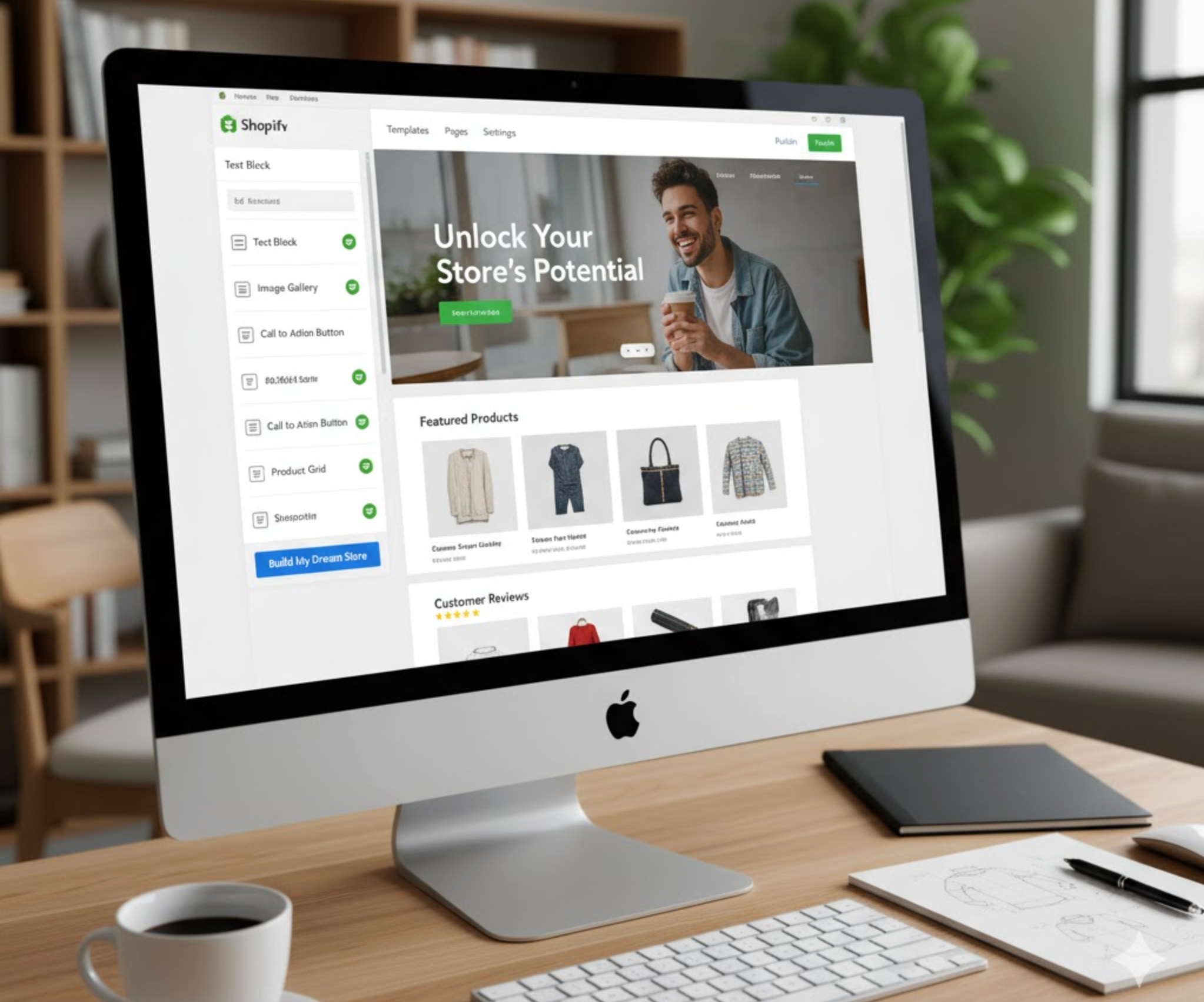
Landing pages play a major role in turning online visitors into paying customers, especially in a Shopify store where first impressions matter. A strong landing page builder helps you design high-converting pages quickly, even without coding skills, making it a crucial tool for modern ecommerce brands. In this article, we explore the 8 best Shopify landing page builders and walk through the essential criteria you should consider before choosing the right one for your store.
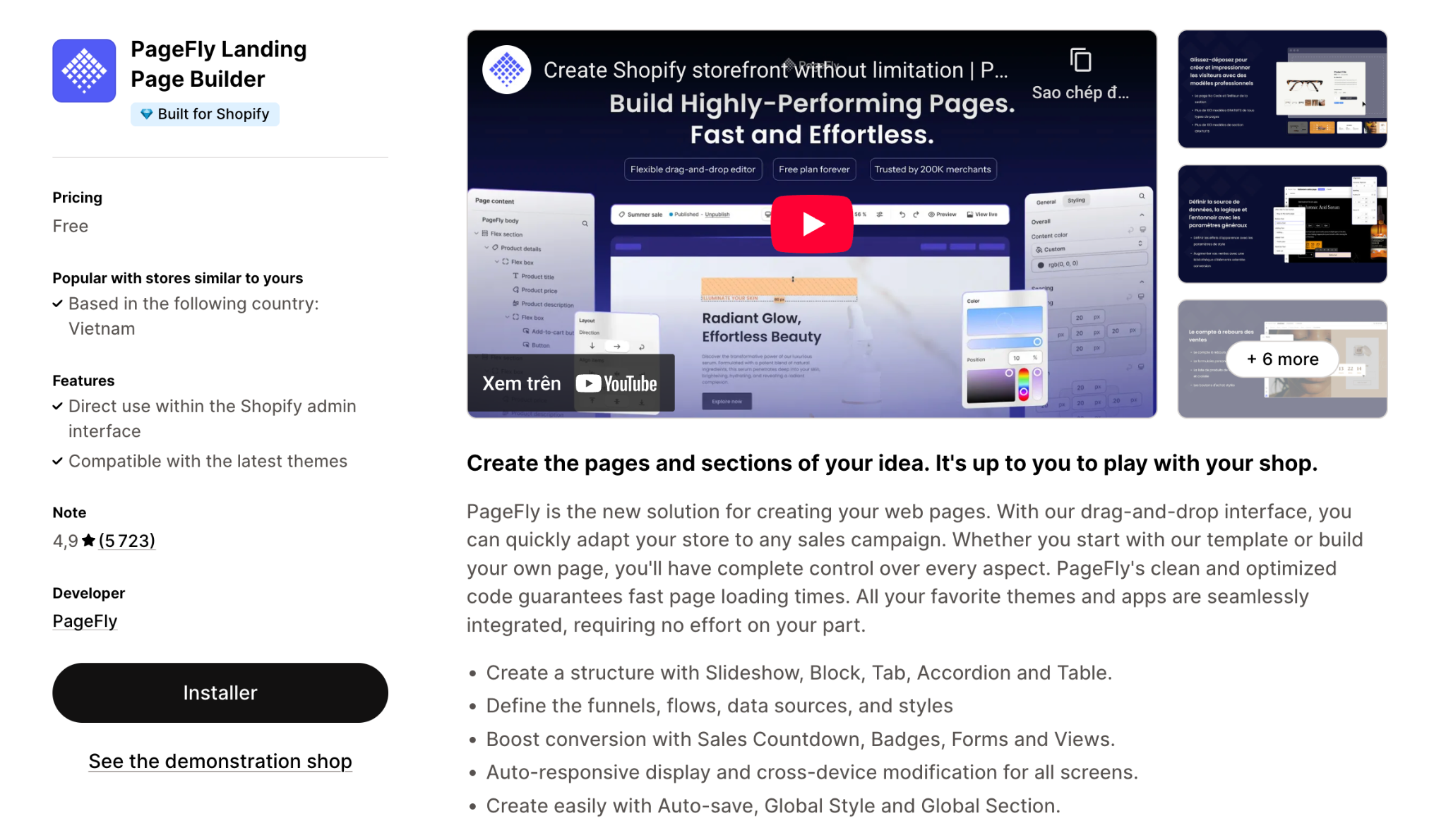
PageFly offers a no-code drag-and-drop builder that lets Shopify merchants create landing pages, product pages, FAQs, and more with strong customization. It integrates with many apps and includes conversion-friendly elements like countdown timers and trust badges. The builder works directly inside Shopify and supports the latest themes. It is suitable for both small and large stores looking for design freedom.
Key Features:
Pricing:
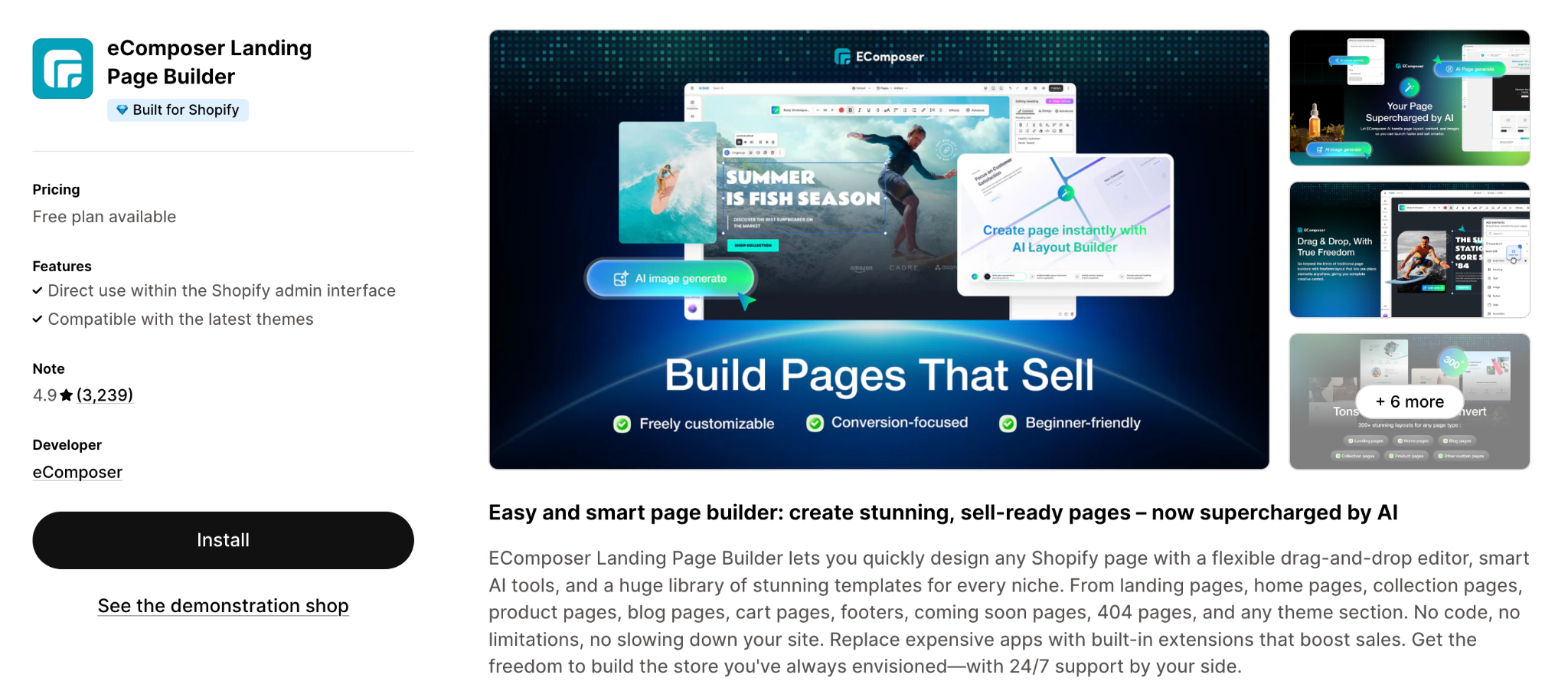
EComposer provides a versatile page builder that supports landing pages, homepages, product pages, blog pages, and more. It offers AI tools such as layout generation and content creation to speed up building. The platform features a large template library for rapid page setup. It also includes built-in sales tools like cross-sell, pop-ups, and wishlist functionality.
Key Features:
Pricing:
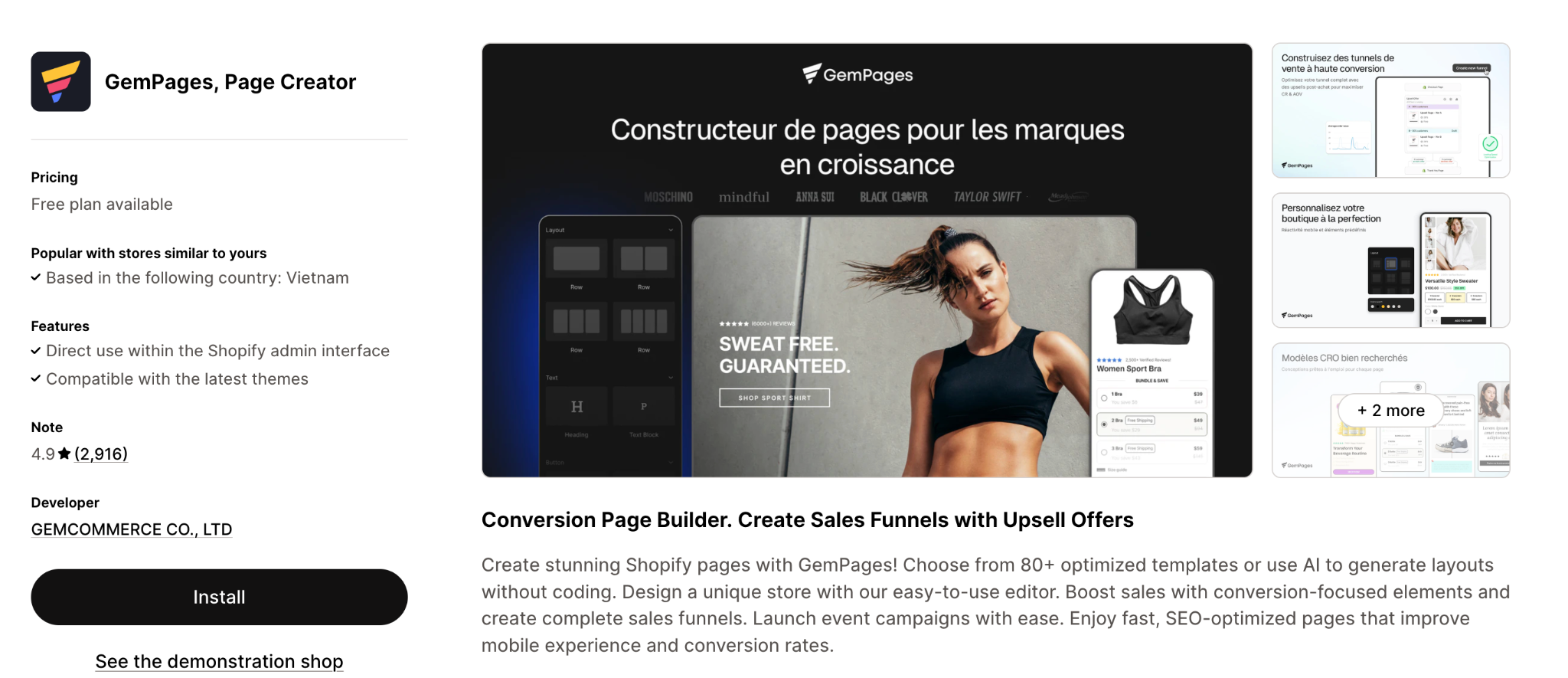
GemPages focuses on conversion-driven design and allows merchants to build landing pages, funnels, and product pages without coding. Its AI “Image-to-Layout” tool can generate editable designs from images or URLs. The builder emphasizes speed, SEO, and performance optimization. It suits merchants who want strong customization with conversion tools.
Key Features:
Pricing:
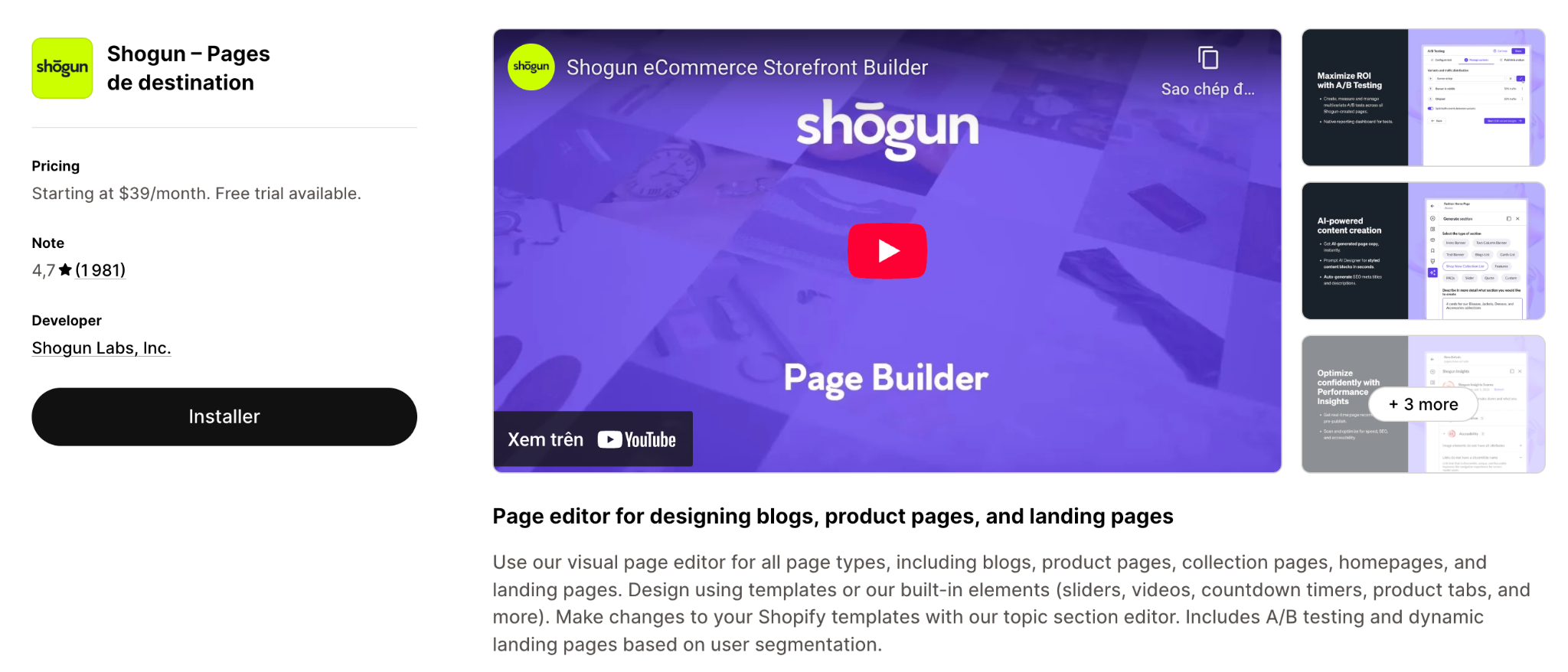
Shogun is a powerful landing page builder commonly used by mid-size and enterprise Shopify stores, including Shopify Plus brands. It supports landing pages, product pages, blog posts, and reusable theme sections. The platform also includes A/B testing and analytics for performance optimization. It is ideal for brands that want flexibility with strong design controls.
Key Features:
Pricing:
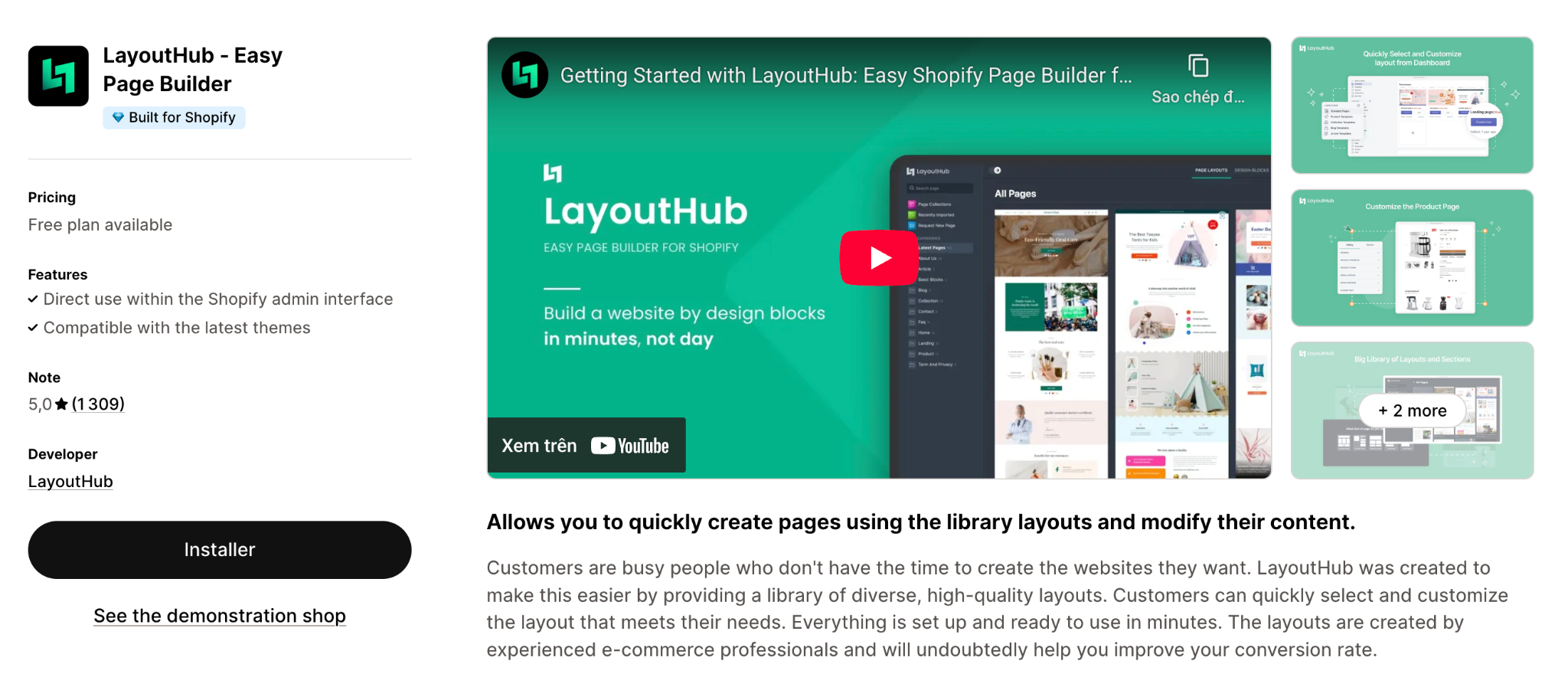
LayoutHub is designed for merchants who want quick and easy landing pages using pre-made layouts. It focuses on simplicity and affordability, making it good for beginners. The builder includes a library of ready-made blocks to assemble pages fast. Its drag-and-drop tools are easy to use even for non-technical users.
Key Features:
Pricing:
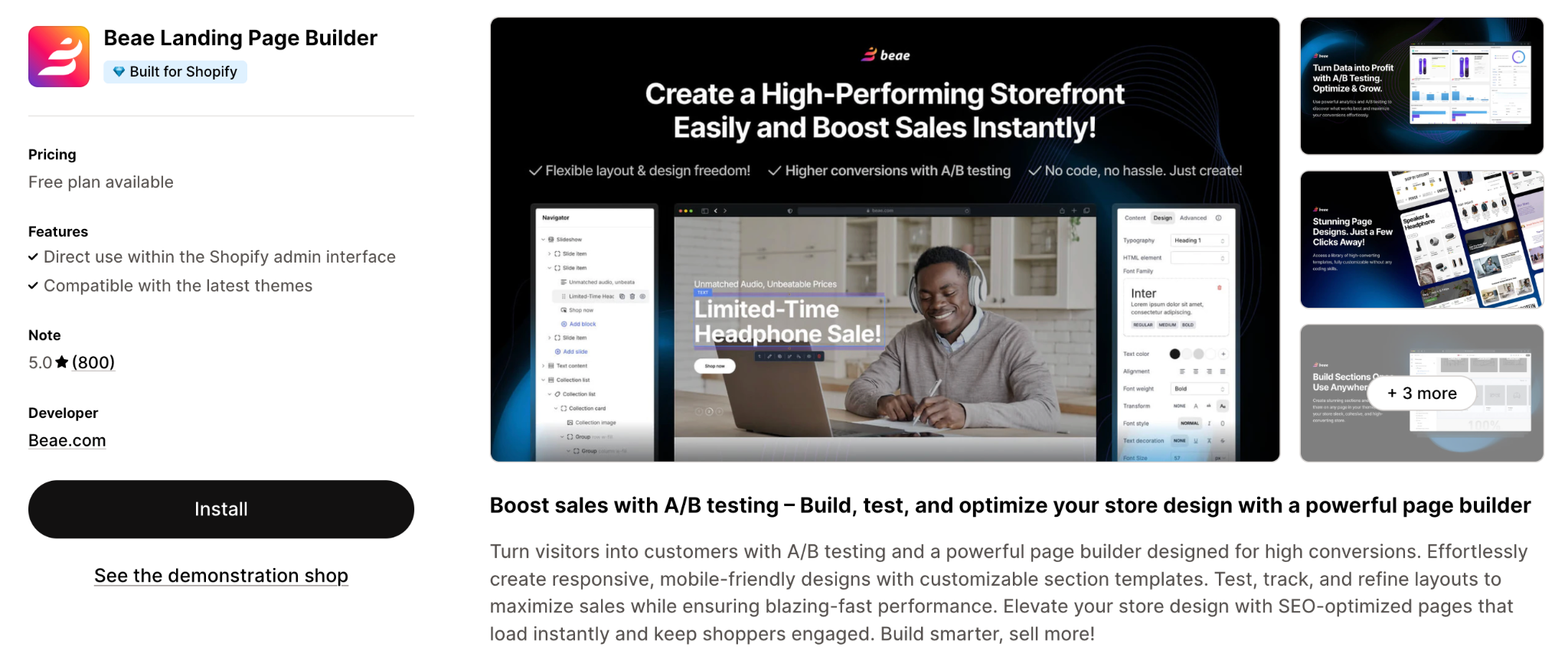
Beae is a modern page builder for Shopify with a focus on clean design, performance, and SEO. It offers landing page templates and a smooth drag-and-drop experience. The platform supports unlimited drafts and is suitable for stores at any growth stage. Its design style is modern, clean, and conversion-oriented.
Key Features:
Pricing:
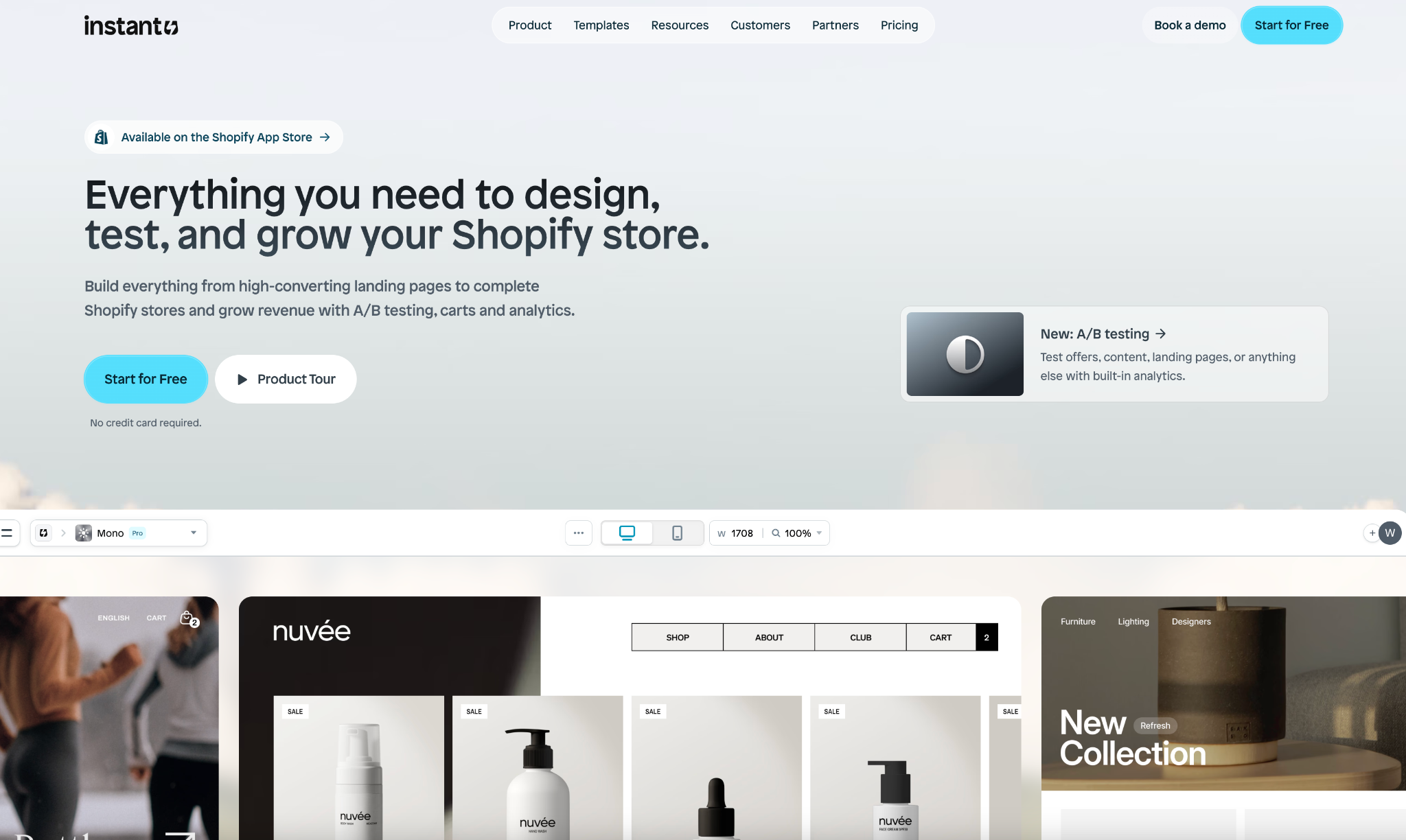
Instant is a flexible landing page builder that supports landing pages, product pages, blog pages, and sections. It includes A/B testing and performance tools, making it suitable for optimization-focused brands. It also offers Figma-to-Shopify import for teams that design in Figma first. This builder is favored by merchants who need fast iteration and creative freedom.
Key Features:
Pricing:
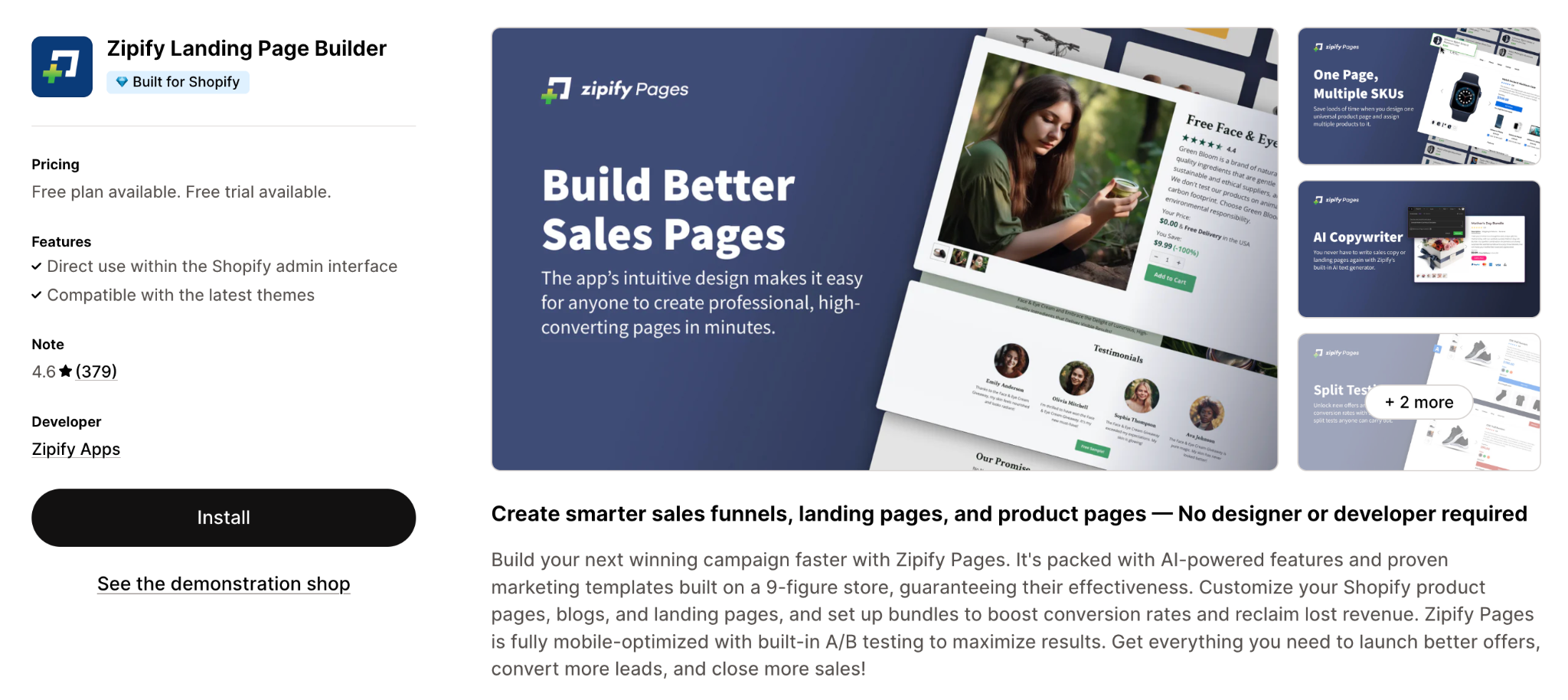
Zipify Pages is built for merchants who rely heavily on paid ads and want high-converting funnel pages. It includes templates optimized for sales funnels, product launches, and advertorials. The platform focuses on improving AOV and creating fast sales funnels rather than deep design customization. It is ideal for stores focused on direct-response marketing.
Key Features:
Pricing:
A great page builder should help you design professional, conversion-ready pages with ease. It also needs to support your long-term business growth by offering flexibility, performance, and integrations. Before choosing one, consider these key aspects:
• Ease of Use
A drag-and-drop editor with intuitive controls allows you to build pages quickly without technical skills. This is especially important for merchants who want full creative control without hiring developers.
• Template Quality & Variety
Look for builders offering a wide selection of professionally designed templates suited for different page types. High-quality templates save time and help ensure your pages look polished and consistent with your branding.
• Performance & Loading Speed
A good builder should produce lightweight, fast-loading pages. Better performance not only improves user experience but also strengthens SEO and conversion rates.
• Conversion-Focused Features
Features like A/B testing, countdown timers, trust badges, and popups help optimize performance. These built-in tools make it easier to increase engagement and boost sales directly from your landing pages.
• Integration Compatibility
Your page builder should integrate smoothly with review apps, marketing tools, upsell apps, and analytics platforms. Strong compatibility ensures your landing pages function well within your overall Shopify ecosystem.
• Pricing & Publishing Limits
Check how many pages you can publish on each plan and whether key features are locked behind higher-tier pricing. Make sure the builder fits your current budget while leaving space for future growth.
Choosing the right landing page builder can dramatically improve your store’s engagement, user experience, and conversions. By focusing on ease of use, performance, conversion tools, and integrations, you can ensure the builder you select supports both your current needs and long-term growth. Whether you prefer design freedom, simplicity, or conversion-focused features, the tools listed in this article offer strong options for every type of Shopify store. If you need help selecting the best one for your specific goals, I’m happy to recommend the ideal choice!