New to Shopify? Free trial, then $1/month for your first 3 months. Start free trial →
 Where is your store?
Ryviu works with both – pick yours to continue.








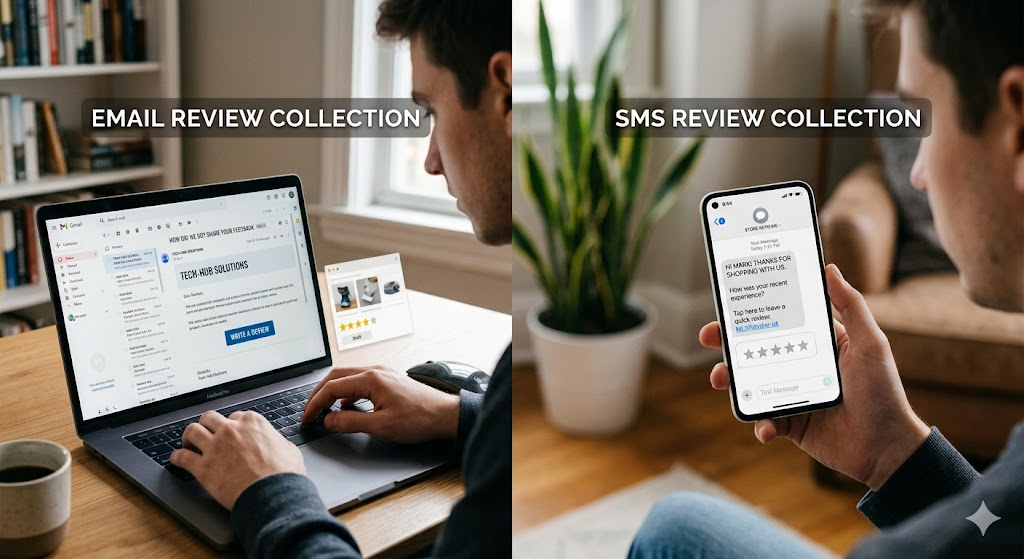
Customer reviews have become one of the most influential factors in modern purchasing decisions. Whether shoppers are browsing a product page or comparing brands, authentic feedback often determines whether they convert or leave. Because of this, businesses are constantly refining how they collect reviews especially through channels like email and SMS.
Both email and SMS offer unique advantages when it comes to requesting reviews. While email has long been the standard for customer communication, SMS has rapidly gained traction due to its immediacy and high open rates. Understanding which channel performs better and when is key to maximizing review collection without overwhelming customers.
Before diving into specifics, it’s important to recognize that there isn’t a one size fits all answer. Instead, the effectiveness of each channel depends on timing, audience behavior, and how well the request is integrated into the customer journey. Businesses that want to collect customer reviews without annoying customers can explore this detailed guide.
Customer reviews are no longer just a “nice-to-have” feature; they are essential to building trust and credibility. In an increasingly competitive digital landscape, shoppers rely on peer feedback more than brand messaging. This makes review collection a core part of any growth strategy.
Reviews also contribute to SEO, conversion rates, and product improvements. The more consistent and authentic your review flow is, the stronger your overall brand perception becomes. Businesses that actively collect and showcase reviews tend to outperform those that don’t.
To understand how email and SMS contribute to this process, let’s break down their impact through key benefits:

Email remains one of the most scalable communication channels available. Businesses can send thousands of review requests at minimal cost, making it ideal for large customer bases. Automation tools further streamline the process, allowing for consistent outreach without manual effort.
Email campaigns can also be segmented based on customer behavior. This means businesses can tailor review requests to specific audiences, improving relevance and response rates. Over time, this leads to more meaningful and detailed feedback.
To see how email excels in scalability, consider the following advantages:
Email allows for a more visually engaging and informative experience. Businesses can include product images, branding elements, and personalized messages to make review requests more appealing. This added context often encourages customers to leave more thoughtful reviews.
Personalization goes beyond just using a customer’s name. Emails can reference specific purchases, delivery dates, or previous interactions. This makes the request feel more relevant and less like a generic message.
Here’s how email enhances personalization:
Email is particularly effective for collecting detailed reviews. Customers are more likely to write longer responses when they have space and time to do so. This is especially useful for businesses that value in-depth feedback.
Long-form reviews provide richer insights into customer experiences. They can highlight specific strengths and weaknesses that shorter responses might miss. This makes email a valuable channel for qualitative data.
Key benefits of email for long-form reviews include:
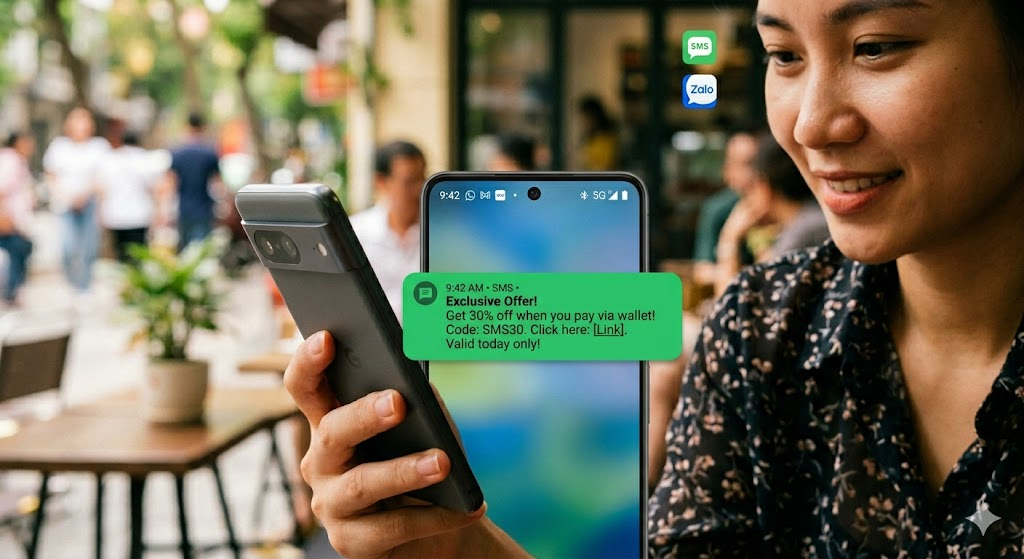
SMS boasts significantly higher open rates compared to email. Most text messages are read within minutes of being received, making it a powerful tool for immediate engagement. This increases the likelihood of customers responding to review requests.
The simplicity of SMS also plays a role in its effectiveness. With fewer distractions and a direct call-to-action, customers are more likely to complete quick tasks. This makes SMS particularly effective for short review prompts.
To understand why SMS performs so well, consider these points:
Timing is critical when requesting reviews, and SMS excels in this area. Messages can be sent immediately after a purchase or delivery, capturing customer sentiment while it’s still fresh. This often leads to higher response rates and more accurate feedback.
SMS also works well for time-sensitive campaigns. For example, businesses can send reminders or follow-ups if a customer hasn’t responded. This ensures that opportunities for reviews are not missed.
While SMS is highly effective for capturing feedback shortly after delivery, some brands go even further by embedding surveys directly into the checkout experience. By embedding order confirmation surveys, businesses can collect instant feedback while customer impressions are still fresh.
Here’s how SMS leverages timing effectively:
SMS reduces friction in the review process. With a simple link or quick reply option, customers can leave feedback in seconds. This convenience is a major factor in its high conversion rates.
The streamlined nature of SMS makes it ideal for mobile users. Since most customers are already on their phones, the transition from message to review is seamless. This eliminates barriers that might exist with email.
Key advantages of SMS simplicity include:
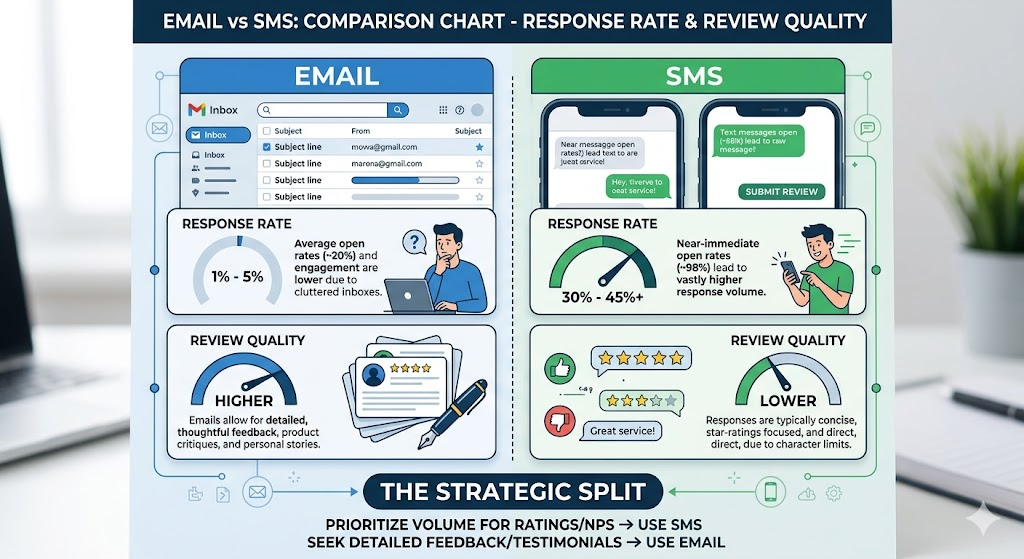
When comparing email and SMS, the distinction often comes down to quantity versus quality. SMS tends to generate more responses due to its immediacy and high open rates. However, these responses are usually shorter and less detailed.
Email, on the other hand, may yield fewer responses but often produces more comprehensive reviews. This makes it better suited for businesses that prioritize depth over volume. The choice depends on what type of feedback is more valuable.
To summarize this trade-off:
Different customer segments respond differently to communication channels. Younger audiences may prefer SMS due to its speed and convenience, while older customers might be more comfortable with email. Understanding your audience is crucial for maximizing effectiveness.
Cultural and regional factors can also influence preferences. In some markets, SMS is the dominant communication method, while in others, email remains the standard. Businesses should analyze their customer base before choosing a strategy.
Here’s how audience preferences impact results:
The effectiveness of email vs SMS also depends on the context in which they are used. For example, SMS works well for quick post-delivery reviews, while email is better for follow-up surveys. Combining both channels can often yield the best results.
A hybrid approach allows businesses to leverage the strengths of each channel. For instance, an initial SMS can prompt a quick rating, followed by an email for more detailed feedback. This creates a balanced review collection strategy.
Common use cases include:
Sending review requests at the right time is critical. Too early, and the customer may not have enough experience with the product; too late, and they may lose interest. Finding the optimal timing can significantly improve response rates.
Frequency also matters. Overloading customers with requests can lead to frustration and unsubscribes. A balanced approach ensures consistent engagement without being intrusive.
In addition, implementing a proper customer feedback management system helps businesses organize responses, identify trends, and turn feedback into actionable improvements.
Best practices for timing include:
The way a review request is written can greatly impact its success. Clear, concise, and friendly messaging encourages customers to take action. Including a strong call-to-action is essential.
Messaging should also align with your brand voice. Whether formal or casual, consistency helps build trust and recognition. Personal touches can further enhance engagement.
Effective messaging strategies include:
The easier it is for customers to leave a review, the more likely they are to do so. Simplifying the process can significantly increase conversion rates. This applies to both email and SMS campaigns.
Reducing friction involves minimizing steps and optimizing for mobile devices. A seamless experience ensures that customers don’t abandon the process midway.
Ways to reduce friction include:
Managing review collection across multiple channels can be challenging. This is where tools like the Ryviu review app come into play. By centralizing and automating the process, businesses can maximize efficiency and results.
Ryviu allows businesses to seamlessly integrate email and SMS review requests into their workflows. It helps ensure that requests are sent at the right time and in the right format. This leads to higher response rates and better-quality feedback.
To see how Ryviu enhances review collection, consider these features:
Choosing between email and SMS isn’t about picking a winner, it's about finding the right balance. Each channel has its strengths, and combining them can create a more effective strategy. Businesses that leverage both tend to achieve the best results.
The key is to align your approach with your goals and audience. If you need quick, high-volume feedback, SMS may be the better option. If you’re looking for detailed insights, email is likely more effective.
To build a balanced strategy:
Email and SMS both play important roles in collecting customer reviews. While SMS excels in speed and response rates, email offers depth and flexibility. The most successful businesses understand how to use each channel strategically.
Rather than choosing one over the other, a hybrid approach often delivers the best outcomes. By leveraging the strengths of both, businesses can maximize review volume and quality. This ultimately leads to stronger customer trust and better business performance.
In the end, the question isn’t just “Which gets more reviews?”; it’s “How can you use both to get the best results?”