New to Shopify? Free trial, then $1/month for your first 3 months. Start free trial →
 Where is your store?
Ryviu works with both – pick yours to continue.








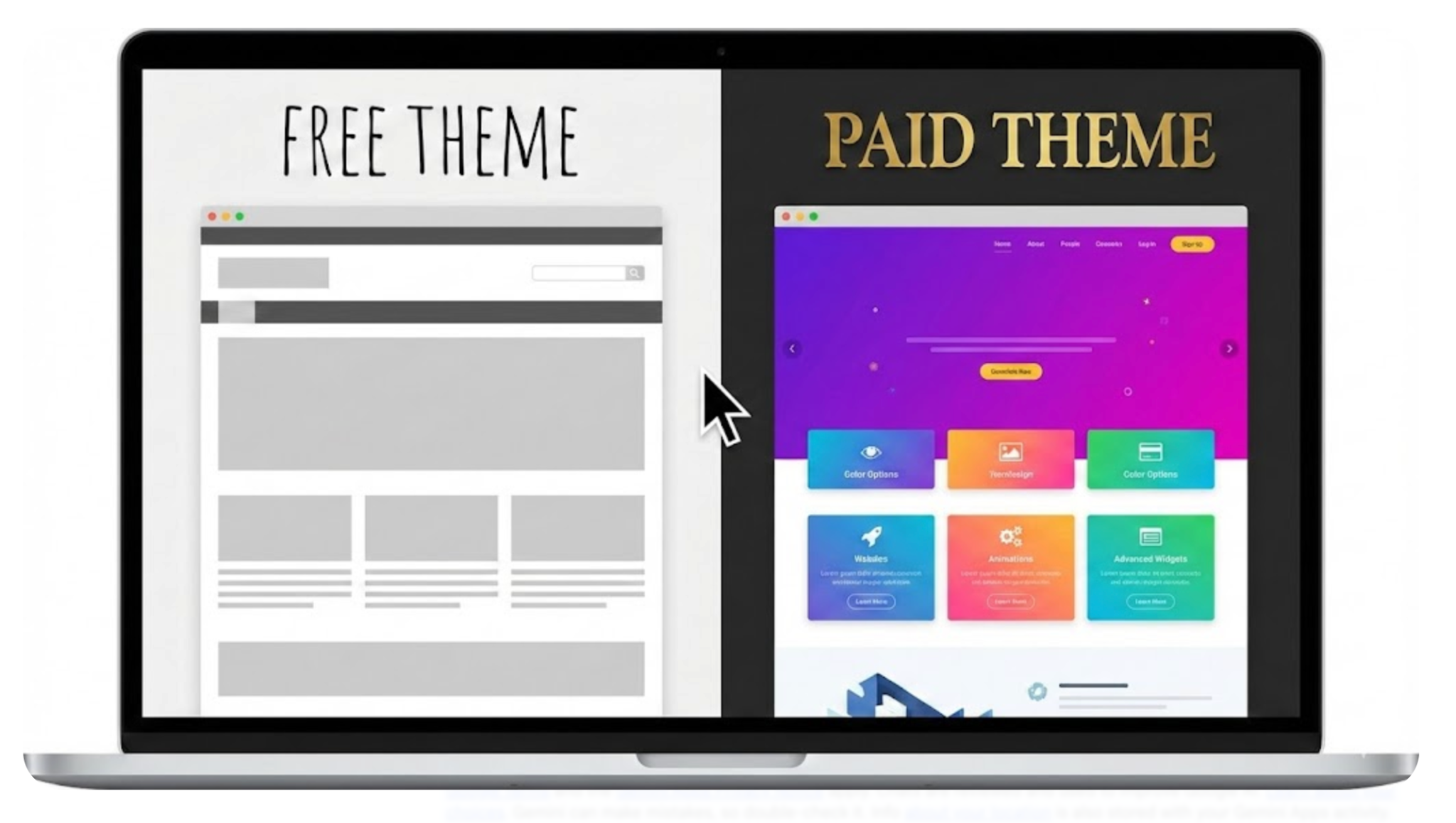
Choosing a theme is more than selecting a visual style, it directly affects usability, performance, and how easily your website can grow over time. While free themes and paid themes can both help you launch a site, they are built with different priorities in mind. Understanding those priorities is key to making the right decision.
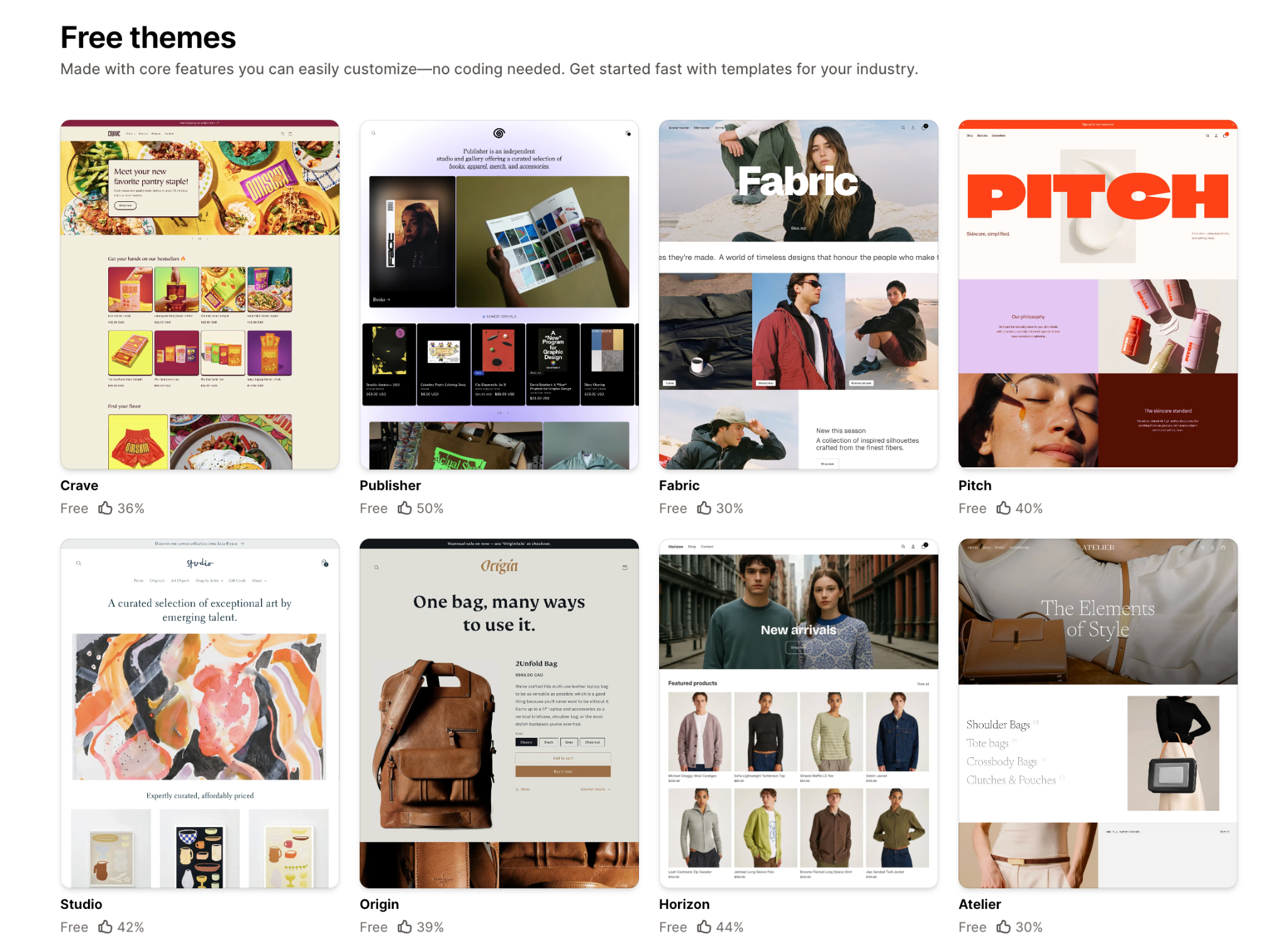
Free themes are designed to provide a fast and accessible starting point for website owners. They focus on essential layouts and core functionality, making them easy to install and use without technical knowledge.
However, because they must serve a broad audience at no cost, free themes often limit customization and advanced features. As your website grows, these limitations can become more noticeable and may require workarounds through plugins or custom code.
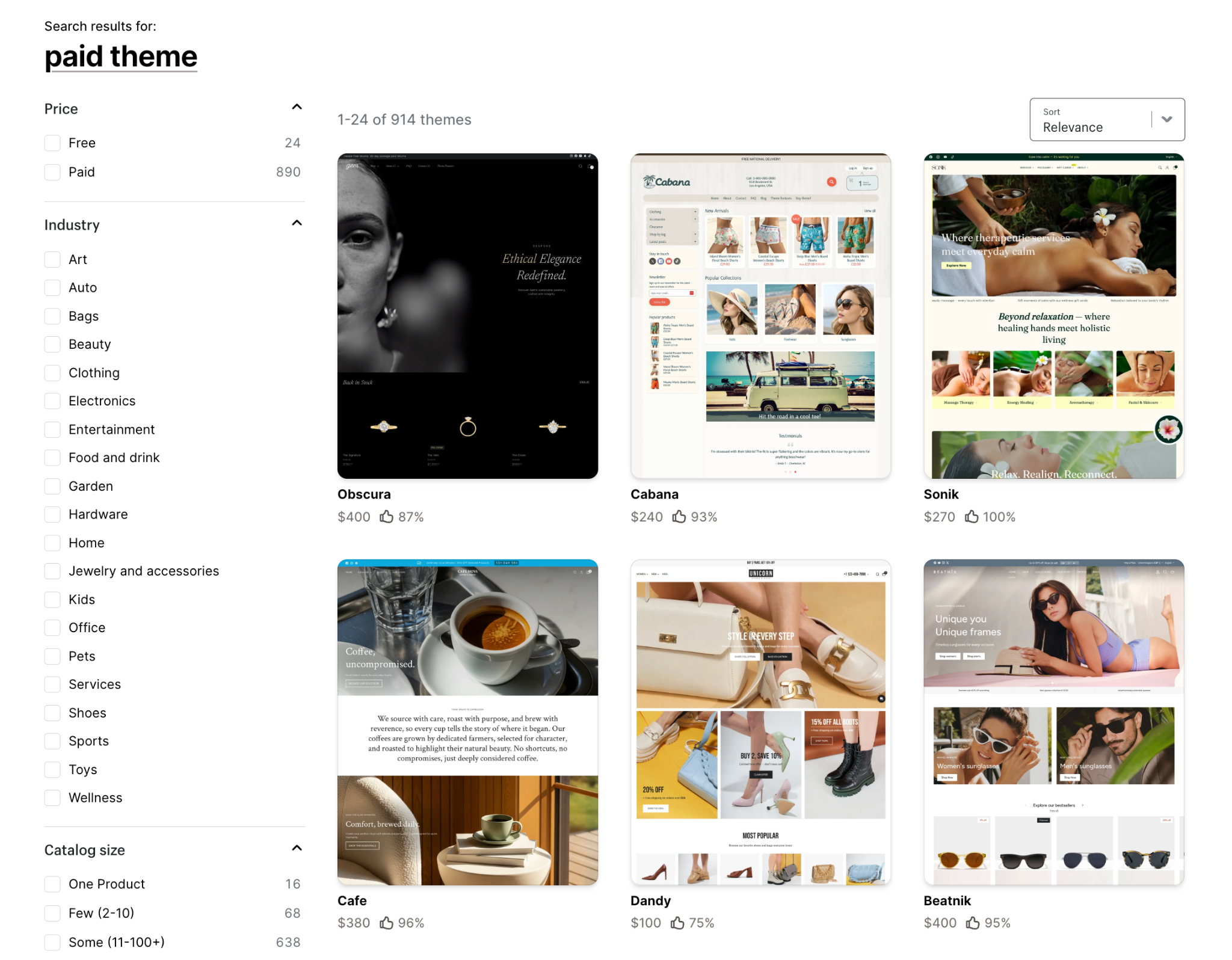
Paid themes are created for users who need greater flexibility, scalability, and professional-level design. They typically include advanced customization options, built-in features, and dedicated support.
While they require an upfront investment, premium themes are often designed to support long-term growth. This makes them especially attractive for business websites or projects where performance and branding matter.
The true difference between free and paid themes becomes clear when you compare how they perform across critical website-building aspects. Rather than focusing on price alone, it’s more helpful to evaluate how each option supports your goals over time.
Free themes usually offer a single design direction with limited styling controls. While this keeps things simple, it can restrict your ability to create a distinctive brand identity.
Paid themes, on the other hand, provide greater control over layouts, typography, colors, and page structures. This flexibility allows you to tailor the design to your audience and marketing goals.
Free themes focus on core functionality to remain lightweight and easy to maintain. Advanced features are usually left to third-party plugins.
Paid themes often bundle essential features directly into the theme, reducing reliance on multiple plugins and improving overall stability.
Performance depends on how efficiently a theme is coded. Free themes are usually lightweight, but optimization options are limited.
Paid themes are commonly optimized for speed, SEO, and responsiveness across devices, which can have a direct impact on user experience and rankings.
Free themes receive updates, but the frequency and scope depend on the developer’s availability. Support is often community-based and may not be timely.
Paid themes typically come with regular updates and direct support channels, offering faster resolution when issues arise.
Free themes work well for static or small websites, but scaling them can introduce complexity.
Paid themes are built with growth in mind, allowing you to expand functionality without restructuring your entire site.
Free themes are best suited for projects with simple requirements and limited risk. They allow you to focus on content and learning rather than upfront investment.
As a result, they are an excellent entry point for early-stage websites or experimental ideas.
Paid themes are ideal when your website plays an important role in branding or revenue generation. They provide the tools needed to create a professional, scalable online presence.
For that reason, paid themes often deliver better long-term value despite the initial cost.
Free themes and paid themes are both valuable, but they serve different purposes. Free themes excel in simplicity and accessibility, while paid themes offer flexibility, support, and scalability. By evaluating your goals, budget, and growth plans, you can choose the option that truly delivers value for your website, not just today, but in the future.