New to Shopify? Free trial, then $1/month for your first 3 months. Start free trial →
 Where is your store?
Ryviu works with both – pick yours to continue.








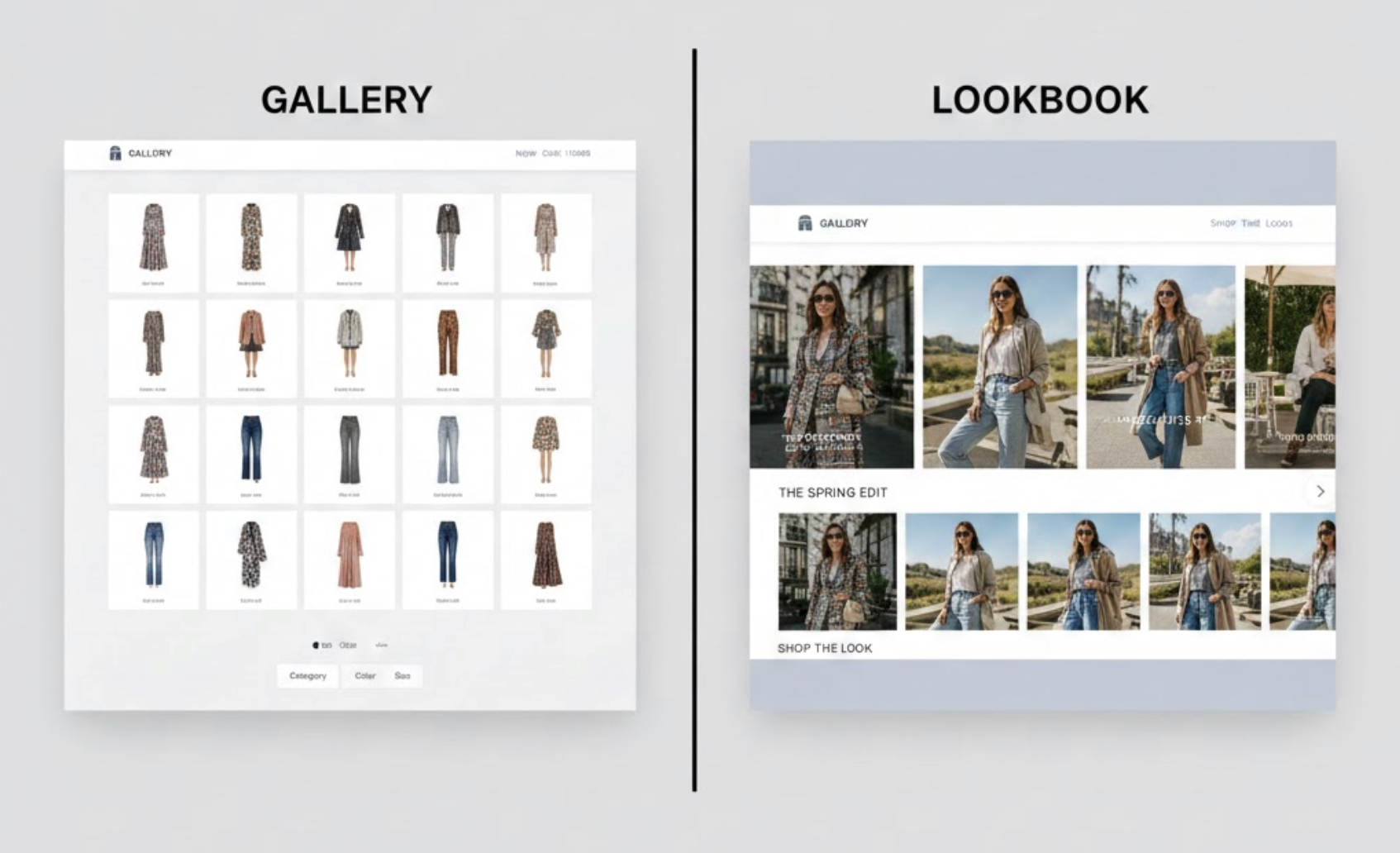
In today’s visually driven eCommerce landscape, images are no longer just decorative elements, they are decision-making tools. Shoppers rely heavily on visuals to understand products, imagine real-life use cases, and determine whether a brand feels trustworthy and premium. Among the most commonly used visual formats in online stores are galleries and lookbooks.
Although these two formats may look similar on the surface, they serve very different strategic purposes. Choosing the wrong one, or using one without understanding its strengths, can limit engagement, reduce conversions, and weaken your brand storytelling. This article breaks down the differences between galleries and lookbooks in detail, helping you decide when and how to use each format for maximum impact.
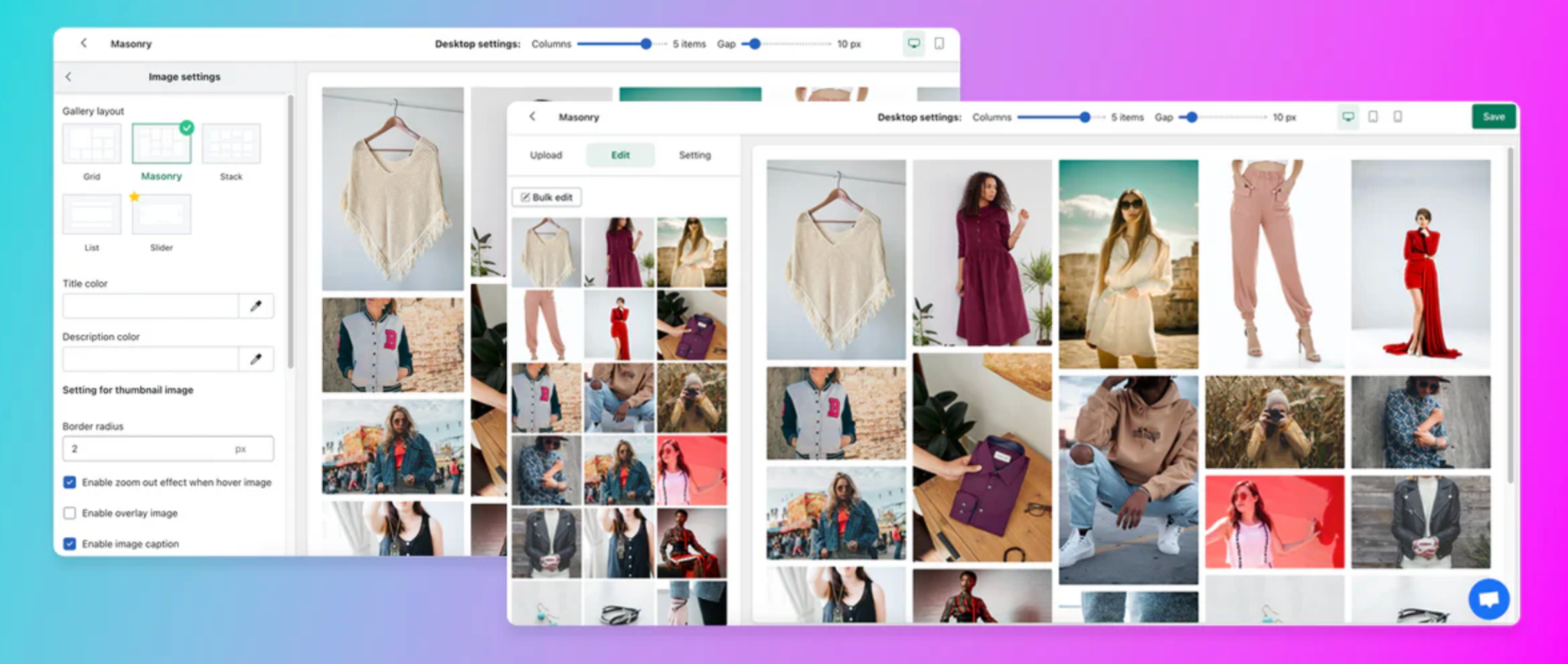
A gallery is a visual display that presents multiple images in a structured layout, such as a grid, masonry, or slider. Its primary goal is to showcase images clearly and efficiently, allowing users to browse freely without being guided through a specific narrative.
Galleries are straightforward by design. Each image stands on its own, and users are not required to follow a particular order. This makes galleries ideal for quick scanning and passive exploration.
The main purpose of a gallery is visual presentation, not persuasion. It helps:
A gallery answers the question:
“What does this brand or product look like?”
However, galleries are mostly passive. They show what exists but rarely guide users toward what to buy or how to use products together.
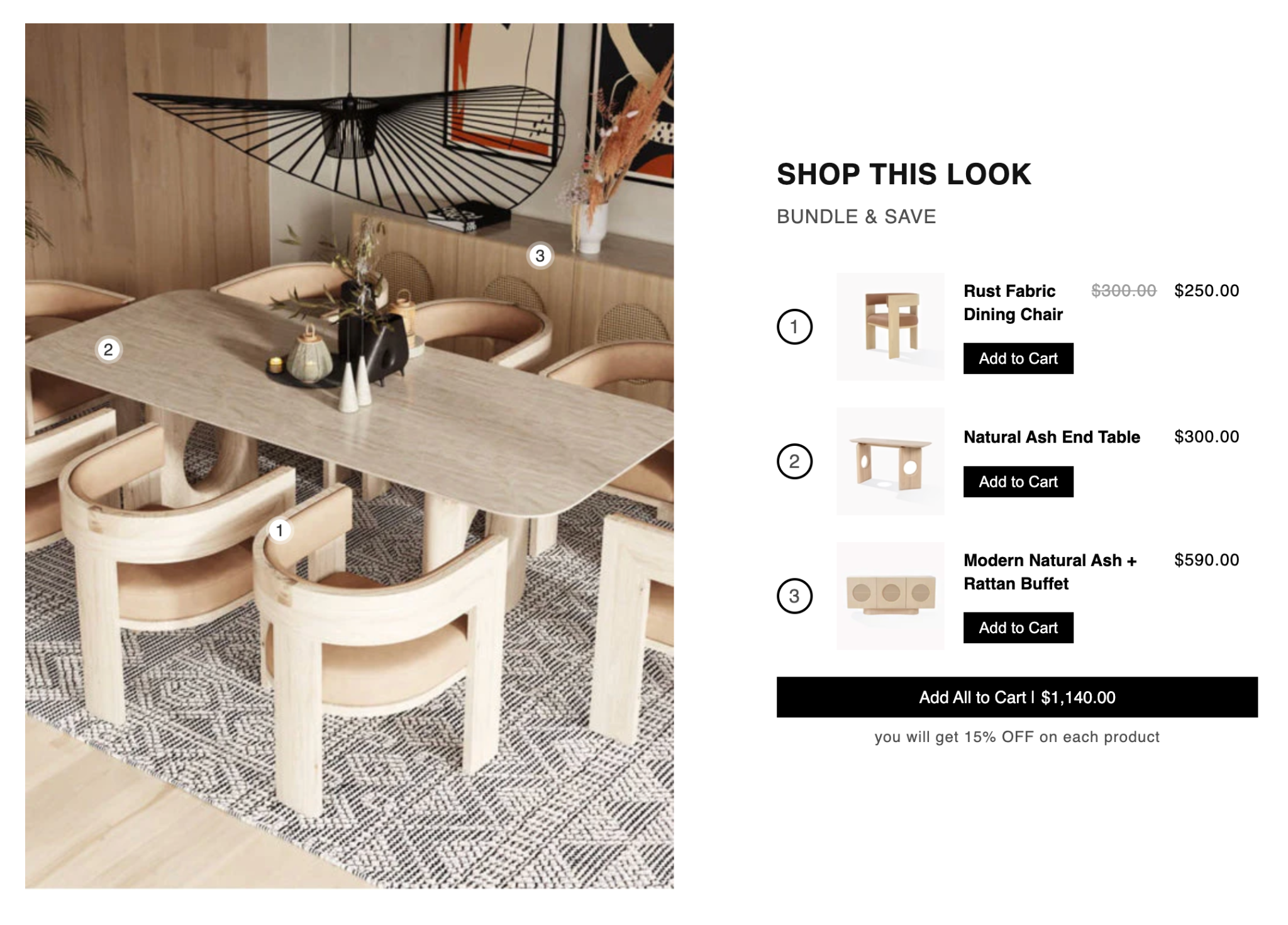
A lookbook is a curated visual experience designed to tell a story through styled images. Rather than showing products individually, lookbooks present products as part of a complete look, lifestyle, or theme.
Lookbooks are intentional. Every image, product placement, and sequence is designed to influence how shoppers perceive and interact with the brand. In eCommerce, lookbooks are often interactive and shoppable, allowing customers to click directly on featured items.
The main purpose of a lookbook is inspiration and conversion. It helps:
A lookbook answers the question:
“How can I use this product, and what should I buy with it?”
Unlike galleries, lookbooks are actively selling tools, even when they feel subtle and editorial.
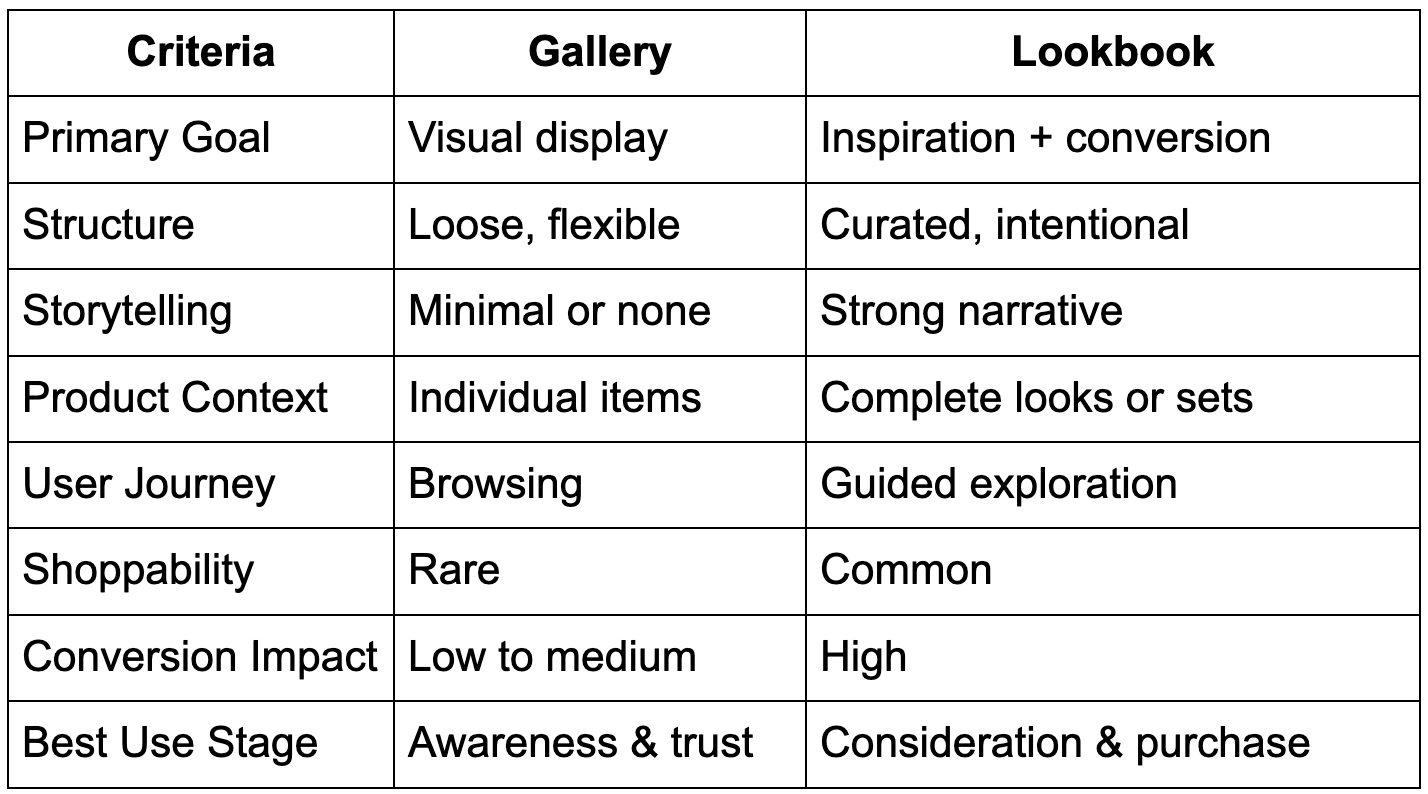
Galleries are most effective at the top of the funnel, where shoppers are still forming their first impressions of a brand or product. At this stage, users are not ready to buy yet, they are looking for reassurance. By presenting multiple real visuals in one place, galleries help shoppers quickly understand what a product looks like and whether the brand feels legitimate, active, and trustworthy.
This visual familiarity plays a critical role in reducing uncertainty, especially in online shopping where customers cannot touch or try products. A well-organized gallery subtly answers early questions like “Is this brand real?” and “Do other people actually use this product?”
Galleries are particularly impactful for:
That said, galleries are largely open-ended experiences. They present images without telling shoppers how to interpret them or what to do next. When customers cannot immediately visualize how products fit into their own lifestyle or work together with other items, they may pause their decision, bookmark the page, or leave to “think about it later.” This is where galleries begin to reach their natural limitation, and where more guided visual formats become valuable.
While galleries support early discovery, lookbooks excel in the middle and bottom of the funnel, where shoppers are actively evaluating options and moving closer to purchase. At this stage, hesitation often comes from uncertainty about styling, compatibility, or decision overload, and lookbooks are designed to remove those barriers.
By presenting products in complete, curated looks, lookbooks directly address common shopper concerns. Instead of asking customers to imagine possibilities on their own, lookbooks show them exactly how products can be worn, combined, or used in real-life settings.
Specifically, lookbooks reduce friction by:
As a result, shoppers who engage with lookbooks tend to behave differently. When they see a complete look that resonates with them, they are more likely to:
This is why lookbooks are especially powerful for fashion, beauty, home décor, and lifestyle brands, where visual context and emotional connection strongly influence purchasing decisions.
A gallery is the right choice when your primary goal is to support discovery and trust-building rather than immediate conversion. It works best in situations where users want to browse freely and absorb visual information without feeling pushed toward a purchase.
You should use a gallery when you want to:
Because galleries are flexible and low-pressure, they perform well in areas such as:
In these contexts, galleries enhance credibility and engagement without disrupting the browsing flow.
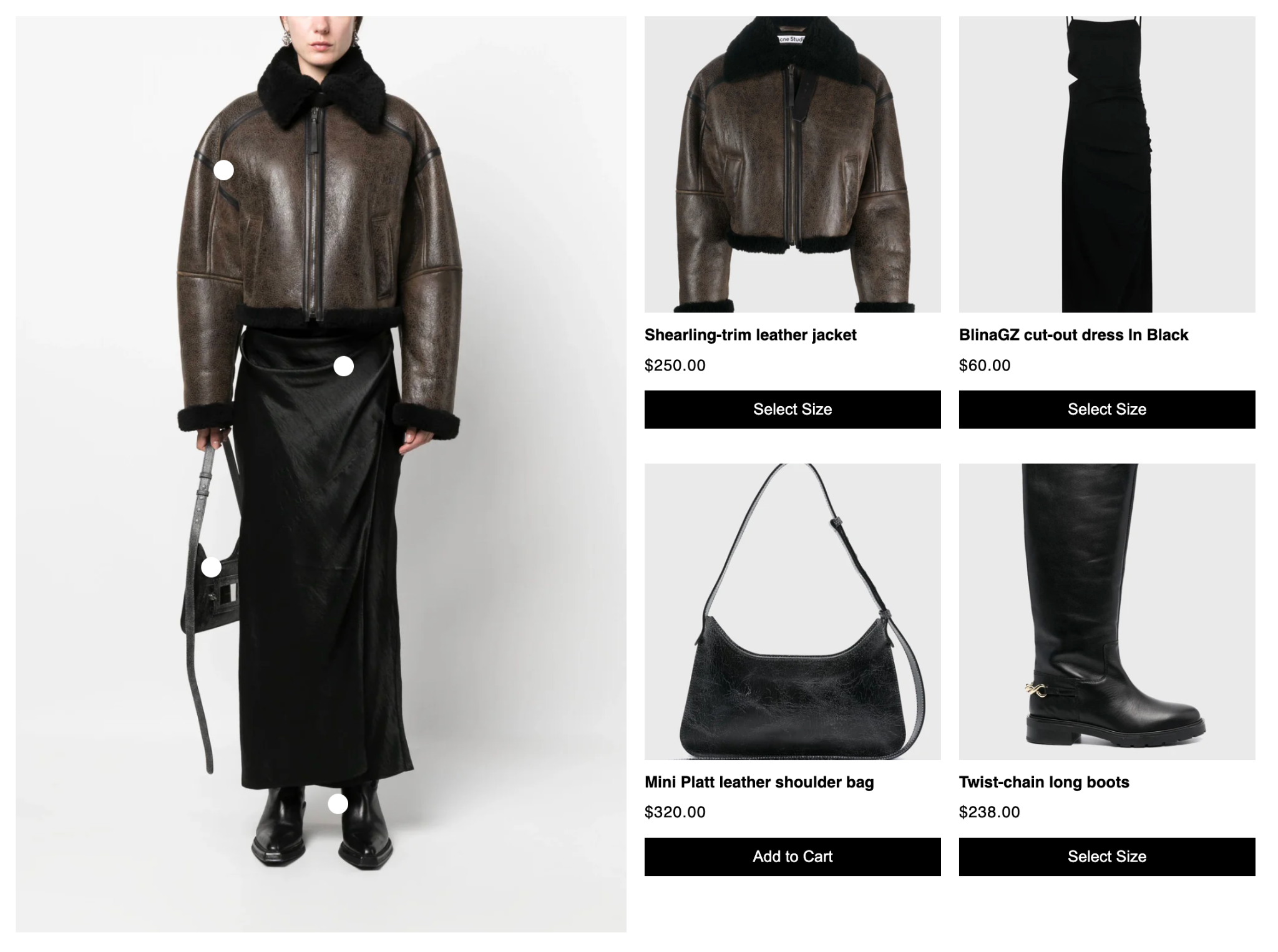
A lookbook is ideal when your goal shifts from showing products to helping customers decide what to buy. It becomes especially valuable when products work better together or when styling and presentation influence perceived value.
You should use a lookbook when you want to:
Lookbooks are most effective when placed in high-intent areas such as:
In these moments, lookbooks actively guide shoppers from inspiration to action.
The most competitive eCommerce stores don’t view galleries and lookbooks as separate features. Instead, they treat them as complementary tools that support different stages of the customer journey. Galleries attract attention and build trust through visual discovery, while lookbooks add structure and direction by showing how products work together in real-life contexts.
When these formats are combined, shoppers can move smoothly from passive browsing to more intentional exploration. They may start by scrolling through lifestyle images, then naturally progress to curated looks that help them visualize ownership and usage. This transition feels organic, which keeps engagement high and reduces the mental effort required to make a purchase decision.
In practical terms, this layered strategy works best when galleries and lookbooks are connected rather than isolated. For example, tools like Lookfy allow merchants to convert standard image galleries into interactive, shoppable lookbooks, making it easier to link inspiration directly with products. This approach avoids breaking the browsing flow and helps turn visual interest into meaningful action.
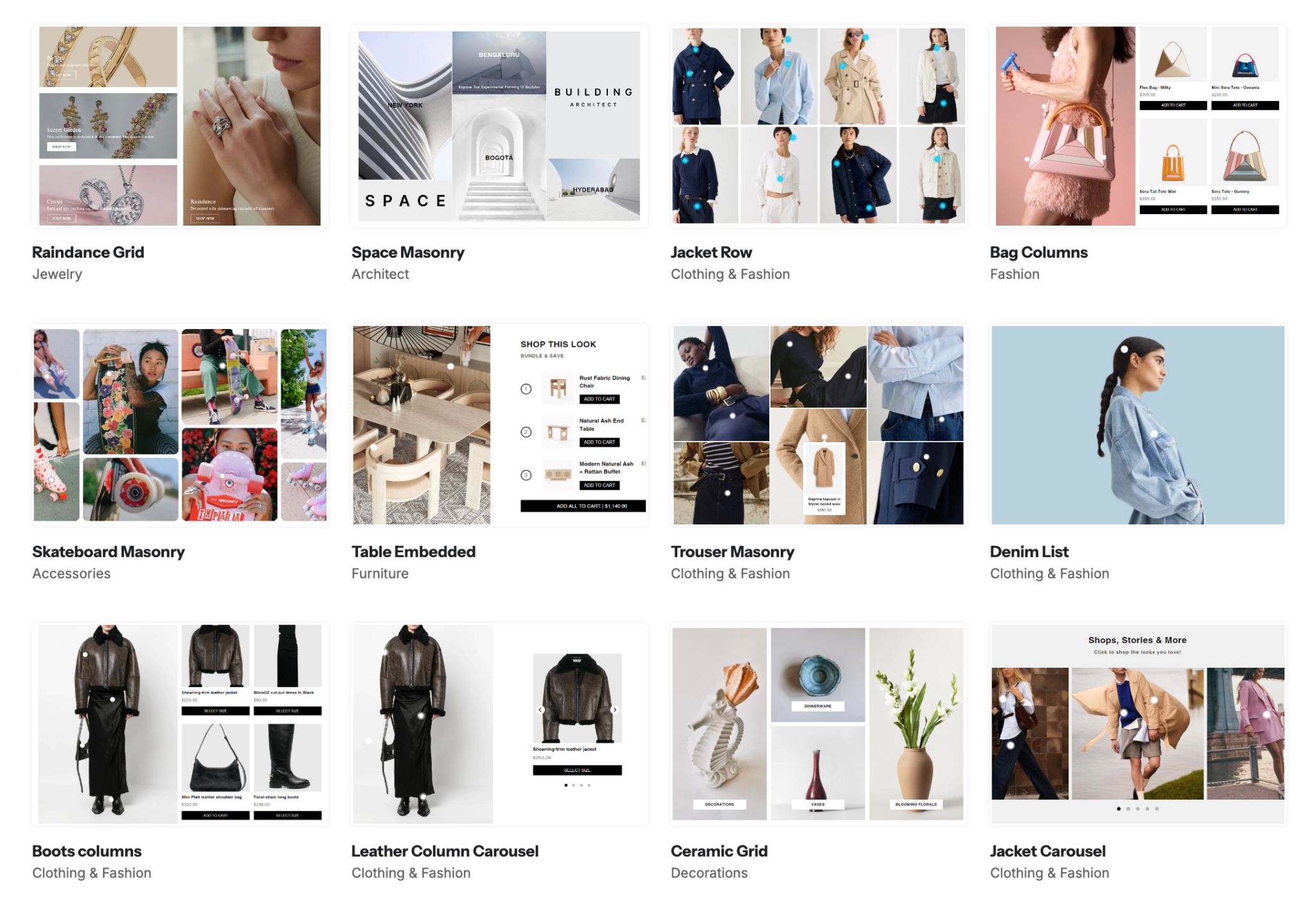
A strong gallery-and-lookbook setup typically follows this structure:
By using galleries to spark interest and lookbooks to guide decisions, brands create a cohesive visual journey that feels helpful rather than promotional. This balanced approach improves engagement, supports confident purchasing, and gives stores a clear competitive edge, without relying on aggressive sales tactics.
While galleries and lookbooks both rely on visuals, their roles in eCommerce are fundamentally different. A gallery shows; a lookbook tells. A gallery supports browsing; a lookbook drives action.
Understanding these differences allows you to design a visual strategy that not only looks good but also performs competitively. When used intentionally, and in the right context, galleries build trust, while lookbooks turn inspiration into revenue.