 New to Shopify? Free trial, then $1/month for your first 3 months. Start free trial →
 Where is your store?
Ryviu works with both – pick yours to continue.








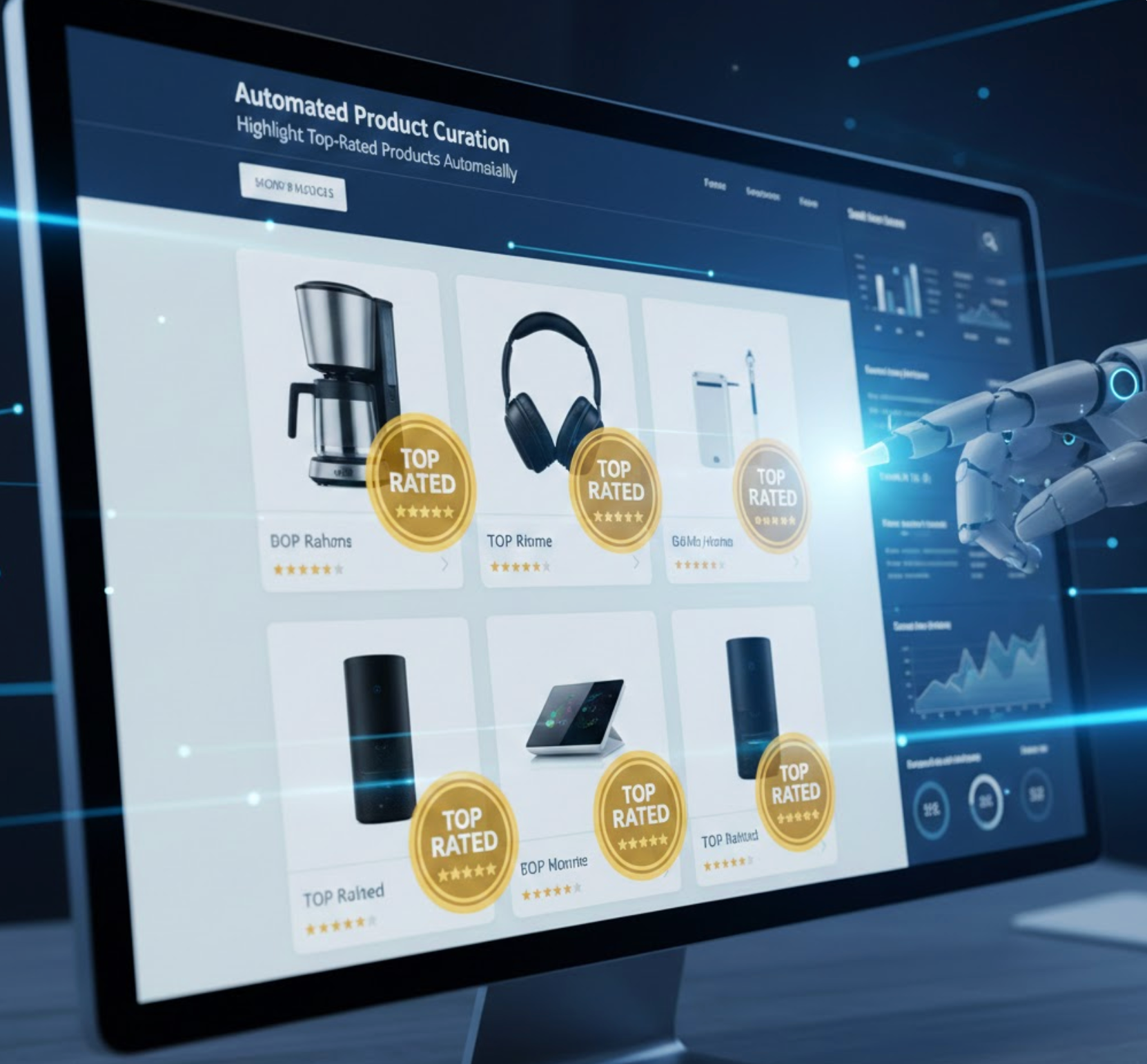
In today’s highly competitive ecommerce landscape, shoppers are exposed to countless product options within seconds. When faced with too many choices, customers often rely on signals like ratings and reviews to decide what to trust. Highlighting top-rated products automatically allows stores to use real customer feedback as a decision shortcut, helping shoppers feel confident without overthinking their purchase.
Rather than manually selecting featured products or constantly updating collections, automation ensures your highest-performing items are always visible. This approach not only saves time but also keeps your storefront aligned with real customer sentiment. In this article, we’ll explore the best ways to highlight top-rated products automatically, explain why each method works, and show how review tools like Ryviu support scalable implementation.
Top-rated products act as powerful social proof because they represent collective customer approval. When shoppers see that many others have rated a product highly, it immediately reduces skepticism and perceived risk. This psychological reassurance is especially important for first-time visitors who are still deciding whether to trust your brand.
In addition to building trust, highlighting top-rated products improves navigation and product discovery. Instead of browsing randomly or feeling overwhelmed by too many options, customers are guided toward products with a proven track record. This creates a smoother shopping journey and increases the likelihood of faster purchase decisions.
From a business perspective, showcasing highly rated products also improves key performance metrics. Stores often see higher conversion rates, increased average order value, and lower bounce rates when top-rated products are made more visible. For these reasons, automating how you highlight them is not just a design choice, but it’s a growth strategy.
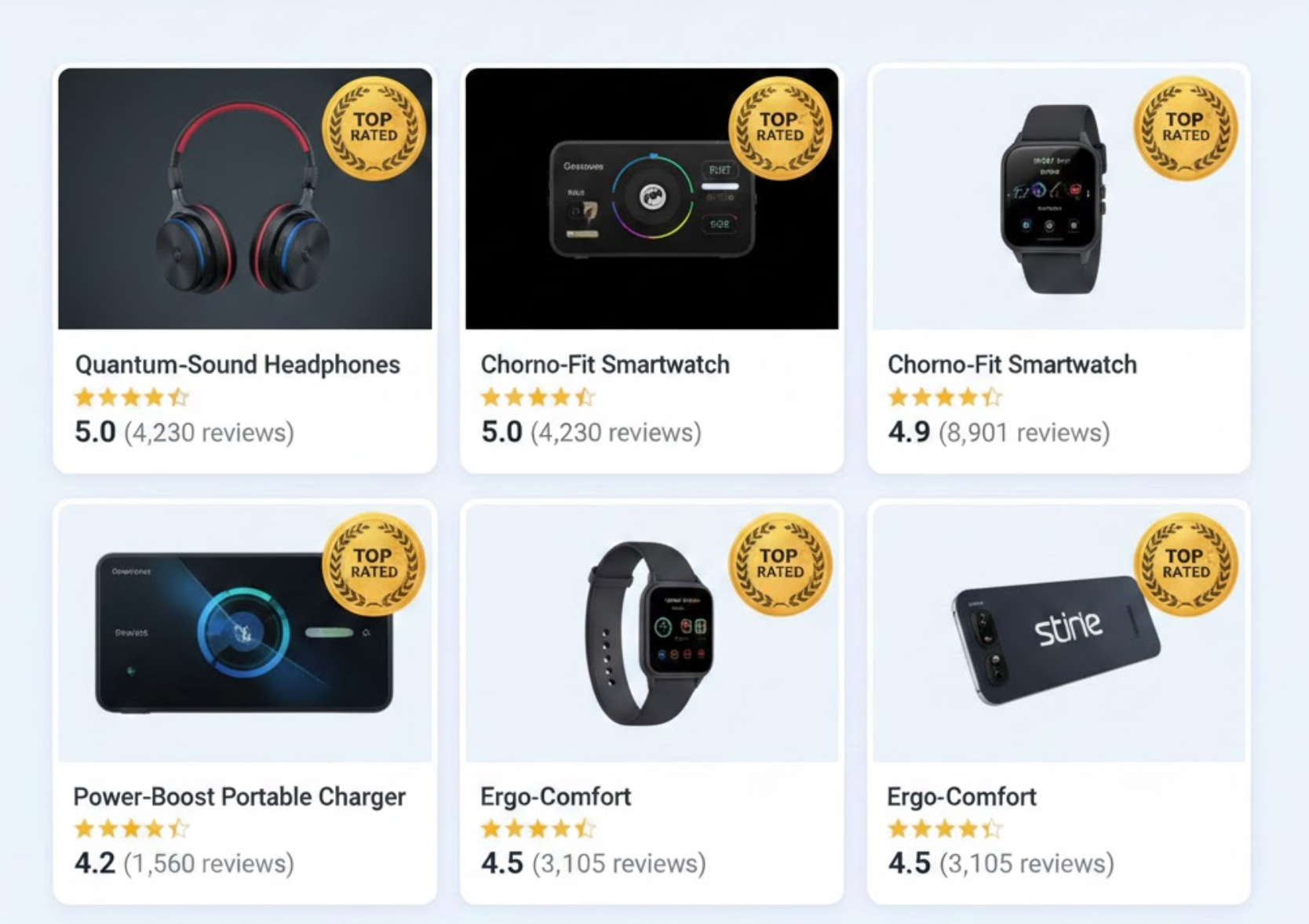
Automatic “Top-Rated” badges are one of the most visually effective ways to draw attention to high-performing products. These badges instantly communicate quality and popularity, even before shoppers read product descriptions or reviews. When applied automatically, badges ensure that recognition is always based on real-time data rather than manual decisions.
By using rating thresholds, stores can maintain consistency and credibility across their catalog. Products that fall below the required rating automatically lose the badge, while newly high-performing items gain visibility. This dynamic approach reinforces trust because customers know the label reflects current customer feedback.
To ensure badges enhance rather than distract from the shopping experience, thoughtful implementation is key.
Best practices for automated top-rated badges include:
Dynamic collections allow merchants to automatically group products based on predefined conditions such as star ratings, review count, or sales performance. Instead of manually curating lists, these collections update themselves as customer reviews change, ensuring ongoing relevance.
This method is particularly effective for stores with large or frequently changing inventories. By surfacing only top-rated products, dynamic collections help customers quickly identify the best options without sorting through dozens of alternatives. This not only improves usability but also strengthens trust in your merchandising logic.
Dynamic collections can also be customized for different marketing goals. To maximize their effectiveness:
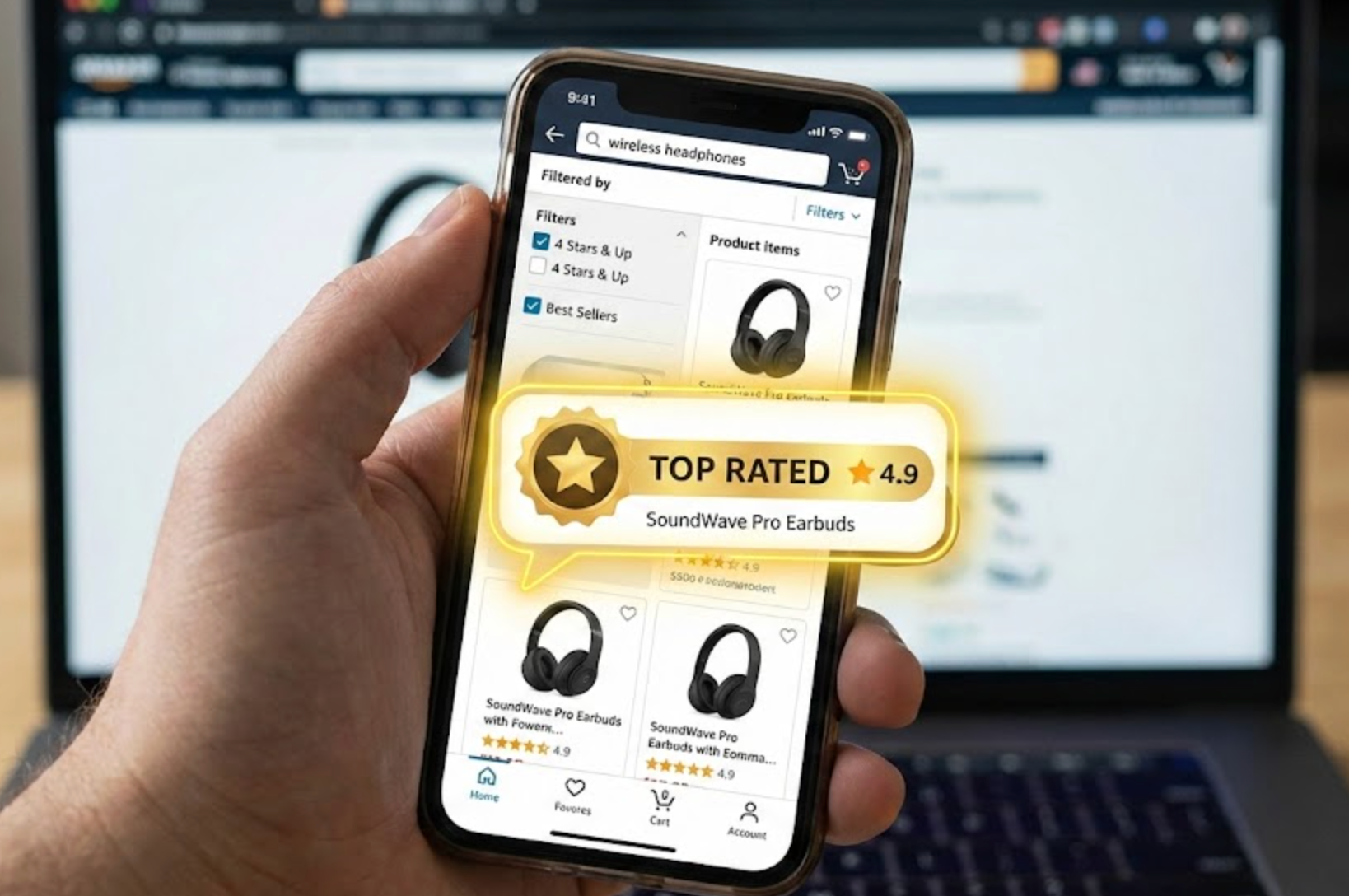
Search and filtering are critical moments in the customer journey, especially for shoppers who already know what they want. Highlighting top-rated products directly within these results ensures that the most trusted options appear at the right time. This reduces friction and helps customers feel confident in their selections.
When ratings are visible during search, shoppers don’t need to click into multiple product pages to compare quality. Instead, they can make informed decisions quickly, which is particularly valuable for mobile users or time-sensitive buyers.
To optimize this experience, stores should integrate rating-based signals directly into their search interface. Below are some effective approaches:
Your homepage often forms the first impression of your store, making it a critical space for highlighting trust and quality. Automatically featuring top-rated products ensures that visitors immediately see what real customers value most. This is especially effective for new visitors who are still evaluating your brand.
Unlike static featured sections that require manual updates, automated homepage sections stay fresh and relevant. As new reviews come in, the products displayed adjust accordingly, reflecting current customer sentiment rather than outdated assumptions.
To get the most value from this strategy, presentation matters. Here are some homepage optimization tips:
Managing ratings, badges, and product visibility manually becomes increasingly complex as a store grows. Review apps like Ryviu simplify this process by centralizing review data and automatically applying it across your storefront. This ensures accuracy, consistency, and scalability.
Ryviu enables merchants to display real-time star ratings, highlight the best reviews and top-rated products, and integrate review data into multiple touchpoints. Because everything updates automatically, store owners can focus on growth rather than maintenance. The result is a storefront that continuously reflects genuine customer feedback.
Let’s explore how Ryviu supports automated highlighting:
Automatically highlighting top-rated products is one of the most effective ways to turn customer feedback into a competitive advantage. By making high-performing products more visible, stores build trust, simplify decision-making, and guide shoppers toward proven choices.
From automated badges and dynamic collections to optimized search results and homepage sections, each strategy contributes to a more intuitive and conversion-focused shopping experience. When combined with a robust review solution like Ryviu, these methods allow eCommerce brands to scale social proof effortlessly and deliver consistently high-impact results.




