 New to Shopify? Free trial, then $1/month for your first 3 months. Start free trial →
 Where is your store?
Ryviu works with both – pick yours to continue.








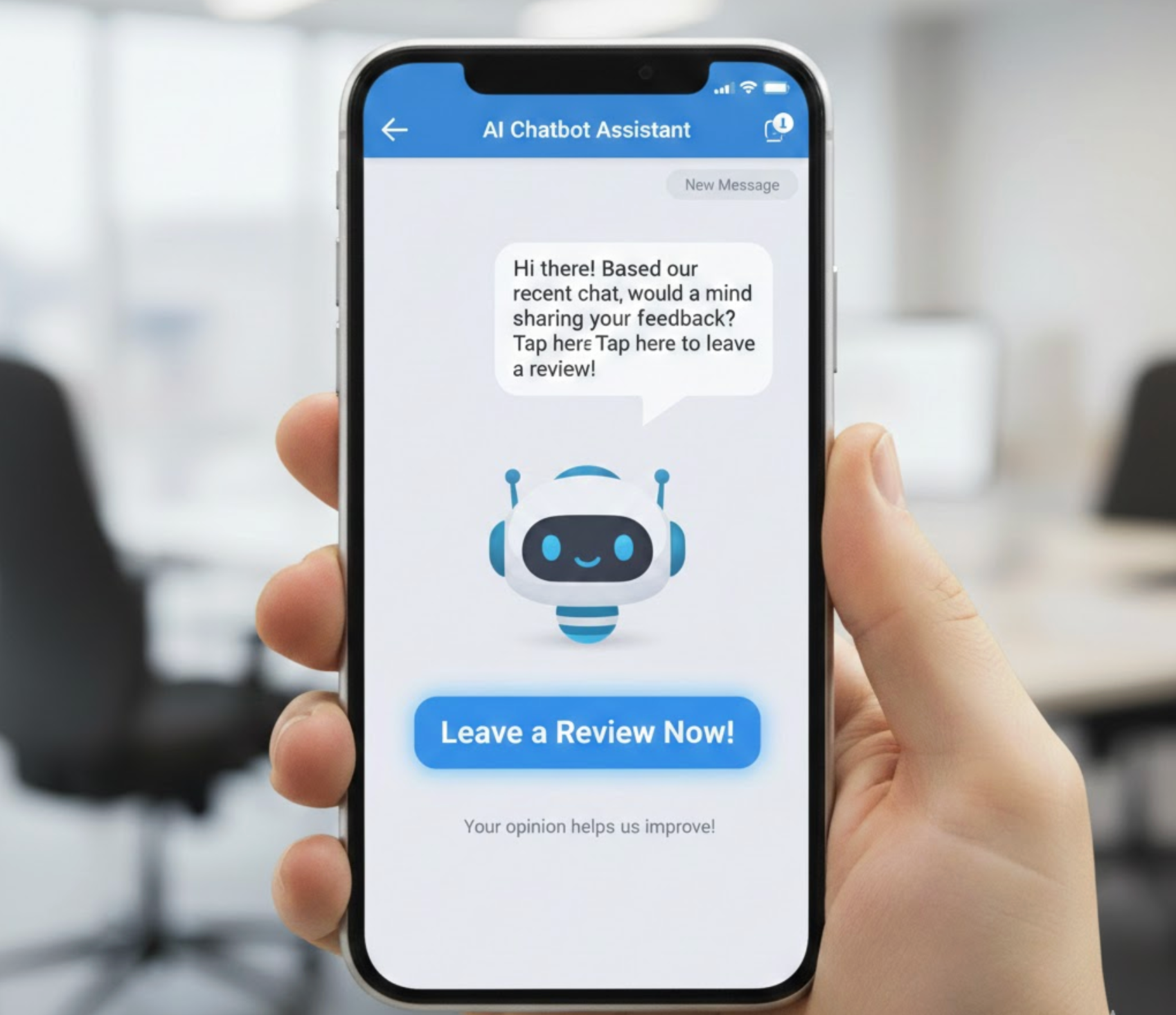
Customer reviews are one of the most powerful forms of social proof in eCommerce. They influence purchasing decisions, guide product improvements, and strengthen your brand’s credibility. The challenge, however, is getting customers to actually submit reviews. Most buyers intend to leave feedback, but daily life gets in the way, they forget, they get busy, or they don’t see the request at the right moment.
This is where AI chatbots have emerged as a game-changing solution. By automating the entire review request process and delivering messages in a friendly, conversational style, AI chatbots make it significantly easier to gather more reviews, especially verified ones. They also help brands maintain consistent communication without adding extra work to their team.
In this expanded article, you’ll learn how AI chatbots can request reviews automatically, why this method is more effective than traditional email requests.
Reviews heavily influence buying behavior. According to industry research, more than 90% of online shoppers read reviews before purchasing. However, only a small percentage actually leave reviews without being prompted. This gap creates a visibility problem: good products may not reach their full potential simply because customers don’t share their experiences.
Automated review requests fix this by ensuring every customer receives a timely, relevant nudge. When done manually, review collection becomes inconsistent, some customers get reminders, many don’t, and the timing varies wildly. AI automation eliminates all of this friction.
Additionally, modern customers prefer convenience. If leaving a review feels like a hassle, they won’t do it. AI chatbots reduce that friction by making the process effortless: one message, one click, one reply.
In an era where repeat purchases and trust matter more than ever, automated reviews are becoming a core part of every brand’s growth strategy.
AI-powered review collection isn’t just simple automation, yet it’s a combination of timing, personalization, conversational UX, and smart logic that works together to boost response rates. Below is a detailed breakdown of how AI chatbots handle this seamlessly.
AI chatbots operate using event-based triggers. This means the system automatically sends messages when a customer reaches certain milestones. Some common triggers include:
These triggers ensure review requests feel appropriate rather than intrusive. For example, clothing buyers should get requests sooner, while customers who bought skincare should get requests only after they’ve had time to try the product.
AI chatbots don’t rely on generic, copy-and-paste messages. Instead, they dynamically personalize each message using:
Because the chatbot references specific details (e.g., “How are your new wireless earbuds working out?”), customers feel seen rather than treated like a number. This personal touch dramatically increases engagement.
Even better, AI can automatically adjust the message style. A returning customer might receive a warmer tone, while first-time shoppers receive a helpful guide-like tone.

Traditional review requests, especially emails, are easy to ignore. Many customers skip them because they feel too formal or require too many clicks.
AI chatbots take a different approach, they engage customers in a friendly conversation. Instead of saying “Please click this link to leave a review,” they ask conversational questions like:
This gentle interaction reduces psychological resistance. Customers who dislike writing long reviews can simply respond with a sentence or short phrase, which the chatbot can format into a review automatically.
Not all brands offer rewards for reviews, but those who do often see a higher response rate. AI chatbots can gently remind customers about:
The chatbot’s tone stays natural and non-pushy, simply highlighting benefits without sounding sales-driven. When done transparently and ethically, incentives can turn a casual response into a verified review.

Modern eCommerce thrives on rich, multimedia reviews. AI chatbots allow customers to submit:
Since customers can upload images or videos directly inside the chat interface, it feels effortless. They don't need to log in, follow complex links, or fill out long forms.
This variety benefits your store, product pages with photo or video reviews convert significantly better than those with text alone.
AI chatbots offer a wide range of advantages that go far beyond simple automation. They help businesses scale their review strategy, enhance customer engagement, and maintain a consistent feedback loop without adding extra workload. Below are expanded explanations of why more online stores are relying on AI-powered review request systems today.
AI chatbots automatically send review requests to every customer at the ideal moment, usually after an order has been received or experienced. This timing increases the likelihood that customers will respond, which leads to a steady rise in review submissions. Because everything operates on autopilot, stores can grow their review count significantly without lifting a finger. Even a modest increase in review volume can dramatically boost product page credibility, conversion rates, and organic search visibility.
Instead of sending a generic “Please leave a review” message, AI chatbots guide customers through simple, friendly prompts such as “What did you enjoy most about the product?” or “How has this item helped you so far?” These natural follow-up questions encourage shoppers to open up and share specific experiences. As a result, reviews become longer, more descriptive, and far more helpful for future buyers who want real insights before making a purchase.
AI chatbots integrate with your store’s order data, ensuring that review requests only go to actual customers. This means every review submitted through the chatbot can be automatically marked as verified. Verified reviews dramatically increase buyer confidence because shoppers can see that real customers, not bots or unverified users, are sharing honest feedback. This reduces the risk of fake reviews and helps maintain a trustworthy reputation.
Traditionally, teams needed to send messages manually, monitor responses, and follow up with customers who didn’t reply. With AI chatbots, all of this repetitive work disappears. The system handles initial requests, reminders, and follow-up questions seamlessly in the background. Your staff can focus on higher-value tasks like customer support or product development while the chatbot keeps your review pipeline active 24/7.
Unlike standard email templates, AI chatbots send conversational, human-like messages that feel friendly rather than pushy. Customers appreciate receiving helpful prompts instead of blunt requests, which leads to a more positive overall experience. Many shoppers even feel more connected to the brand thanks to these personalized interactions. Over time, this improved communication can strengthen trust, encourage repeat purchases, and build long-term loyalty.
Ryviu, known for handling product reviews, also contributes to a smooth workflow even though it’s not a chatbot. It provides:
If you want to collect reviews conversationally, Ryviu becomes the perfect place to manage, publish, and display them in your store.
Using AI chatbots for review collection works best when the process feels natural, respectful, and genuinely helpful for customers. Below are the key practices to follow to maximize response rates without overwhelming your buyers.
Customers respond better to friendly, human-like messages. Instead of sounding robotic or transactional, your chatbot should speak naturally, checking in, asking simple questions, and showing appreciation. This makes the interaction feel like a genuine interest in the customer’s experience rather than a demand for feedback.
Timing is essential. Customers should receive review requests only after they’ve had enough time to use the product. For example, clothing can be reviewed shortly after delivery, while skincare or supplements require more days before requesting feedback. Proper timing ensures reviews are thoughtful and honest, and prevents customers from feeling rushed.
Not all customers want to write long reviews. Some prefer quick ratings, photos, or short messages. AI chatbots that support different formats, stars, text, images, or videos, help reduce friction and allow each customer to choose the easiest option for them. This flexibility leads to higher participation.
A single gentle reminder can boost review rates, but too many follow-ups may feel intrusive. Keep your sequence simple: one initial message and one polite reminder a few days later. Respecting customer boundaries maintains a positive relationship, even if they decide not to respond.
Many shoppers don’t know what to write. Simple questions like “What did you enjoy most?” or “Did the product meet your expectations?” make the process easier. These prompts encourage more detailed and informative reviews, improving quality without demanding too much effort.
Personalized messages, using the customer’s name, product details, or past purchases—feel more thoughtful than generic templates. When customers see a message tailored specifically to their order, they are more likely to participate because the request feels relevant and intentional.
If the customer recently reported an issue or expressed dissatisfaction, the chatbot should prioritize support instead of requesting a review. Collecting feedback only after resolving concerns leads to more positive experiences and prevents negative reviews triggered by unresolved problems.
Rewards like loyalty points or small credits can motivate customers, but they should always feel optional, not pressured. A gentle mention is enough. The goal is to encourage participation without making the request seem transactional or forced.
Customers are more likely to leave a review when they know it won’t take long. Short prompts, simple buttons, and reassurance that it takes only a few seconds help remove hesitation and increase engagement.
Beyond social proof, reviews offer valuable insights into product performance, customer expectations, and potential improvements. Use these patterns to refine descriptions, adjust inventory, and improve product quality. This not only strengthens your store but also reduces future negative feedback.
AI chatbots have transformed the way online stores collect customer reviews. They automate timing, personalize messaging, simplify the review process, and create meaningful interactions that encourage buyers to share their experiences. As a result, stores see more reviews, higher-quality feedback, and stronger product credibility.




