New to Shopify? Free trial, then $1/month for your first 3 months. Start free trial →
 Where is your store?
Ryviu works with both – pick yours to continue.








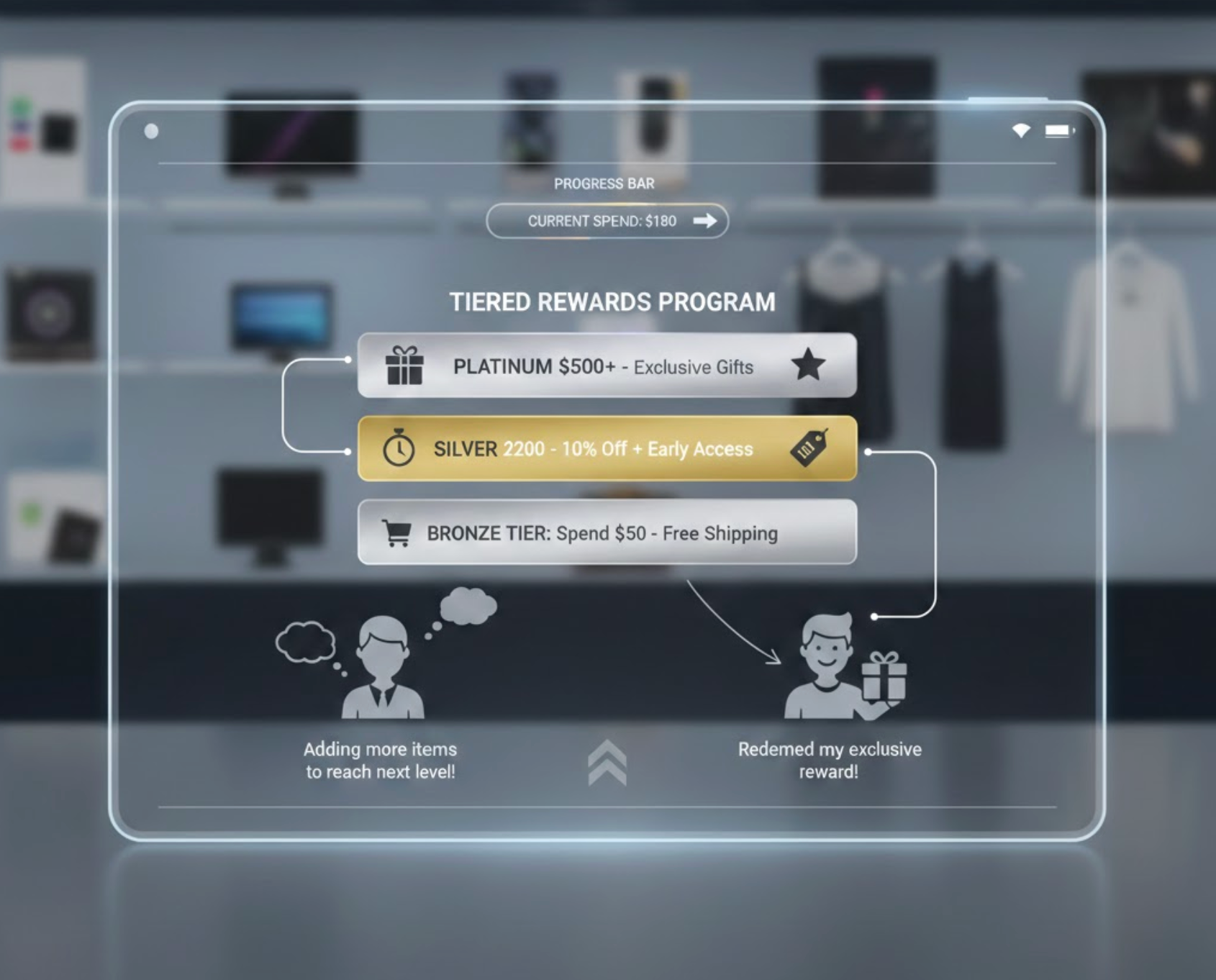
Tiered rewards have become a cornerstone of modern loyalty strategies, especially in competitive markets where price alone is no longer enough to retain customers. By organizing rewards into structured levels, such as Basic, Silver, Gold, and VIP, brands subtly guide customer behavior over time. Rather than offering flat discounts, tiered programs create a sense of progression, achievement, and emotional investment that influences how often customers buy, how much they spend, and how loyal they remain.
Understanding how tiered rewards shape customer behavior helps businesses design loyalty programs that are not only attractive but also sustainable and profitable in the long term.
Tiered reward systems are deeply rooted in human psychology. People are naturally motivated by goals, progress, and recognition, and tiers transform routine purchases into a journey with milestones. Each tier acts as a visible symbol of achievement, reinforcing the idea that continued engagement leads to higher status and better treatment.
One key psychological principle at work is the goal-gradient effect, where motivation increases as individuals get closer to a reward. When customers see they are “only $50 away” from the next tier, they are far more likely to increase their effort. In addition, tiers introduce social comparison, allowing customers to measure their status relative to others, which further boosts motivation.
Instead of viewing rewards as transactional benefits, customers begin to associate tiers with personal accomplishment, making the loyalty program emotionally compelling.
Tiered rewards are particularly effective at influencing how much customers spend per transaction. When advancement is tied to spending thresholds, customers often modify their purchasing behavior to reach the next level faster.
Rather than buying only what they need, customers may:
This behavior feels justified to customers because spending more is framed as an “investment” toward unlocking better rewards. Over time, this leads to higher average order value (AOV) and increased lifetime value, without the brand needing to rely heavily on aggressive discounts.
Tiered rewards strongly impact repeat purchase frequency, making them a powerful retention tool. Once customers reach a certain tier, they become motivated to maintain it, especially if the tier resets after a specific period.
This is driven by loss aversion, a psychological bias where people feel the pain of losing something more strongly than the pleasure of gaining something new. Customers don’t want to lose free shipping, bonus points, or VIP perks, so they continue purchasing even when alternatives exist.
As a result, tiered rewards shift customer thinking from occasional buying to consistent engagement, turning sporadic shoppers into loyal, habitual buyers.
Beyond financial incentives, tiered rewards tap into a powerful emotional driver: status. Higher tiers signal recognition and exclusivity, making customers feel valued beyond their spending.
Brands like Starbucks and Sephora excel at this by offering early access, exclusive products, and member-only experiences to top-tier customers. These benefits create a sense of belonging and prestige that cannot be easily replicated by competitors.
When customers feel special, they develop emotional loyalty, which is far more durable than loyalty based solely on discounts.
Tiered rewards influence not just short-term behavior, but long-term brand commitment. As customers climb tiers, they accumulate points, perks, and status that represent a meaningful investment of time and money.
This creates switching costs, leaving the brand would mean starting over elsewhere with no status or benefits. Even if competitors offer lower prices, customers often stay because abandoning their tier feels like losing progress.
Over time, top-tier members frequently evolve into:
This makes tiered programs especially valuable for building stable, long-lasting customer relationships.
Well-designed tiered reward programs influence behavior beyond transactions. When actions like writing reviews, referring friends, or engaging on social media contribute to tier progression, customers interact more frequently with the brand.
This increased engagement:
Customers begin to see the brand as more than just a store, it becomes an ecosystem where their actions are recognized and rewarded, deepening emotional attachment.
From a business perspective, tiered rewards provide valuable insights into customer behavior. Tracking how customers move between tiers helps brands identify high-value segments and predict future behavior.
With this data, businesses can:
This feedback loop allows brands to continuously optimize their loyalty strategy while delivering more relevant experiences to customers.
Tiered rewards influence customer behavior by combining psychological motivation, emotional value, and strategic incentives. They encourage customers to spend more, buy more often, stay longer, and engage more deeply with the brand.
When thoughtfully designed, tiered loyalty programs go far beyond simple rewards. They turn everyday purchases into meaningful progress, transform customers into loyal advocates, and create relationships that are difficult for competitors to break.