 New to Shopify? Free trial, then $1/month for your first 3 months. Start free trial →
 Where is your store?
Ryviu works with both – pick yours to continue.









Over-promising is one of the fastest ways to lose customer trust. While bold claims may drive short-term clicks or conversions, they often create unrealistic expectations that the product cannot consistently meet. When reality falls short, customers feel misled, disappointed, and far less likely to return.
Strong marketing copy does not exaggerate outcomes. Instead, it builds confidence by clearly aligning promises with real product capabilities. This article explores why over-promising happens, how it damages your brand, and practical strategies to write persuasive copy without crossing the line.
Marketing teams are under constant pressure to stand out in crowded markets. With competitors making aggressive claims, it can feel risky to sound more restrained or realistic.
Over-promising often starts with good intentions. Marketers want to highlight value, speed up decision-making, and reduce hesitation. However, when benefits are framed as guarantees rather than possibilities, the copy stops informing and starts misleading.
Over-promising usually comes from a small set of recurring pressures and habits, including:
Recognizing these pressures is the first step toward writing more honest, effective copy.
While exaggerated claims may boost initial interest, they almost always create friction later in the customer journey. This friction shows up in support tickets, refunds, negative reviews, and lower lifetime value.
When expectations are not met, over-promising erodes trust in multiple, often compounding ways:
In eCommerce and SaaS, trust compounds over time. Once broken, it is difficult and expensive to rebuild. Avoiding over-promising protects not just conversions, but long-term brand equity.

One of the most common over-promising mistakes is using absolute or guaranteed language. Phrases like “always,” “instantly,” “effortless,” or “perfect for everyone” leave no room for real-world variation.
Instead of removing ambition from your copy, you should soften certainty without weakening value.
Here are a few examples of how to soften absolute claims without weakening the core message:
This approach still communicates benefits, but it sets expectations more accurately. Customers are far more forgiving when results vary within the range you described.
Over-promising often shifts from describing product functionality to predicting life-changing outcomes. While emotional benefits matter, claiming dramatic transformations creates unrealistic expectations.
For example, saying a tool “helps organize tasks more efficiently” is very different from saying it “will eliminate stress and double productivity.”
To keep outcomes realistic and credible, focus your copy on the following principles:
When copy focuses on what the product enables rather than what it magically delivers, it feels credible and empowering rather than manipulative.
Vague superlatives are a major source of over-promising. Words like “best,” “ultimate,” “revolutionary,” or “game-changing” sound impressive but rarely explain anything concrete.
Specifics reduce skepticism and increase clarity.
The difference becomes clearer when you compare vague claims with more specific descriptions:
Specific language allows customers to self-qualify. When buyers understand exactly what they’re getting, they are more likely to be satisfied after purchase.
Many brands fear that mentioning limitations will hurt conversions. In reality, thoughtful transparency often increases trust and reduces buyer anxiety.
Every product has boundaries. Acknowledging them signals honesty and confidence.
You can communicate limitations in a constructive way by doing the following:
For example, stating that a tool is “best for small to mid-sized teams” prevents disappointment from enterprise users with complex needs. Customers appreciate being guided away when a product is not the right fit.
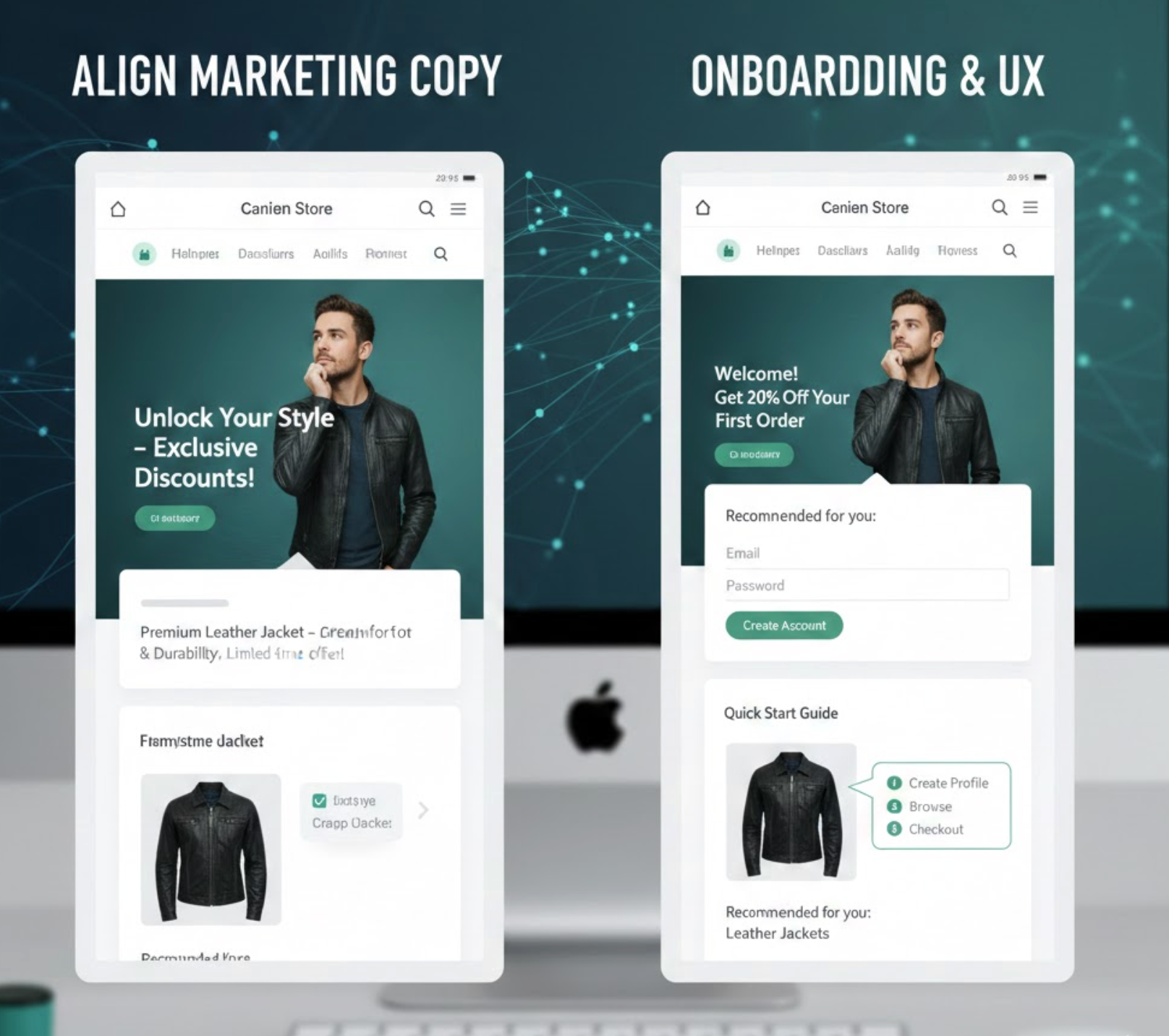
Over-promising often becomes obvious during onboarding. If marketing copy suggests simplicity but setup feels complex, users immediately feel misled.
To ensure expectations stay aligned from marketing to product experience, consider the following checks:
Marketing should prepare users for what they will experience next. When expectations match reality, users feel competent and confident rather than frustrated.
Testimonials and reviews can unintentionally amplify over-promising when only extreme success stories are shown. While positive outcomes matter, showcasing only best-case scenarios can distort expectations.
To keep social proof credible and representative, follow these best practices:
When social proof reflects a range of realistic experiences, it reinforces credibility and reduces post-purchase regret.
Over-promising is often a symptom of optimizing for immediate metrics rather than customer relationships. Copy written for long-term trust prioritizes clarity, accuracy, and relevance over hype.
When reviewing your copy, these questions can help uncover hidden over-promises:
Brands that consistently under-promise and over-deliver earn loyalty that no aggressive copy can replace.
Before publishing any marketing copy, ask a simple question:
“If I were a first-time customer, how would I interpret this promise?”
Below are some helpful review checks for you to try:
Running copy past product managers, support staff, or real users often reveals hidden over-promising that marketers overlook.
Avoiding over-promising in marketing copy is not about sounding cautious or boring. It is about being precise, honest, and customer-focused. Clear expectations create better experiences, stronger trust, and more sustainable growth.
By replacing absolutes with realistic language, focusing on actual product value, and aligning copy with real usage, brands can persuade without misleading. In the long run, marketing that respects the customer’s intelligence always performs better than hype that overreaches.
Honest copy does not weaken your message. It makes it believable, and belief is what truly drives action.




