New to Shopify? Free trial, then $1/month for your first 3 months. Start free trial →
 Where is your store?
Ryviu works with both – pick yours to continue.









Customer feedback is one of the most powerful and overlooked content resources available to marketers. While brands spend significant time researching keywords, analyzing competitors, and monitoring trends, they sometimes forget that their most valuable insights often come directly from the people already interacting with them: their customers. These individuals know exactly what they want to learn, what they find confusing, and what information would help them make better purchasing decisions.
Integrating this feedback into your blog content allows you to create articles that are not only SEO-friendly but also highly relevant, practical, and relatable. In other words, feedback turns your content strategy from assumption-based to audience-driven. This guide dives deeper into why customer insights matter, where to gather them, and how to transform them into high-performing blog content.
Many brands rely solely on search data or competitor analysis when choosing what to write. While those methods are important, they don’t fully capture your audience’s emotions, motivations, objections, or real-life experiences. That’s where customer feedback becomes invaluable.
Feedback gives you access to actual customer voices, what they ask, what they worry about, and what they need help understanding. When you weave these real-world insights into your content, you create blog posts that feel more personal and trustworthy. Readers recognize that your content is based on genuine customer concerns instead of generic SEO suggestions.
Additionally, integrating feedback creates a more natural flow between your content and your audience’s journey. Instead of producing articles that vaguely match search trends, you create posts that directly solve problems your customers face. This not only increases engagement but also encourages readers to move confidently toward your products or services.
In short, customer feedback helps your blog content achieve four major benefits:
Overall, content becomes more strategic, more customer-centric, and more valuable.
To create content that truly connects with readers, you need to gather feedback from multiple sources. Each platform captures a different angle of customer sentiment, some reveal frustrations, others show expectations, and some highlight recurring questions. Collecting inputs from several places helps you paint a complete picture of what your audience wants.
Below are the richest sources of feedback and how each contributes to your blog content.
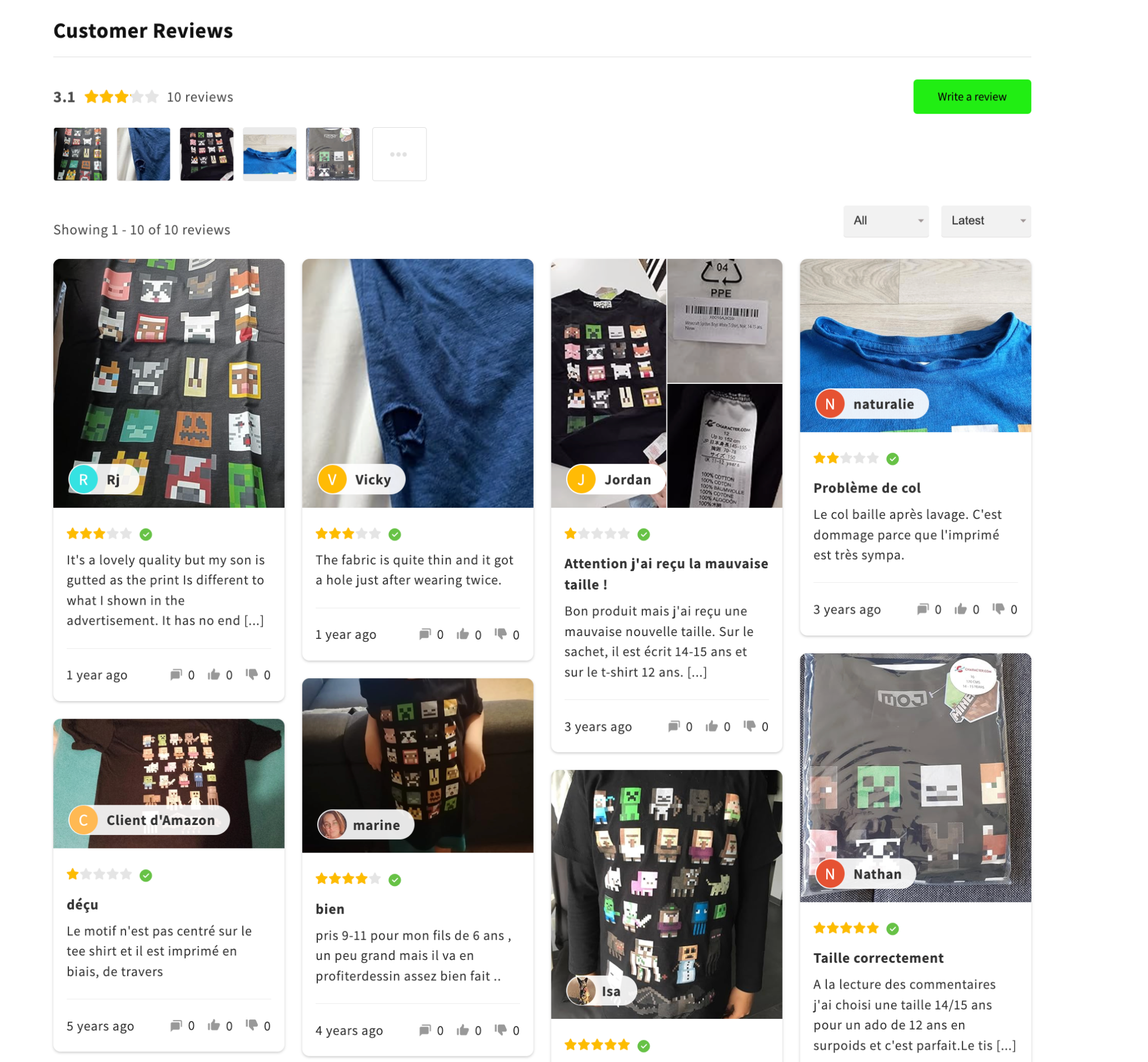
Product reviews are treasure troves of honest customer experiences. They show you what customers love, what they struggle with, and what made them choose your product in the first place. By analyzing reviews across different products, you can uncover trends such as sizing issues, feature confusion, or expectations vs. reality.
These insights often lead to articles like buying guides, troubleshooting content, or comparison posts. Because the topics come directly from customer challenges, the articles are naturally engaging and extremely useful.
Support teams constantly interact with customers who need help solving issues or clarifying information. If the same problem appears repeatedly, like installation steps, compatibility questions, or refund policies, it’s a strong sign that your blog should address it.
Blog posts based on support issues help reduce future workload, improve user experience, and strengthen customer satisfaction. They also demonstrate that your brand takes customer struggles seriously and provides educational resources proactively.
Messages from chat and email channels often reveal the emotional side of customer concerns, confusion, excitement, fear of choosing the wrong option, or frustration with unclear information. These emotions give you powerful clues about how to frame your blog content.
If customers express uncertainty or hesitation, that becomes a signal to create content that offers reassurance, clarity, and step-by-step explanations.

Social platforms such as TikTok, Facebook, Instagram, or YouTube enable customers to respond quickly and casually. Their spontaneous reactions often reveal new questions, concerns, or interesting use cases you might not find anywhere else.
Because social conversations evolve quickly, this feedback helps you create timely content that matches current trends or seasonal demands.
Surveys and net promoter score (NPS) data provide organized insights into customer satisfaction and expectations. These responses highlight what customers appreciate most about your brand and what improvements they wish to see.
Survey-driven content often becomes data-rich blog posts, industry insights, or authoritative guides that attract backlinks and establish expertise.
Collecting customer feedback is only the beginning; the true impact comes from analyzing and selecting insights that genuinely strengthen your content. Because customers share thoughts across many channels, reviews, emails, social media, and support messages, you’ll naturally receive a mix of helpful, irrelevant, emotional, and sometimes contradictory opinions. This is why you need a clear process for filtering and prioritizing feedback, ensuring that the topics you choose benefit both your readers and your overall content goals.
Below are three effective methods to extract the most meaningful insights from the feedback you gather.
One of the strongest indicators that a topic deserves a blog post is when you see multiple customers mentioning the same issue, asking the same question, or expressing similar concerns. These repeated patterns show you what your audience consistently struggles with, which means addressing them will help the largest number of readers. By turning repeated questions into clear, well-structured articles, you offer practical guidance while reducing confusion for future customers.
How customers phrase their questions often reveals more than the question itself. Their natural language frequently mirrors how they search on Google, which makes it incredibly valuable for creating blog content that ranks organically. When you use their exact words, or close variations, you create content that feels relatable, matches search intent more accurately, and avoids sounding like forced SEO writing.
Not all feedback has the same level of importance, so prioritize insights that have a direct influence on customer decisions or product experiences. High-impact feedback usually highlights situations where customers face uncertainty before buying, struggle while using a product, or misunderstand a feature due to lack of clear explanation. Creating content around these topics helps you solve real problems, remove barriers to purchase, and build trust by offering meaningful support where it matters most.
Once you understand customer needs, the next step is turning those insights into articles that educate, support, and convert your audience. Below are detailed methods to transform feedback into high-performing content.
When customers repeatedly ask similar questions, whether about installation, usage, sizing, or compatibility, it’s a strong sign the topic deserves a complete guide. These posts reduce confusion, build trust, and improve user experience.
They also help you address both potential customers who are researching and current customers who need more clarity.
Customer voices make articles more relatable and credible. Adding real quotes (with permission or anonymously) shows readers that your content is based on true experiences, not assumptions.
These quotes can support claims, illustrate benefits, or highlight pain points in a natural and trustworthy way.
Case studies offer practical examples of how customers use your product, what challenges they faced, and what results they achieved. These stories strengthen your blog by showing real outcomes rather than theoretical explanations.
They also help potential customers visualize themselves using your products successfully.
When customers struggle to choose between models, materials, or versions, you can turn these inquiries into comparison content. Because the questions originate from actual buying decisions, your articles become highly relevant and conversion-friendly.
Instead of ignoring complaints, use them to create posts that explain how to avoid issues or how to use products correctly. This approach shows transparency and reassures customers that you listen and improve.
It also reduces future complaints by clarifying misunderstandings before they happen.
If you see many comments related to durability, installation, sizing, or maintenance, create a full cluster of posts around each theme. Topic clusters help build SEO authority and guide customers through a complete learning journey.
Data-driven content positions your brand as a thought leader. When customers share preferences or experiences through surveys, you can turn the results into compelling reports, trend analyses, or educational articles.
This type of content attracts backlinks, press interest, and industry recognition.
Before finalizing a long guide or complex article, share the outline or idea with a small group of customers. Their feedback helps you refine examples, clarify explanations, and decide whether the topic is truly important.
This ensures the final article resonates strongly with your real audience.
To ensure your content remains helpful, ethical, and aligned with your brand identity, follow these guidelines:
Protecting customer privacy should always come first. Even harmless details can unintentionally reveal someone’s identity if shared publicly. Always anonymize quotes or request clear permission before using identifiable information.
Your content should primarily aim to educate and address the customer’s original concern. When readers feel genuinely helped, they naturally become more open to product suggestions. Introduce your offerings only when they clearly support the solution being discussed.
Real customer language adds credibility and relatability to your content. Avoid over-editing quotes or rewriting experiences in overly polished marketing tones. Keeping their original voice helps the message feel honest and trustworthy.
Customer needs evolve, and your content should evolve with them. Revisiting older posts allows you to add new insights, replace outdated explanations, and address emerging questions. This keeps your blog relevant and signals ongoing care for your audience.
Some feedback-driven topics will resonate more strongly than others, so tracking metrics is essential. Performance data helps you understand which formats, such as guides, FAQs, or case studies, deliver the most value. Use these insights to refine future content and focus on what your audience truly needs.
Integrating customer feedback into your blog content is one of the most effective ways to produce articles that feel personal, practical, and truly customer-centric. Instead of guessing what your audience wants, you let their voices guide your strategy. This leads to content that solves real problems, boosts engagement, builds trust, and supports conversions naturally.
By combining feedback from reviews, support tickets, social comments, and surveys, and turning these insights into guides, FAQs, case studies, comparison posts, and educational articles, you transform your blog into a powerful resource that evolves alongside your customers’ needs.