New to Shopify? Free trial, then $1/month for your first 3 months. Start free trial →
 Where is your store?
Ryviu works with both – pick yours to continue.









Long product pages are powerful conversion tools, but they often suffer from one critical issue: information overload. When dozens or even hundreds of reviews are displayed without structure, customers struggle to identify what truly matters. As a result, valuable insights get buried, and decision-making becomes slower or less confident.
To maximize conversions and user trust, businesses must prioritize high-impact reviews, those that directly influence purchasing decisions. By organizing and highlighting the most relevant feedback, brands can guide users efficiently through complex product pages. This approach not only improves user experience but also ensures that the most persuasive content gets the visibility it deserves.
To understand how to implement this effectively, let’s break down the key strategies step by step.
Customers rely heavily on reviews when evaluating products, especially on long pages where attention is limited. Not all reviews carry the same weight, and some have significantly more influence on purchasing decisions. Identifying and prioritizing these high-impact reviews can drastically improve engagement and conversion rates.
To make the most of your review section, it’s important to focus on what truly drives customer behavior.
Not every positive review is necessarily useful, and not every negative review is harmful. High-impact reviews are those that provide meaningful, decision-driving information. They often answer questions potential buyers haven’t even asked yet.
To identify these reviews effectively, you need clear evaluation criteria.
Understanding the traits of impactful reviews helps streamline the prioritization process. These reviews stand out because they provide clarity, context, and credibility.
To translate this understanding into action, consider the following key characteristics.
Beyond content quality, performance metrics also reveal which reviews resonate most with users. These signals help you identify which reviews deserve prominent placement.
To bridge the gap between qualitative and quantitative evaluation, focus on these metrics.
A well-structured product page ensures that users can quickly find the information they need. Without proper organization, even the best reviews lose their effectiveness. Strategic placement and categorization are essential for maximizing impact.
To achieve clarity and usability, consider structuring your review section thoughtfully.
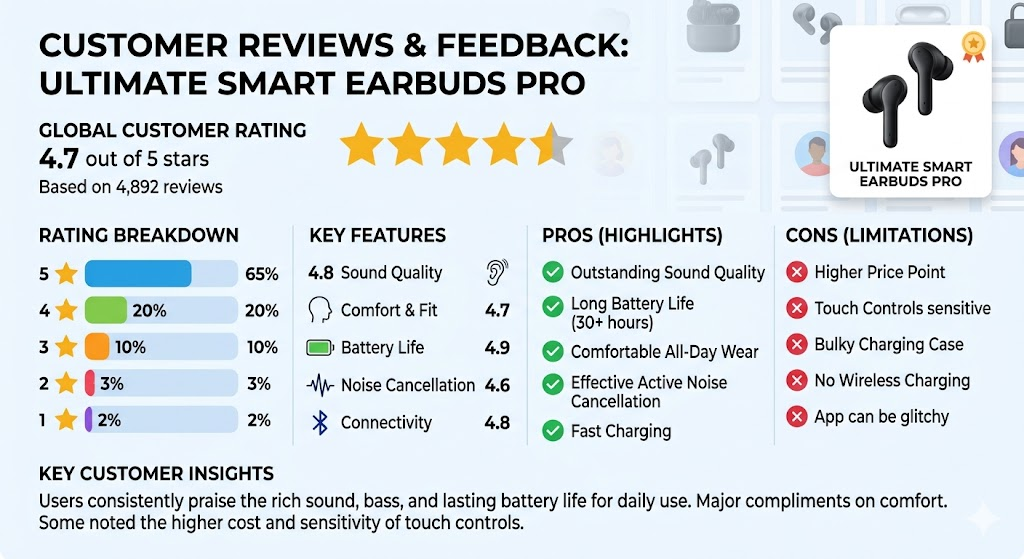
Users often skim before committing to reading detailed reviews. A concise summary at the top provides immediate value and sets expectations.
To make summaries effective, focus on clarity and relevance.
Grouping reviews by themes helps users navigate large volumes of feedback more efficiently. This approach allows customers to focus on what matters most to them.
To implement thematic segmentation effectively, consider these categories.
Once you’ve identified impactful reviews, the next step is ensuring they are prominently displayed. Prioritization techniques help guide users toward the most valuable insights without overwhelming them.
To implement this effectively, focus on strategic placement and visibility.
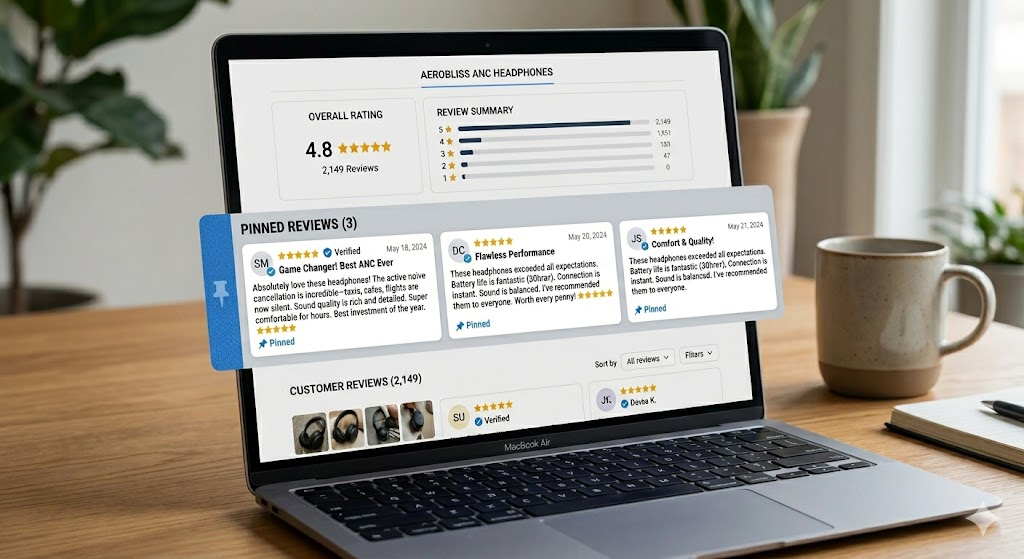
Pinning allows you to showcase the most influential reviews at the top of the section. This ensures they are seen first, increasing their impact.
To maximize the effectiveness of pinned reviews, consider the following.
Filters empower users to customize their review experience based on their preferences. This improves usability and ensures relevant content is easily accessible.
To make filtering more effective, businesses should allow users to refine reviews based on specific product variations, helping them find the most relevant feedback, as explained in this product variant reviews guide.
To make filtering intuitive and effective, focus on these options.
Manually managing reviews becomes impractical as volume increases. Automation and AI tools can help identify and surface high-impact reviews efficiently. These technologies analyze patterns, sentiment, and engagement to optimize review visibility.
To take advantage of automation, businesses should integrate intelligent tools into their workflow, especially by combining multiple Shopify apps to enhance performance, as explained in this Shopify apps combo guide.
AI enhances accuracy and efficiency in prioritizing reviews. It reduces manual effort while improving the quality of displayed content.
To understand the value of AI, consider these benefits.
Tools like the Ryviu review app provide advanced features for managing and showcasing reviews effectively. It helps businesses automate review collection, organization, and prioritization.
To leverage Ryviu’s capabilities, consider these features.
A common mistake is focusing only on positive reviews. However, a mix of feedback builds credibility and helps customers make informed decisions. Transparency is a key factor in establishing trust.
To strike the right balance, consider presenting reviews strategically.
Negative reviews provide insights into potential drawbacks and demonstrate authenticity. When handled correctly, they can actually increase trust.
To use negative reviews effectively, keep these points in mind.
A balanced narrative ensures that customers see the full picture. This helps build confidence and reduces the likelihood of post-purchase dissatisfaction.
To maintain balance, consider these practices.
Visual content significantly increases engagement and helps users understand products better. Reviews that include images or videos are often more impactful than text alone. Interactive elements further improve usability and navigation.
To enhance the review experience, consider integrating these features.
Visual reviews provide proof and context that text alone cannot convey. They help customers visualize the product in real-world scenarios.
To maximize the impact of visual content, businesses should encourage customers to share images and videos, as outlined in these tips to make product reviews more visual.
To maximize the impact of visual content, focus on these elements.
Interactive tools make it easier for users to explore reviews. They reduce friction and improve overall satisfaction.
To create a more engaging experience, consider these features.
Implementing prioritization strategies is only the first step. Continuous measurement ensures that your approach remains effective and aligned with user behavior. Data-driven optimization is essential for long-term success.
To evaluate performance, focus on relevant metrics and insights.
Tracking the right KPIs helps you understand the impact of your review strategy. These metrics provide actionable insights for improvement.
To monitor effectiveness, consider these KPIs.
Optimization is an ongoing process that requires regular updates and adjustments. By analyzing data, you can refine your approach over time.
To ensure continuous improvement, follow these practices.
Prioritizing high-impact reviews on long product pages is not just about organization; it’s about guiding customers toward confident decisions. By identifying valuable reviews, structuring content effectively, and leveraging tools like Ryviu, businesses can transform their product pages into powerful conversion engines. The key lies in balancing clarity, authenticity, and usability while continuously optimizing based on data.
When done correctly, review prioritization enhances trust, reduces friction, and ultimately drives better business outcomes.