New to Shopify? Free trial, then $1/month for your first 3 months. Start free trial →
 Where is your store?
Ryviu works with both – pick yours to continue.








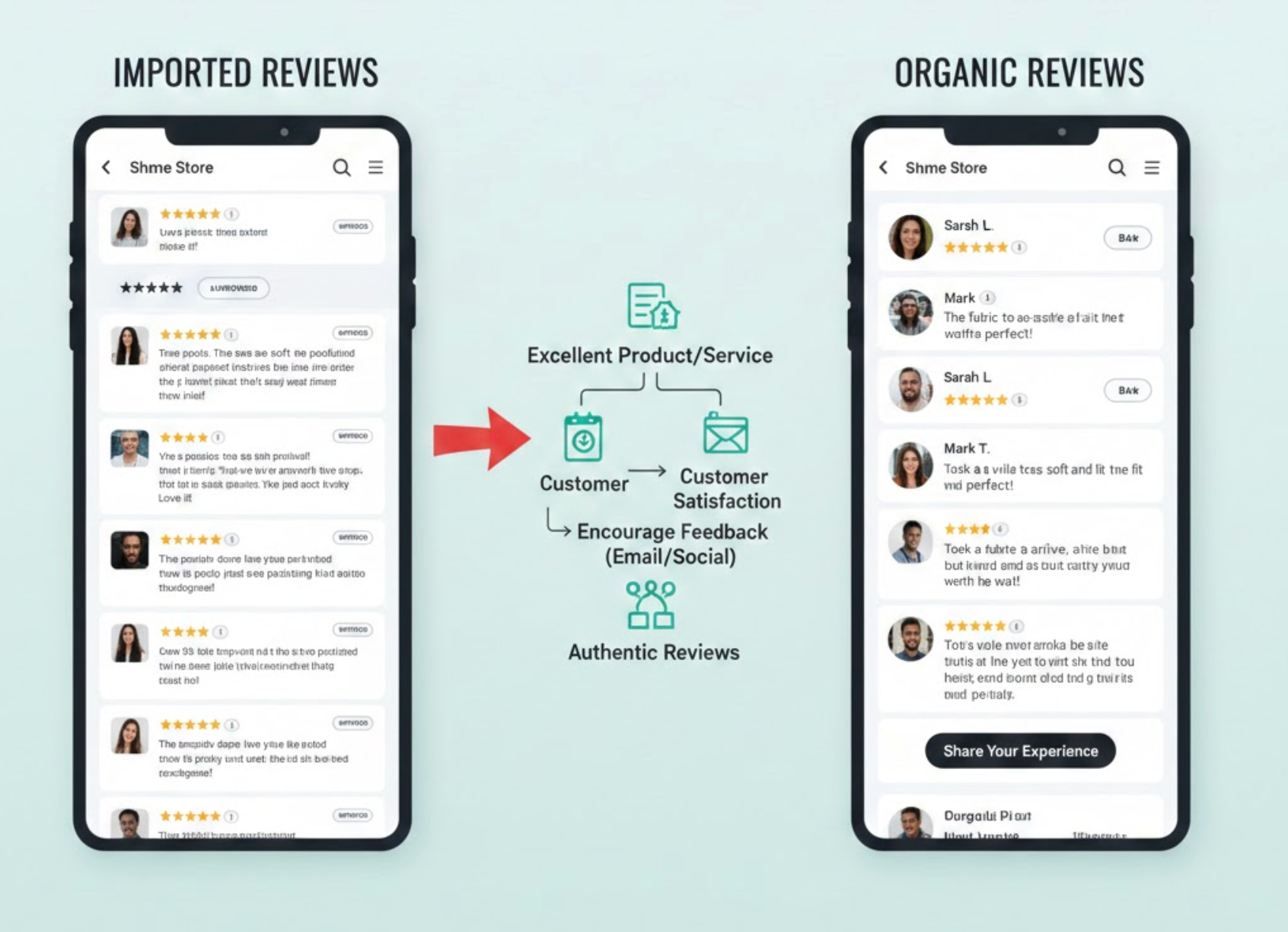
Imported reviews often serve as the first layer of trust for new or fast-growing online stores. They help reduce hesitation, fill otherwise empty product pages, and give early visitors the confidence to explore your products. As your store matures, however, customers begin to look for feedback that reflects real, recent interactions with your brand.
Organic reviews written by actual buyers are the foundation of long-term credibility. They communicate authenticity, reinforce trust, and support sustainable growth far better than imported feedback alone. Successfully transitioning requires a thoughtful approach that strengthens trust without disrupting the customer experience.
Imported reviews play an important but temporary role in the life of an online store. In the beginning, they help overcome uncertainty by showing that products have already been used and appreciated by others. This early reassurance is often the difference between hesitation and a first purchase.
As sales increase and real customers interact with your brand, the function of imported reviews naturally changes. At that point, shoppers want to hear from people who have experienced your shipping, packaging, and support firsthand.
To make the transition effectively, it helps to step back and evaluate how imported reviews currently support your store.
At this stage, focus on the following aspects:
Organic reviews grow best when guided by a clear plan. Without specific goals, it’s easy to rely on imported reviews simply because they already exist. Defined objectives keep your review strategy intentional and forward-moving.
These goals should reflect both quantity and usefulness, helping you build a review base that genuinely supports buying decisions. Clear metrics also make it easier to identify what’s working and what needs improvement.
Once expectations are set, every review-related effort becomes easier to evaluate and refine.
When setting goals, consider targeting areas such as:
A sudden drop in visible reviews can raise concerns and create unnecessary doubt. Rather than removing imported reviews all at once, it’s more effective to shift attention toward organic feedback over time. This gradual approach maintains trust while guiding customers toward more authentic content.
The goal is not to erase imported reviews, but to let real customer voices naturally take the lead. As organic reviews increase, they should become the most prominent and influential.
By managing how reviews are presented, the transition feels smooth and intentional.
You can guide this shift by taking steps such as:
Customers are most willing to leave reviews when the process feels easy and well-timed. A poorly designed request can quickly become an afterthought, even for satisfied buyers. Creating a smooth review experience removes friction and increases participation.
Review requests should align naturally with the customer’s post-purchase journey. When the timing and format feel appropriate, customers are far more likely to respond.
Optimizing this step lays the foundation for consistent organic review growth.
To improve the experience, focus on actions such as:
Incentives can help motivate customers, but they must be handled with care. When rewards feel tied to positive ratings, trust can erode quickly. The focus should always remain on honest participation, not influence.
Well-structured incentives show appreciation for effort rather than opinion. This approach encourages more reviews while protecting authenticity.
When communicated clearly, incentives can support growth without compromising credibility.
Effective incentive practices often include:
Seeing real customer feedback reassures shoppers at every stage of their journey. Organic reviews feel more powerful when they are visible beyond the product page. Strategic placement helps reinforce trust and encourages participation.
When reviews are integrated into your store experience, they become part of your brand story. This visibility also signals that customer voices are valued and shared openly.
Thoughtful presentation turns reviews into ongoing social proof.
Consider highlighting organic reviews in places such as:
Engaging with reviews shows that your brand listens and cares. Customers appreciate acknowledgment, whether their feedback is positive or critical. These interactions build relationships, not just reputation.
Public responses also shape how future customers perceive your brand. A thoughtful reply can be just as influential as the review itself.
Consistent engagement encourages more customers to share their experiences.
Strong response habits include actions like:
As review volume increases, manual management becomes less practical. Review tools simplify collection, organization, and display while supporting a smooth transition from imported to organic content. They also help maintain consistency across your store.
Solutions like Ryviu allow merchants to automate review requests, highlight verified buyers, and manage imported reviews responsibly. This balance makes it easier to grow organic feedback without losing early trust.

Technology ensures the process remains scalable and transparent.
Key advantages of using review tools include:

More reviews don’t always mean better reviews. Customers value insight, context, and real-world usage more than short, generic comments. High-quality reviews answer questions and reduce uncertainty.
Encouraging meaningful feedback improves both trust and conversions. Detailed reviews often become decision-making shortcuts for hesitant shoppers.
Guidance helps customers understand what kind of feedback is most helpful.
To raise review quality, encourage practices such as:
There is a natural point where imported reviews are no longer necessary. When organic reviews appear regularly and reflect current experiences, they become the strongest source of trust. At that stage, older imported content may feel less relevant.
Phasing out imported reviews should be guided by data and consistency, not assumptions. Freshness and engagement matter more than sheer numbers.
A clean transition reinforces confidence in your brand’s authenticity.
Clear indicators that you’re ready include:
Transitioning from imported reviews to organic reviews is a defining step in the growth of an online store. Imported reviews help you establish initial credibility, but organic reviews are what sustain trust over time. The transition works best when it’s gradual, transparent, and customer-focused.
By setting clear goals, improving the review experience, engaging with feedback, and using the right tools, you create a review system that grows naturally alongside your brand. Ultimately, organic reviews do more than support sales—they reflect real customer experiences and build lasting confidence in your business.