New to Shopify? Free trial, then $1/month for your first 3 months. Start free trial →
 Where is your store?
Ryviu works with both – pick yours to continue.









Customer feedback is one of the most valuable and underrated marketing assets a business can own. While many brands see feedback as a tool for improvement, the truth is that each review, comment, or testimonial also holds tremendous storytelling power. Every message from a customer, whether short, long, enthusiastic, or constructive, can be transformed into content that builds trust, increases conversions, and humanizes your brand. Understanding how to turn this raw input into polished marketing material is the key to strengthening your online presence and communicating value more convincingly.
To help you tap into this powerful content source, this guide walks you through the essential steps, practical methods, and strategic opportunities for leveraging customer feedback in your marketing ecosystem.

The first step in transforming feedback into content is ensuring you gather it from a diverse range of sources. Customers express themselves differently depending on the platform, so expanding your collection channels allows you to capture richer, more authentic insights. Whether it’s through product reviews, post-purchase surveys, live chat, social media comments, or private messages, each touchpoint can reveal a layer of real customer sentiment. You can also send request reviews emails to encourage customers to leave their reviews after purchases.
By widening your feedback net, you create a more accurate picture of what customers love, question, or hope to see. This broader understanding naturally opens up more opportunities to repurpose their words into compelling narratives that connect with new prospects.
Not every customer comment will be suitable for marketing, so the next step is identifying which pieces carry the most value. High-quality feedback is usually detailed, emotional, or specific, highlighting features, benefits, or experiences that matter to new shoppers. Feedback that clearly explains a transformation, solves a real problem, or expresses genuine enthusiasm is especially strong.
Once you begin to categorize feedback by themes, such as customer pain points, product strengths, or memorable service experiences, it becomes easier to recognize patterns. These patterns guide you in choosing content that resonates and gives your marketing clarity, direction, and consistency.
Customer reviews are the easiest type of feedback to convert into marketing content. With a bit of polishing, you can transform raw customer statements into testimonials that highlight the exact value your product provides. Testimonials work exceptionally well on product pages, landing pages, email campaigns, and social media because they borrow trust from real people, something no traditional sales copy can fully replicate.
To make testimonials more powerful, select quotes that reveal outcomes, emotions, or specific product features. A short but targeted testimonial often performs better than a long, general one. By strategically placing these testimonials at persuasion points, next to CTAs, pricing tables, or product descriptions, you create subtle nudges that help prospects feel more confident in their decision.

Modern audiences skim content quickly, especially on social platforms, where attention spans shrink by the second. Converting customer feedback into visual social-proof graphics is an effective way to showcase trust instantly. Whether it’s a quote card, a star-rating banner, or a carousel of testimonials, visuals help highlight authenticity while maintaining a polished brand feel.
These graphics work beautifully for Instagram posts, Facebook ads, Pinterest pins, and blog headers. They also boost credibility in newsletters or onboarding emails. When designed consistently, they reinforce your brand identity while showcasing real voices, making your marketing feel both professional and relatable.
Some customers provide longer, richer stories that go beyond simple praise. These are ideal for creating case studies, which are among the strongest forms of marketing content in B2B and high-consideration purchases. A great case study explains the customer’s problem, how they used your product or service, and what measurable results they achieved.
By turning feedback into a structured case study, you offer depth and proof, something prospects rely on when evaluating big decisions. Case studies also support sales teams, enrich blog content, and elevate your brand by showing real-world success backed by customer voices.
Customer feedback is not limited to praise but it also includes concerns, questions, hesitations, and misconceptions. Instead of seeing these pieces of feedback as negative, use them as inspiration for educational content such as FAQs, tutorial videos, troubleshooting guides, blog posts, or onboarding flows.
When you address real customer questions proactively, you reduce friction, increase product understanding, and build trust before purchase. This transformation turns uncertainty into clarity and positions your brand as transparent, helpful, and customer-centric.

Emails are one of the best channels to insert trust-building content like testimonials and micro-stories. A single sentence from a delighted customer can transform a promotional email into a convincing message. Whether you’re launching a new product, running a discount, or nurturing leads, weaving in real customer quotes increases the persuasive power of your email content.
To make this even more effective, match specific feedback with relevant email segments, for example, use shipping-related praise in abandoned-cart emails or product-specific testimonials in post-purchase follow-ups. This creates a more personalized and believable communication experience.
Some customer phrases are so good that they sound like ads themselves. When feedback includes emotional triggers, descriptive language, or meaningful product benefits, those words can become powerful ad copy for Facebook Ads, Google Ads, Instagram campaigns, or TikTok creatives.
By using the customer’s own language, your ads naturally feel more organic and relatable. Prospects trust these messages more because they come directly from real users, not a marketing script. This user-generated messaging can significantly increase engagement, click-through rates, and conversions.
User-generated content (UGC) is one of the most authentic and engaging forms of marketing today. Photos, videos, and captions created by customers bring genuine context to how your product works in real life. Encouraging people to share experiences not only builds community but also gives you a continuous flow of content that you can repurpose for months.
Whether you turn UGC into reels, TikTok edits, product highlights, or customer-story threads, these posts feel more trustworthy because they are rooted in real usage. Each piece helps reinforce that your brand delivers on its promises in everyday scenarios.
Customer feedback often contains words and phrases that capture real motivations and value better than traditional marketing language. By analyzing what customers repeatedly mention, speed, durability, friendliness, comfort, or convenience, you can turn those insights into headline copy, product descriptions, feature lists, and homepage messaging.
This ensures your website speaks the same language your customers use, making your brand feel instantly relatable. When prospects read wording that reflects their own thoughts, they feel understood and more inclined to trust your offering.
When you receive a high volume of feedback, patterns begin to emerge. These trends can be converted into data-backed marketing messages, such as “92% of customers experienced faster setup” or “8 out of 10 buyers say this product solved their main problem.” Statistics like these add authority, help validate product strengths, and give your messaging a more evidence-driven tone.
By turning raw feedback into digestible data points, you strengthen your positioning and provide prospects with confidence-boosting proof that your product consistently performs.

Video is one of the most powerful formats for storytelling. By integrating customer quotes, before-and-after statements, or full testimonial recordings into product videos, you create dynamic content that keeps viewers engaged longer. Whether you build a dedicated testimonial video or simply insert short customer statements into product demos, these elements increase credibility and emotional impact.
Video-based social proof works especially well for YouTube ads, homepage hero sections, and social reels where first impressions are quick and decisive.
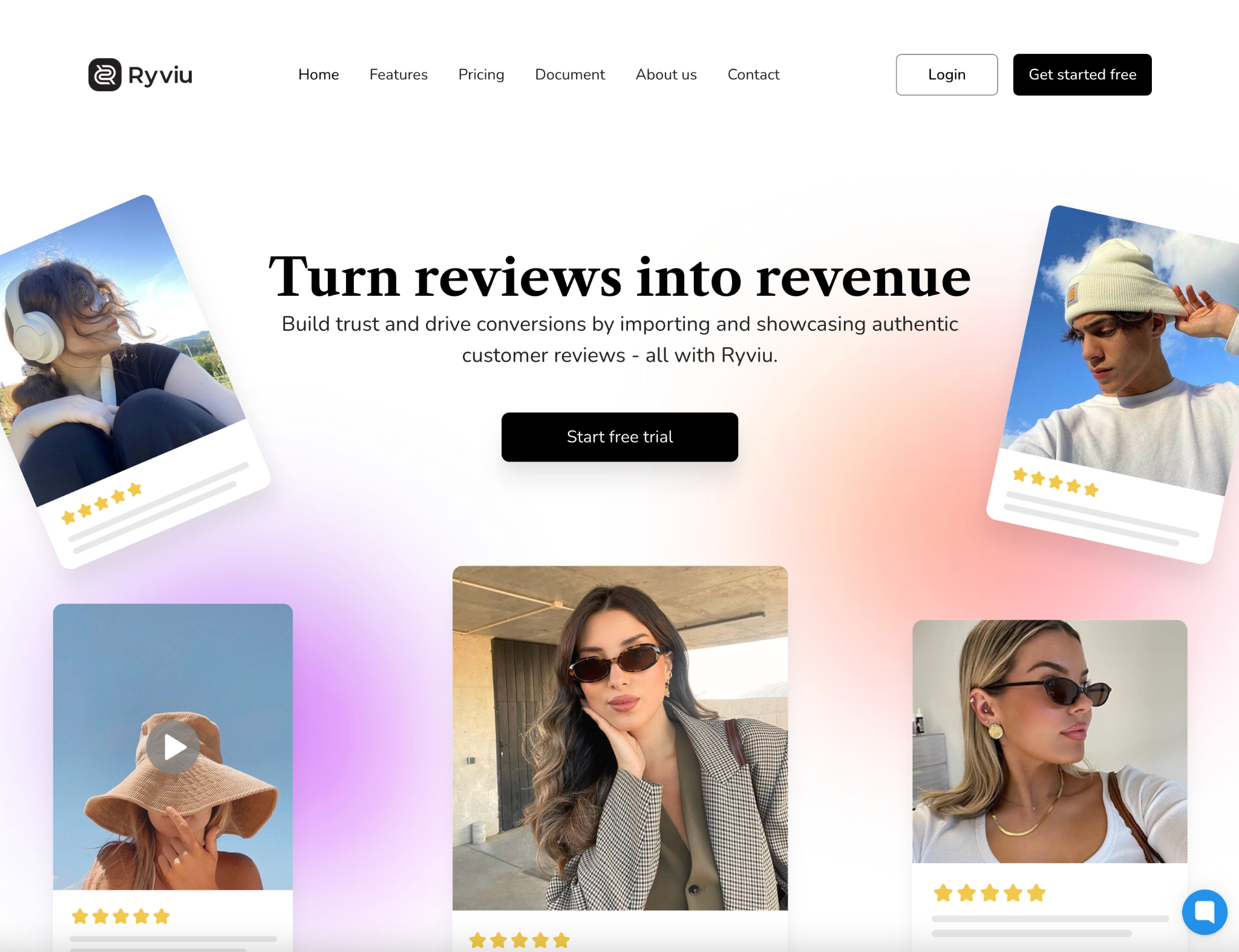
Ryviu is a dedicated review and UGC platform designed to help ecommerce stores collect, manage, and display customer feedback with ease. It brings all your reviews into one centralized dashboard, giving you full control over how they appear and how they support your brand story. With its customizable design options and seamless integrations, Ryviu makes it effortless to turn authentic customer voices into persuasive content that boosts conversions. Its user-friendly interface ensures both beginners and experienced merchants can optimize social proof without technical complexity. By transforming raw feedback into polished, high-impact assets, Ryviu gives your marketing content a stronger foundation built on trust.
To make this process even smoother, Ryviu provides powerful features that amplify the value of every customer review.
Turning customer feedback into marketing content is more than a strategy, but it’s a mindset that reshapes the way you view customer interaction. Every comment, review, question, or story holds a marketing opportunity waiting to be unlocked. By collecting feedback widely, identifying the most compelling pieces, and transforming them into clear, persuasive formats, you create a marketing engine powered by real customer voices.