 New to Shopify? Free trial, then $1/month for your first 3 months. Start free trial →
 Where is your store?
Ryviu works with both – pick yours to continue.









For a long time, eCommerce success seemed simple: the more 5-star reviews a product had, the better it would sell. High ratings were seen as instant proof of quality, reliability, and customer satisfaction. As a result, many brands focused heavily on collecting as many perfect reviews as possible.
However, the online shopping landscape has changed. Today’s consumers are more experienced, more skeptical, and far more aware of how reviews are generated and displayed. Instead of blindly trusting star ratings, shoppers actively analyze review patterns and content. Because of this shift, an overload of flawless feedback can now raise doubts rather than eliminate them.
In this article, we’ll explore why too many 5-star reviews can feel fake, how shoppers psychologically interpret review patterns, and how brands can build stronger trust by embracing authenticity instead of perfection.
Modern shoppers don’t read reviews just to confirm that a product is “good.” They read reviews to understand risk, manage expectations, and avoid disappointment.
When customers see a product with hundreds, or even thousands, of 5-star reviews and almost no variation, it often feels unrealistic. At that moment, excitement can quickly turn into suspicion. Shoppers may begin asking themselves:
This skepticism isn’t random, it’s learned behavior. Over the years, consumers have encountered fake reviews, paid testimonials, and overly curated feedback across countless platforms. As a result, they’ve developed a natural defense mechanism: perfection feels suspicious.
Interestingly, many shoppers feel more comfortable purchasing a product with a 4.5–4.7 average rating than one with a perfect 5.0. A small range of opinions signals honesty, transparency, and real-world usage, which ultimately builds more trust.
From a psychological perspective, perfection creates distance, while imperfection creates relatability.
Shoppers instinctively know that no product can satisfy every customer in every situation. Different expectations, preferences, and use cases naturally lead to mixed experiences. When reviews fail to reflect this reality, buyers struggle to see themselves in the feedback.
This disconnect can quietly weaken confidence. Instead of thinking, “This product is amazing,” shoppers may think, “Why hasn’t anyone had an issue?”
Subtle criticism actually plays an important role in the decision-making process. It:
For example, a review that says, “Excellent quality, but delivery took longer than expected,” feels far more believable than endless claims of perfection. These small imperfections reassure buyers that the reviews are genuine, and that the brand isn’t hiding anything.
Even when shoppers accept 5-star ratings, the content of those reviews still matters greatly.
A long list of brief, generic comments like:
adds very little value to the buying decision. When many of these reviews appear within a short time frame, they can feel automated, incentivized, or copied, which immediately raises red flags.
Today’s consumers scan reviews strategically. They look for:
Without these details, even a large volume of positive reviews fails to answer shoppers’ real questions. As a result, trust weakens, not because reviews are positive, but because they lack substance.
At first glance, negative reviews seem harmful. In reality, when used correctly, they can strengthen trust and even improve conversion rates.
A small number of lower-star reviews sends an important signal: nothing is being hidden. This transparency reassures shoppers that they are seeing the full picture, not a filtered version of reality.
More importantly, negative reviews help buyers self-select. If a complaint doesn’t apply to their needs, it may actually increase confidence. If it does apply, it prevents dissatisfaction later, protecting both the customer and the brand.

Brand responses play a critical role here. When shoppers see calm, thoughtful replies to criticism, it demonstrates:
In contrast, a product with no visible criticism feels controlled and overly polished. Transparency, even when imperfect, feels human, and humans trust humans.
The goal of a review section isn’t to eliminate doubt entirely, it’s to guide shoppers through it honestly.
High-performing brands focus on review balance, ensuring that feedback reflects real customer experiences rather than a curated highlight reel. This includes:
By showcasing real customer voices, complete with context, photos, and varied opinions, stores can maintain credibility while still emphasizing product value.
Balanced reviews don’t make a product look worse. They make it look real.
Having mostly 5-star reviews is not a bad thing, but without context, they can easily feel exaggerated or untrustworthy. Shoppers don’t just look at ratings, they evaluate how reviews are collected, presented, and explained. Ryviu helps transform a wall of perfect ratings into a review section that feels authentic and credible.
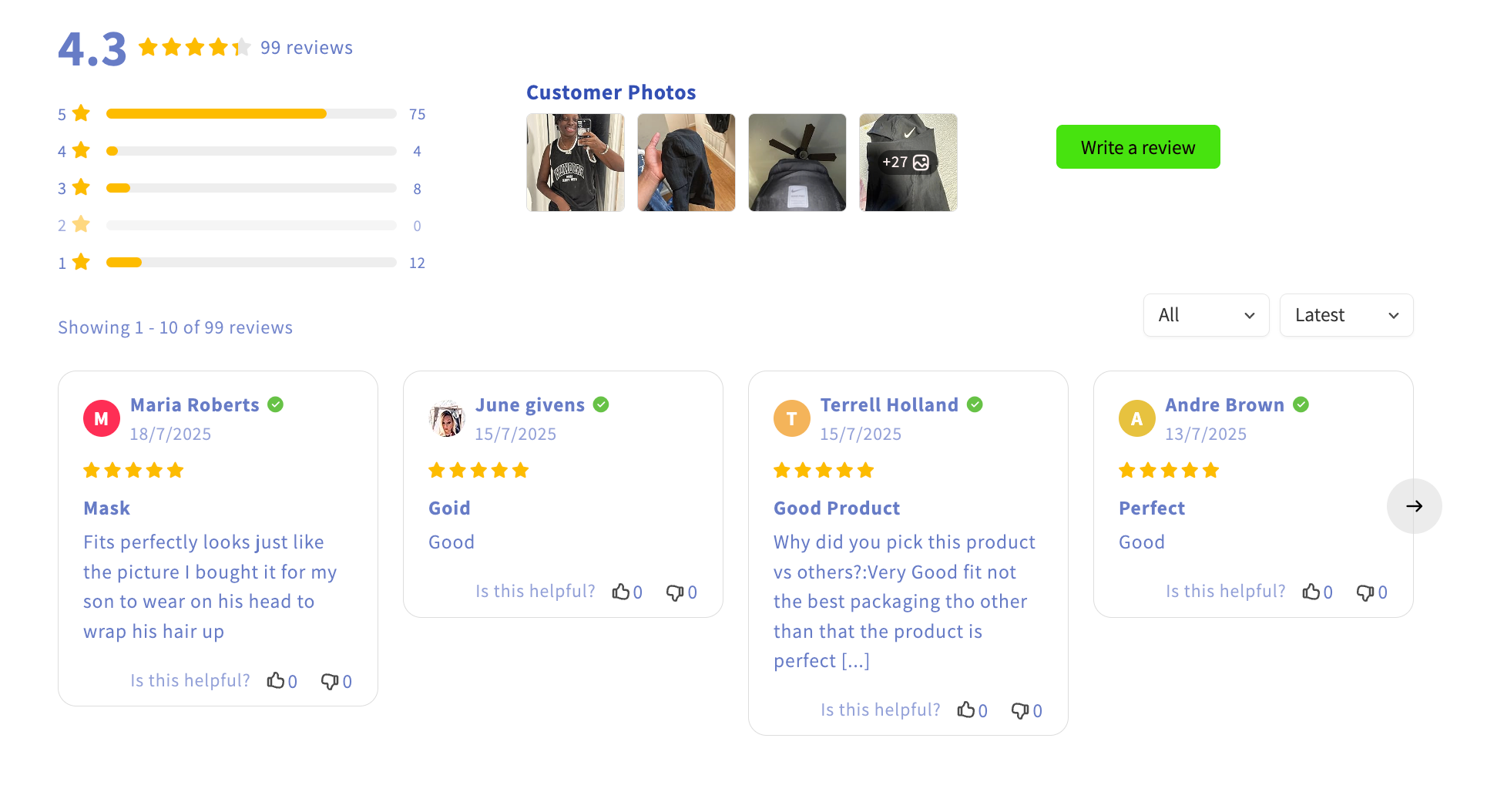
Instead of suppressing positive feedback, Ryviu focuses on making it more meaningful and believable.
Rather than obsessing over flawless ratings, experienced brands prioritize long-term trust and customer satisfaction.
They:
This strategy doesn’t reduce sales. In fact, it often leads to higher-quality conversions, fewer returns, and stronger brand loyalty, because customers know what to expect before they buy.
In today’s eCommerce environment, perfection no longer impresses shoppers, it makes them cautious.
A review section filled only with 5-star praise can feel manufactured, while a mix of honest opinions feels dependable. Balanced reviews help shoppers make confident decisions, set realistic expectations, and trust the brand behind the product.
The most successful brands don’t try to look perfect. They focus on looking genuine.
And in a marketplace crowded with marketing promises, genuineness is what truly converts.




